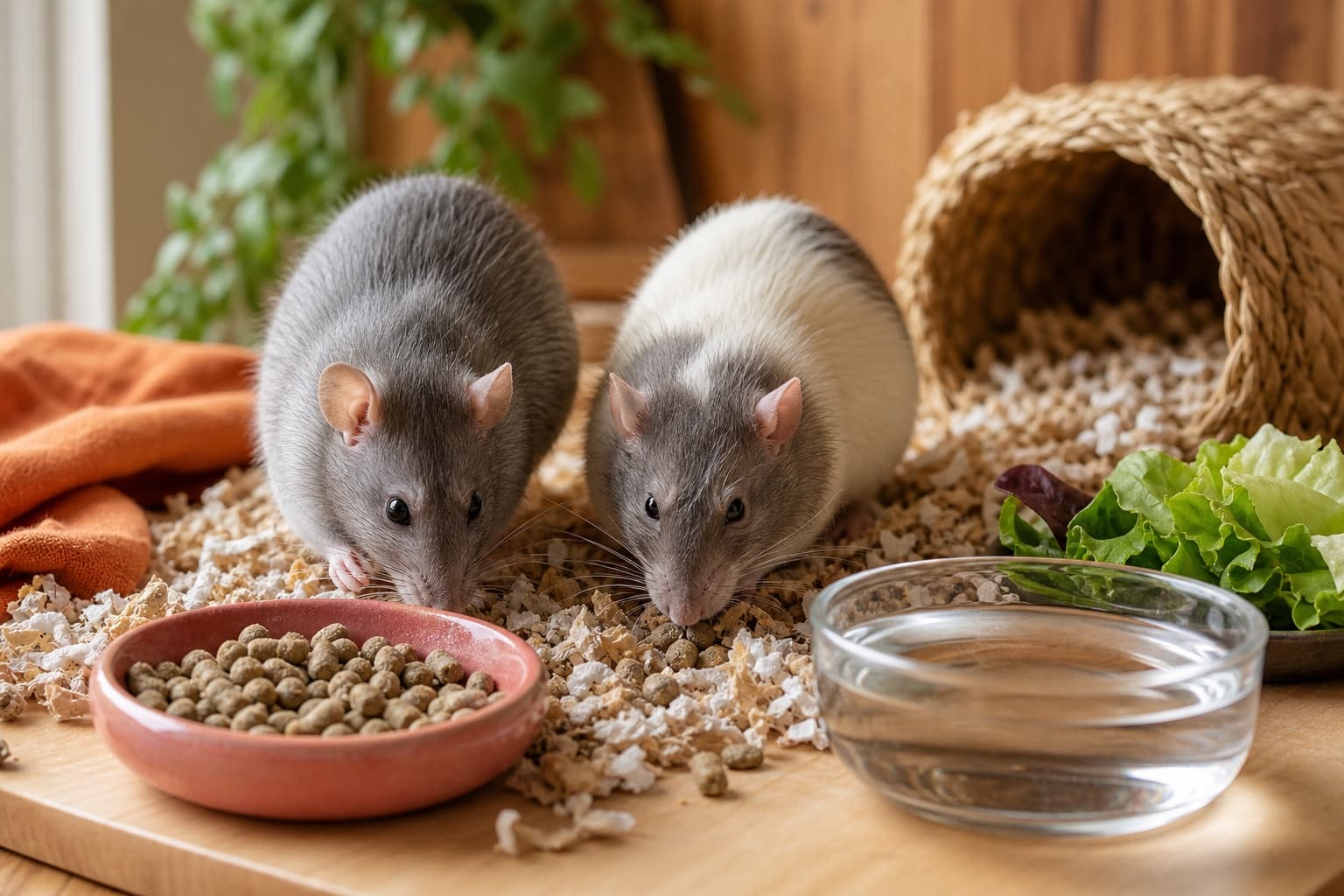
A practical rat feeding routine begins with a complete food formulated for rats, fresh water, and a consistent amount the owner can observe. Enrichment comes from how part of that food is offered, not from continually adding extras.
The RSPCA rat diet guide recommends a complete commercial rat food and using part of the daily allowance for scatter feeding and foraging. This gives rats work to do while keeping the total intake visible.
Make complete rat food the foundation
Choose a reputable pellet or nugget formulated for rats. Uniform pieces prevent a rat from selecting only favorite ingredients from a loose mixture. Food made for another small herbivore is not a substitute, because the nutritional design differs by species.
Keep the original package or record the exact product and ordinary amount. If a rescue or breeder has already established a food, begin with that routine. Discuss a planned change with a veterinarian who routinely treats rats, and make changes gradually when advised.
Use one daily allowance in several ways
Put some of the complete food in a stable dish so intake is easy to see. Scatter another portion through clean paper, a cardboard tray, or a reusable forage toy. Hide a few pieces across more than one cage level.
This approach creates search, movement, and problem solving without turning enrichment into an unmeasured second meal. In a group, spread the food across several places so one rat cannot sit over the only source.
Offer fresh foods as modest additions
RSPCA includes suitable fruits and vegetables as part of a varied routine, while emphasizing gradual introduction and appropriate portions. Offer a small amount of clean fresh produce, remove leftovers before they spoil, and notice how each rat responds.
Because individual needs change with age, body condition, reproductive status, and health history, a veterinarian familiar with rats is the right person to help tailor the overall amount or a special diet.
Avoid using sugary or fatty treats as the main route to training. A piece of the complete daily food can often serve as a reward. Keep human snack foods, alcohol, caffeinated drinks, and unknown household foods out of the play area.
Keep water easy to reach
Provide clean fresh water at all times. More than one drinking point helps a social group and gives backup if one bottle stops flowing. Bottles should release water when tested; bowls should be stable and placed where bedding is less likely to fill them.
Check water in the morning and evening. Wash vessels regularly and notice an obvious change in how much the group drinks. A clear change in eating or drinking needs prompt veterinary advice.
Watch the routine, not just the empty bowl
An empty dish does not always show who ate what. Observe the group during active periods. Look for each rat approaching food, carrying pieces, chewing normally, and moving between resources. Weighing rats on a consistent schedule can help an owner notice a trend, but a veterinarian should interpret a concerning change.
Store dry food in a cool, dry place in its original packaging or a sealed container that preserves the label and date. Discard damp, stale, contaminated, or pest-damaged food.
Keep feeding connected to the habitat
Food is one part of a larger daily pattern. Place foraging opportunities near climbing, digging, and exploring routes, while keeping the main water and food points easy to access. Rotate the location or presentation without changing every element at once.
The VCA feeding rodents guide likewise centers species-appropriate commercial food, clean water, and carefully chosen fresh additions rather than an improvised seed-heavy mix.