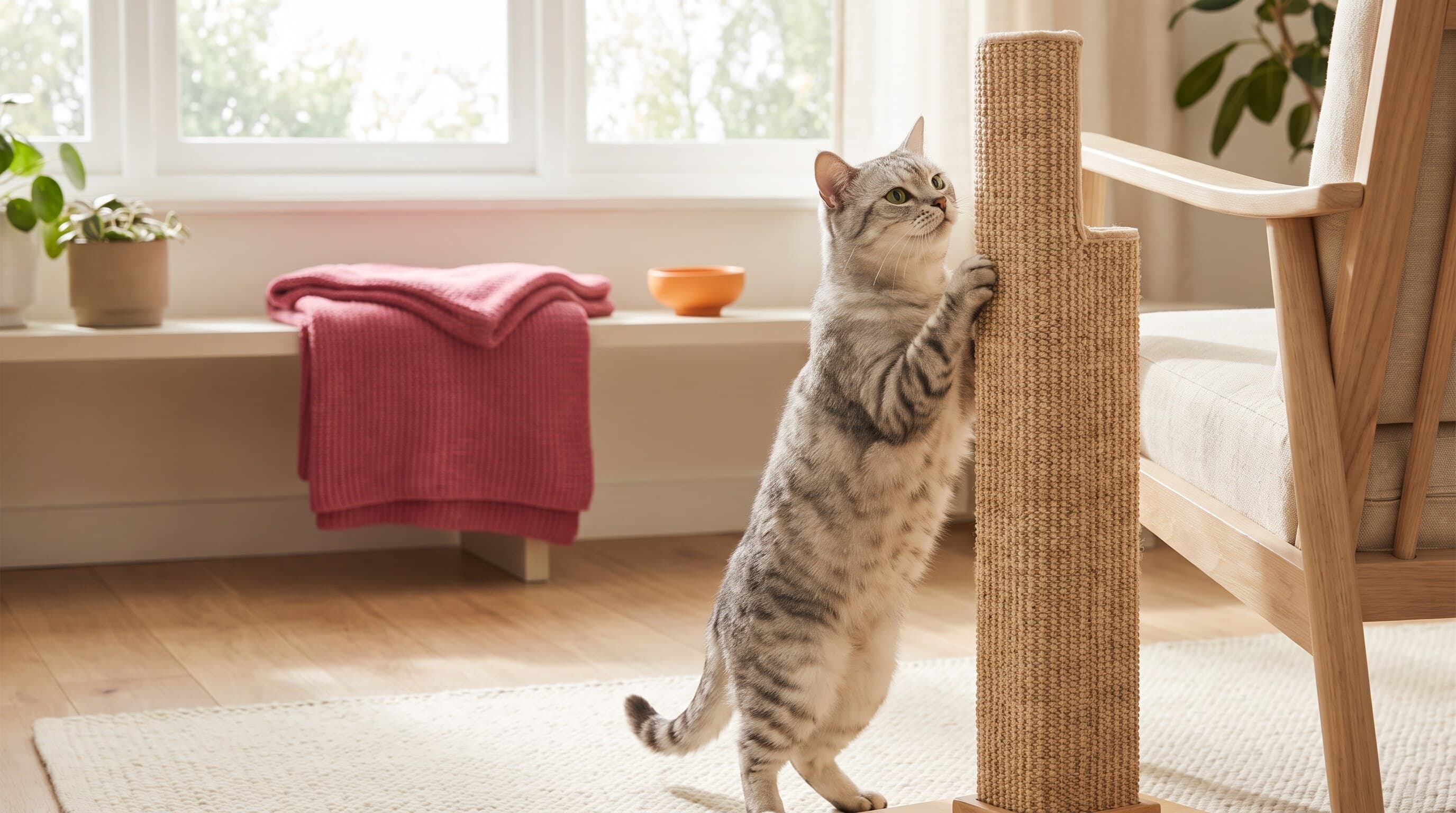
If your couch is paying the price for your cat's claws, it helps to know that scratching is not spite or bad behavior, it is a deep, healthy instinct. Cats need to scratch, and the aim is never to stop it but to move it onto surfaces you are happy for them to use. According to the ASPCA, the most effective approach is to teach your cat where and what to scratch by offering appealing alternatives, rather than trying to suppress a normal need. Get the alternatives right and the furniture usually gets a reprieve.
Why cats scratch
Scratching serves several purposes at once, which is why it is so hardwired. International Cat Care explains that when a cat drags its front claws down a surface, a motion sometimes called stropping, it loosens and removes the worn outer husk of the claw to reveal a sharp new surface underneath. Scratching also stretches and exercises the muscles of the front legs and spine, which is why cats often scratch right after waking up.
Just as importantly, scratching is a form of communication. Cats have scent glands in their paws, and scratching deposits both a visible mark and a scent mark that signals territory to other cats. The Cornell Feline Health Center notes that this destructive scratching is a normal behavior, and understanding it as marking plus maintenance plus exercise explains why simply telling a cat "no" never works. The drive does not go away, so it has to be redirected.
Redirect to the right surfaces
The heart of the solution is giving your cat a scratching option that is genuinely more attractive than your furniture. The trick is to match your cat's existing preferences rather than guessing.
- Watch what your cat already targets. International Cat Care recommends observing whether your cat scratches horizontal surfaces like carpets or vertical ones like the side of the sofa, and what texture it prefers. Then choose a post or pad that mirrors that orientation and material.
- Offer variety. The ASPCA suggests providing several posts with different surfaces, such as sisal rope, cardboard, wood, and carpet, so your cat can find a favorite.
- Make posts tall and sturdy. A vertical post should let your cat stretch to full length without wobbling. A flimsy post that tips over will be abandoned fast.
- Place them where they matter. Put scratching options next to the furniture your cat currently uses and near sleeping spots, since cats love to scratch when they wake up. A post hidden in a spare room will not compete with the couch by the window.
- Make them appealing. The ASPCA suggests scenting posts with catnip and hanging toys on them to draw your cat in, and rewarding your cat with praise or a treat when it uses the right surface.
If your cat is already scratching a specific spot, provide the alternative right beside it, matching height and texture, and make the furniture itself less appealing with a temporary deterrent like double-sided tape until the new habit takes hold. Our roundup of the best cat trees and scratching posts covers durable options for different preferences.
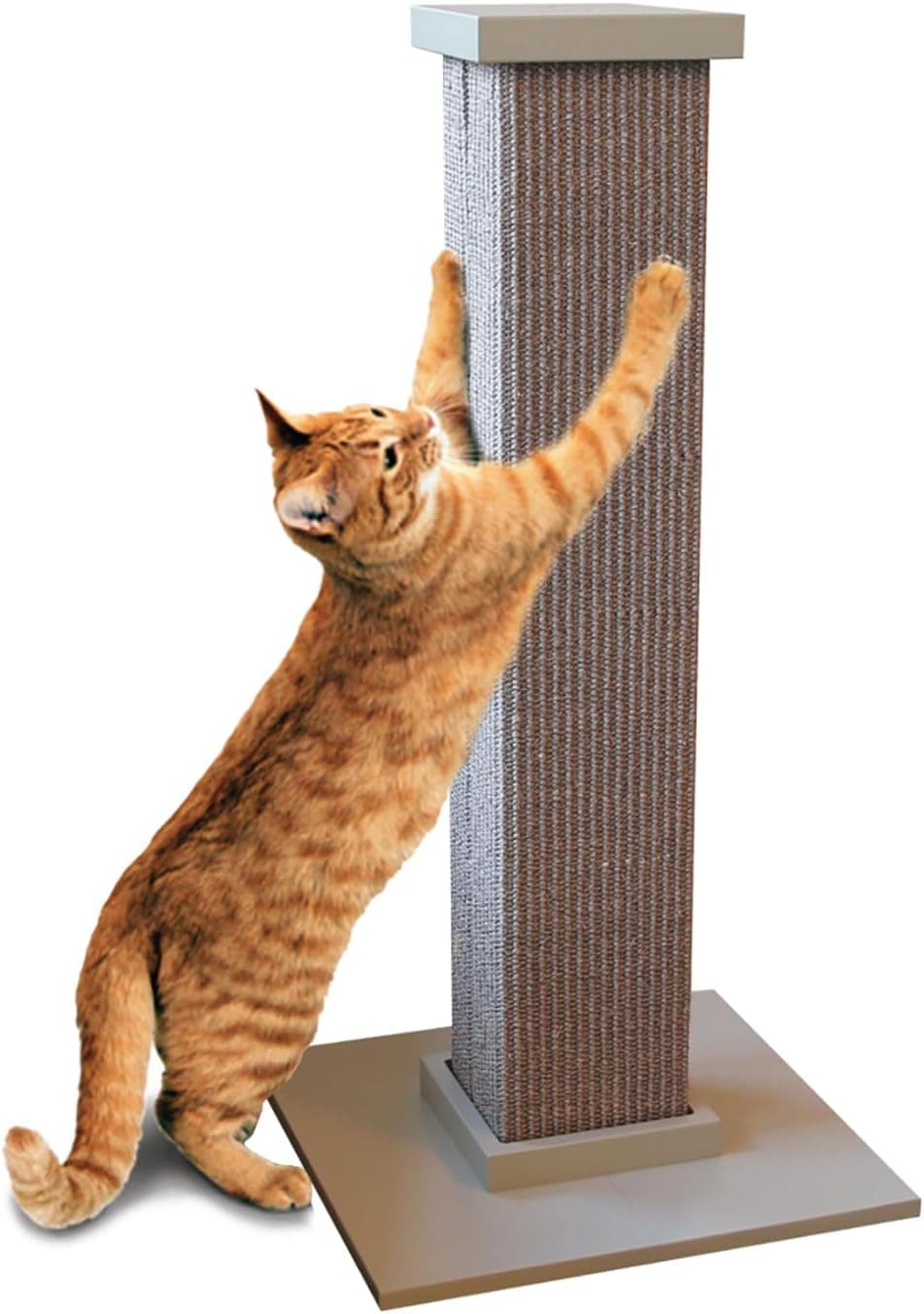
A tall, sturdy vertical post is what tempts most cats away from the sofa arm, and the SmartCat Ultimate Scratching Post is a tall sisal option built not to wobble.
SMARTCAT
Ultimate Scratching Post
- Height
- 32 in
- Material
- Durable sisal fiber wrap
- Assembly
- 2 screws and 2 dowels
- Design
- Tall, simple single-post tower
A tall, simply built scratching post wrapped in durable sisal fiber, designed to let cats of all sizes fully stretch while scratching. Assembly requires only two screws and two dowels.
See more detailSee less detail
Strengths
- Largest review base and highest rating of the scratching posts compared
- Tall design allows a full stretch for larger cats
- Minimal, quick assembly
Weaknesses
- Highest price of the scratching posts in this roundup
- Single-post design with no additional platforms or toys
Best for
Cats that need a tall, simple post to fully stretch during scratching
What owners say
Why declawing is never the answer
It can be tempting to look for a permanent fix, but declawing is not one, and it causes real harm. The ASPCA is strongly opposed to declawing and stresses that it should never be used as a behavioral remedy or a preventive measure. Declawing is not a simple nail removal: it is the amputation of the last bone of each toe. The ASPCA notes it carries the risks of any surgery, including anesthesia, bleeding, and post-operative infection and pain, and that when tissue damage or bone fragments remain, cats can suffer chronic pain that requires ongoing management. It also has not been shown to reliably fix the behavior problems people hope it will.
The humane alternatives are exactly the ones above: appropriate scratching surfaces paired with positive reinforcement, regular nail trims, deterrents on off-limits furniture, and, if you want them, temporary soft nail caps that cover the claw. These protect your home without taking away a cat's ability to do a normal, healthy behavior.
When to look closer
Most furniture scratching resolves once the right posts are in the right places. If your cat suddenly starts scratching far more than usual, is scratching alongside signs of stress like hiding or house soiling, or seems to be marking heavily in a multi-cat home, it is worth a conversation with your veterinarian to rule out stress or a medical trigger and, if needed, a feline behavior professional. For another common cat behavior explained, see our guide to why cats knead.