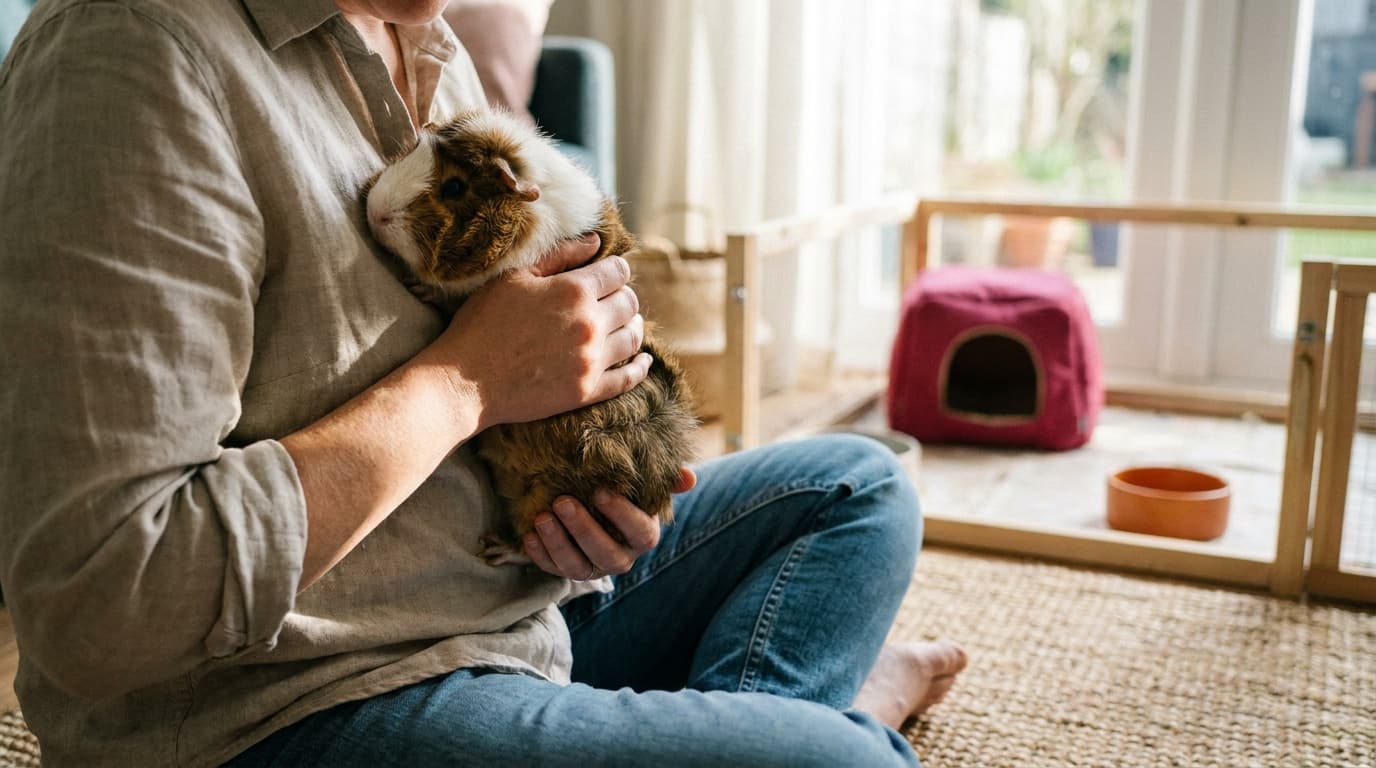
Pick up a guinea pig only when handling has a clear purpose, then support the chest and hindquarters for the entire lift. Keep the animal close to your body, move over a secure surface, and make the carry short.
The Merck Veterinary Manual handling guidance describes supporting the rump and thorax during pickup and supporting the animal's weight while carrying. The RSPCA guinea pig environment guide recommends approaching from the front at a low level because an approach from above can startle a prey animal.
Prepare the route first
Close doors, move dogs and cats out of the room, and clear the path to the destination. Put the carrier, towel, or examination surface within reach before touching the guinea pig.
For routine movement, a small open carrier or sturdy tunnel can be easier than chasing. Let the guinea pig enter, cover the opening, and move the container with both hands. This is especially useful for animals that are still learning the household routine.
Approach low and from the front
Speak quietly and bring your hands into view from the side or front. Avoid repeated grabs from above. If the guinea pig runs into a shelter, do not pull it through a narrow doorway. Use an open-ended tunnel or gently guide the animal into a clear pickup area.
Place one hand around and under the chest while the other supports the hindquarters. Lift in one controlled movement and bring the guinea pig against your torso. Do not carry by a leg, loose skin, or the middle of the body without rear support.
Hold close to a secure surface
Sit on the floor or a low seat for early handling sessions. Rest the guinea pig across your lap or against your torso while maintaining chest and rear support. Keep sessions short and return the animal before it begins struggling strongly.
Children should sit on the floor and interact under direct adult supervision. An adult should manage the pickup and return until the child can consistently support the whole animal and respond calmly to sudden movement.
Return the guinea pig deliberately
Lower the animal rear first while keeping the chest supported. Wait until all feet contact the floor before releasing. Face the guinea pig toward the enclosure interior rather than leaving it balanced on an edge.
Pair necessary handling with a predictable cue and a normal part of the daily food allowance after the animal is back in the enclosure. Do not chase repeatedly, squeeze, shout, or prolong the hold to force stillness.
Notice a change in handling response
A guinea pig that suddenly resists touch, cries when lifted, shifts weight away from one side, or stops moving normally needs veterinary attention. Avoid additional handling beyond what is necessary for safe transport.
The goal is reliable, necessary handling, not making the guinea pig remain in someone's arms for long periods. Floor-level interaction, feeding routines, and enclosure-based observation often provide better ways to become familiar with each animal.