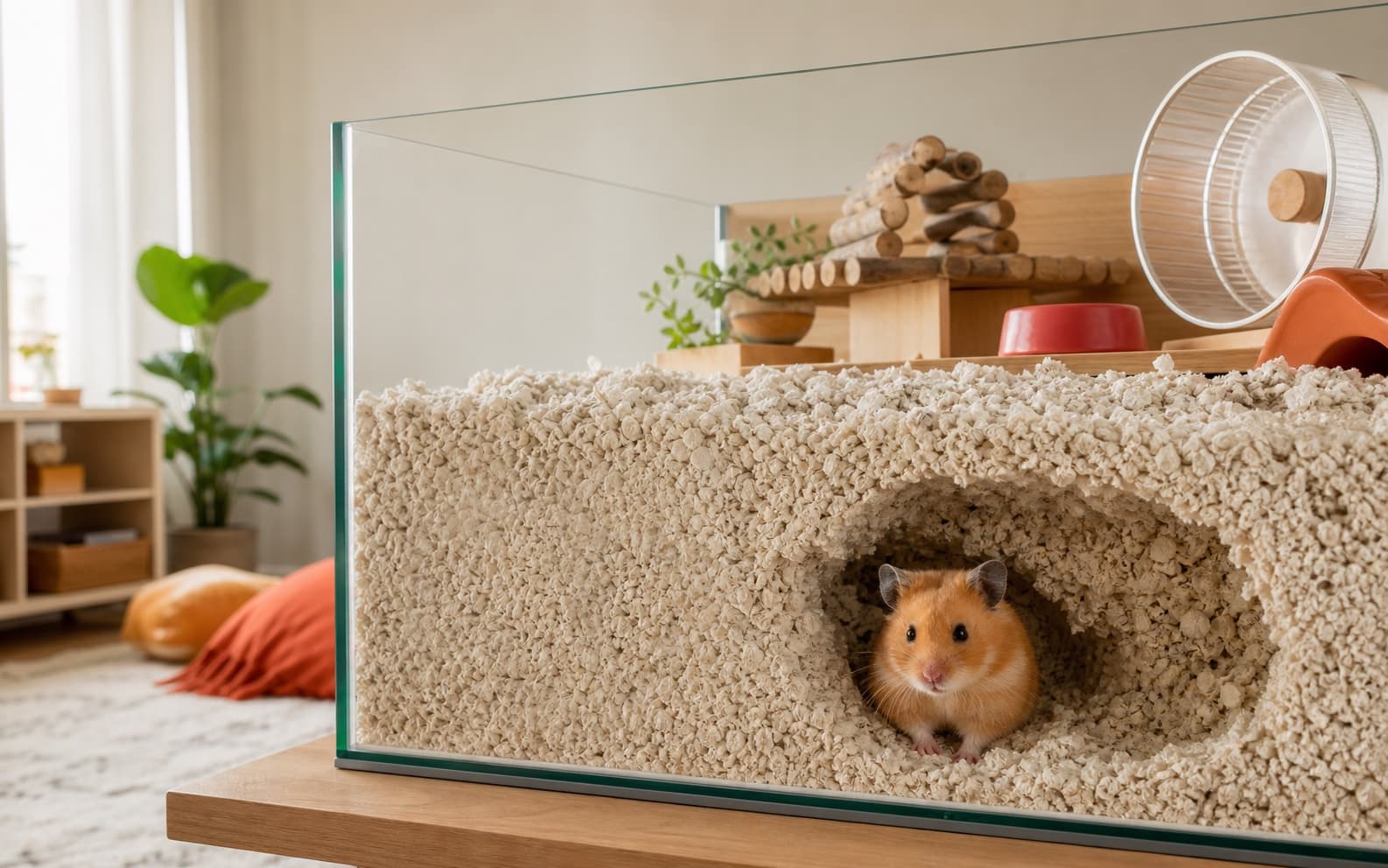
Hamster bedding is both the floor and the architecture. A deep, cohesive layer lets a hamster dig tunnels, build a nest, store food, hide, and choose a stable place to sleep during the day.
The BC SPCA describes wild hamsters sleeping, storing food, and sheltering in underground burrows. UC Davis School of Veterinary Medicine recommends recycled paper bedding and advises against cedar, pine, and corncob products because of health concerns.
Choose material that is soft, dry, and low in dust
Unscented paper bedding is a practical starting material. It should feel springy, separate easily by hand, and produce little visible dust when poured. Avoid perfumed products and fluffy fiber nesting material that can wrap around small limbs or be difficult to separate.
Plain torn paper can supplement the main bedding in the nest area. Hay or coarse forage may add texture, but it does not replace an absorbent burrowing base.
Make one part genuinely deep
Fill a large section of the enclosure high enough for the hamster to disappear below the surface and build a tunnel system. The Blue Cross hamster housing guide recommends at least 20 centimeters of suitable digging bedding. A deeper section also requires an enclosure wall and lid designed to contain it securely.
Add bedding in layers and press it gently so the material can hold its shape without becoming compacted into a hard block. Place the main hide at the surface or partially below it to give the hamster a sheltered starting point.
Keep a lower working zone
A deep enclosure can still include a lower stable area for the wheel, water, and sand bath. Use a firm platform or divider so the wheel remains level and its moving parts stay clear. Create a gentle route between the lower zone and the burrow rather than a steep exposed drop.
Cardboard tubes, cork, and low wooden cover can connect the zones. Check every opening against the adult size of the hamster, especially for a Syrian carrying food in full cheek pouches.
Clean the dirty part, preserve the useful part
Hamsters organize their homes. Many choose separate areas for sleeping, food storage, and toileting. Learn that map before removing large amounts of material.
Spot-clean visibly wet bedding and remove spoiled fresh food. Leave clean dry stores and much of the familiar nesting material intact. When a larger clean is needed, return a portion of clean old bedding so the hamster keeps familiar scent and structure.
Avoid collapsing a clean burrow simply to make the surface look tidy. The hidden architecture is part of the habitat's function.
Read what the bedding is telling you
A stable tunnel entrance, a chosen nest, and regular movement between zones show how the hamster is using the base. Bedding that constantly falls flat may need greater depth, gentler packing, or a more cohesive paper texture. Damp bedding, strong odor, or a leaking bottle needs immediate correction.
When the bedding works, the hamster can redesign the lower half of the enclosure while the wheel, water, and other essentials remain stable above it.