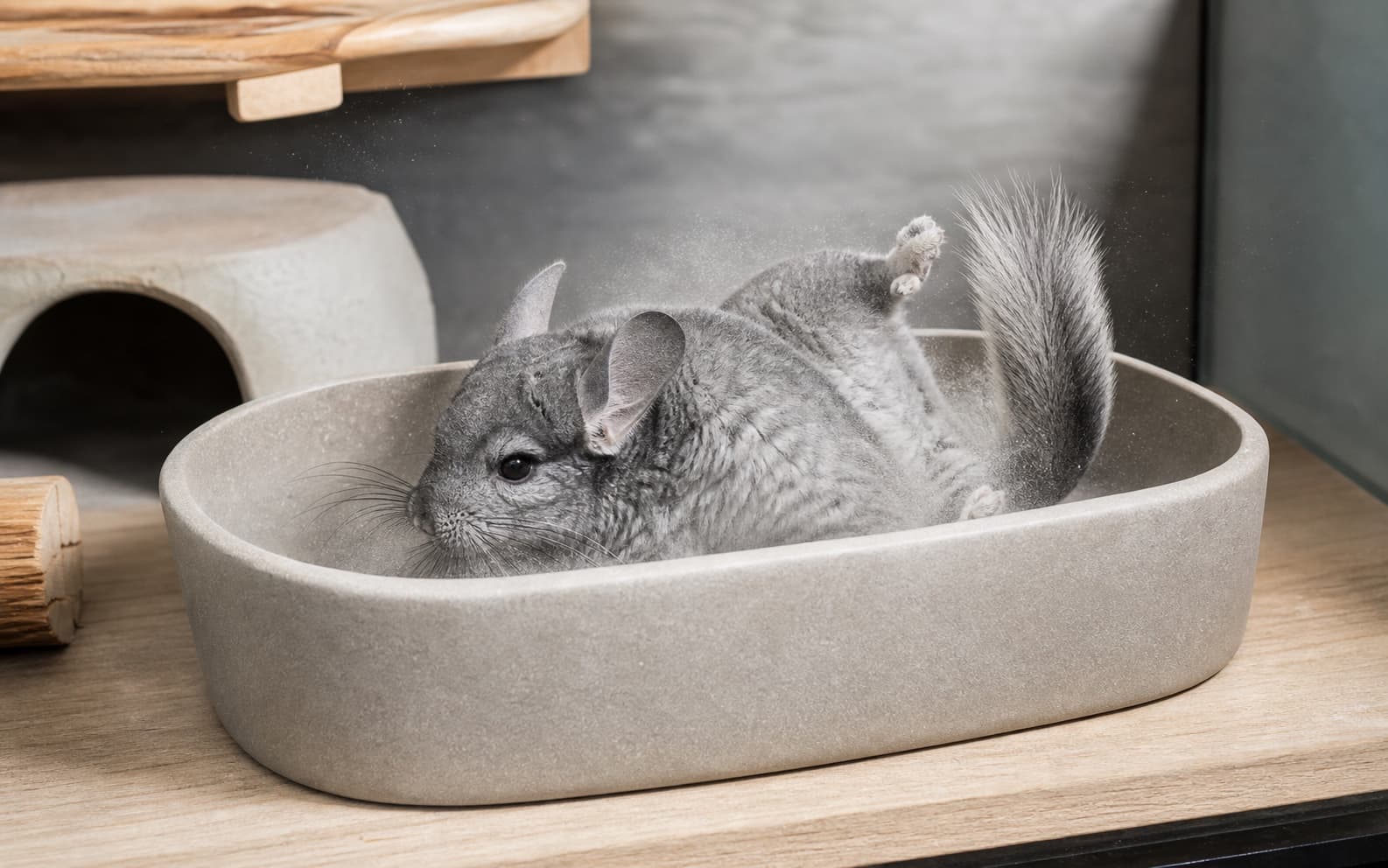
Chinchillas clean their dense fur by rolling in a dry bathing material. A useful setup gives the animal room to turn, contains most of the dust, stays stable during movement, and can be removed so it remains a bathing station rather than a soiled part of the enclosure.
The RSPCA environment guide calls for a suitable dust bath, and the MSD Veterinary Manual housing guide explains that dust bathing helps maintain the coat.
Choose material sold for chinchillas
Use a fine commercial bathing material intended for chinchillas. It should be dry, clean, and stored in a sealed container away from humidity. Avoid play sand, builders' sand, scented powders, talc, and improvised household materials.
Check the product instructions and ask a chinchilla-experienced veterinarian when a skin, eye, or breathing concern may affect bathing. The role of the bath is routine coat care, not treatment.
Fit the container to a full roll
Choose a stable container large enough for the chinchilla to enter, turn, and roll without striking the walls. High sides or a covered form can contain dust, but the entrance must remain wide and smooth. Ceramic, metal, or another chew-resistant material is easier to keep stable than a light plastic bowl.
Test the bath on a broad solid surface. It should stay level and clear of shelf edges, water, hay, and long open drops.
Offer it during the active period
Place the bath in the enclosure or a secure exercise area when the chinchilla is awake. Allow voluntary entry and natural rolling. Some animals begin immediately; others inspect first.
For a compatible pair, use a container and space plan that prevents crowding. Separate supervised turns may be more practical when one animal controls the entrance or the bath is not large enough for safe shared access.
Keep the material clean and dry
Remove droppings, damp clumps, hay, and visible debris. Replace the material when it becomes soiled or no longer stays fine and dry. Wipe and fully dry the container before refilling it.
Store the bath and main material away from steamy rooms, open windows, and floor moisture. A lidded storage container keeps humidity and household debris out.
Read the animal, not only the calendar
House humidity, coat condition, veterinarian guidance, and the individual animal can affect the routine. Watch how the fur looks and how the chinchilla uses the bath. Excessive scratching, hair loss, eye irritation, breathing changes, skin changes, or a sudden refusal to bathe needs veterinary advice.
A polished bath setup is simple to use and easy to remove. That keeps the routine clean, observable, and separate from the rest of the enclosure.