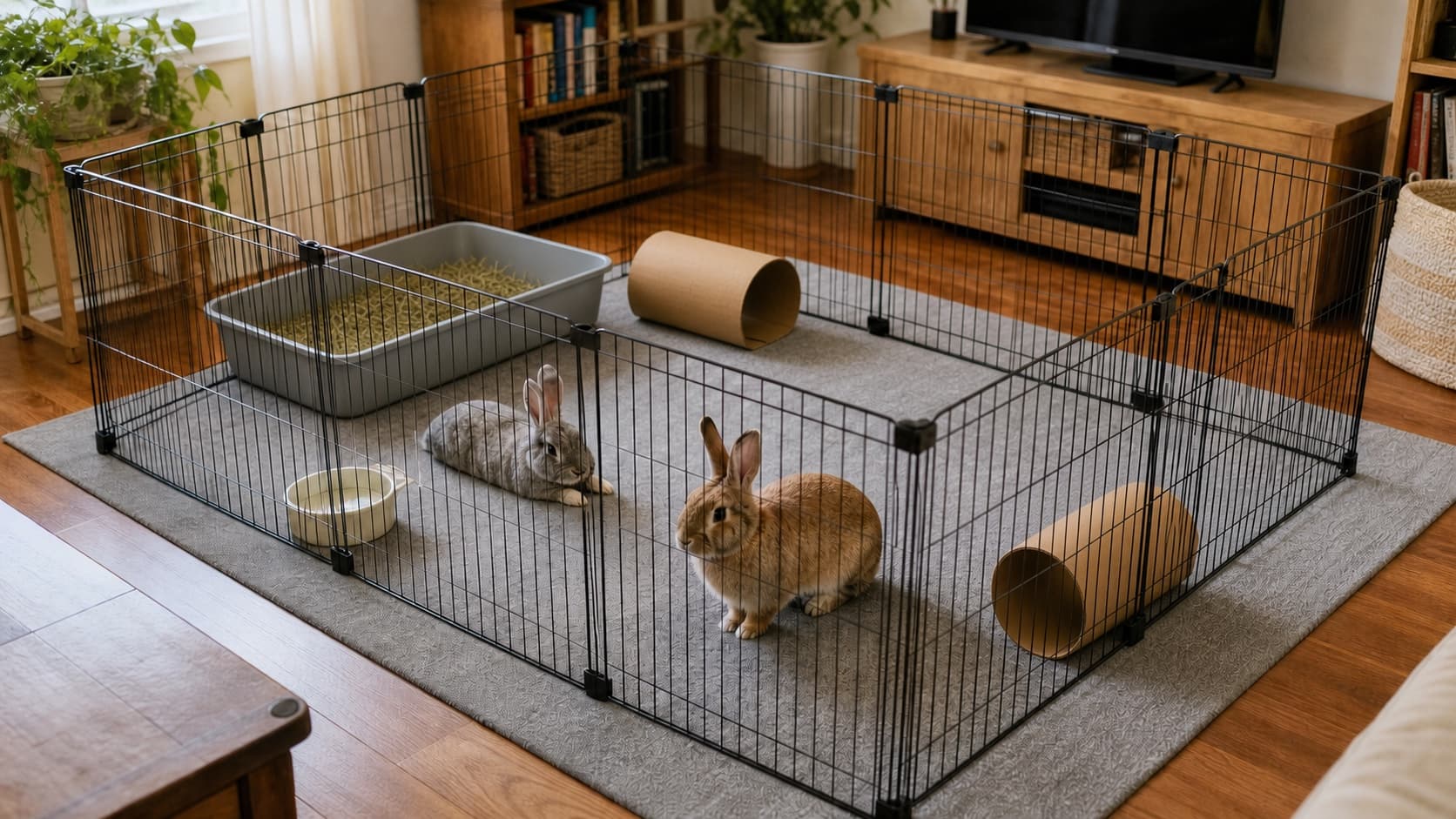
An indoor rabbit pen should create a useful piece of floor, not a tiny cage with taller walls. The floor plan comes first. After that, choose the panel height and human access that fit the rabbit, the room, and the person who will enter it every day.
Rabbit.org's housing guidance describes a four-by-four-foot puppy pen with daily time outside it as an ideal starting point for many indoor rabbits. The San Diego House Rabbit Society adoption guidelines use a four-by-four-foot exercise pen with a thirty-inch minimum height for one rabbit. The RSPCA indoor-rabbit guide calls for a large secure exercise area, a solid non-slip floor, and enough room for normal behavior.
Each pen here uses eight panels that are twenty-four inches wide. Closed as a square, each one makes the same four-by-four-foot, sixteen-square-foot floor. They are alternatives, not a bundle. What changes is the height and whether a person can step through a door.
Top picks at a glance
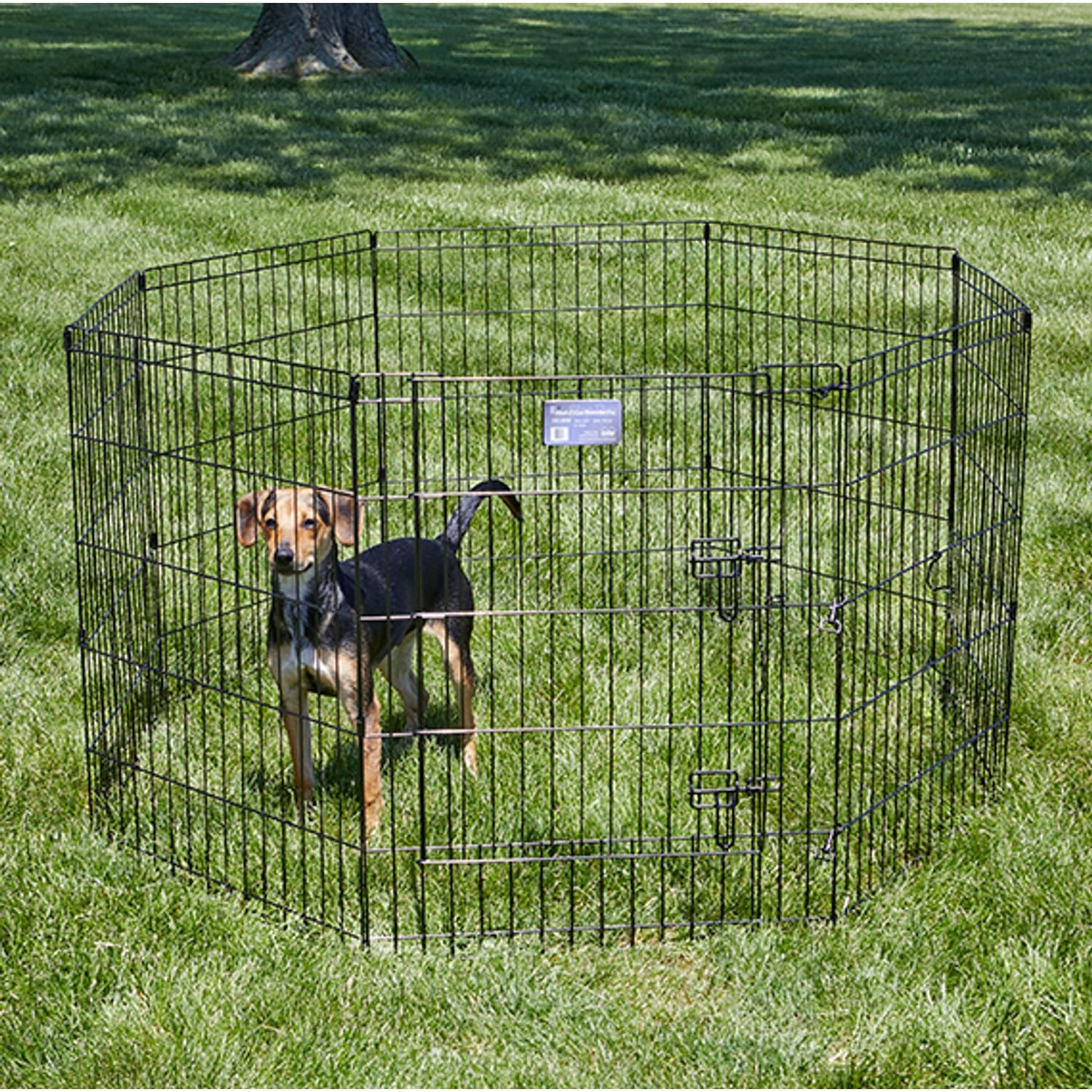 30 in With DoorMidWest Exercise Pen with DoorShopView at Amazon for MidWest Exercise Pen with Door, 30 Inch (opens in a new tab)
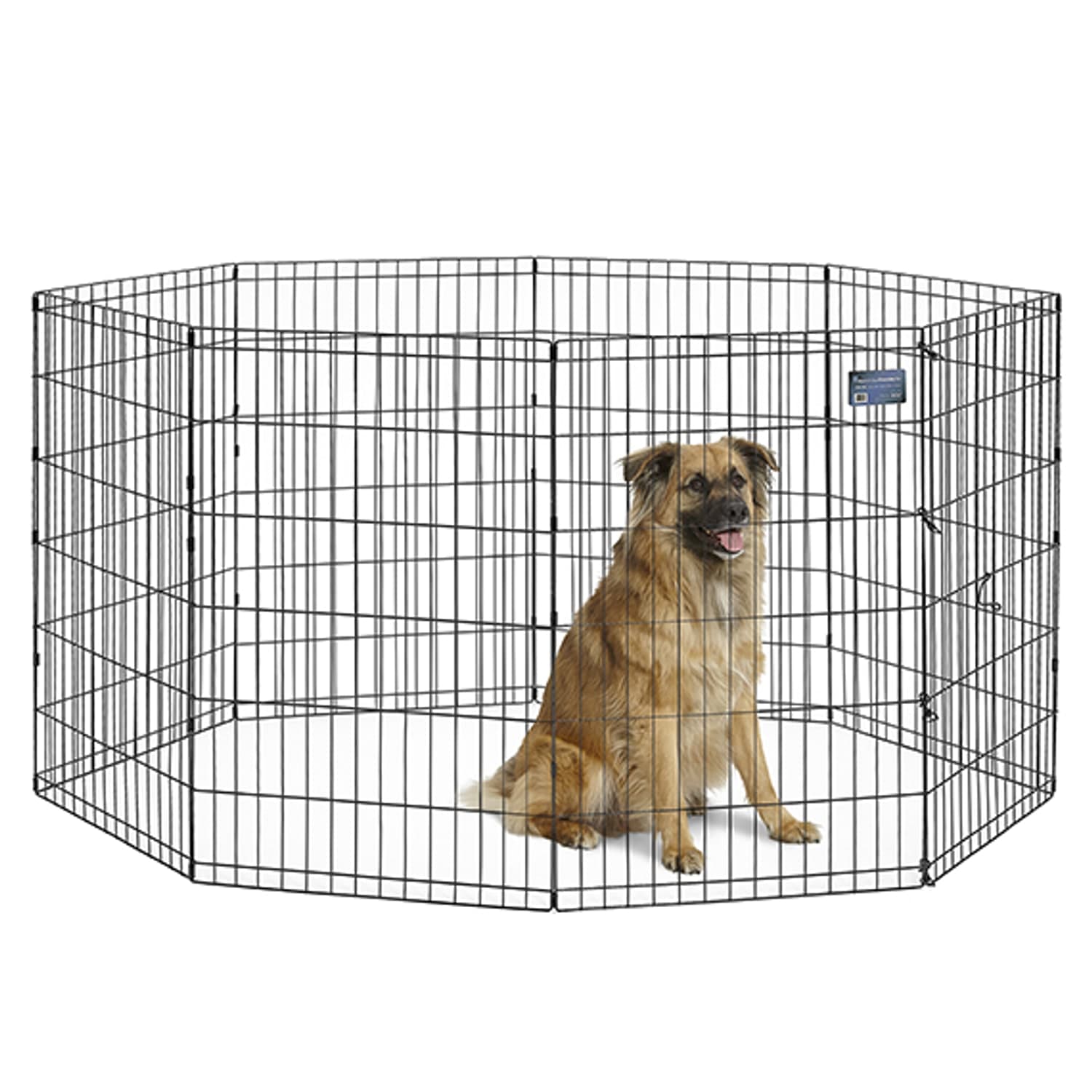 36 in No DoorMidWest Exercise PenShopView at Amazon for MidWest Exercise Pen, 36 Inch (opens in a new tab)
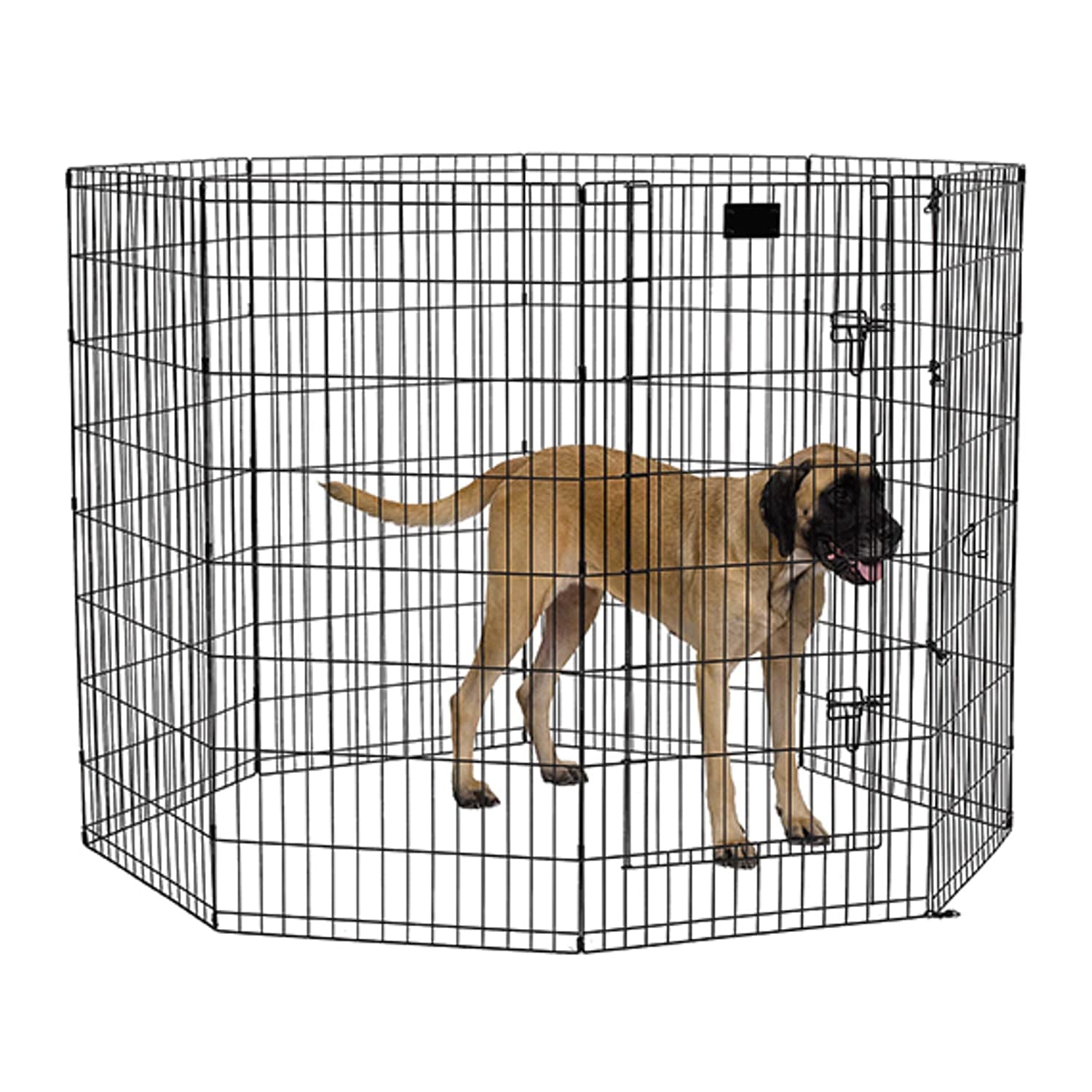 48 in With DoorMidWest Exercise Pen with DoorShopView at Amazon for MidWest Exercise Pen with Door, 48 Inch (opens in a new tab)
The choice in one glance
Swipe or use arrow keys to compare every column.
| Pen | Floor | Height | Access |
|---|---|---|---|
| MidWest 30 inch with door | 4 by 4 feet; 16 square feet | 30.08 inches | Step-through door |
| MidWest 36 inch without door | 4 by 4 feet; 16 square feet | 36.07 inches | No door |
| MidWest 48 inch with door | 4 by 4 feet; 16 square feet | 48.04 inches | Step-through door |
The picks
MIDWEST HOMES FOR PETS
MidWest Exercise Pen with Door
- Pen role
- Lower boundary with owner access
- Panel set
- Eight 24-inch-wide panels; 16 linear feet
- Square footprint
- 4 by 4 feet when closed as a square
- Height
- 30.08 inches
- Door
- Step-through door with double latch
- Finish
- Black e-coat metal wire
Eight linked metal panels form a sixteen-square-foot square and add a step-through door for everyday access. The thirty-inch height is the lowest boundary in this comparison, so room placement and the individual rabbit's jumping matter most.
See more detailSee less detail
Strengths
- Step-through door avoids climbing over the panel
- Same sixteen-square-foot square as the taller picks
- Folds flat and includes panel clips and ground stakes
Weaknesses
- Lowest boundary in this comparison
- Nearby furniture can create a launch point
- A door reduces one uninterrupted panel section
Best for
A rabbit room that needs easy human access and can safely use the lowest boundary in this comparison
The thirty-inch MidWest is the easiest of these three for a person to enter because it has a step-through door. It makes the same sixteen-square-foot square as the taller versions, so choosing it does not mean giving up floor space.
The tradeoff is the lower boundary. Thirty inches is the starting point used by the San Diego House Rabbit Society for one rabbit, not a promise that every rabbit will remain inside. Keep sofas, storage cubes, hides, and other launch points away from the outside panels. If the rabbit is already a confident jumper, start with the taller options.
MIDWEST HOMES FOR PETS
MidWest Exercise Pen
- Pen role
- Taller uninterrupted boundary
- Panel set
- Eight 24-inch-wide panels; 16 linear feet
- Square footprint
- 4 by 4 feet when closed as a square
- Height
- 36.07 inches
- Door
- No door
- Finish
- Black e-coat metal wire
This thirty-six-inch version uses the same eight-panel floor plan without a door. The extra height creates a taller uninterrupted boundary, while daily access requires stepping over the panel or opening the connection.
See more detailSee less detail
Strengths
- Six inches taller than the thirty-inch pick
- Uninterrupted wire panels without a door opening
- Same sixteen-square-foot square as the other picks
Weaknesses
- No step-through door for daily access
- Stepping over a thirty-six-inch panel will not suit every person
- Height still does not guarantee that an individual rabbit cannot jump out
Best for
A household that wants a taller continuous boundary and has a comfortable daily access plan
The thirty-six-inch version adds six inches of height and removes the door. That creates an uninterrupted boundary, but it also changes the owner routine. A person has to step over the panel or open the connection whenever the pen needs to be entered.
Test that movement before buying. Tape a thirty-six-inch line on a wall and picture carrying hay, a litter tray, or a rabbit across it. If that daily step feels awkward, the extra height is not worth losing a safe entrance.
MIDWEST HOMES FOR PETS
MidWest Exercise Pen with Door
- Pen role
- Tallest boundary with owner access
- Panel set
- Eight 24-inch-wide panels; 16 linear feet
- Square footprint
- 4 by 4 feet when closed as a square
- Height
- 48.04 inches
- Door
- Step-through door with double latch
- Finish
- Black e-coat metal wire
The forty-eight-inch pen keeps the same four-by-four-foot square and adds the tallest boundary in this comparison plus a step-through door. It needs the most vertical room and the same careful clearance from furniture and climbing aids.
See more detailSee less detail
Strengths
- Tallest boundary in this comparison
- Step-through door supports daily access
- Same sixteen-square-foot square as the shorter picks
Weaknesses
- Largest and most expensive option here
- Tall panels are heavier to position and store
- Nearby furniture can still defeat the boundary
Best for
A known jumper or room plan that needs the tallest compared boundary without giving up a human door
The forty-eight-inch version combines the tallest boundary here with a step-through door. It is the clearest starting point for a known jumper or a room where the pen sits near furniture that cannot be moved far away.
It is also the largest physical object to handle. The taller panels are heavier, need more vertical storage room, and can make the pen feel more enclosed from a seated position. Map the folded storage spot and the open door route before checkout.
Build the room in this order
- Tape the floor. Mark a four-by-four-foot square and walk around it from every side.
- Choose a solid surface. Use a non-slip floor or a flat washable rug that cannot bunch under the panels.
- Plan the human entrance. Open the door or panel where hay, water, litter, and cleaning supplies can move through without twisting.
- Move launch points. Keep sofas, shelves, hides, and platforms away from the outside edge.
- Add the toilet and hay end. Leave open floor after the tray, hay, water, and hideouts are in place.
- Watch the rabbit. Check reaching, jumping, chewing, and panel movement during ordinary activity.
What the height changes
All three pens use the same amount of floor when arranged as a square. The higher versions do not create more room to run, stretch, or share. They only change the vertical boundary.
The door changes the owner's route. A step-through opening can make feeding and cleanup easier, especially when the person is carrying a loaded tray. A doorless pen keeps the boundary continuous, but only works when the owner can comfortably cross or open it every day.
The RSPCA enrichment guide warns against filling the living space with so many objects that the rabbit loses room to move. Give every hideout and tunnel a job, then protect the open route between them.
The room-fit check
- The finished pen still gives the rabbit room to hop, stretch, stand, and turn.
- A compatible pair can pass each other without one blocking the only route.
- The floor is solid, level, and non-slip.
- The litter tray, hay, water, and hideouts leave open movement space.
- The owner can enter with both hands occupied.
- The door or panel connection is fully secure.
- Furniture and platforms do not create a launch point beside the boundary.
- The panel height matches the rabbit's observed jumping, not only the product label.
Use the rabbit housing guide to plan the whole room, then compare the three pen roles or open the side-by-side decision desk. The rabbit supply map connects the boundary with litter, hay, hideouts, and daily care.