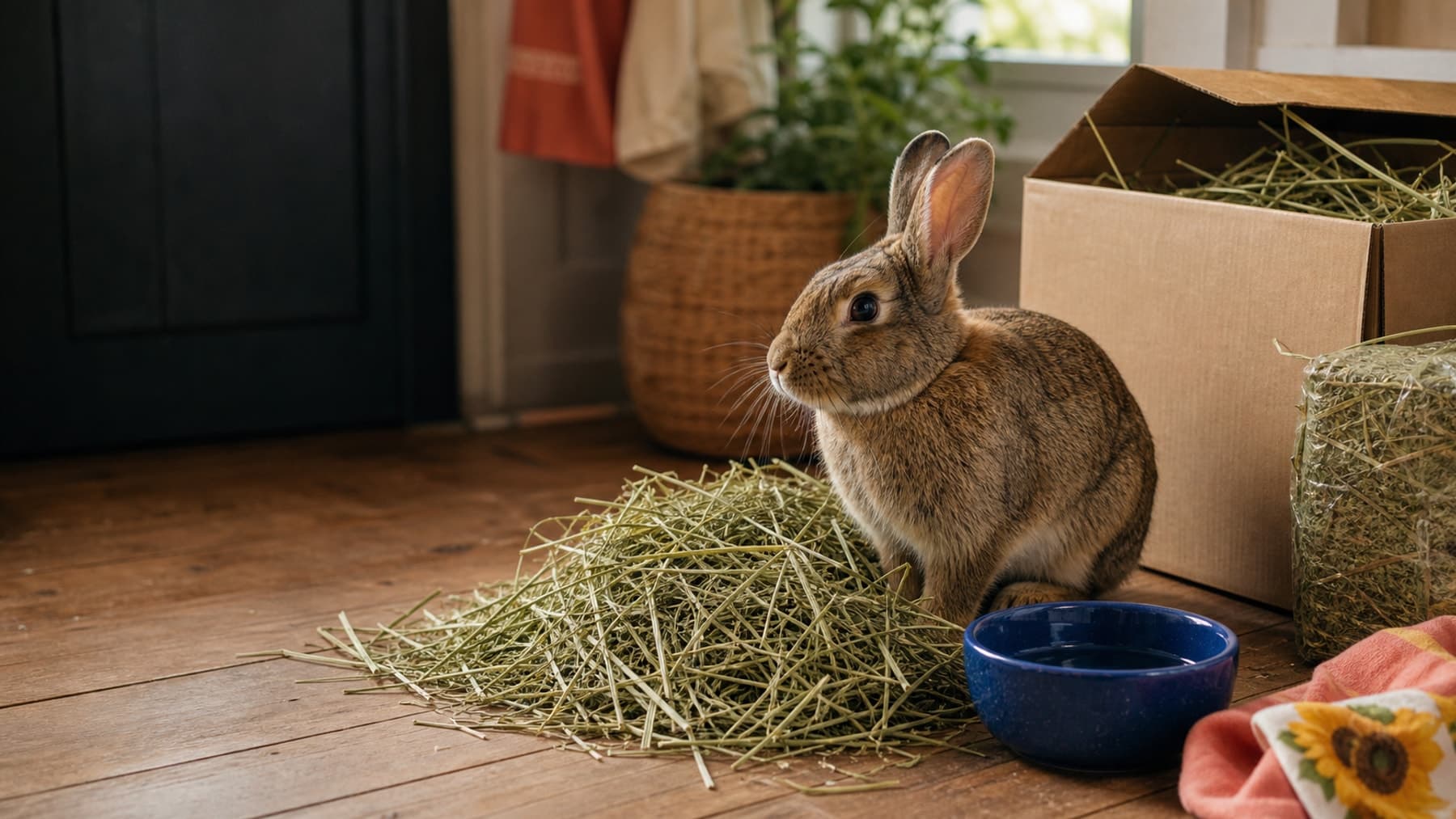
The best hay is the clean, dry grass hay your adult rabbit will reliably eat and your household can store well. This shortlist compares three Timothy options with genuinely different routines: a 10 pound loose-hay box, a compact 40 ounce bag, and a 60 ounce wafer cut that peels apart in layers.
The RSPCA rabbit diet guide and House Rabbit Society diet guide both put good-quality hay or grass at the center of everyday rabbit feeding. Keep it available, replace damp or soiled hay, and make food changes gradually. A younger rabbit or a rabbit with a veterinarian-directed diet needs an individual feeding plan.
Top picks at a glance
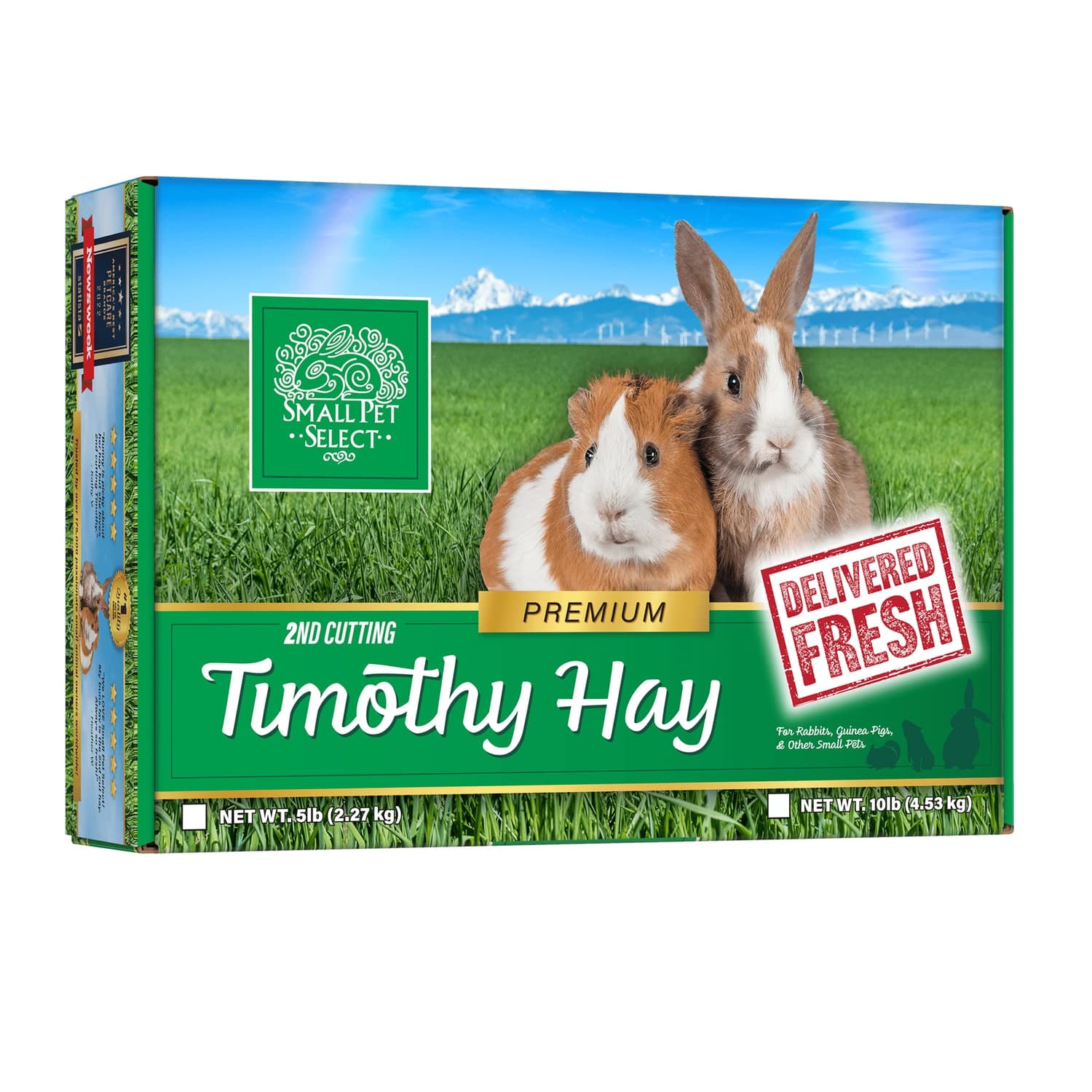 Best Overall2nd Cutting Timothy HayShopView at Amazon for Small Pet Select 2nd Cutting Timothy Hay, 10 Pound Box (opens in a new tab)
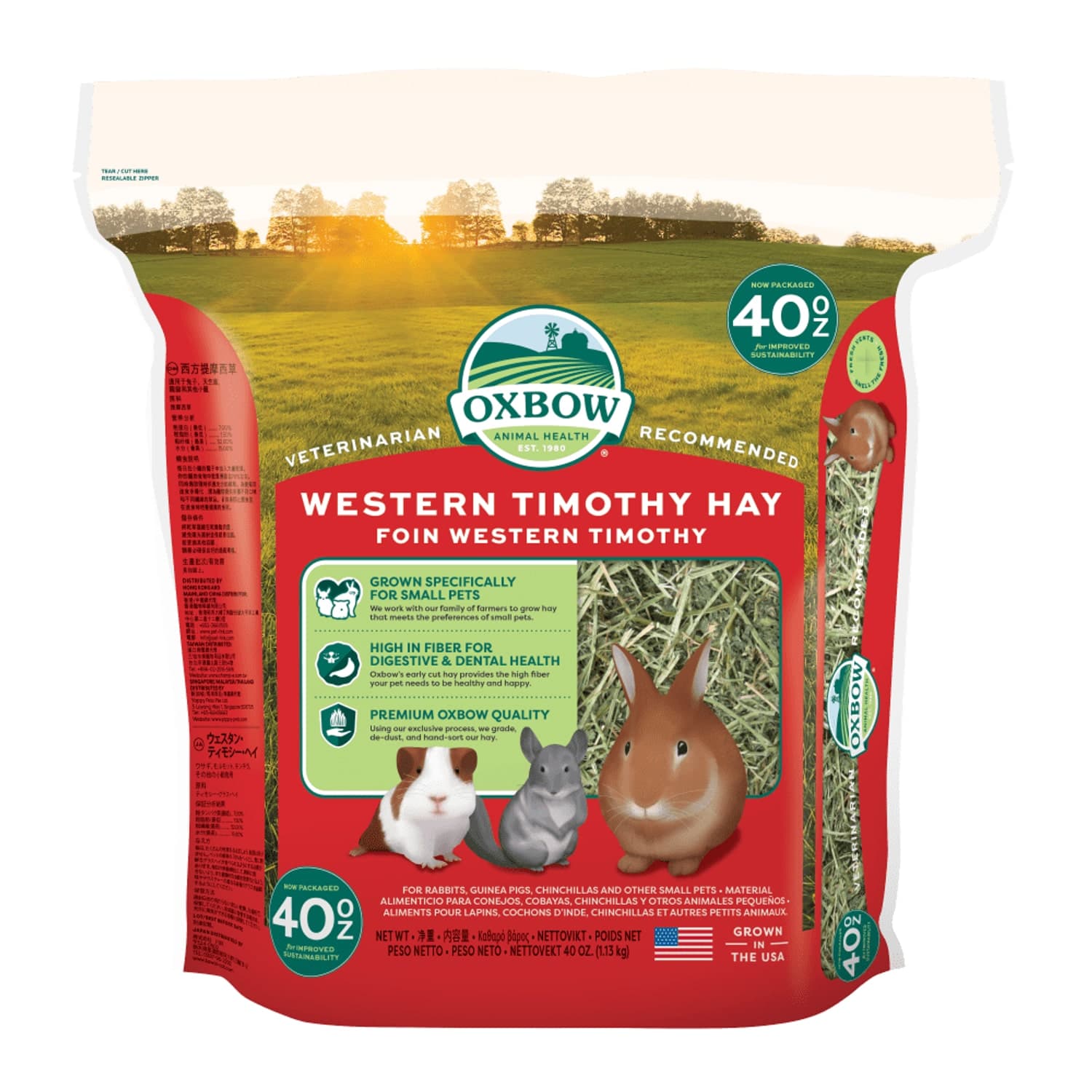 Compact BagWestern Timothy HayShopView at Amazon for Oxbow Western Timothy Hay, 40 Ounce Bag (opens in a new tab)
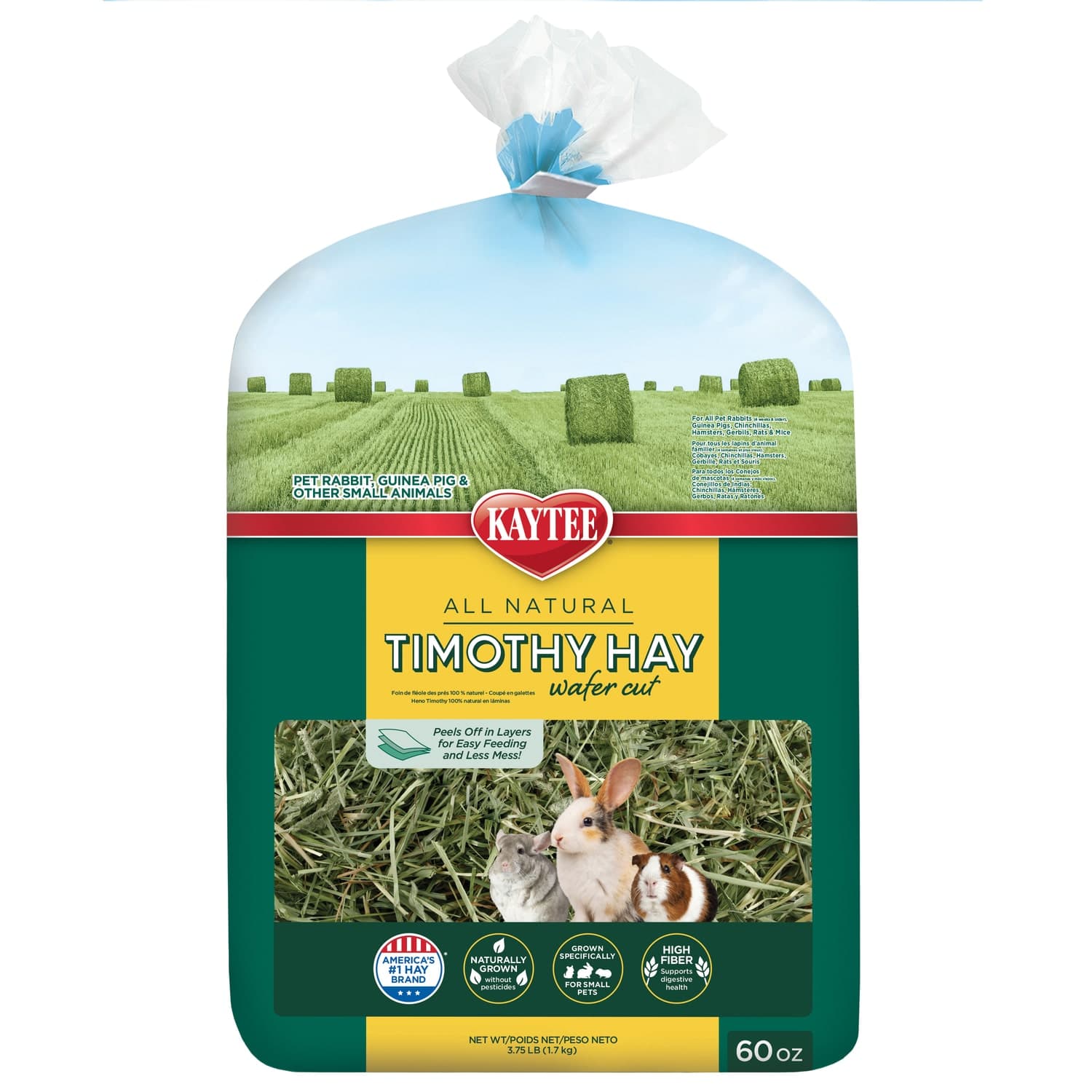 Easy PortionsWafer Cut Timothy HayShopView at Amazon for Kaytee Wafer Cut Timothy Hay, 60 Ounce Bag (opens in a new tab)
Three hay routines, plainly compared
Swipe or use arrow keys to compare every column.
| Hay | Pack | Format | Storage plan |
|---|---|---|---|
| Small Pet Select 2nd Cutting | 10 pounds | Loose second-cut Timothy | Large cardboard box in a dry room |
| Oxbow Western Timothy | 40 ounces | Loose Western Timothy | Compact bag with a secure closure or storage bin |
| Kaytee Wafer Cut | 60 ounces | Layered sun-cured Timothy | 5.5 x 12 x 4-inch bag |
Hay is an agricultural product. Color, stem thickness, leaf content, and seed heads can vary between harvests even when the brand and package stay the same. Check the actual order for a clean, dry feel and a fresh grass smell before it enters the feeding routine.
The picks
SMALL PET SELECT
2nd Cutting Timothy Hay
- Pack size
- 10 pounds
- Hay format
- Loose 2nd cutting Timothy hay
- Container
- Cardboard box
- Source statement
- Manufacturer states 100% US-grown and hand packed in small batches
A 10 pound box of loose second-cutting Timothy hay. Small Pet Select describes it as 100% US-grown, hand selected, and hand packed in small batches.
See more detailSee less detail
Strengths
- Largest loose-hay pack in this comparison
- The second-cut format is stated on the product
- Box can remain the working storage container in a dry room
Weaknesses
- Needs considerably more storage room than either bag
- A cardboard box needs protection from humidity and household spills
Best for
Rabbit households with enough dry storage for a larger recurring hay order
Small Pet Select is the best fit for households ready for a larger recurring order. The 10 pound box contains loose second-cutting Timothy hay, and the company states that it is 100% US-grown and hand packed in small batches. The box can serve as the working container when it has a dry, protected place to live.
The tradeoff is space. A 10 pound hay box needs a real landing zone and protection from humidity. Measure the shelf, closet, or lidded storage area before ordering instead of letting a large box become an obstacle in the rabbit room.
OXBOW
Western Timothy Hay
- Pack size
- 40 ounces
- Hay format
- Loose Western Timothy hay
- Container
- Plastic bag
- Product code
- 744845402758
A compact 40 ounce bag of loose Western Timothy hay. Oxbow describes the hay as all-natural and publishes the product code for this pack size.
See more detailSee less detail
Strengths
- Smallest storage footprint in this comparison
- Loose hay is easy to place in several feeding stations
- Exact 40 ounce variant is published on the manufacturer page
Weaknesses
- Smallest refill in this comparison
- The opened bag needs a reliable dry-storage closure or container
Best for
Owners trying a compact loose-hay bag before committing shelf space to a bulk box
Oxbow is the compact starting point. The 40 ounce bag occupies much less room than the bulk box and still provides loose hay that can be distributed among a litter-side feeder, a second station, or an enrichment setup. Oxbow publishes this exact 40 ounce variant on its Western Timothy product page.
The smaller pack will need replacing more often. Once the bag is open, close it securely or move the hay into a clean, dry container that does not trap moisture.
KAYTEE
Wafer Cut Timothy Hay
- Pack size
- 60 ounces
- Hay format
- Wafer-cut sun-cured Timothy hay
- Container
- 5.5 x 12 x 4-inch bag
- Product code
- 071859947518
A 60 ounce bag of sun-cured Timothy hay packed in layers. Kaytee publishes the pack dimensions and describes the wafer cut as a way to peel off hay with less loose handling.
See more detailSee less detail
Strengths
- Layered format peels apart for easier handling
- Published package dimensions help with shelf planning
- Larger pack than the 40 ounce Oxbow bag
Weaknesses
- Smaller pack than the 10 pound Small Pet Select box
- Compressed layers are less flexible than fully loose hay for stuffing several enrichment stations
Best for
Owners who prefer a portionable layer over pulling loose hay from a box or bag
Kaytee is the tidiest handling format in this group. Its 60 ounce Timothy hay is packed in layers that peel apart, and the manufacturer page publishes package dimensions of 5.5 x 12 x 4 inches. Those details make both shelf planning and refill handling more predictable.
The wafer is a structured pack rather than a fully loose box. Owners who routinely stuff several cardboard tubes, baskets, or widely separated stations may prefer the flexibility of loose hay.
Before you buy
- Decide whether the hay is for a healthy adult rabbit or part of a veterinarian-directed feeding plan.
- Measure the clean, dry storage space before choosing the 10 pound box.
- Pick loose hay for maximum placement flexibility or a wafer cut for simpler handling.
- Check the delivered hay itself for dryness, freshness, and contamination.
- Keep the previous hay available while introducing a new product gradually.
The package is only part of the decision. The daily win is easy, continuous access in places the rabbit already uses. A good storage setup makes that routine easier to maintain.
Read what rabbits eat for the complete feeding routine. Then browse current rabbit Timothy hay listings when you want additional pack sizes and formats beyond these three researched options.