The best rabbit carrier is the one that fits the whole passenger, opens in a way you can use calmly, and stays rigid from the room to the vehicle. Start with the rabbit or compatible pair. Then compare the carrier.
The RSPCA rabbit transport guide calls for a sturdy, non-collapsible, well-ventilated carrier that resists chewing and gives rabbits room to lie in any direction and turn around. It also recommends traveling with bonded companions together and securing the carrier in the vehicle. Rabbit.org's travel guide emphasizes ventilation, cleaning, easy access, sturdy latches, and a dependable handle. Rabbit Welfare Association and Fund highlights the usefulness of front entry plus a top opening.
That care standard immediately removes soft bags, backpacks, collapsing carriers, and open wire transport cages from this shortlist. These three picks use rigid shells and metal doors. They are alternatives, not a bundle.
Choose the route through the carrier
Swipe or use arrow keys to compare every column.
| Carrier | Published room | Access | Best starting point |
|---|---|---|---|
| Petmate 24 inch Two-Door | 24 by 16.8 by 14.5 inches outside; 21 by 14.5 by 13.5 inches inside | Front and top doors | A roomy two-door route for one rabbit that fits |
| Van Ness Calm Carrier Max | 24 by 16.5 by 15 inches outside | Front door with sliding floor drawer | A larger rabbit or compatible pair that fits the finished floor |
| Ferplast Atlas 20 Open | 57 by 37 by 33 centimeters on the Amazon listing | Front door and opening top grid | A smaller footprint with two access routes |
The picks
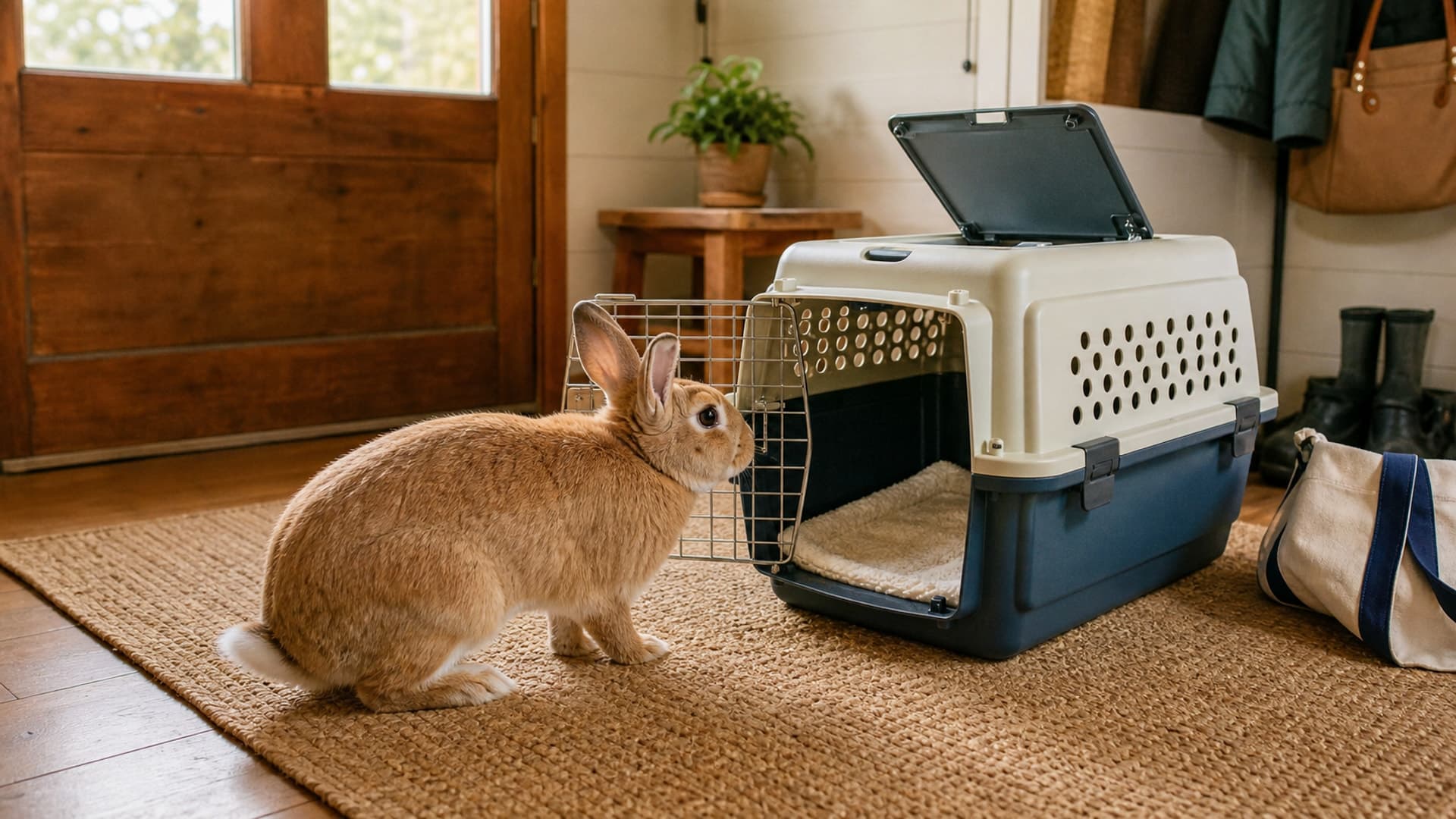
The twenty-four-inch Petmate gives the clearest two-door plan in this comparison. Its manufacturer publishes a twenty-one by fourteen-and-a-half by thirteen-and-a-half-inch interior, a steel-wire front door, and a second steel-wire door in the roof. A rabbit can approach through the front at home, while the top gives the owner another route at an appointment.
The shell is rigid EcoTEC plastic joined with metal hardware. Side openings add ventilation, and the top and front wire panels make it easy to inspect the carrier before each trip. The manufacturer limit is fifteen pounds, so this pick needs the most careful fit check for a large rabbit or pair. Use the interior measurements and the actual animals, not the weight number alone.
The Van Ness changes the loading motion. The floor sits on a patented drawer that slides toward the open front, giving the owner a way to move the carrier floor without reaching deep into the shell. Its published exterior is twenty-four by sixteen-and-a-half by fifteen inches, the largest volume in this comparison, with ventilation on all four sides.
That extra room comes with the largest storage and vehicle footprint here. The front is the only animal access route, so practice the drawer, door, and latch sequence at home. Check that the drawer is fully seated and the heavy-gauge wire door is secure before the carrier moves.
The Ferplast Atlas 20 Open pairs a plastic-coated iron front door with an opening metal grid on top. The top panel adds a second handling route and more ventilation, while side snap hooks let the shell come apart for cleaning.
The Amazon listing publishes a fifty-seven by thirty-seven by thirty-three-centimeter exterior, while Ferplast rounds the Atlas 20 family to nearby metric dimensions on its own pages. Confirm the exact version and dimensions at checkout. This is the smallest published shell in the comparison, so the taped-floor test matters most.
Ferplast includes a washable cotton cushion. Treat every included liner as a separate fit and chewing decision. Use a flat, secure, absorbent travel surface that the individual rabbit can use safely, and replace it when it becomes wet or damaged.
Set up the carrier before you need it
- Put it in the room. Leave the rigid carrier on the floor with the front door secured open.
- Make the floor familiar. Add a stable travel liner and a little familiar hay without crowding the turning space.
- Let the rabbit investigate. Build ordinary positive contact with the carrier before an appointment creates a deadline.
- Practice the access route. Open and close the front, top, or drawer without trapping fur, toes, bedding, or the travel liner.
- Lift the loaded weight. Test the handle and your grip with the carrier supported close to the floor.
- Walk the whole path. Check doorways, stairs, vehicle openings, and the position where the carrier will be secured.
Front entry, top access, or drawer entry
A front door lets a rabbit enter from floor level. It also keeps the carrier useful as a familiar hide in the room before the trip. The opening needs enough width and height for the individual rabbit, and the door needs to secure completely once the animal is inside.
Top access gives the owner another route when front entry is difficult. It can also improve access during an appointment without taking the entire shell apart. Check the hinge, latch, handle clearance, and the space above the carrier.
A drawer changes the floor rather than adding a roof door. It can help an owner bring the floor closer to the front, but it adds a moving piece that must seat correctly before travel. Choose it for that specific interaction, not only because the carrier is larger.
Plan for a bonded pair
The RSPCA advises bonded rabbits to travel together. That means measuring the pair in the position they actually use, not adding two body weights and relying on a product limit.
The finished floor should let both rabbits settle without one blocking the only door. Both need ventilation, stable footing, and room to change position. A larger carrier also becomes heavier and harder to move, so test the full lift and vehicle path before the day of travel.
If the pair does not fit comfortably in any of these published footprints, choose a larger rigid carrier with the same access, ventilation, and secure-shell standard. The shortlist is a starting point, not a ceiling.
The pre-trip carrier check
- The whole rabbit or compatible pair can turn and lie down on the finished floor.
- The shell is rigid, fully assembled, and free of cracks.
- Every side fastener, bolt, hinge, door, and latch is secure.
- Ventilation openings are clear.
- The liner lies flat and does not block the door or drawer.
- The handle is sound and comfortable at the loaded weight.
- The carrier fits through the home and vehicle route.
- The carrier can be secured in the vehicle according to its instructions.
- The front, top, or drawer route has been practiced before the appointment.
Open the side-by-side carrier desk to compare all three access plans, or use the vet-trip carrier collection to walk from measurement to vehicle. The rabbit supply map connects travel with the rest of the room and daily routine.