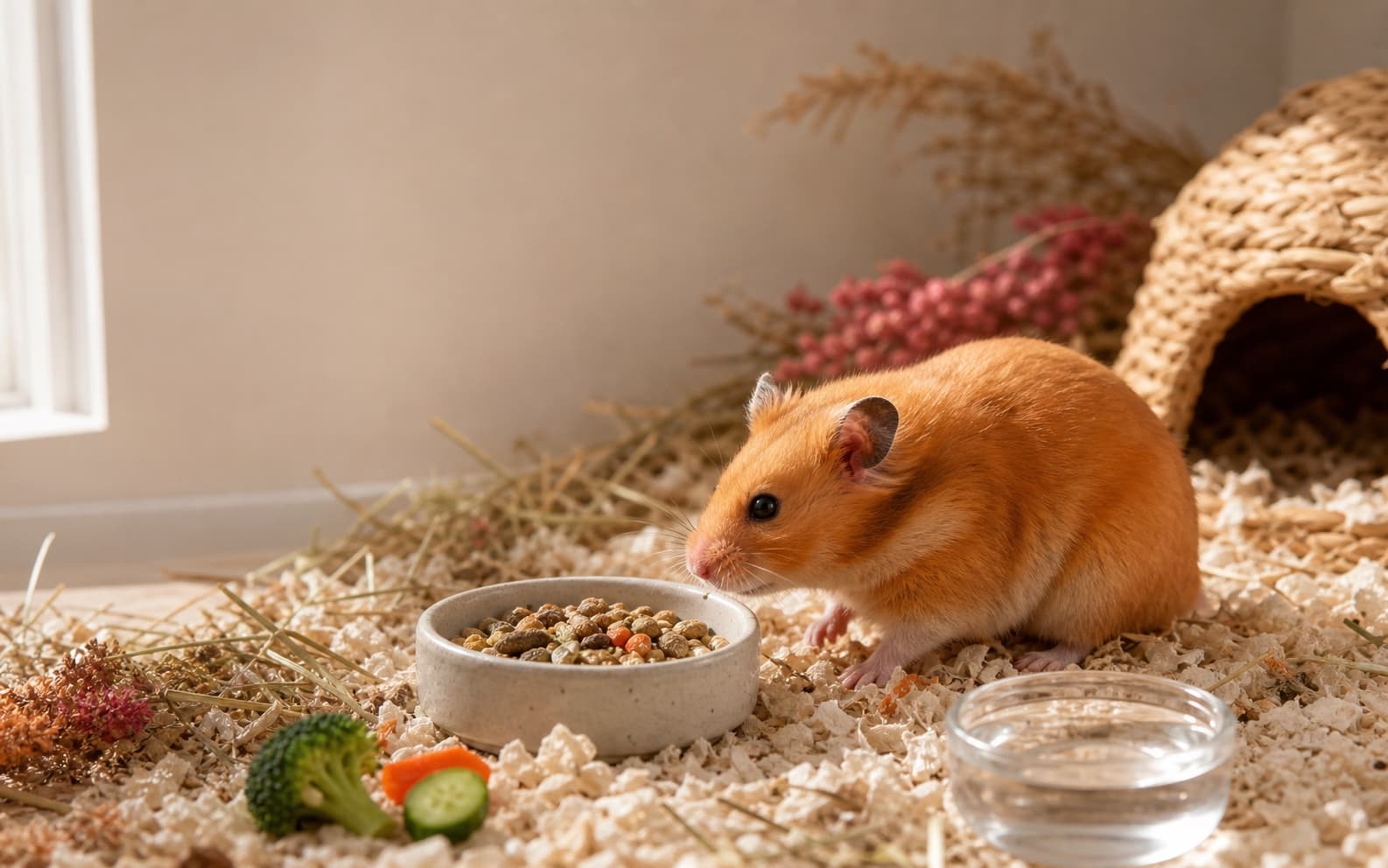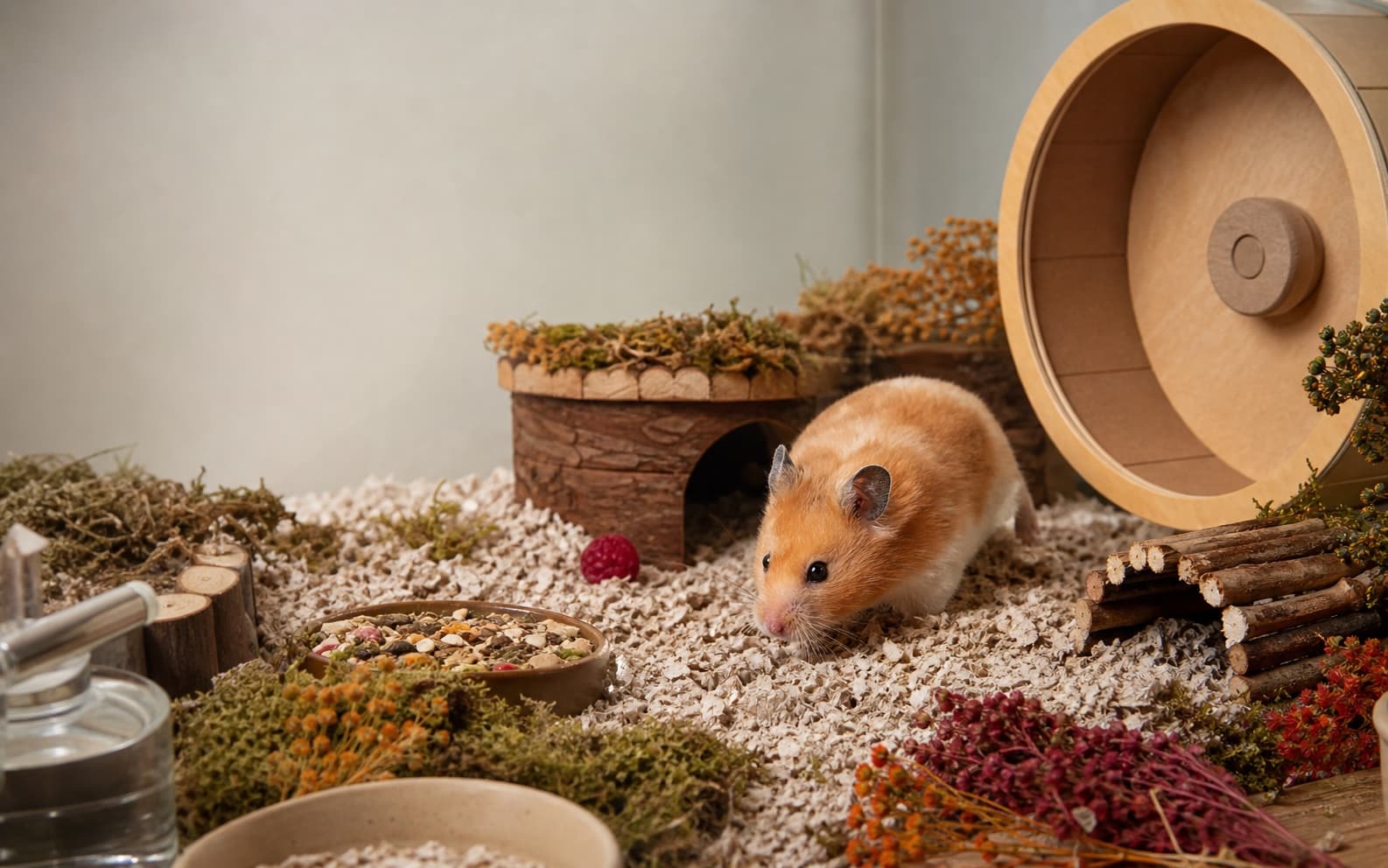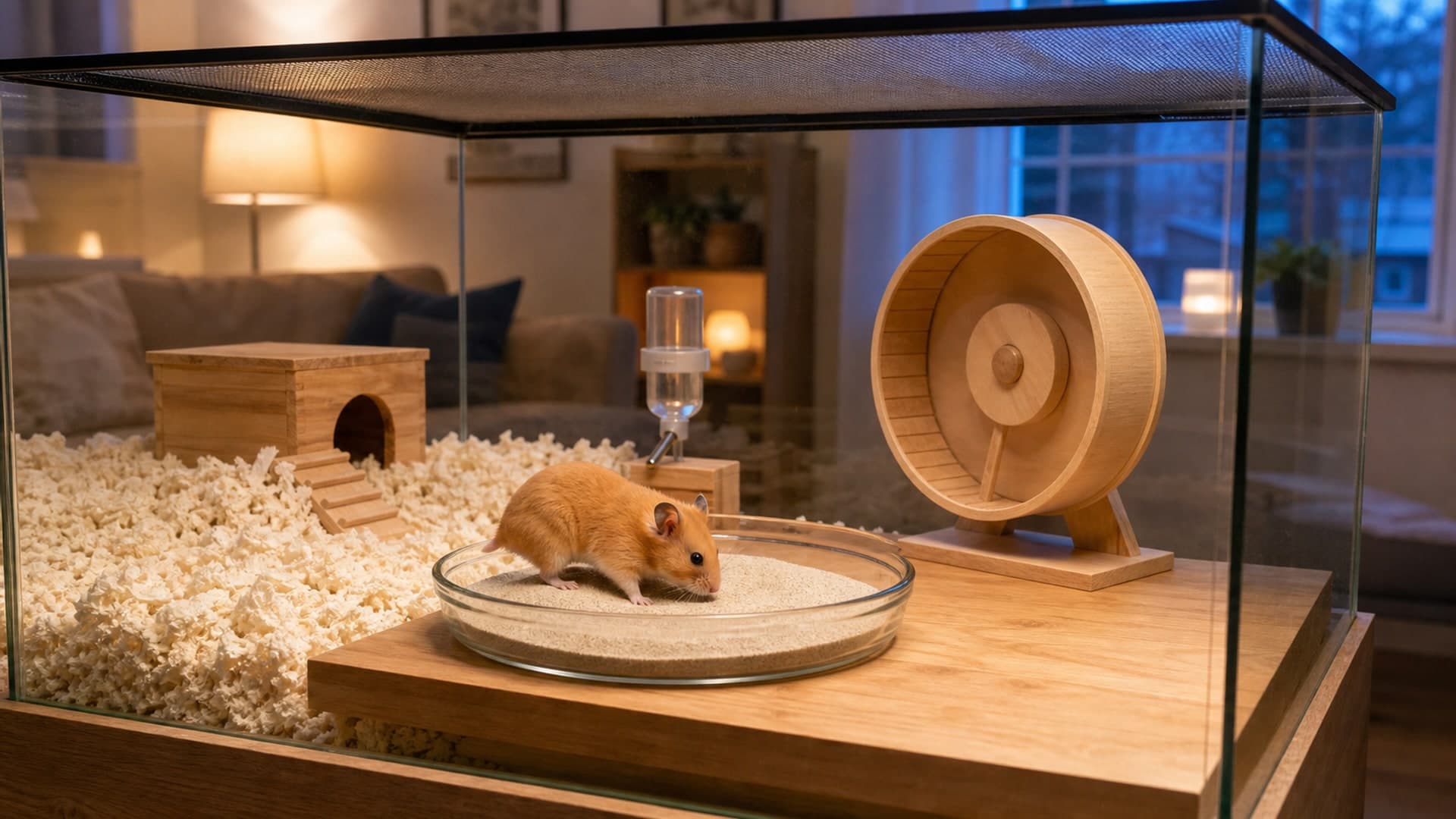
A useful sand bath begins with enough open floor for the hamster to enter, turn, dig, and leave without squeezing through the furniture around it. Shape matters only after that job is possible.
Woodgreen's hamster care guidance suggests a glass oven dish with hamster-safe sand and places heavy equipment on a sturdy platform. Blue Cross describes a sand bath as a place to clean the coat and explore another texture, with a particularly large sand area for Roborovski hamsters.
That makes the container and its contents two separate decisions. This guide compares the container. Choose the exact sand from care guidance and the product label after the footprint, entry, and cleaning route work.
Measurements and materials below are the manufacturers' published specifications.
Start with a finished floor plan
Measure the space after deep bedding, the wheel platform, hides, water, and routes are in place. A container that fits an empty habitat can block the wheel or pinch the path once the room is furnished.
The useful measurements are straightforward:
- The interior floor must let the hamster turn without folding around the wall.
- The entry must suit the hamster's body and remain easy to approach.
- The wall must hold useful sand without forcing a difficult climb.
- The complete container needs a firm, supported position.
- The top or lid must come away easily enough for daily checks and spot cleaning.
Swipe or use arrow keys to compare every column.
| Container | Published plan | Entry | Useful role |
|---|---|---|---|
| Niteangel Rectangle | 12.2 by 8.6 by 4 inches | Open side beside a half lid | Largest dedicated sand station |
| Pyrex 222 | 8 by 8 by 2 inches | Fully open top | Simple low glass dish |
| Niteangel Corner | 7.4 by 7.4 by 4 inches | 2.7-inch top opening | Compact measured corner |
The picks
The Niteangel Rectangle has the broadest published plan here at 12.2 by 8.6 inches. One side stays open while the removable half lid covers the other. That gives the hamster a visible approach and leaves more floor for turning than either compact option.
The clear acrylic body makes the sand line easy to see. The lid also lifts away, so the full interior is accessible during cleanup. Its size is the tradeoff: plan the complete rectangle beside the wheel, not in the wheel's moving path, and keep the wooden top dry.
The Pyrex 222 is an ordinary open glass dish rather than a pet-specific box. Its eight-inch square plan and two-inch sides match Woodgreen's glass oven-dish approach while keeping every edge visible and the entire top open.
The low wall makes entry simple, but it also provides less control over kicked-out sand. The integrated side grips make the heavy dish easier to lift. Because the published dimensions describe the complete exterior, measure the usable interior when the dish arrives and keep the glass on a stable, supported surface.
The Niteangel Corner uses a fan-shaped 7.4-inch plan and a removable wood lid with a 2.7-inch top opening. It is the smallest option here and the only one that asks the hamster to enter through a fixed hole.
That makes it a fit-specific choice. Measure the individual hamster, observe the approach, and confirm that the animal can turn and leave comfortably before keeping it in the habitat. The corner shape can preserve a straighter route elsewhere, but saving floor space is useful only when the interior still works.
Open dish or covered box?
An open dish has the simplest approach and the fastest visual check. It also allows more sand to leave the container. A partly covered box can keep more of the surrounding platform clear while still preserving an open side. A compact top-entry box contains the station within a corner, but its entry and turning room need the closest check.
Choose the plan that keeps the hamster's movement obvious:
- Pick the large rectangle when the habitat has a dedicated equipment platform and enough open floor.
- Pick the glass dish when a broad, low, fully open approach is the priority.
- Pick the corner box only after the published opening and interior have been matched to the individual hamster.
Set the station where it stays usable
Woodgreen recommends sturdy support for heavy habitat items. That matters for a glass dish and for any container filled with sand. Use a flat platform that supports the complete base. Keep deep bedding from piling under one edge, and leave a direct route to the station.
The wheel deserves its own clearance. Spin it after the sand bath is installed and confirm that no wall, lid, bedding ridge, or container edge touches the moving drum or stand. The wheel, stand, and bath should all remain fully usable at the same time.
Spot-clean wet or dirty sand as part of the daily habitat check. Lift the container on its own cleaning route rather than carrying it over the nest or food area. Inspect acrylic, wood, and glass for damage each time the station is emptied.
Use the hamster housing guide to place the station in the full room plan, then compare the three container footprints. For more current boxes and dishes that pass the container-only title gate, browse the sand-bath container shelf.