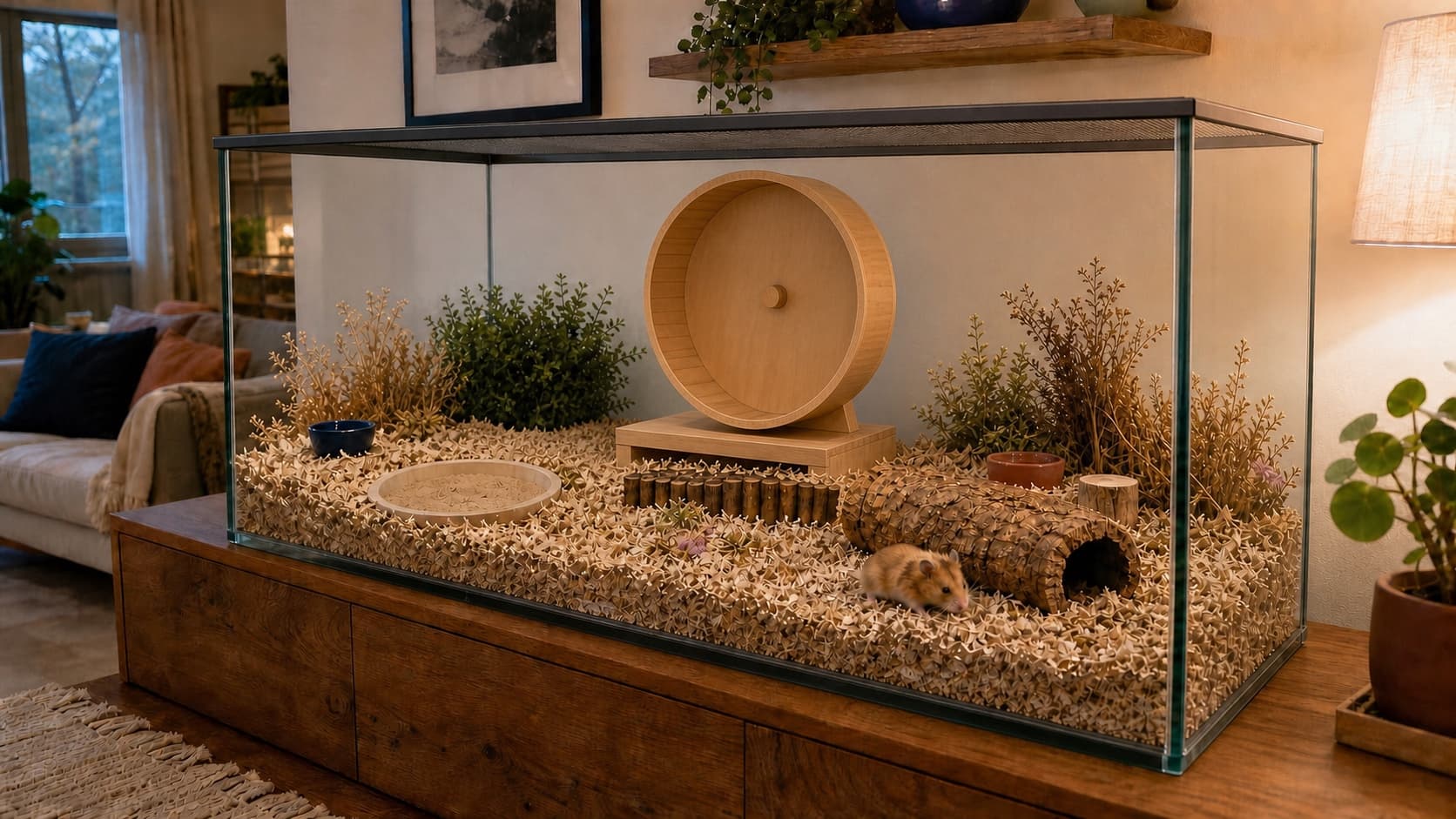
A hamster habitat is closer to a piece of furniture than a tabletop cage. It needs a broad floor, room for a deep burrow, a full-size wheel, and access that still works after every hide and tunnel is in place.
The Blue Cross hamster care guide describes an ideal home as at least 100 by 50 cm on the floor and 50 cm tall, with at least 20 cm of digging bedding. It also recommends secure mesh ventilation and warns that elaborate tube systems can be difficult to ventilate and clean.
Woodgreen's hamster housing guidance uses the same 100 by 50 cm floor for Syrian, Chinese, and dwarf hamsters, with a 50 cm height for Syrian and Chinese hamsters and 40 cm for dwarfs. These three enclosures clear the shared floor baseline in their exact listed variants.
Measurements, materials, and access details below come from the manufacturers' current product pages. Check the retailer's selected size before ordering.
Top picks at a glance
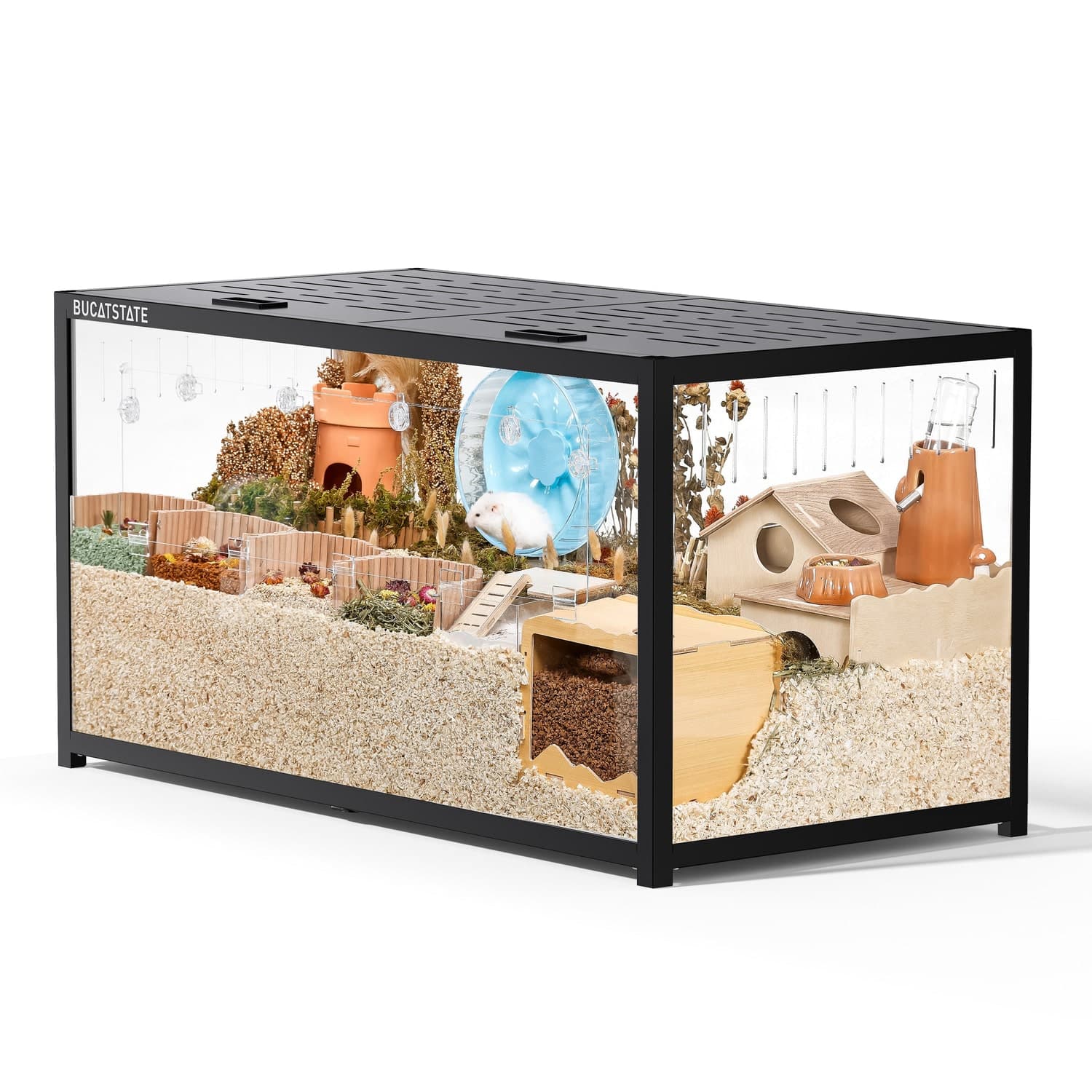 Best OverallMetal Cage 3.0ShopView at Amazon for Metal Cage 3.0, 120 cm, Black (opens in a new tab)
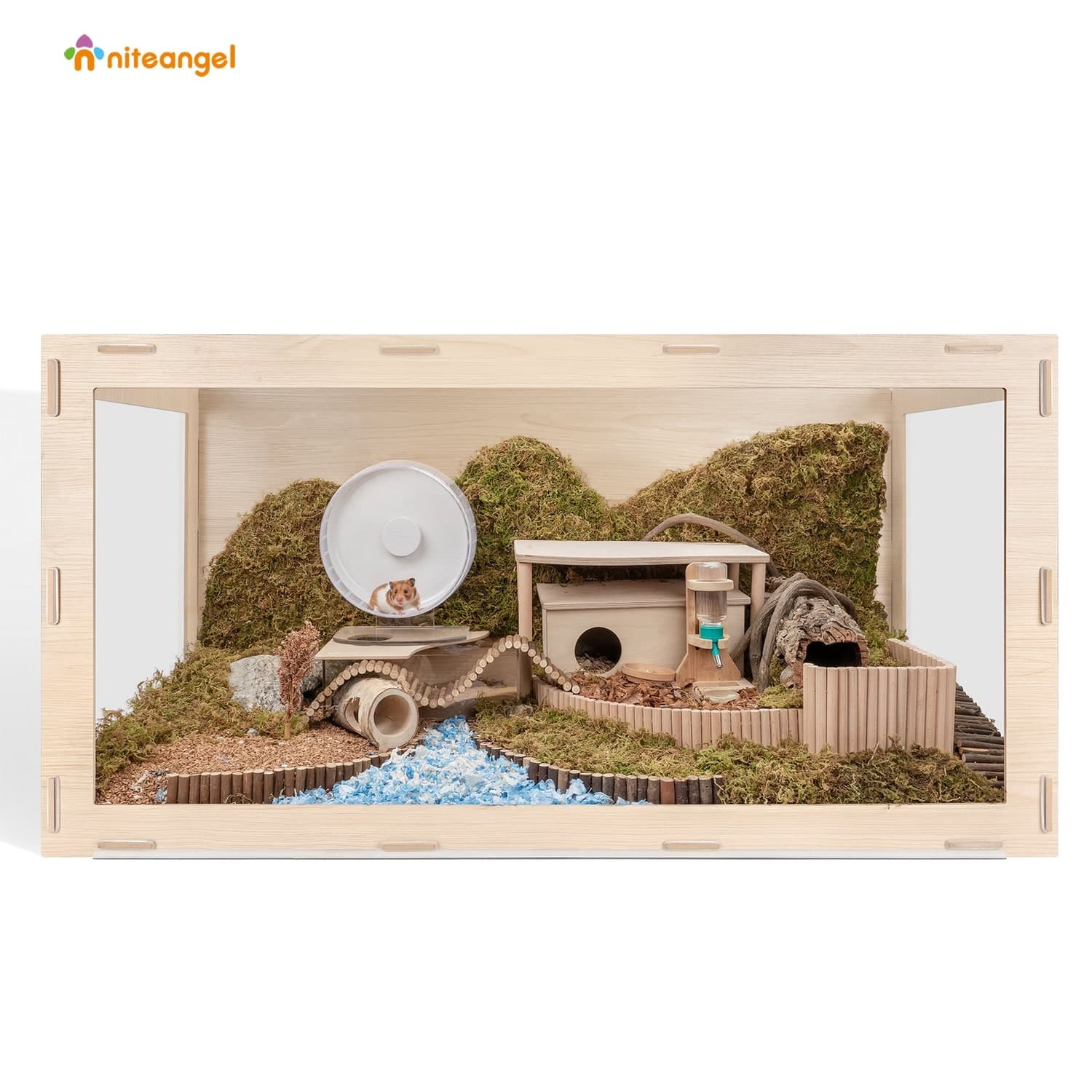 Best Simple Wood PlanBigger World MDF TerrariumShopView at Amazon for Bigger World MDF Terrarium, Large (opens in a new tab)
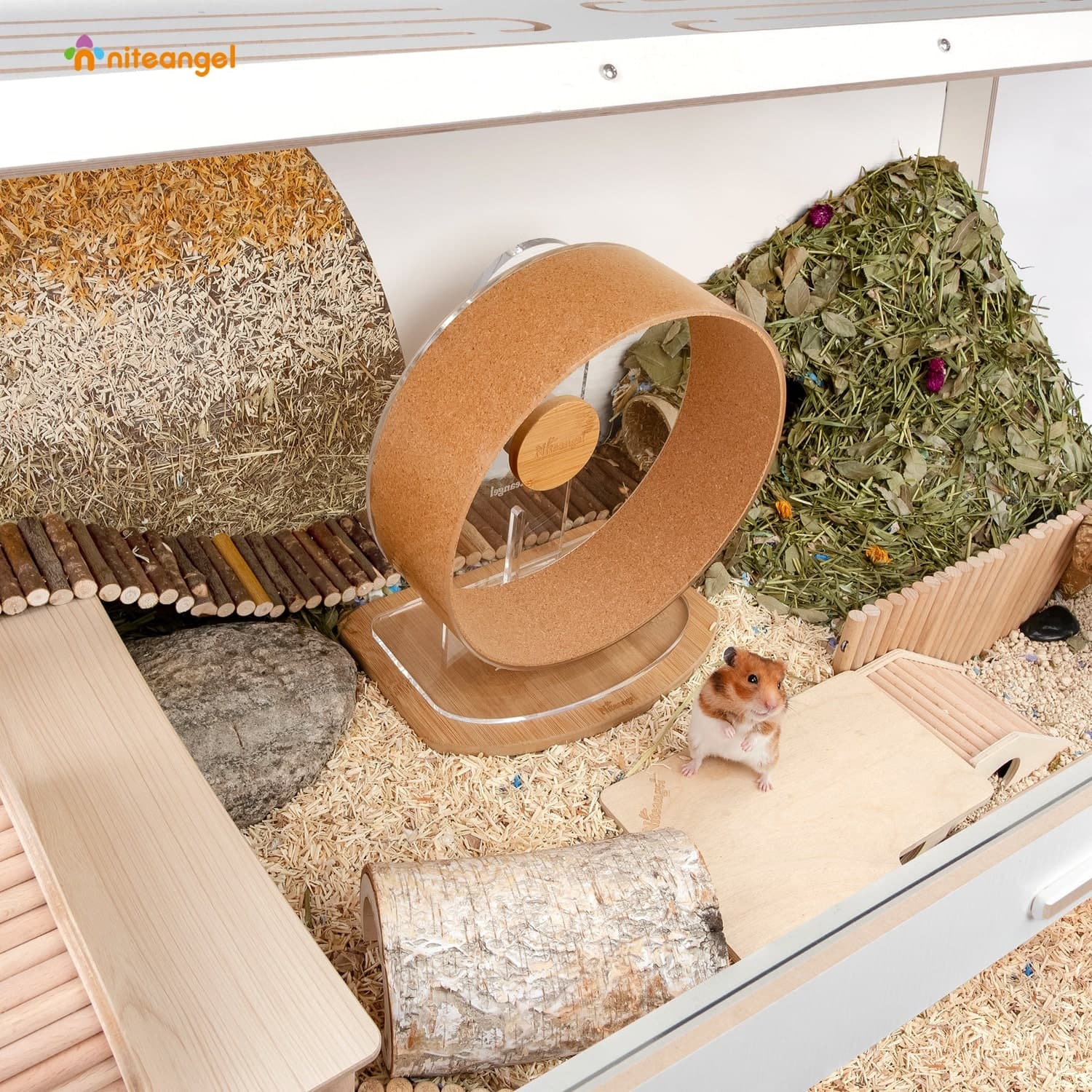 Best Front AccessVista Hamster CageShopView at Amazon for Vista Hamster Cage, Large (opens in a new tab)
Mark the rectangle in the room
Tape the outside dimensions on the cabinet, stand, or floor before comparing finishes. A 120 cm enclosure can dominate a small wall, and the top door may need several more inches of clear air above it.
Then sketch the inside:
- Give most of one end to deep bedding and buried chambers.
- Keep the large upright wheel on a firm platform where bedding cannot stop it.
- Leave an open route between the nest, wheel, water, sand bath, and forage.
- Keep every latch, vent, corner, and wet spot reachable.
Swipe or use arrow keys to compare every column.
| Habitat | Published floor | Bedding and ventilation | Everyday access |
|---|---|---|---|
| BUCATSTATE Metal Cage 3.0, 120 cm | 120 by 60 cm | 30 cm base; ventilated top and large front opening | Double top doors and front door |
| Niteangel Bigger World, Large | 47.2 by 19.7 inches | Tall wood-look shell; curved top vents | Full opening roof |
| Niteangel Vista, Large | 47.1 by 22.7 inches | Tall MDF shell; confirm bedding line at the opening | Angled front opening |
The three room plans
BUCATSTATE
Metal Cage 3.0
- Published size
- 120 by 60 by 62.5 cm
- Floor area
- 7,200 square cm
- Bedding base
- 30 cm deep
- Frame
- Metal with acrylic panels
- Access
- Double top doors and front door
- Finish
- Water and rust resistant
A broad metal-and-acrylic enclosure with a published 120 by 60 cm floor plan, a 30 cm bedding base, double top doors, and a large front door. It leaves the most room of these three for deep bedding and separate equipment zones.
See more detailSee less detail
Strengths
- Largest published floor plan in this comparison
- Thirty-centimeter bedding base
- Top and front access for different care jobs
Weaknesses
- The 47.1 by 23.6 inch footprint needs a substantial cabinet
- Heavy panels make this a furniture-scale setup
- Wheels and stacking hardware are separate accessories
Best for
A permanent living-room habitat with maximum bedding depth and more than one access route
The 120 cm BUCATSTATE Metal Cage 3.0 is the most complete floor-and-bedding plan here. The manufacturer publishes a 120 by 60 cm floor, equal to 7,200 square cm, plus a 30 cm deep base. That extra depth gives the burrow zone room to rise without crowding the wheel platform.
The metal frame and acrylic panels suit a permanent setup, and the mix of double top doors and one large front door gives you more than one route into the enclosure. Use the front opening for a quick water or sand-bath check and the roof when the full layout needs rearranging.
This is also the heaviest commitment. The enclosure is about 47.1 by 23.6 inches before the door swing and surrounding care space. Set it on a fully supported cabinet and decide where it will live before assembly.
NITEANGEL
Bigger World MDF Terrarium
- Published size
- 47.2 by 19.7 by 23.6 inches
- Floor area
- About 930 square inches
- Frame
- MDF with PVC viewing panels
- Ventilation
- Curved top slits
- Access
- Opening roof cover
- Floor liner
- PVC board sheet
A long wood-look enclosure with three viewing panels, a lift-open roof, top ventilation slits, and a PVC floor sheet. The plain rectangle is easy to zone without forcing the habitat around tubes or fixed platforms.
See more detailSee less detail
Strengths
- Long uninterrupted floor plan
- Opening roof gives broad setup access
- PVC floor sheet protects the wood base during routine cleaning
Weaknesses
- The manufacturer says it is not suitable for destructive rodents
- Wood construction needs careful seam and moisture checks
- Top-only access can be awkward under a low shelf
Best for
A wood-look setup in a protected room where a full-width opening roof is easy to reach
The Niteangel Bigger World Large is the plainest rectangle, which is useful. Its published 47.2 by 19.7 inch floor gives the hamster about 930 square inches without fixed shelves or tube routes deciding the layout for you.
The roof opens across the top, curved slits provide ventilation, and a PVC sheet protects the floor during routine cleaning. The large version is 23.6 inches tall, leaving room for a deep end and a wheel platform.
Niteangel says this enclosure is not suitable for destructive rodents. Inspect seams and edges regularly, and choose a different material if the hamster persistently works at the wood. The top opening also needs clear space, so it is a poor fit beneath a low shelf.
NITEANGEL
Vista Hamster Cage
- Published size
- 47.1 by 22.7 by 26.9 inches
- Floor area
- About 1,069 square inches
- Frame
- MDF aspen
- Access
- Oblique front opening
- Format
- Wide rectangular enclosure
- Variant
- Large, burlywood
A wide, tall MDF enclosure with an angled front opening. Its published 47.1 by 22.7 inch floor plan gives it more depth than the Bigger World while keeping daily access in front of the habitat.
See more detailSee less detail
Strengths
- Broad 47.1 by 22.7 inch published floor
- Front access can work beneath a shelf
- Extra height leaves room for bedding and a large upright wheel
Weaknesses
- The opening height still needs checking against the finished bedding line
- Wood seams need regular moisture and chew inspection
- The large variant occupies more room front to back
Best for
A deep cabinet where front access matters more than a fully removable roof
The Niteangel Vista Large trades the removable-looking roof plan for an angled front opening. That can make daily access easier on a cabinet with shelves above it. The published floor is 47.1 by 22.7 inches, about 1,069 square inches, and the shell stands 26.9 inches tall.
That extra front-to-back depth is valuable when the wheel and sand bath need firm ground beside a deep burrow zone. It also claims more of the room, so tape the complete footprint before deciding that the front opening saves space.
Plan the bedding line around the door. Deep substrate should stay deep, but it should not spill every time the front opens. A retaining panel or a deeper back zone can preserve both the burrow and the access route.
Glass, acrylic, and wood each change the chores
Clear walls make the burrow profile and wet corners easier to see. They also show smears quickly. Use a soft cloth and the care method named by the manufacturer so acrylic panels stay clear.
Wood-look enclosures feel more like furniture, but seams and floor protection deserve regular attention. Check the corners your hamster returns to, keep damp bedding from sitting against wood, and address a loose edge before it becomes a larger chew point.
Whatever the shell material, the lid and vents need an unobstructed path. Keep bedding, paper, fabric, and nearby shelves away from ventilation openings.
The last fit check happens after setup
An empty enclosure can look enormous. The finished habitat is the useful measurement. Add the deep bedding, full-size wheel, multi-chamber hide, sand bath, water, and several textured routes, then check that the hamster can move between them without squeezing through one narrow corridor.
Watch the first evenings from a distance. A well-planned setup gives the hamster choices: burrow, run, forage, hide, groom, and move away from activity without being handled.
Use the hamster housing guide to place the burrow, wheel, sand bath, and water inside the plan. Then compare the researched habitat shelf or browse current large habitat listings.