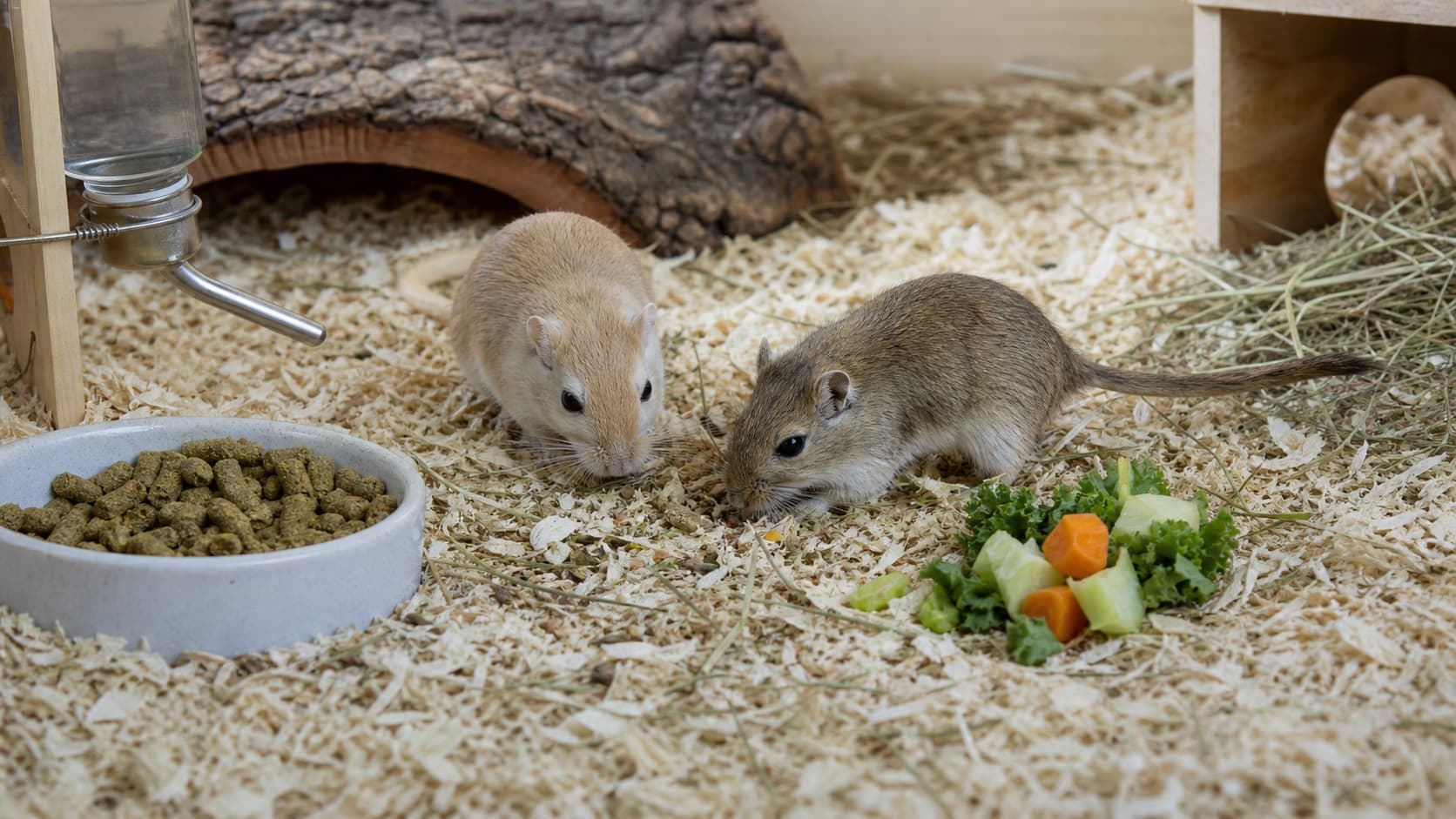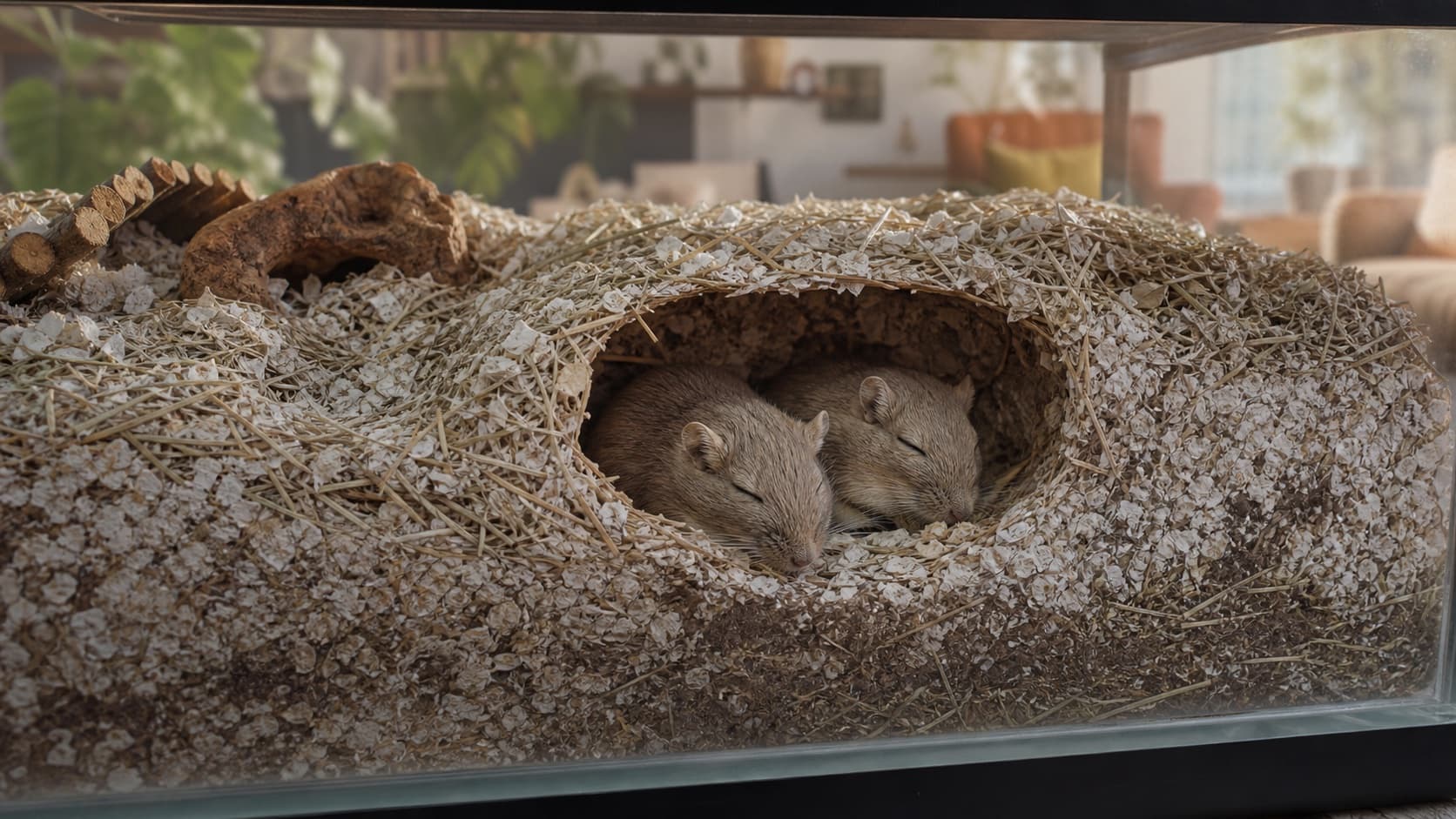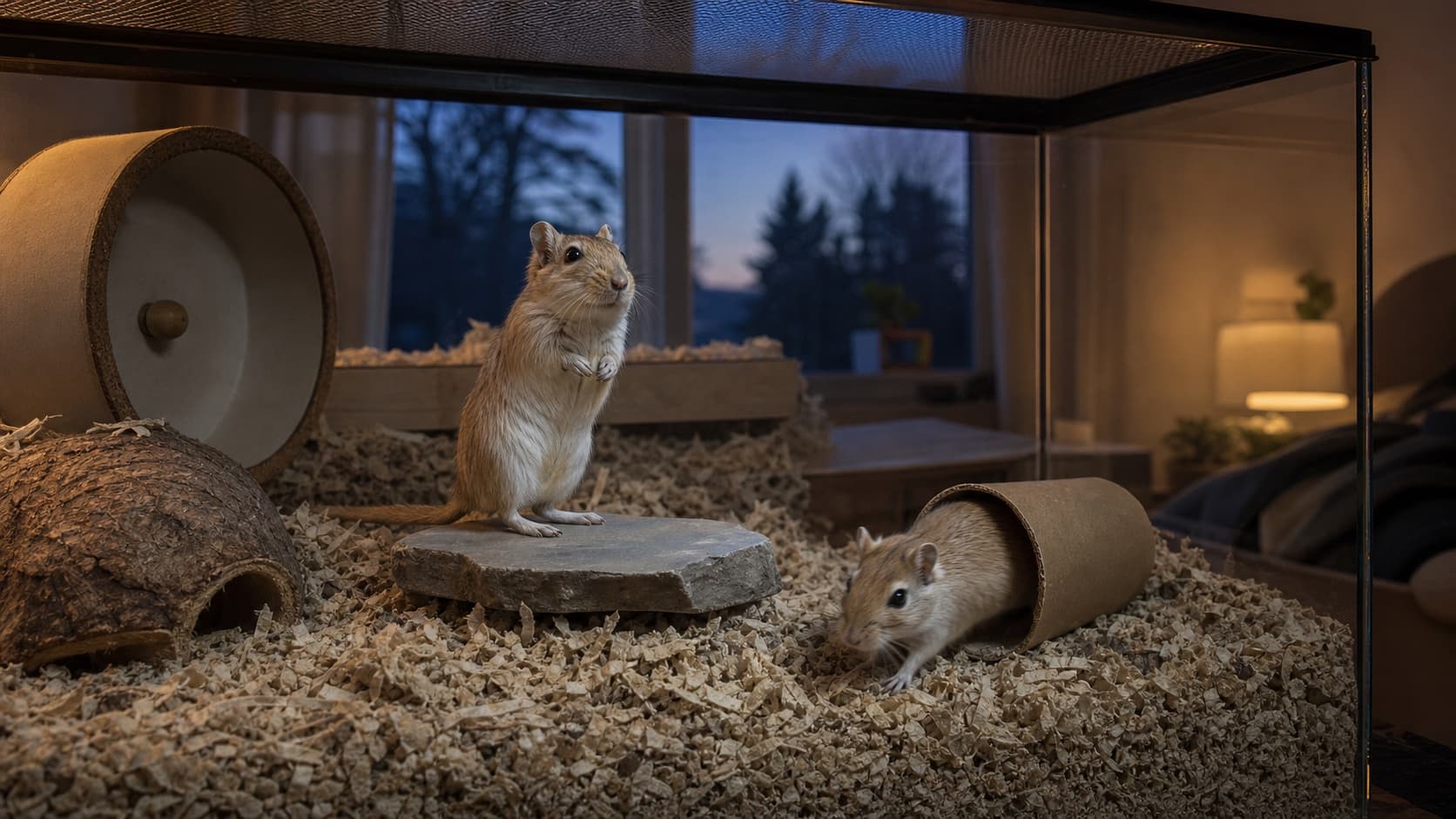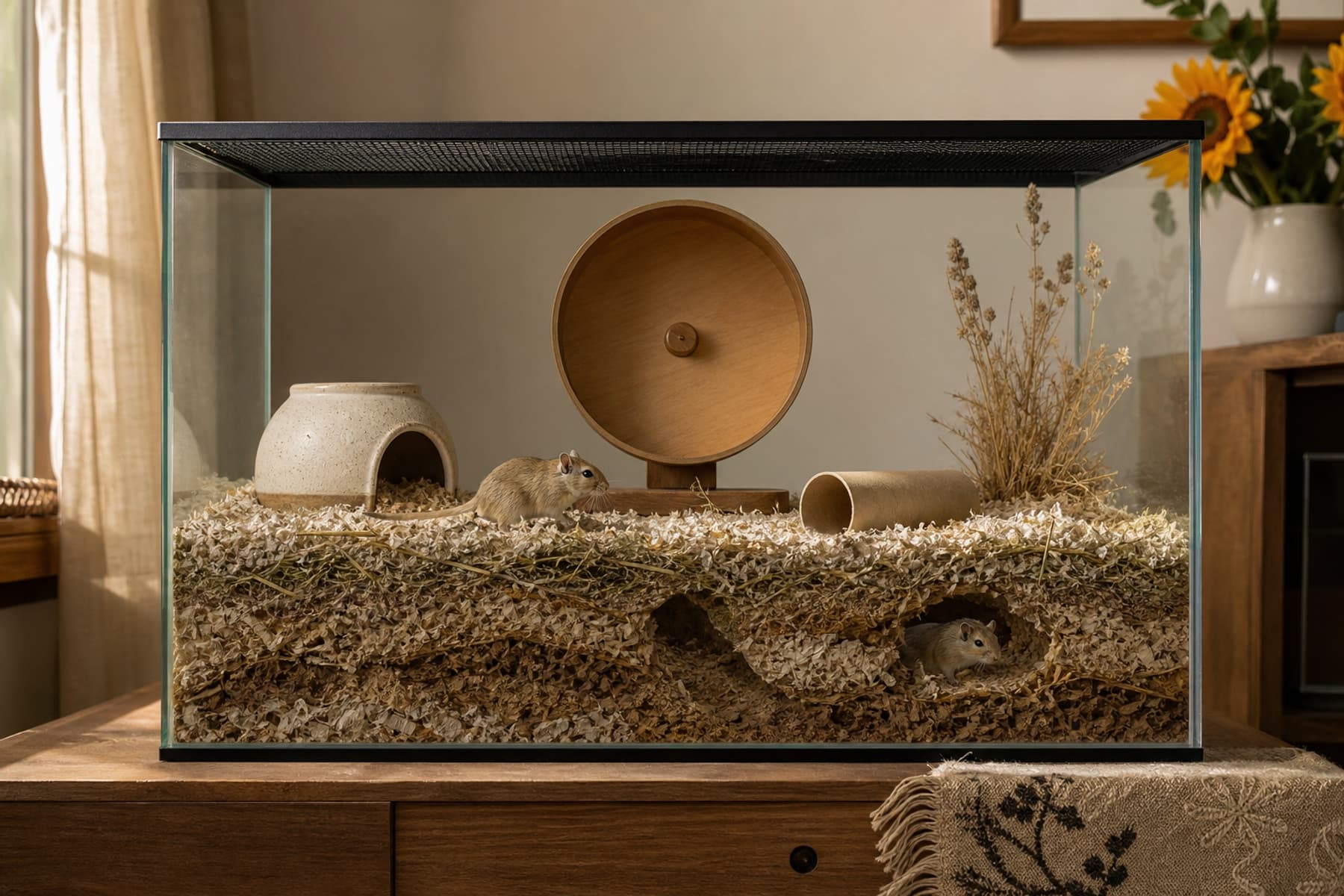
Gerbil bedding is a building material before it is a refill. The useful question is not which single bag wins. It is which material and pack will help create the deep, stable, familiar substrate a bonded pair needs.
Woodgreen recommends at least 20 to 25 cm of bedding and says two or more materials can be mixed for absorbency and stability. Its examples include hemp, aspen, soft paper, and hay. The RSPCA recommends 20 to 30 cm of bedding and describes woodchips mixed with hay as one way to add structure. Blue Cross also names dust-extracted bedding, cardboard, hay, and shredded paper.
This comparison looks at one exact paper pack, one aspen pack, and one hemp pack. They are alternatives at checkout, but the finished habitat may combine materials. The comparison uses published material, pack, label, and storage details. Absorbency and tunnel strength depend on the rest of the mix and the contents of each opened bag.
Start with the liters the habitat can hold
Measure the inside length and width of the bedding zone in centimeters. Multiply those numbers by the planned depth, then divide by 1,000.
Length x width x bedding depth / 1,000 = approximate liters
Woodgreen's 100 by 50 cm pair-housing benchmark holds about:
- 100 liters at 20 cm deep
- 125 liters at 25 cm deep
- 150 liters at 30 cm deep
Those numbers describe a simple empty rectangle. Floor-supported platforms, hides, tunnels, and deeper or shallower zones change the real quantity. Bedding also settles after the first fill.
Use the calculation to understand the size of the job. Do not read a bag's liters as a promise that one material should fill the entire enclosure. A mixed substrate may use paper for a soft, visible layer, aspen or hemp for structure, and hay or plain cardboard through the burrow zone.
Swipe or use arrow keys to compare every column.
| Bedding base | Exact pack | Published material | Planning note |
|---|---|---|---|
| Kaytee Clean & Cozy Natural | 72 L | Natural paper | Exact usable volume, but smaller than a 100 L baseline |
| Small Pet Select Aspen | 141 L | Heat-dried aspen shavings | Largest measured volume and a larger dry-storage footprint |
| Eaton Hemp | 8 lb | Hemp hurd | Exact weight, but no consistent manufacturer liter figure |
Three useful base materials
Kaytee gives the clearest first quantity check. The exact Natural variant is labeled at 72 liters, so the paper layer can be compared directly with the volume of the planned bedding zone.
The manufacturer lists the Natural formula as fragrance free, and the current 72 liter package carries a 99.9 percent dust-free claim. Those are label facts, not House Pet measurements. The opened bag remains the practical inspection point.
One 72 liter pack is smaller than the 100 liter estimate for a 100 by 50 by 20 cm rectangle. That does not make the pack too small. It means the paper should be planned as one part of the mixed substrate or as a measured first layer rather than mistaken for complete coverage.
Small Pet Select publishes 141 liters of usable volume for the exact jumbo pack. The company identifies the material as heat-dried aspen, names gerbils among the intended small pets, and gives the bag a 24 by 16 by 10 inch storage footprint.
That combination makes this the easiest bulk pack to plan around. The aspen volume exceeds a 100 liter baseline before hides, supports, deeper zones, other materials, and settling change the finished fill.
The manufacturer describes the bedding as low dust and without added dyes or irritants. Keep the open bag dry. Aspen can add a distinct structural layer, while paper, hay, and plain cardboard complete other jobs in the burrow.
Eaton is the hemp option. The exact Amazon variant is an 8 pound bag, and the manufacturer identifies the material as hemp hurd, describes it as low dust, and names gerbils among the small pets that can use the bedding.
Weight is useful for confirming the correct checkout variant, but it does not answer the fill calculation. The current manufacturer material does not publish one consistent usable-volume number for this bag, so the first order should be treated as a material trial rather than a liter-perfect refill.
Hemp earns its place when the plan specifically needs another structural material and the household is comfortable judging the opened volume. It is less useful when the order must match a measured liter target before arrival.
Keep the wheel above the burrow, not inside it
Place the wheel and every heavy object on a support that reaches the enclosure floor before adding bedding. The full wheel should remain round, unobstructed, and visibly clear of the secure lid. If deep bedding buries the stand or stops the wheel, the equipment zone needs a raised platform or less loose material.
Put heavy ceramic hides and supports on the floor as well. Bedding can move around them without creating a falling object above a tunnel.
Keep cotton wool, fluffy nesting products, and other materials that separate into strong strands out of the habitat. The RSPCA and Blue Cross both recommend paper, cardboard, or hay for nesting instead.
Refresh changed areas and keep some familiar bedding
Gerbils organize a home by scent and structure. Woodgreen, the RSPCA, and Blue Cross all support preserving some clean used bedding during a larger refresh.
Spot clean wet or changed areas and leave clean, dry, familiar material in place. Store the opened refill dry and closed against household debris. Check around the water bottle, sand area, and fresh-food locations before deciding how much of the burrow needs attention.
Use the gerbil bedding and burrows guide to build the finished layers. Then compare the researched bedding shelf or browse current gerbil bedding listings.