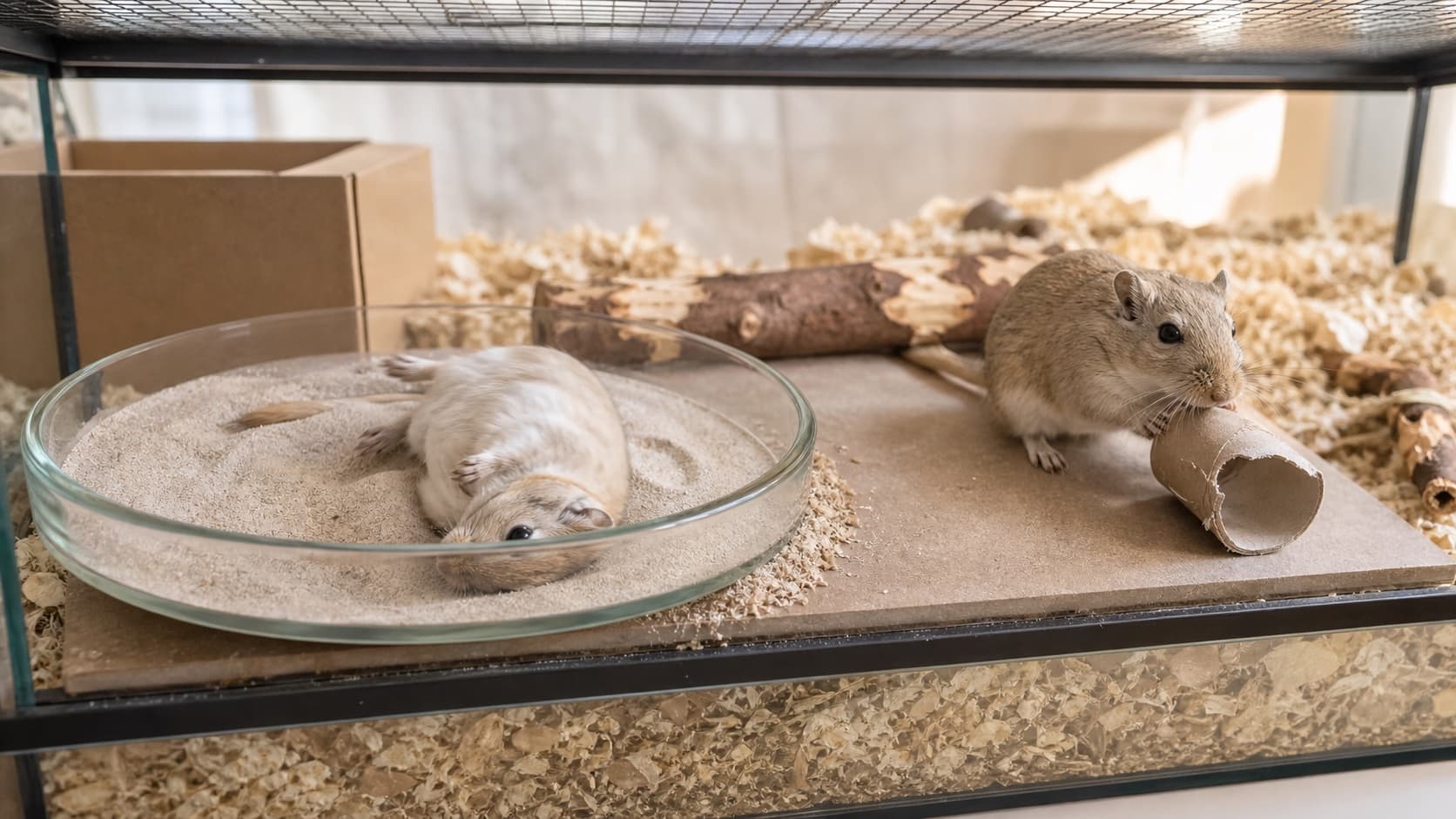
A gerbil sand bath supports coat care, while deep bedding, cardboard, chewing, foraging, and a solid wheel provide the everyday work. The best enrichment fits around the burrow rather than replacing its floor space.
The Blue Cross gerbil care guide recommends gerbil-safe sand, cardboard tunnels and boxes, suitable wood, hanging foraging materials, branches, a flat rock, and a solid running wheel. Its guidance also warns against chinchilla dust and soft plastic toys for this strong-chewing species.
Build a stable sand station
Choose a heavy ceramic or glass dish that allows a gerbil to turn and roll without tipping. Place it on a stable platform or directly on the enclosure floor, then keep deep bedding around rather than beneath that support.
Use a product clearly labeled as sand suitable for gerbils. The material should remain settled in the dish instead of creating a powder cloud. Scoop out waste and replace damp or soiled sand.
Keep chewing materials simple
Gerbil teeth make shredding and gnawing part of the daily rhythm. Plain cardboard tubes, egg cartons, unprinted boxes, and appropriate untreated wood provide useful work and can become part of the burrow.
Remove staples, tape, glue-heavy seams, glossy coatings, food residue, and sharp chewed edges. Replace a branch or wooden item when chewing creates a point or exposes hardware.
Soft plastic can be quickly destroyed and swallowed. Use ceramic, glass, metal, cardboard, cork, and clearly identified chew-safe wood where those materials suit the job.
Give food a second job
Scatter part of the complete gerbil food across the bedding. Put a few pieces inside a folded paper parcel, cardboard tube, or hanging hay bundle that remains easy to inspect. Spread the activity across more than one area so both animals can forage.
Keep fresh foods easy to find and remove before they spoil. The complete diet and fresh water remain the steady center of the feeding routine.
Fit a solid wheel
Choose a wheel with a continuous solid running surface and enough diameter for a level back and tail position. Open bars or mesh can catch feet or the tail. Mount the wheel securely on a stable surface with clearance from the glass, lid, and moving bedding.
Watch both gerbils use it. Wobble, repeated jumping out, a sharply curved running posture, or tail contact with the stand signals a poor fit.
Rotate without erasing the home
Change one or two surface objects while preserving the shared nest, most tunnels, and core resources. A new cardboard shape, forage parcel, bridge, or chew can make the familiar territory interesting without turning it into a new environment.
Track the jobs already available:
- Dig through deep, stable substrate.
- Build with hay, paper, and cardboard.
- Chew suitable disposable material.
- Forage for part of the complete food.
- Run on a solid, correctly fitted wheel.
- Roll in clean gerbil-safe sand.
- Watch from a stable stone or platform.
- Sleep and groom with a bonded companion.
When every job already exists, more objects can create clutter rather than choice.
Inspect the changing object
Enrichment changes as it is used. Check cardboard for dampness, wood for sharp points, wheel supports for looseness, hanging items for exposed fibers, and sand for waste. Remove an object when its material, attachment, or shape is no longer safe.