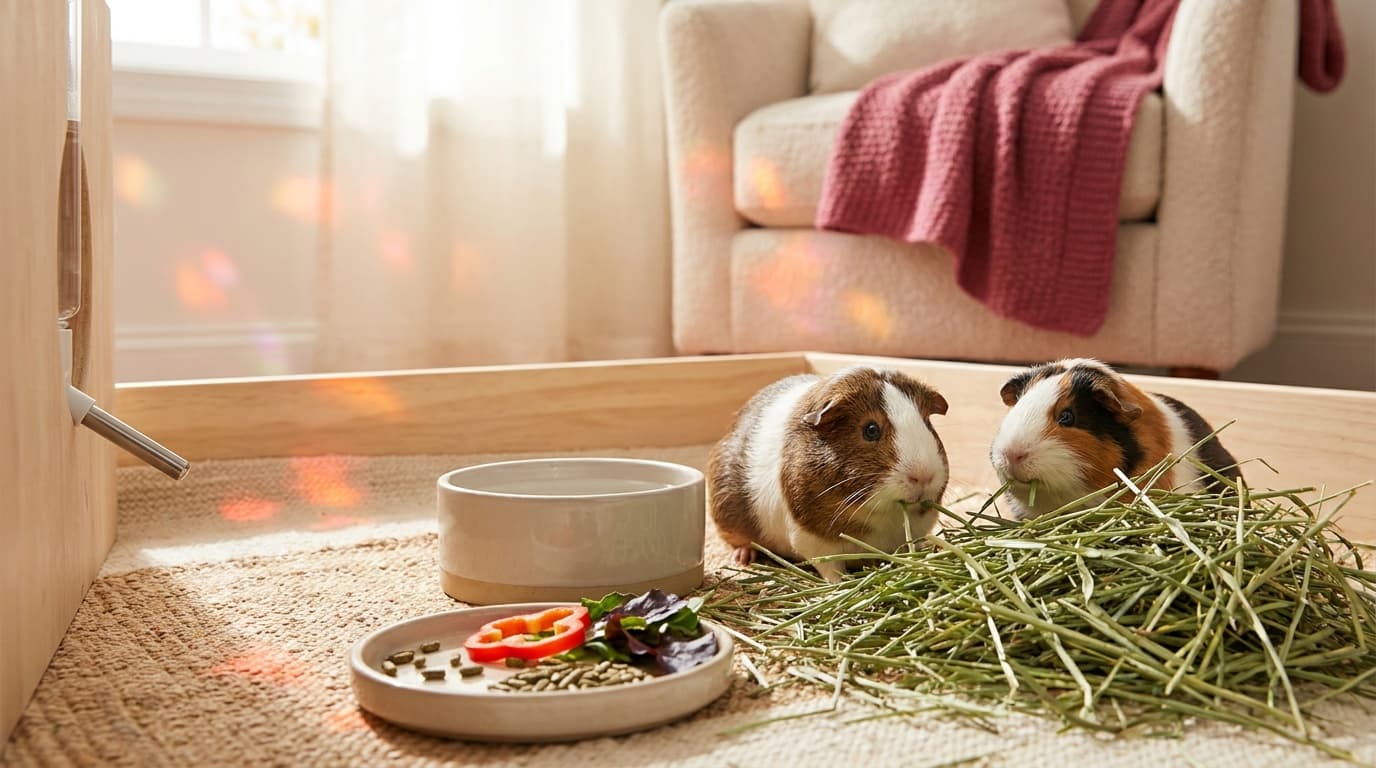
A good guinea pig water station gives every animal a clear route to fresh water and gives you a quick way to confirm that each dispenser is working. Choose the setup first. Then choose the bottle.
The RSPCA guinea pig diet guide says guinea pigs need constant access to fresh, clean drinking water and recommends checking it twice daily. Its guinea pig care guide adds a daily check for leaks and blockages, at least daily water changes, and regular cleaning of the bottle and nozzle.
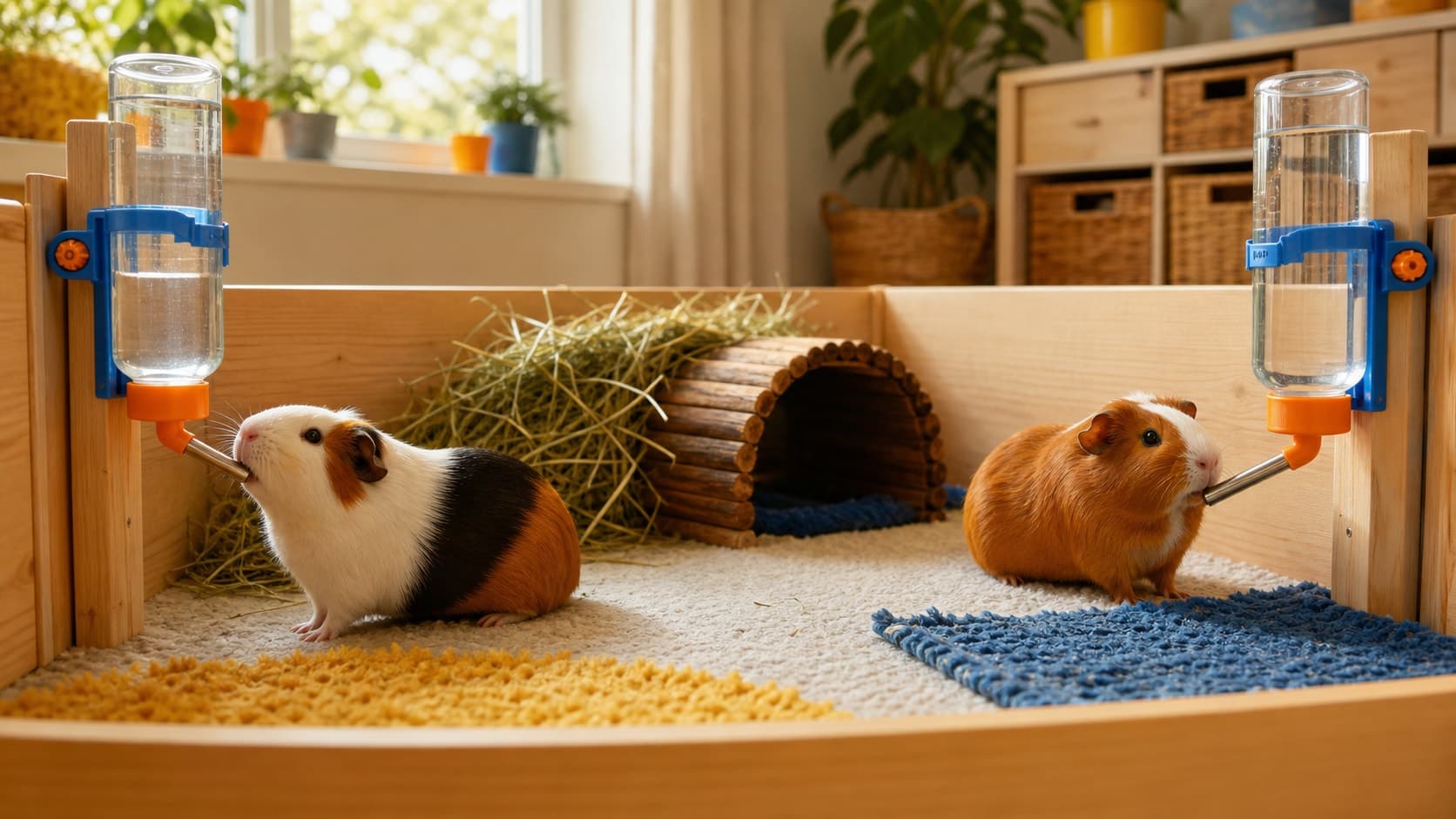
RSPCA Victoria recommends multiple water dispensers so every guinea pig has access. PDSA says to wash water containers daily before refilling. Those needs matter more than a bottle's label.
These three picks are alternatives for different cleaning and mounting routines. A shared habitat still needs multiple accessible drinking points.
Start with the water-station plan
Swipe or use arrow keys to compare every column.
| Bottle | Published capacity | Body and cleaning route | Mounting route |
|---|---|---|---|
| Lixit Glass | 16 fluid ounces | Glass body with a narrow opening | Wire cage hanger |
| Lixit Wide Mouth | 16 fluid ounces | Plastic body with a wide cleaning opening | Wire cage hardware |
| Choco Nose C128 | 10.2 fluid ounces | Compact plastic body | Fixed screw bracket with snap-off bottle |
The picks
The Lixit Glass pairs a sixteen-fluid-ounce glass body with a three-eighth-inch 304 stainless-steel tube. Lixit publishes a vacuum-seal design and a simple wire cage installation. The clear, heavier bottle makes the fill level easy to scan from across the room.
Glass also changes the owner's routine. This is the heaviest bottle here when full, and its narrow neck calls for a bottle brush. It suits someone who values a glass cleaning surface and can comfortably lift, turn, and remount it every day.
The Lixit Wide Mouth keeps the same sixteen-fluid-ounce capacity and published tube size in a lighter BPA-free plastic body. Its useful difference is the opening: a bottle brush has more room, and refilling is less fussy.
The tradeoff is the plastic body and simple wire mount. Check the bottle surface as it wears, and make sure the hanger returns to the same usable height after every refill. This is the clearest starting point when hand access and daily washing matter most.
The Choco Nose C128 holds 10.2 fluid ounces and uses a ten-millimeter stainless-steel nozzle. Its screw-on bracket stays attached to the cage while the bottle snaps off. That makes it easier to return the nozzle to a consistent position.
Its smaller capacity needs closer attention in a shared habitat. It works best as one point in a multiple-dispenser plan, especially where a compact bottle and fixed mounting position solve a real access problem. Retailer colors vary.
Mount every nozzle for the animal in front of you
A bottle mounted too high can turn fresh water into an inaccessible resource. A bottle mounted too low can create an awkward posture, wet bedding, or a tube that is easy to knock.
- Place the nozzle where each guinea pig can reach it with a comfortable, level posture.
- Keep a clear standing area below it.
- Watch every guinea pig drink after installation.
- Move the mount when an individual stretches, crouches, or pushes another animal away from the only station.
- Keep the second drinking point far enough away to provide another route.
Build the twice-daily check into the room
- Morning: refresh the water, press each tube to confirm flow, inspect the mount, and look for damp bedding.
- After refilling: seat every cap and bracket, return each nozzle to its measured height, and confirm water can move through it.
- Evening: check the water level, tube, bottle, and surrounding bedding again.
- Daily wash: wash the container and nozzle before refilling, following the product instructions.
- Regular observation: make sure every guinea pig is using at least one drinking point.
Sudden changes in drinking or an animal that cannot use a familiar station deserve prompt veterinary advice. The bottle can show you that something changed, but the veterinarian should interpret what it means for the individual animal.
Glass, wide mouth, or snap-off
Choose the glass Lixit when the bottle body and visible fill level matter most. Confirm you can grip, brush, and remount a full glass bottle comfortably.
Choose the wide-mouth Lixit when daily brush access is the priority. It keeps sixteen-ounce capacity while simplifying the path into the bottle.
Choose the Choco Nose when a fixed bracket and compact snap-off refill suit the enclosure. Its smaller capacity makes it a stronger secondary point than a single source for a shared habitat.
Before checkout
- Confirm the exact capacity, nozzle, bracket, and included hardware.
- Check that the mount works with the habitat walls.
- Measure the mounting height for the shortest comfortable drinker.
- Plan more than one independent drinking point for a shared habitat.
- Keep a bottle brush that reaches the bottom and the inside of the opening.
- Decide where the bottle will drain and dry after washing.
- Confirm the current model, color, price band, and availability at the retailer.
Open the side-by-side water-bottle desk to compare all three formats, or use the water-station collection to work from daily access to mounting and cleaning. The guinea pig supply map connects water with hay, meals, shelter, and the rest of the shared habitat.