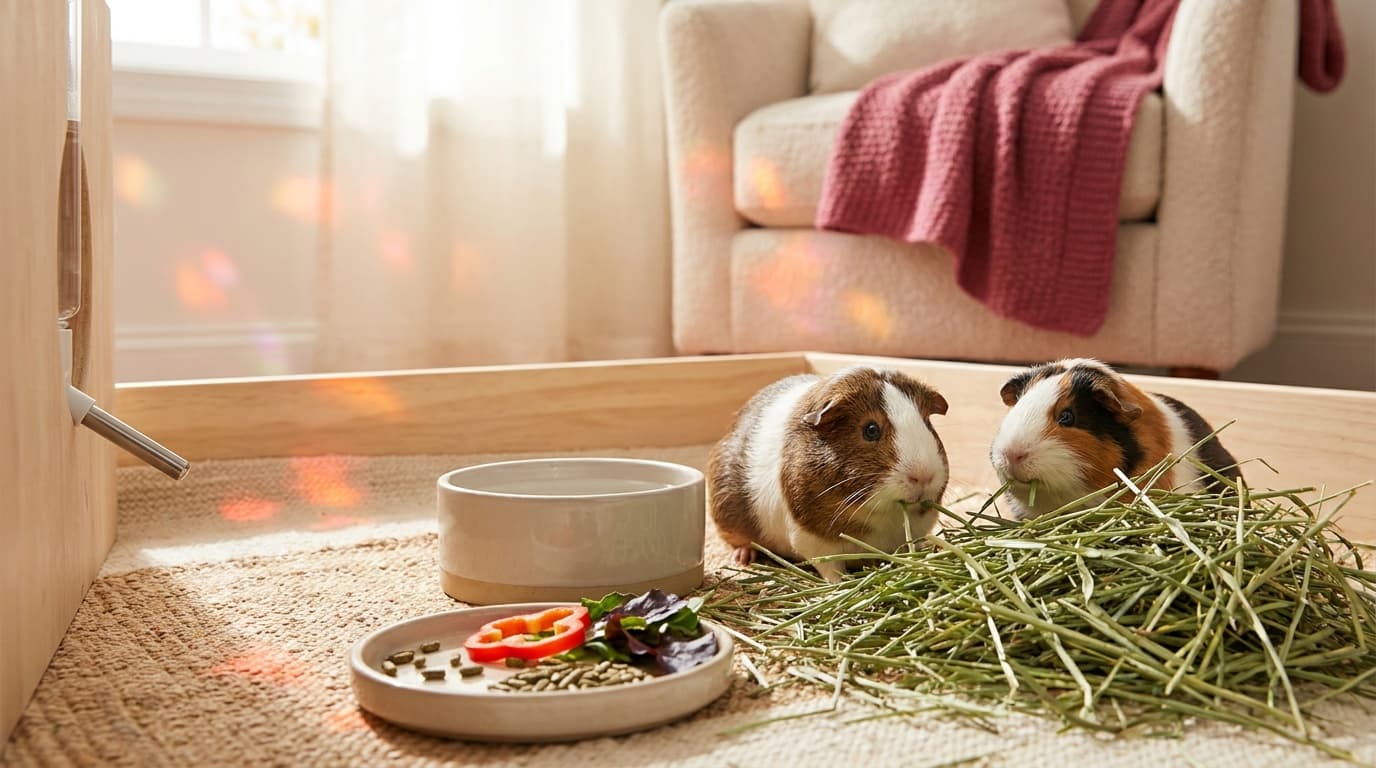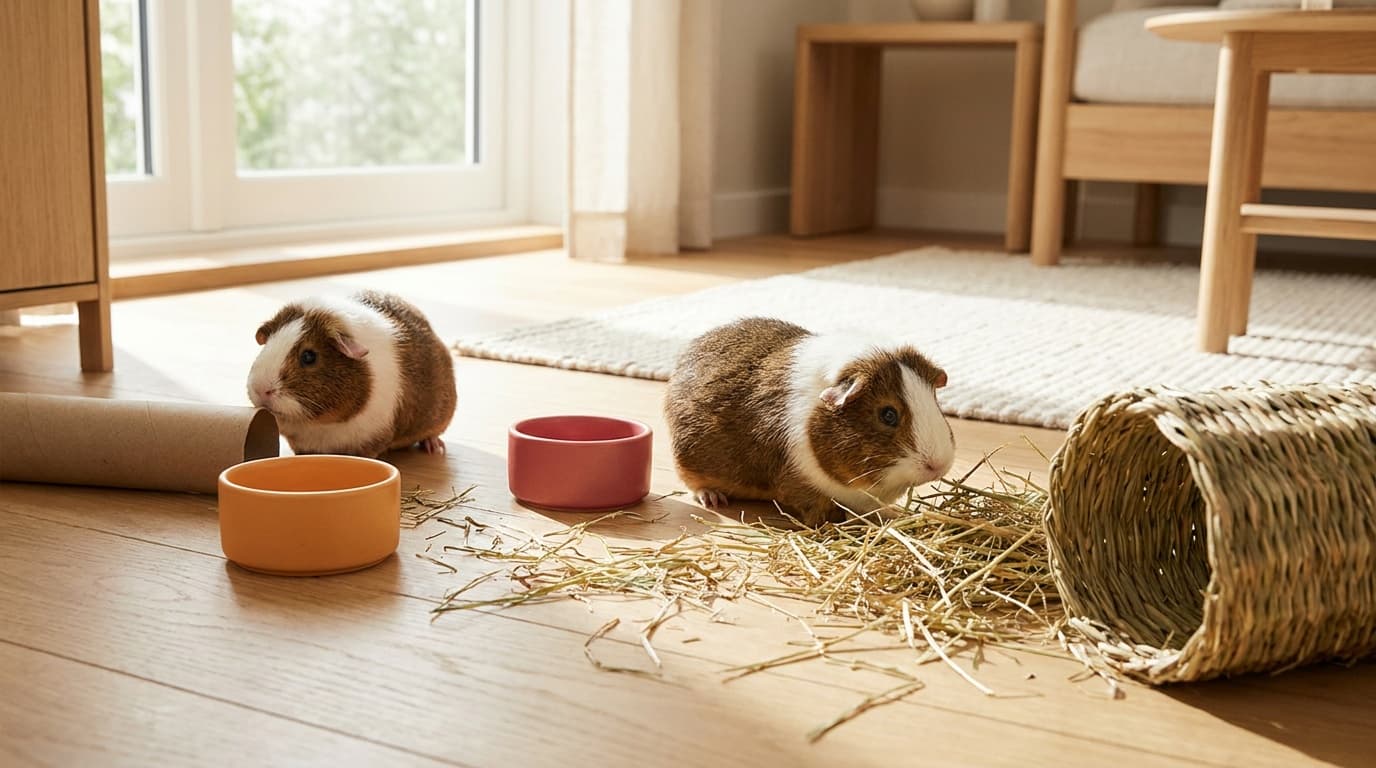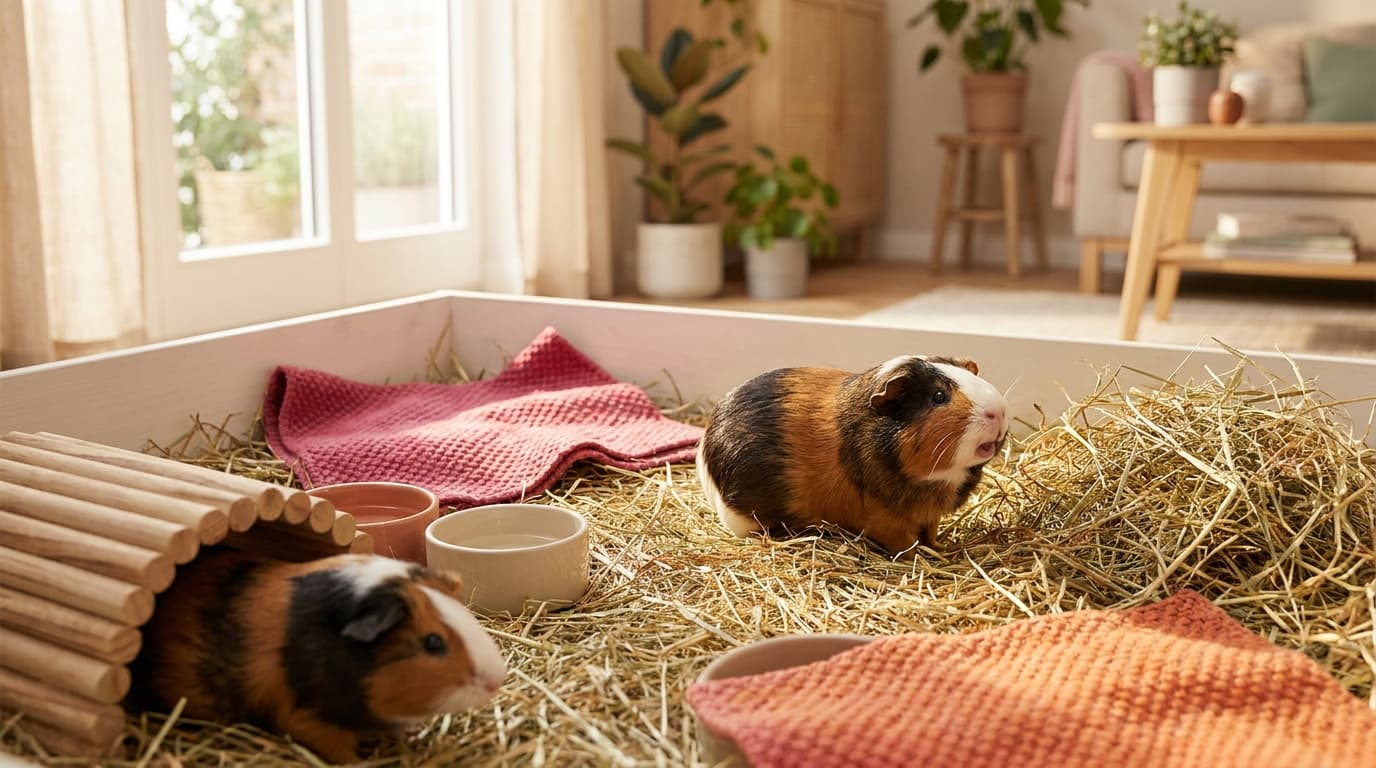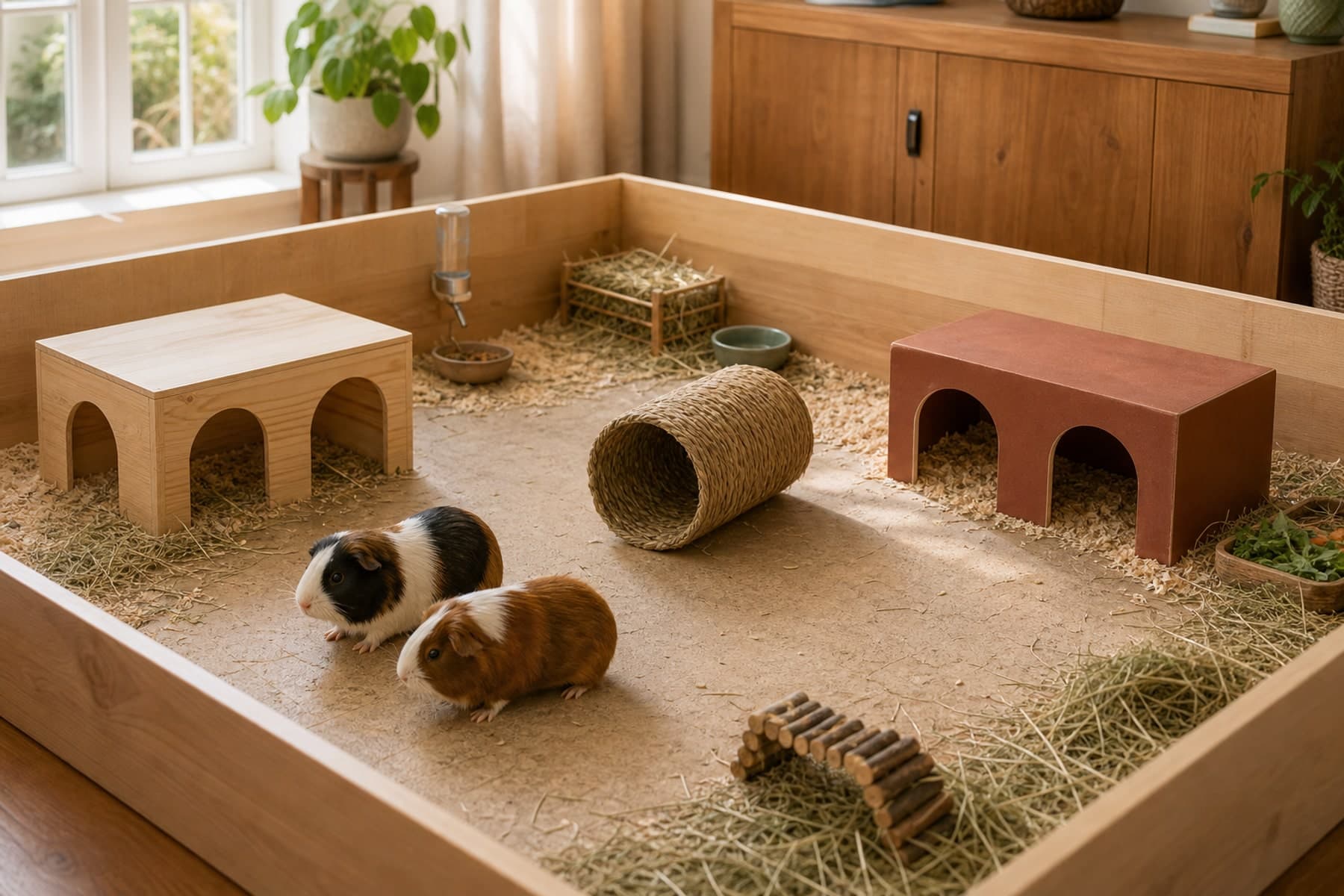
For a bonded pair, the useful question is not which hideout wins. It is whether the finished habitat gives both guinea pigs enough places to retreat, more than one way through, and an open route across the floor.
The RSPCA guinea pig environment guide says the number of refuge areas should exceed the number of animals by one. That makes three refuge positions a practical starting point for a pair.
Open routes matter too. Blue Cross recommends open-ended boxes, beds, and tubes during introductions so guinea pigs can move away from one another. PDSA recommends hiding places with more than one entrance or exit so small pets do not feel trapped.
These three options fill different roles. Measure the guinea pigs and the habitat before choosing any of them.
Start with the refuge map
Swipe or use arrow keys to compare every column.
| Hideout | Refuge role | Published routes | Published footprint |
|---|---|---|---|
| Prevue Wood Hut | Compact rigid refuge | Two round holes and one corner opening | 10 by 8 3/8 by 7 inches |
| Lixit Critter Hollow | Low lift-off refuge | Two 5-inch openings | 12 by 11 by 5.5 inches |
| Tunnel of Love | Covered perimeter route | Open at both ends | 14 by 6.5 by 7.5 inches |
The three shelter formats
The Prevue Wood Hut is the most enclosed option here, but it still publishes three routes through the structure: two round crawl holes and one larger corner opening. The manufacturer lists unvarnished pet-safe plywood, non-toxic binders, and a 10 by 8 3/8 by 7-inch exterior.
That compact footprint can make a defined corner refuge without taking over the habitat. Measure every opening against the widest guinea pig in the group, and make sure the flat roof does not create an easy step over a low enclosure wall.
Wood changes the cleaning routine. Prevue advises a damp soft cloth and mild soap, followed by thorough drying. It also calls for periodic inspection and removal when the hut becomes worn or damaged.
The Lixit Critter Hollow is a low plastic shell with two published five-inch openings. Its 12 by 11-inch footprint is broader than the Prevue hut, while the 5.5-inch height keeps the structure low.
The floor is open. That lets the owner lift the whole shelter away from the habitat surface instead of cleaning around an attached base. It also means the bedding or liner underneath remains part of the setup.
Color varies by retailer, and plastic deserves a regular condition check as scratches or chew wear appear. Confirm both openings and the internal height work for each guinea pig before placing it.
The Tunnel of Love is a fourteen-inch straight-through Coroplast tunnel reinforced with wire. It ships flat, then fastens with four rivets and bends into its tunnel shape.
This is the least enclosed option. It works as overhead cover along a perimeter route while keeping both ends fully open. That makes it useful when the habitat needs another refuge position but the center still needs to stay clear for movement.
The 6.5-inch width is the narrowest route here. Measure the largest guinea pig and watch the finished tunnel in use. Coroplast and the reinforcing wire also need regular condition checks.
Draw the routes before placing the shelters
Use a quick floor sketch or painter's tape outside the enclosure.
- Mark the hay and water positions.
- Mark three refuge positions for a pair.
- Point openings toward more than one usable route.
- Keep a broad path through the center.
- Leave enough hand room to lift every shelter during cleaning.
- Watch both guinea pigs move through the completed layout.
If one animal regularly controls a doorway, hay area, or water route, the layout needs another path or a different shelter position. The goal is a habitat that remains usable when both guinea pigs move at once.
Choose the material with the care routine
Wood gives the refuge a rigid, natural surface. It needs time to dry after cleaning, and wear is easier to manage when it is checked often.
Plastic creates a rigid shell that is light to lift. Check scratches, edges, and chew wear as part of the normal habitat inspection.
Coroplast keeps the tunnel light and shapeable. Confirm the rivets, edgers, wire reinforcement, and exposed edges remain in good condition.
Cardboard boxes can also add a replaceable refuge position. Cut more than one generous entrance, remove tape and staples, and replace the box when it becomes damp or damaged.
Before checkout
- Count the guinea pigs, then plan one more refuge position than animals.
- Measure every animal and every published opening.
- Compare the exterior footprint with the finished habitat floor.
- Keep hay, water, and the center running lane accessible.
- Confirm the exact material, dimensions, color, included parts, price band, and availability at the retailer.
- Decide how each shelter will lift out, clean, dry, and return to the same usable position.
- Inspect every shelter regularly and replace it when damage changes the surface or openings.
Open the side-by-side hideout comparison to compare all three formats, or use the refuge map to plan the number, routes, and care routine. The guinea pig supply map connects shelters with floor space, hay, water, and the rest of the shared habitat.