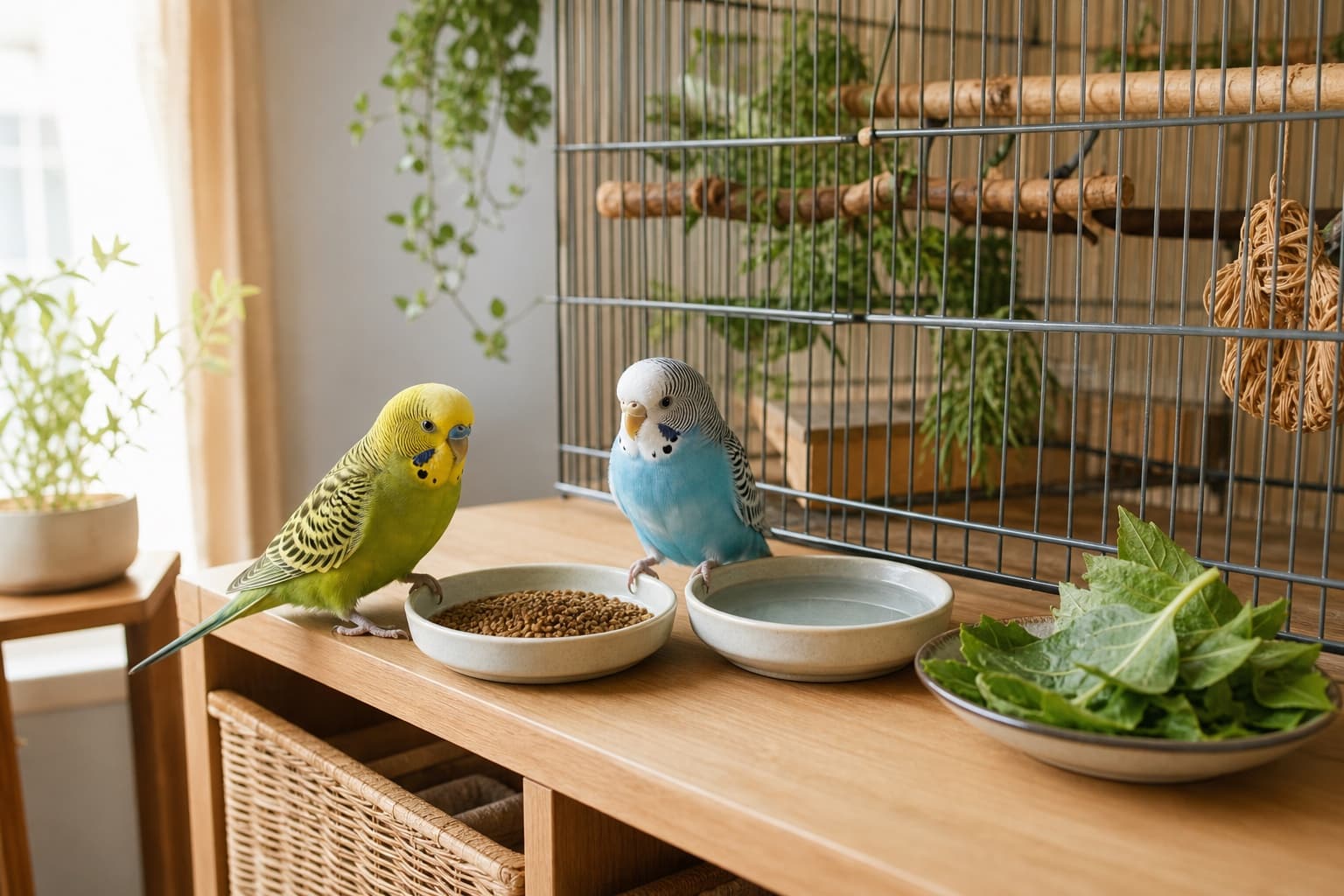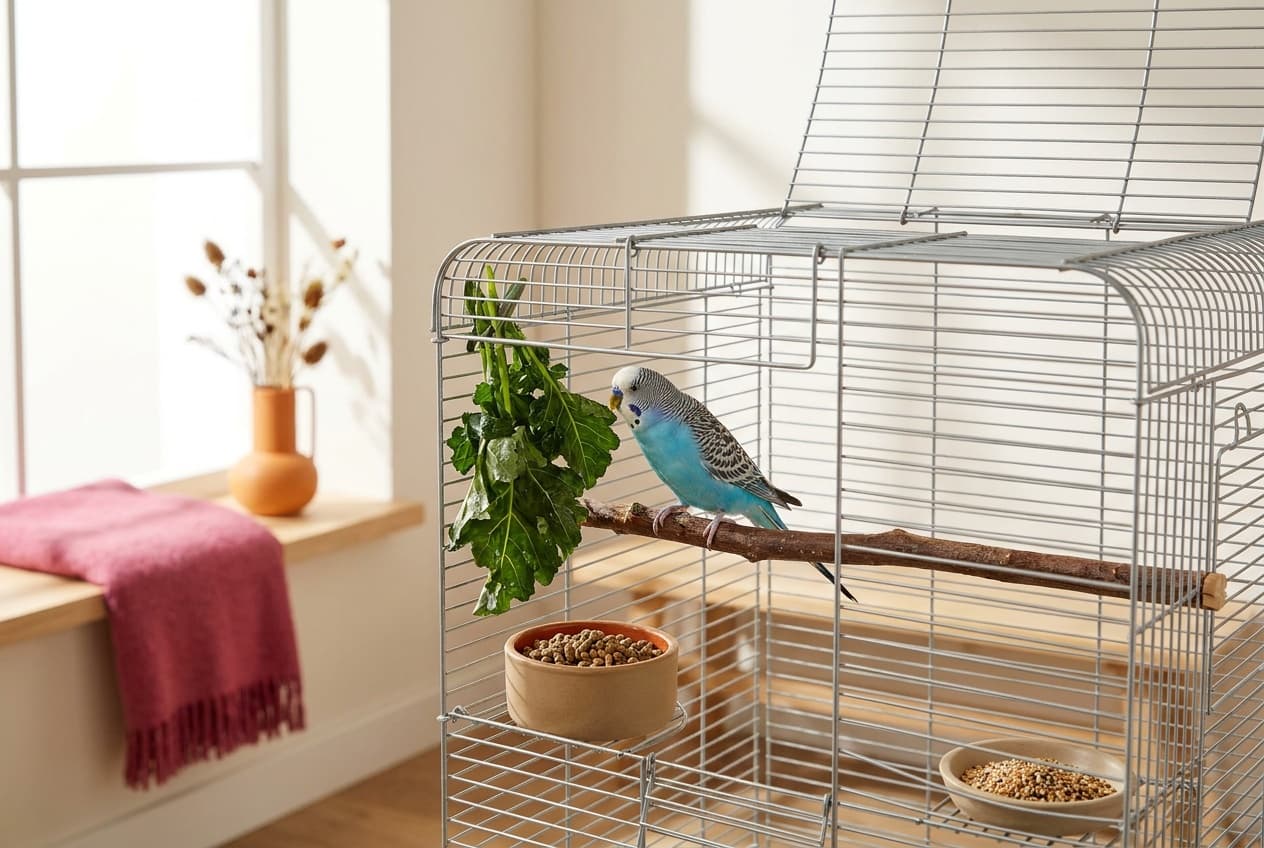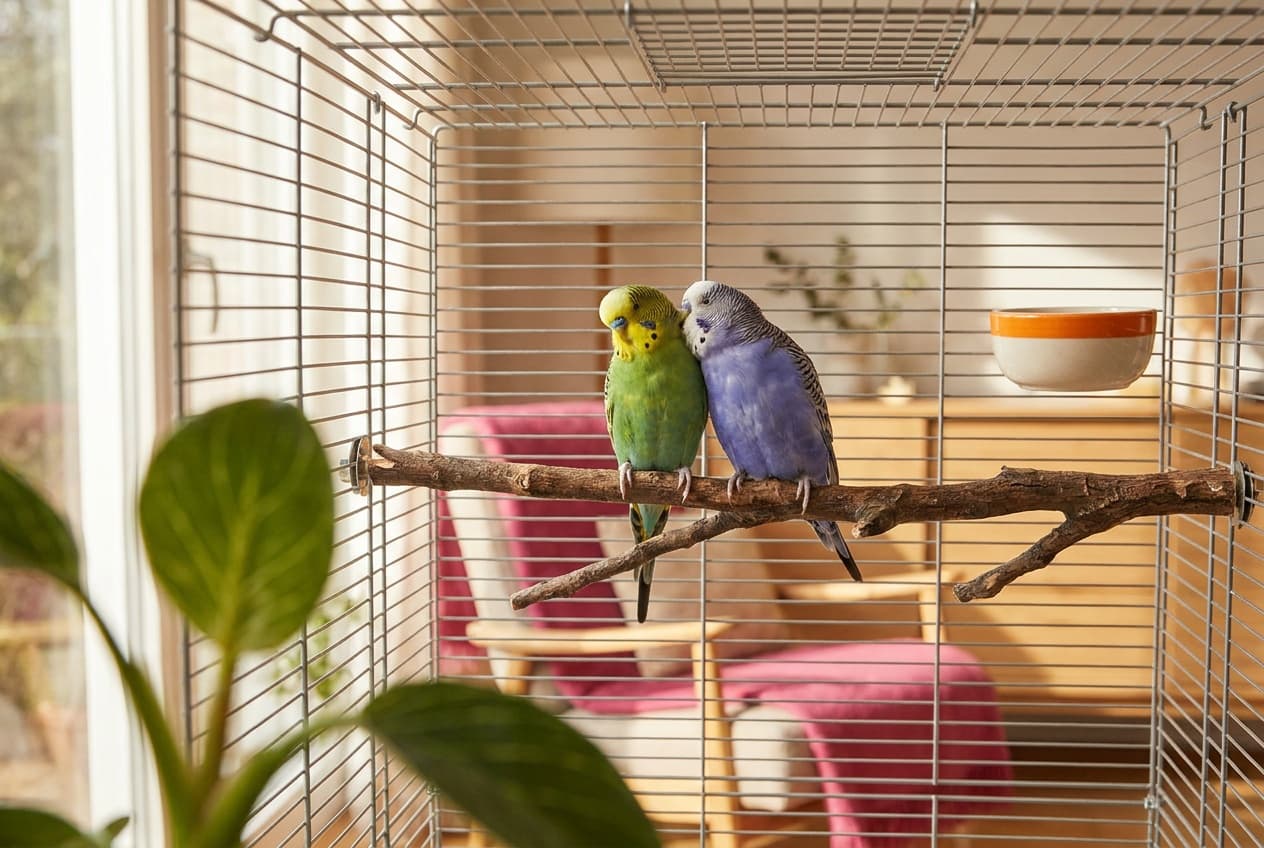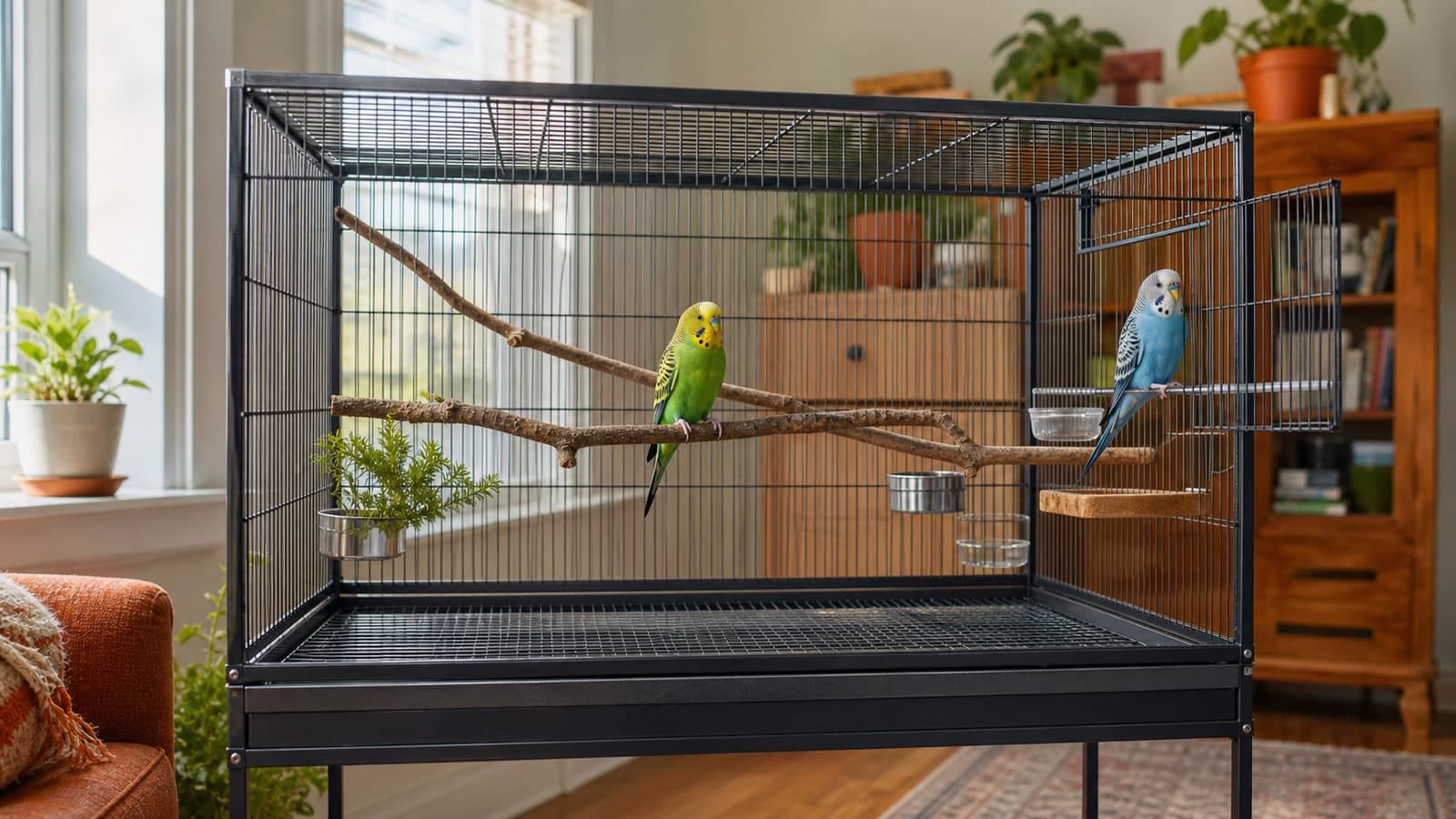
The useful question is not how tall a cage looks in the product photo. It is how much clear width remains after the perches, cups, and toys go in.
The Merck Veterinary Manual cage table lists 20 by 20 by 30 inches and half-inch bar spacing for budgerigars. Treat that published size as a starting line. The RSPCA bird-housing guide says a cage should allow a bird to fully extend and flap its wings, and that birds kept in an indoor cage need daily access to a safe flight room.
Every cage in this shortlist publishes half-inch bar spacing and at least a 30-inch interior width or a 32-inch overall width. They separate on room footprint, usable interior width, and the way a person reaches the cage for daily care.
Top picks at a glance
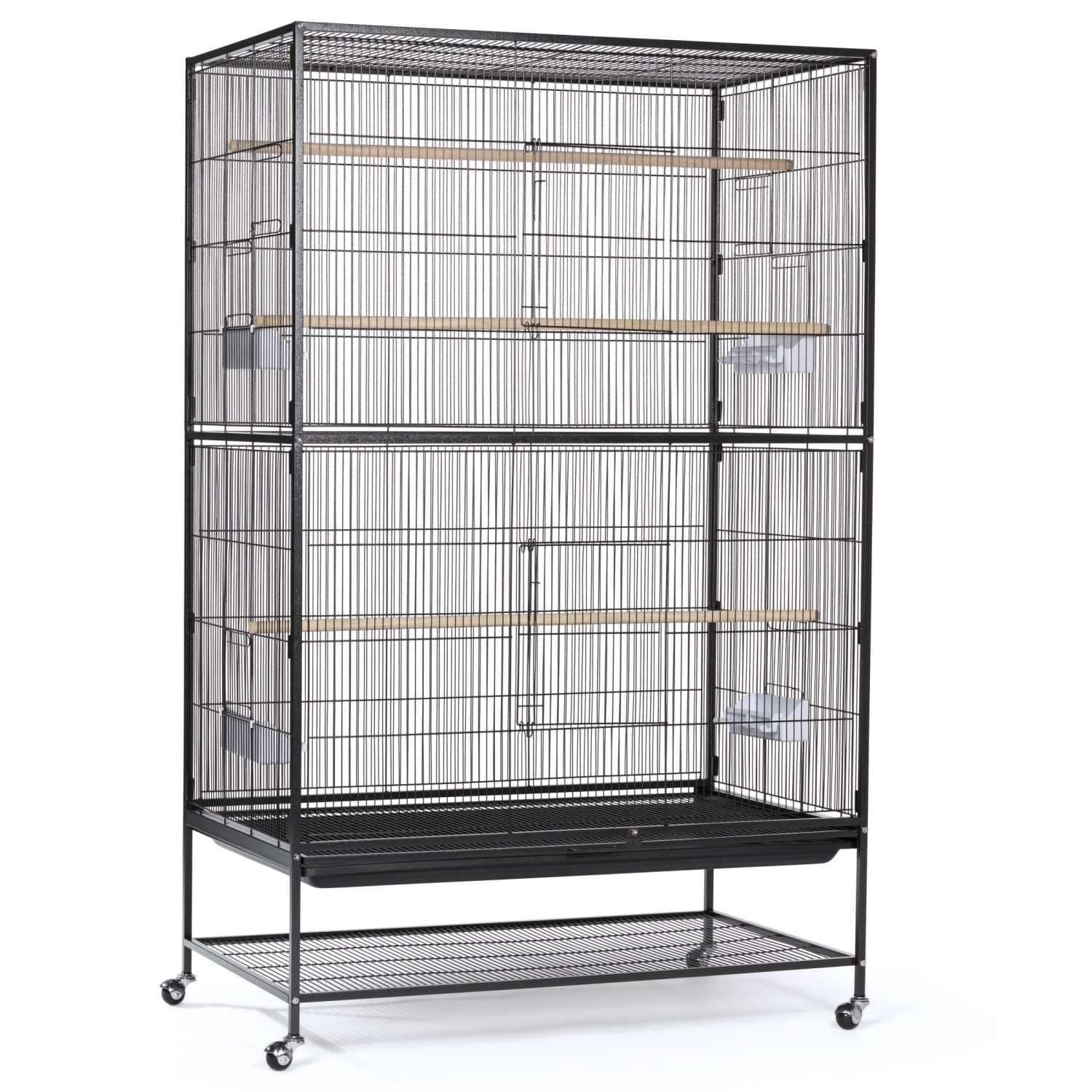 Widest InteriorF050 Large Flight CageShopView at Amazon for Prevue Pet Products F050 Large Flight Cage (opens in a new tab)
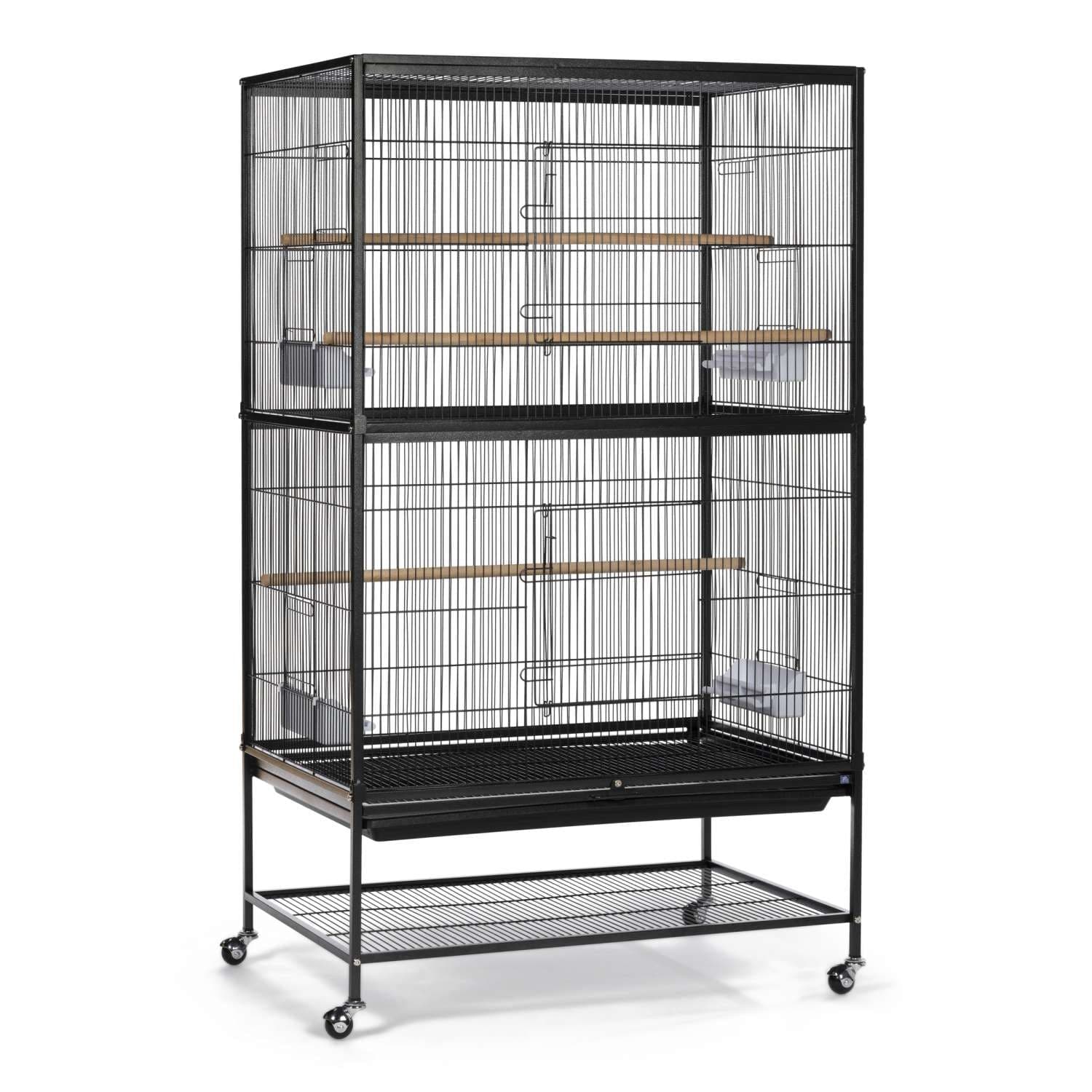 Smaller FootprintF040 Flight CageShopView at Amazon for Prevue Pet Products F040 Flight Cage (opens in a new tab)
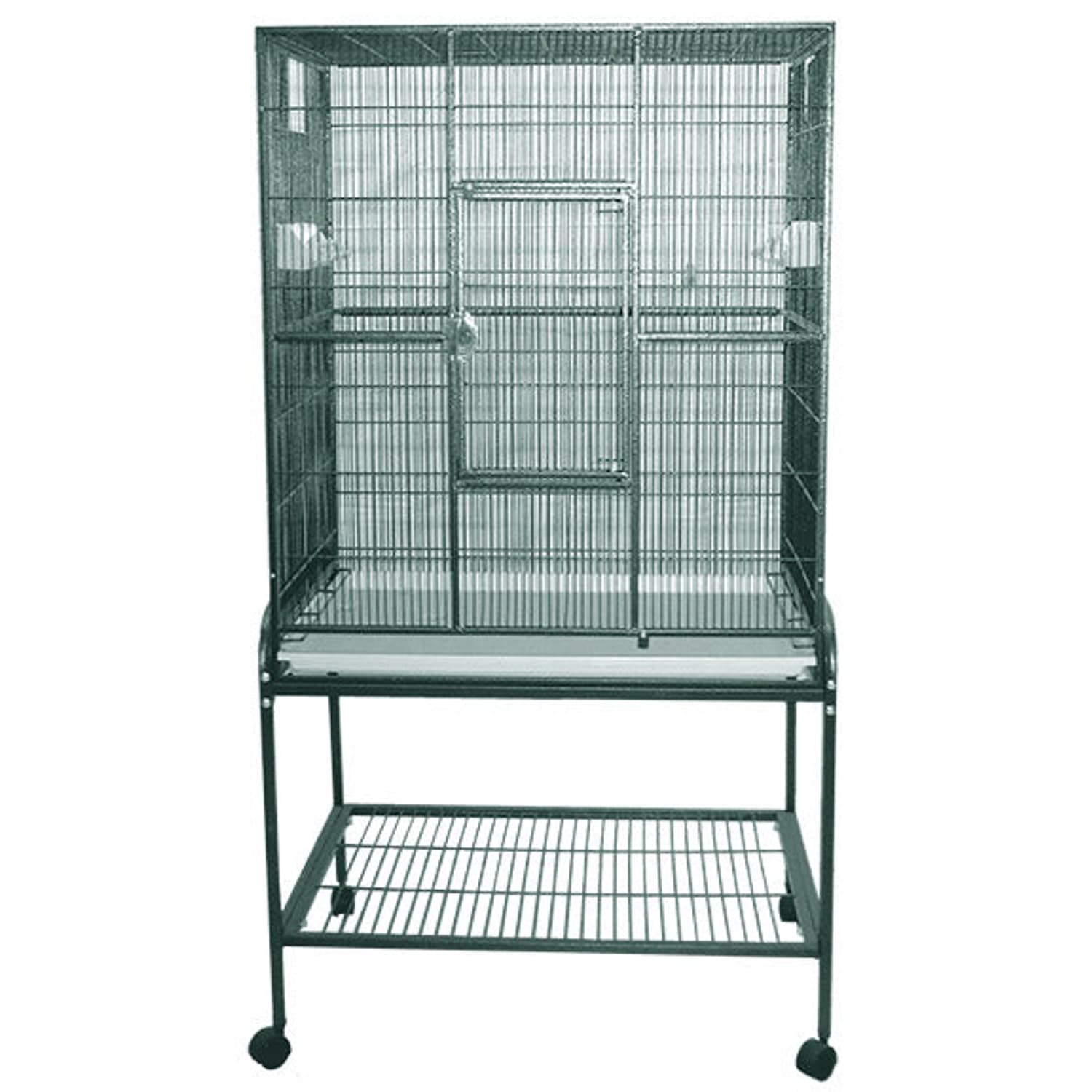 Single-Door Access13221 Flight Cage and StandShopView at Amazon for A&E Cage Company 13221 Flight Cage and Stand (opens in a new tab)
Start with three questions
- How wide is the usable interior? A tall stand does not add flight room. Compare the cage body, then subtract the space used by bowls, perches, and activity stations.
- Is the spacing published at half an inch? Merck lists half-inch spacing for budgerigars. A wider gap is not a worthwhile trade for a larger-looking cage.
- Can you reach every corner? Door layout matters when you change food and water, wipe bars, move perches, and retrieve a dropped toy.
Swipe or use arrow keys to compare every column.
| Cage | Published interior | Bar spacing | Main access | Best fit |
|---|---|---|---|---|
| Prevue F050 | 36 1/8 W by 22 1/8 D by 47 H inches | 1/2 inch | Two large front doors, six side doors | The widest interior here |
| Prevue F040 | 30 1/4 W by 20 1/4 D by 40 H inches | 1/2 inch | Two large front doors, six side doors | A smaller room footprint |
| A&E 13221 | 32 W by 21 D inches overall, 35-inch interior height | 1/2 inch | One large front door plus feeder and breeder doors | One broad main access point |
The picks
PREVUE PET PRODUCTS
F050 Large Flight Cage
- Overall size
- 37 by 23 by 60 inches
- Interior size
- 36 1/8 by 22 1/8 by 47 inches
- Bar spacing
- 1/2 inch
- Front access
- Two large front doors
- Side access
- Six smaller side doors
- Cleaning
- Pull-out grille and tray
The broadest published interior in this shortlist, with two large front doors and six smaller side doors around a 36 1/8 inch wide flight space.
See more detailSee less detail
Strengths
- Widest published interior of the three
- Two large front doors make the center easier to reach
- Six side doors support feeder and equipment access
Weaknesses
- Largest overall footprint and highest price band here
- The included straight perches still need a more varied final perch plan
Best for
The roomiest interior in this shortlist when the 37 by 23 inch floor footprint fits
The Prevue F050 gives the birds the most published interior width in this group: 36 1/8 inches. Its 22 1/8 inch interior depth and 47 inch interior height leave more room to stagger natural branch perches without forcing every object into the same narrow band.
Prevue publishes half-inch bar spacing, two large front doors, six smaller side doors, a pull-out grille and tray, three perches, four cups, casters, and a storage shelf. The cage occupies 37 by 23 inches on the floor and reaches 60 inches high on the stand.
That extra width is the reason to choose it. It is also the reason to measure carefully. Mark the full 37 by 23 inch footprint with painter's tape, then leave enough room to open the doors, remove the tray, roll the cage for cleaning, and keep it away from drafts and cooking fumes.
The included straight perches are a starting kit, not the final layout. Use the open width for a varied perch plan and preserve a clear route across the center instead of hanging every accessory in front of the birds.
PREVUE PET PRODUCTS
F040 Flight Cage
- Overall size
- 31 by 20 1/2 by 53 inches
- Interior size
- 30 1/4 by 20 1/4 by 40 inches
- Bar spacing
- 1/2 inch
- Front access
- Two large front doors
- Side access
- Six smaller side doors
- Cleaning
- Pull-out grille and tray
A 30 1/4 inch wide interior with the same two-door front and six-door side access pattern as the larger F050, in a shorter and shallower frame.
See more detailSee less detail
Strengths
- Smallest overall footprint in this shortlist
- Two large front doors give access from both sides of the center
- Published interior clears the Merck table dimensions for budgerigars
Weaknesses
- About six inches less interior width than the F050
- The included straight perches still need a more varied final perch plan
Best for
A flight-cage layout when the room cannot take the F050's extra width and depth
The Prevue F040 keeps the same basic access idea in a smaller frame. Its published interior measures 30 1/4 inches wide, 20 1/4 inches deep, and 40 inches high. The complete cage occupies 31 by 20 1/2 inches and stands 53 inches high.
Prevue lists half-inch bar spacing, two large front doors, six side doors, a pull-out grille and tray, three perches, four cups, casters, and a lower shelf. That door pattern is useful when the cage sits against a wall and you still need to reach both sides of the interior.
Choose the F040 when the F050's extra six inches of interior width will not fit the room. It clears the dimensions in Merck's table and offers more horizontal room than a narrow decorative cage, but the shorter width makes equipment placement more disciplined. Keep bowls and activity near the sides and avoid turning the center into a hanging-toy corridor.
The two Prevue cages can look nearly identical in a small listing photo. Compare the published interior measurements, not the product-card scale. The F050 is meaningfully wider and deeper.
A&E CAGE COMPANY
13221 Flight Cage and Stand
- Overall size
- 32 by 21 by 63 inches
- Interior height
- 35 inches
- Bar spacing
- 1/2 inch
- Front access
- One large front door
- Included setup
- Stand, two perches, two feeder stations
- Cleaning
- Slide-out grille and tray
A 32 by 21 inch flight-cage footprint with one large front door, separate feeder and breeder access, and a rolling stand with a storage shelf.
See more detailSee less detail
Strengths
- Broad 32 by 21 inch published footprint
- One large front door creates a simple main access point
- Rolling stand and lower storage shelf are included
Weaknesses
- The manufacturer publishes interior height but not a complete interior width and depth
- The green listing may not match every room or current color availability
Best for
A broad standard flight-cage footprint with one large main door and a built-in storage shelf
The A&E 13221 uses one large main door instead of the Prevue pair. The manufacturer publishes a 32 by 21 by 63 inch exterior, a 35 inch interior height, and half-inch bar spacing. It includes a stand, two wood perches, two feeder stations, a slide-out grille and tray, four casters, and a storage shelf.
A&E's product specifications do not publish a complete interior width and depth. That missing measurement stays visible in the comparison instead of being guessed from the exterior. Confirm the usable interior with the retailer or manufacturer if a precise inside fit is essential.
The single broad front opening suits someone who wants one obvious care door. Feeder doors and a breeder door add smaller access points. Check every closure after assembly, then operate the doors with the cage empty until the movement and locks are familiar.
The researched Amazon listing is green. Other product photos show color variants in the same 13221 family, but current colors and included parts can change by retailer. Confirm the exact color, cups, perches, and stand in the listing before checkout.
Measure the room in this order
1. Tape the outside footprint
Use the overall width and depth, not the interior numbers, to reserve floor space. Add clearance for door swing, tray removal, cords outside the cage, and routine cleaning around the stand.
2. Sketch the inside route
Draw the main perches first. A budgie should be able to move between them without clipping a toy, cup, or wall. Place food and water where droppings from an upper perch will not land in them.
3. Check the room around the cage
The RSPCA recommends a safe location away from smoke, cooking fumes, and sudden temperature changes. A bright shared room can work when the cage also has a quiet side and a predictable sleep routine.
4. Plan the out-of-cage route
Close windows and doors, cover unsafe glass, switch off fans, remove toxic plants, and keep other pets out before opening the cage. Use the budgie room-safety guide to prepare that space.
Choose by the room you actually have
Choose the Prevue F050 when its 37 by 23 inch footprint fits and you want the broadest published interior in this shortlist.
Choose the Prevue F040 when a 31 by 20 1/2 inch footprint fits the room better and the two-front-door access pattern still matters.
Choose the A&E 13221 when a 32 by 21 inch exterior and one large main access door suit the room, and you can confirm the exact interior and included parts before buying.
None of the three arrives as a complete habitat. The final home still needs a varied perch plan, clean bowls, appropriate activity, a protected sleep routine, and daily safe flight outside the cage.
Before the bird moves in
- Assemble the cage without the bird nearby and confirm that every panel, caster, grille, tray, door, and cup sits securely.
- Measure the actual gap between bars and around doors after assembly.
- Look for sharp wire ends, paint damage, pinch points, and openings created by a missing cup or feeder door.
- Wash and fully dry the cage and included accessories according to the manufacturer's instructions.
- Replace a row of identical straight perches with varied bird-safe natural branches sized for different foot positions.
- Keep the first layout simple enough that you can see the bird, the floor, the bowls, and every attachment during a daily check.
Use the budgie cage setup guide to place perches, bowls, and activity inside the chosen shell. Then compare the three cages side by side or browse current budgie cage listings.