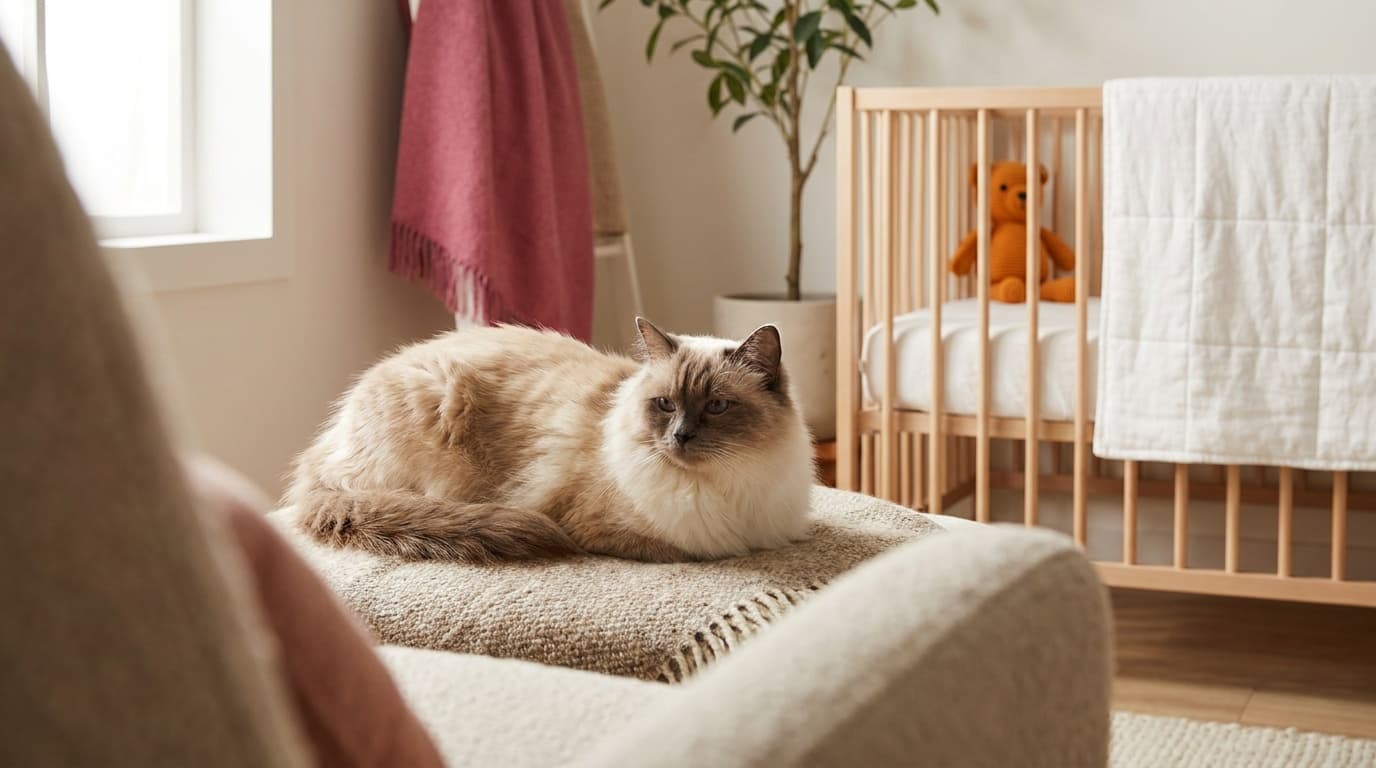
Cats and babies can absolutely share a home peacefully, and the calmest transitions start well before the baby arrives. As the ASPCA notes, there are simple, sensible precautions that expecting parents can take to help both the baby and the cat adjust. The goal is to make the new sounds, smells, and routines feel familiar and safe to your cat, so a big change lands as a gradual one. This guide covers how to prepare, how to keep everyone safe, and how to tell real risks apart from old folklore.
Prepare during the pregnancy
Some cats take change in stride, and some do not. The cats most likely to be unsettled by a baby are the ones that already dislike disruption, so the ASPCA recommends using the whole pregnancy to prepare them slowly.
A few effective steps:
- Introduce baby sounds and smells gradually. Play recordings of baby noises at a low volume so the sounds become ordinary. Rub a little baby lotion on your hands before a pleasant activity with your cat, so the new scents get paired with good things.
- Set up the nursery early. Assemble the crib and furniture weeks ahead and let your cat investigate. Then, before the baby comes, make surfaces like the crib and changing table unwelcoming. The ASPCA suggests covering them temporarily with cardboard and double-sided tape, which cats tend to avoid, so your cat learns to steer clear.
- Shift routines ahead of time. If feeding, grooming, or play will move to a different person or a different time once the baby arrives, make those changes one to two months early. That way the adjustment is not piled on top of the baby's homecoming.
Litter box hygiene and toxoplasmosis during pregnancy
Toxoplasmosis deserves a clear, calm explanation because it is often misunderstood. It is a parasitic infection that can be serious if a woman is infected for the first time during pregnancy. The good news, per the CDC, is that straightforward precautions lower the risk substantially, and having a cat does not mean you must rehome it.
The CDC recommends that, if possible, someone other than the pregnant person changes the litter box. If that is not possible, wear disposable gloves and wash your hands with soap and water afterward. It also advises keeping cats indoors so they are less likely to hunt and become infected, feeding cats commercially prepared food rather than raw or undercooked meat, and not adopting or handling stray cats or kittens while pregnant.
The Cornell Feline Health Center adds useful context: the parasite shed in cat feces is not immediately infectious, which is part of why scooping the box daily and prompt cleanup reduce risk. It is also worth remembering that people are commonly exposed through undercooked meat and gardening soil, not only cats, so gloves while gardening and careful food handling matter too. Any specific questions about your own pregnancy belong with your healthcare provider, and questions about your cat's health belong with your veterinarian.
Bringing the baby home
When you first arrive home, the ASPCA suggests greeting your cat calmly in a quiet room before the household fills with visitors. A few unhurried minutes of reconnection help your cat feel that its world is still intact.
You can let your cat investigate the baby's scent by placing a used receiving blanket or piece of infant clothing in an area the cat can approach on its own terms. Keep the introductions low-key and never forced. Let curiosity happen at your cat's pace rather than carrying the cat over to the baby.
Keep the cat and infant supervised, and mind the myths
You may have heard the old warning that cats "steal a baby's breath." That is folklore, not fact, and there is no truth to the idea that a cat sets out to smother an infant. The real safety concerns are more mundane and easy to manage. A newborn cannot turn its head or move away, so the ASPCA cautions that a warmth-seeking cat that curls up against a baby's face could make breathing difficult. That is a reason for supervision and boundaries, not for fear of the cat's intentions.
Practical rules that cover it: never leave your cat and an infant together unsupervised, keep the crib and other baby sleeping spots off limits, and close the nursery door during naps. If there is no door, a temporary screen door or a crib tent keeps the cat out. These same steps also prevent a stressed cat from urinating in the crib.
When to consult a professional
Most cats settle in with patience and the steps above. If your cat shows persistent signs of stress, such as hiding for long stretches, litter box problems, or behavior that seems aggressive or fearful around the baby, do not try to diagnose it yourself. Talk with your veterinarian, who can rule out a medical cause and, if needed, refer you to a qualified veterinary behaviorist. Reaching out early is a strength, and it protects both your cat and your child.
The bottom line
Introducing your cat to a new baby is mostly a matter of preparation and patience. Make the changes gradual, keep the cat's routine and safe spaces intact, follow sensible litter box hygiene, and supervise every early interaction. Handled this way, most cats accept a new baby as just another member of the family. For a related walk-through on managing pets and small humans, see our guide to how to introduce your dog to children, and if your cat is also new to the home, the new kitten checklist covers the settling-in basics.