Keeping a cat indoors protects it from many dangers, but it also puts the job of providing exercise, stimulation, and a rich environment squarely on you. An indoor cat with nothing to do can become bored, stressed, and prone to weight gain, while an indoor cat whose environment is set up well can thrive for years. The Ohio State University Indoor Pet Initiative was built around exactly this idea, offering science-based guidance on meeting an indoor cat's needs. This article covers the pillars of indoor cat wellbeing, from enrichment and play to litter box care, weight, water, and routine veterinary care. It is a lifestyle guide, not a way to diagnose or treat health problems, which is always your veterinarian's role.
Enrichment and vertical space
Cats are predators by nature, and a healthy indoor life gives them ways to express that. The Ohio State University Indoor Pet Initiative recommends providing resources that let cats climb, perch, scratch, hide, and observe. A cat tree or a shelf near a window lets your cat survey the world from up high, which many cats find deeply satisfying. Scratching posts protect your furniture while letting your cat stretch and mark. Simple additions like cardboard boxes and paper bags give cats places to explore and hide.
The Cornell Feline Health Center notes that environmental enrichment and reducing stress can decrease the severity and frequency of some health issues in cats, which is a reminder that enrichment is not a luxury. It supports both behavior and physical health.
Play and mental stimulation
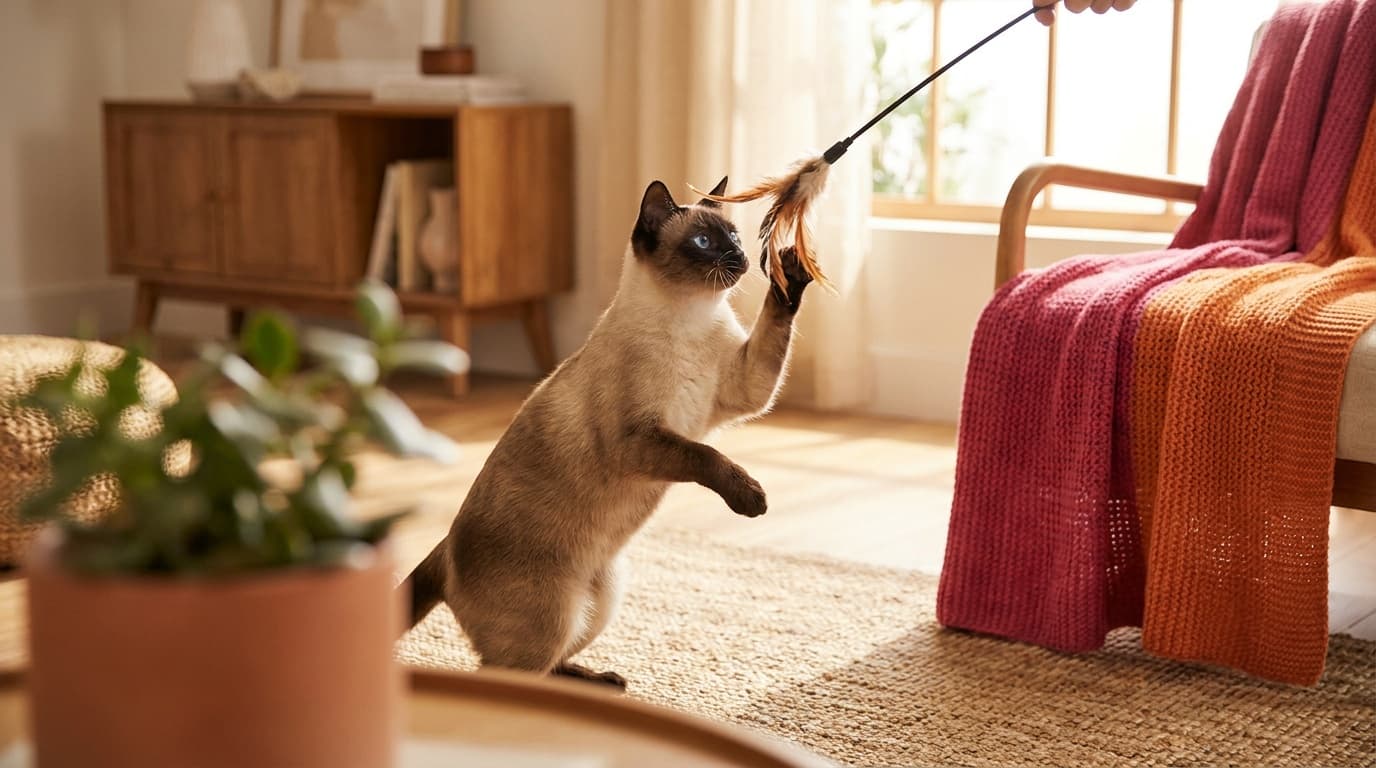
Daily interactive play is one of the best things you can do for an indoor cat. Wand toys that mimic prey let your cat stalk, chase, and pounce, which burns energy and satisfies the hunting instinct. Short sessions a couple of times a day are often more effective than one long one, and ending a session by letting your cat "catch" the toy gives a satisfying finish. Rotating toys keeps them novel, and puzzle feeders that make your cat work a little for food add mental engagement to mealtimes. Play is not just fun. It helps prevent the boredom and inactivity that lead to weight gain and stress.
Litter box hygiene
Litter box care has an outsized effect on an indoor cat's comfort and health. The general guidance is to provide at least one box per cat plus one extra, to keep boxes in quiet and accessible spots, and to scoop daily. Cats are particular about cleanliness, and a dirty or poorly placed box can lead a cat to avoid it. A change in litter box habits, such as going outside the box, straining, or going more or less often, is worth mentioning to your veterinarian, since it can be one of the earliest signals that something is off.
Weight, water, and dental care
Indoor cats are prone to weight gain because they move less, and excess weight is linked to a range of health problems. The Cornell Feline Health Center describes obesity as one of the most common preventable health issues in cats. Measured portions, feeding on a schedule rather than leaving food out all day, and daily play all help. Ask your veterinarian what a healthy weight looks like for your individual cat, and see our guide on how to tell if your cat is overweight for the body checks owners can do at home.
Water intake matters too. Many cats drink less than is ideal, so offer fresh water in clean bowls, consider more than one water station, and note that some cats prefer water placed away from their food. Dental health rounds out the picture. Dental disease is common in cats, so keep up with home care and let your veterinarian check your cat's mouth at routine visits.
Routine veterinary care and monitoring
Indoor cats still need regular veterinary care, even when they seem perfectly healthy. Cats are famously good at hiding illness, so routine checkups give your veterinarian a chance to catch changes early. Ask your vet how often your cat should be seen based on its age and health. Between visits, you are the monitor. Watch for shifts in appetite, thirst, litter box habits, weight, energy, grooming, or behavior, and report anything that drifts from your cat's normal. Noticing early and calling your vet is the goal. Diagnosing and treating is not something to attempt at home.
The bottom line
A healthy indoor cat is usually the product of a well-designed environment and an attentive owner. Give your cat outlets for its natural instincts, keep its resources clean and accessible, help it stay at a healthy weight, and keep up with routine vet visits. Your role is to enrich, observe, and loop in your veterinarian when something changes, not to diagnose. If you share your home with an older cat, our senior cat care guide builds on these habits for the specific needs of aging.