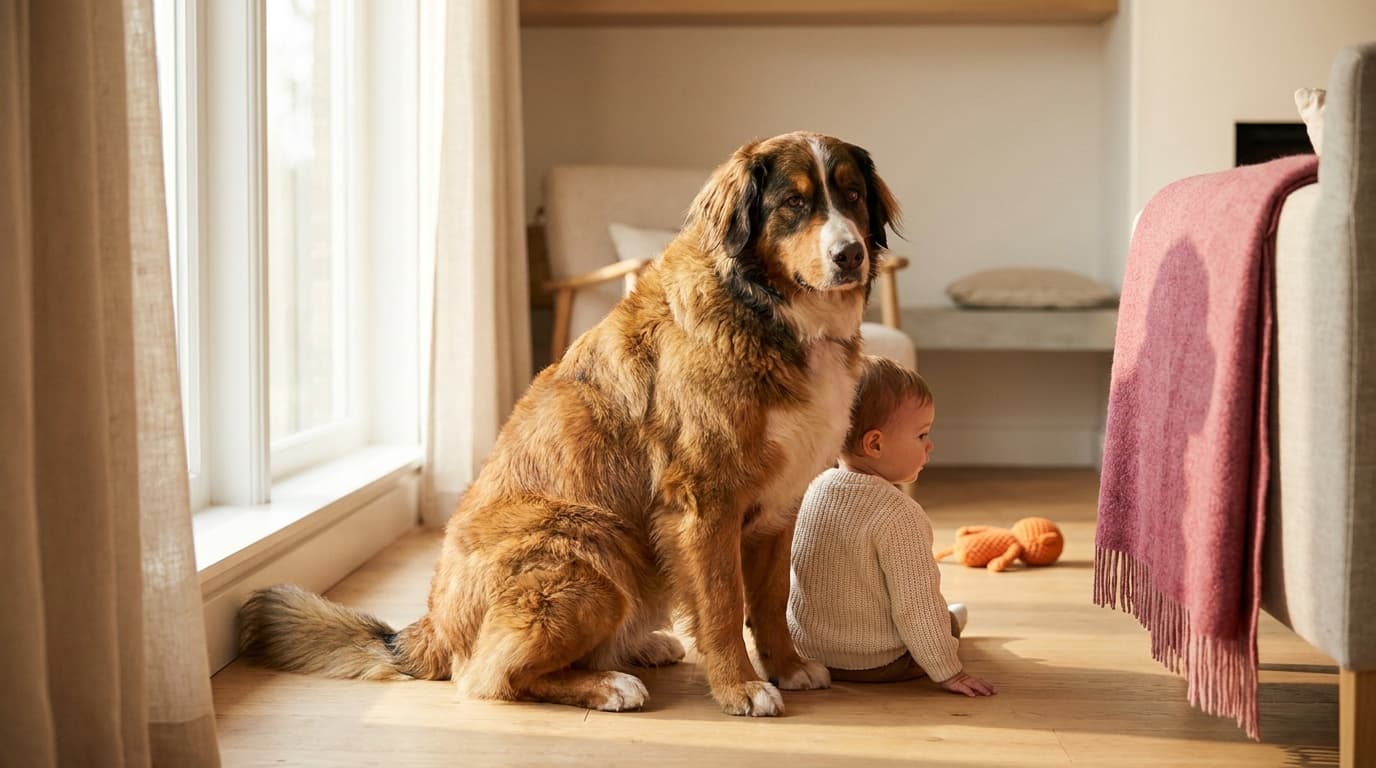
Dogs and children can be wonderful companions, but safe introductions depend on two things: adult supervision and teaching both the dog and the kids how to behave around each other. The AVMA notes that many dog bites to children come from everyday interactions that seem harmless, such as hugging a dog, disturbing it while it eats or sleeps, or approaching too quickly. Most of these bites are preventable, and prevention starts with understanding how dogs communicate.
This guide covers how to set up safe first meetings, what to teach children, and the warning signs every adult should know.
Supervise every interaction
The single most important rule is that young children and dogs should never be left alone together, even with a gentle, familiar dog. Supervision is not about distrusting the dog. It is about the fact that children move fast, make sudden noises, and do not yet read a dog's signals. An adult watching closely can step in before a minor discomfort becomes a bite. Treat supervision as non-negotiable in the early weeks and with young children generally.
Set up the first meeting calmly
Keep the first introduction low-key. Let the dog approach in its own time rather than having children rush toward it. The AKC recommends keeping early interactions calm and positive, and pairing the presence of children with good things like treats and praise so the dog builds a happy association. Ask children to use quiet voices and slow movements, and to let the dog sniff them before any petting begins.
Teach children how to behave around dogs
Children need to learn their part, and they can learn it early. The AKC and AVMA offer consistent guidance:
- Pet gently on the back or shoulders, and avoid the face, ears, and tail.
- Never disturb a dog that is eating, sleeping, or caring for puppies.
- No hugging, climbing on, or pulling at the dog. Many dogs tolerate this but do not enjoy it, and it is a common trigger for bites.
- Approach calmly and let the dog come to you rather than chasing or cornering it.
- If a loose or unfamiliar dog approaches, "be a tree": stand still, arms tucked in, and look down, as the AKC teaches in its safety programs.
Learn to read a dog's body language
Adults should learn the warning signs and watch for them constantly. The AVMA explains that a dog signals discomfort before it bites, and the signs can be subtle: turning its head or body away, stiffening, yawning or lip-licking out of stress, showing the whites of its eyes, or trying to move away. Growling is a clear request for space, not bad behavior to be punished. If you see any of these, calmly separate the dog and child and give the dog room. Punishing a growl only teaches a dog to skip the warning next time.
Build good habits over time
Safe coexistence is an ongoing practice, not a one-time introduction. Keep reinforcing gentle handling with children, keep rewarding the dog for calm behavior around them, and keep supervising. As children grow, involve them in age-appropriate care and positive training, which builds mutual respect. For the reward-based methods that make a dog comfortable and responsive, see essential commands to teach your dog.
When to get help
If your dog shows real fear or aggression around children, if it guards food or space, or if you are unsure how to read its signals, get professional help early. A veterinarian can rule out pain or a medical cause, and a qualified, positive-reinforcement trainer or veterinary behaviorist can build a safe plan. This guide is general education, not a substitute for hands-on help with a specific dog and a specific child.
The bottom line
The recipe for safe dogs and kids is simple to state and takes real diligence to keep: supervise closely, teach children to respect the dog, and learn to read the dog's signals. Do those three things consistently and you give a dog and a child the best chance at the kind of bond that makes both their lives better.