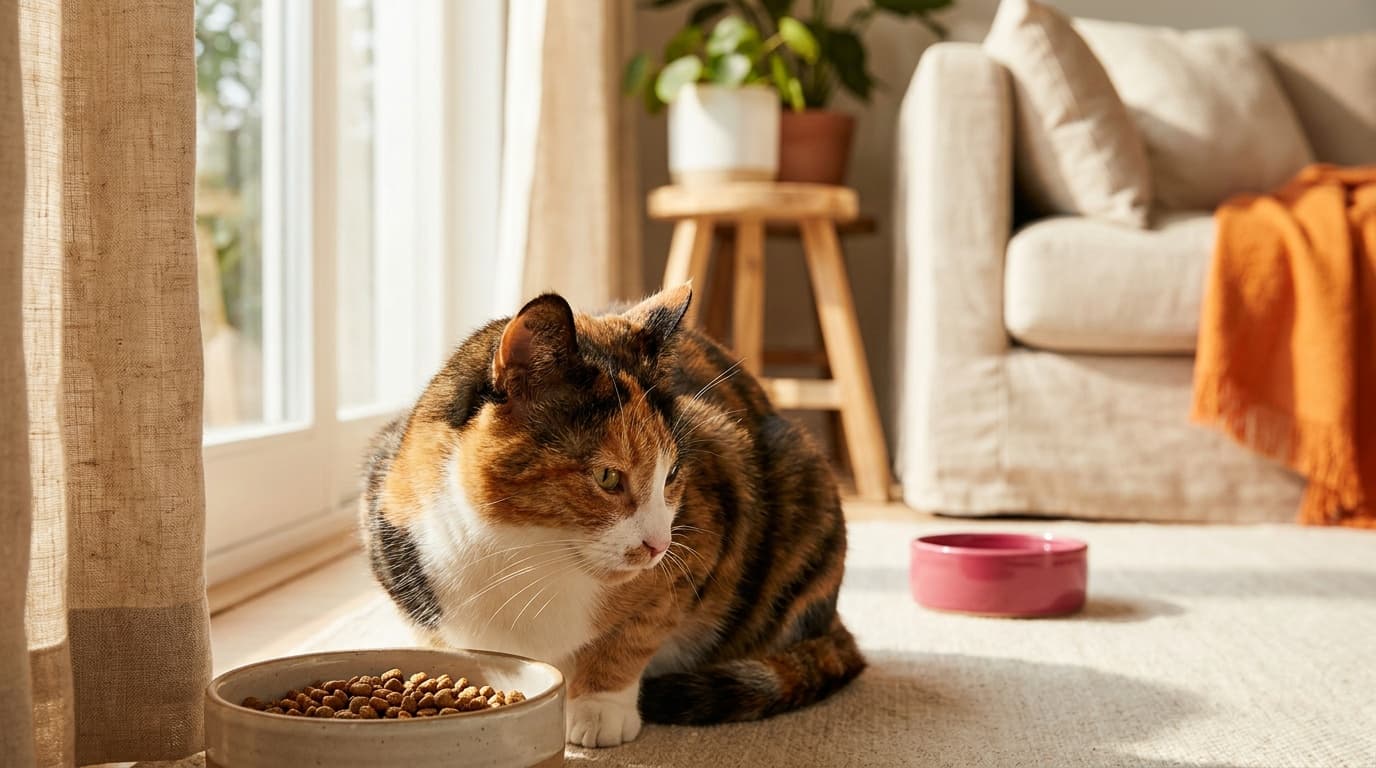
A cat that suddenly stops eating is telling you something is wrong, even if you cannot tell what. Appetite loss, which veterinarians call anorexia, is a symptom rather than a diagnosis, and it can accompany conditions that range from mild and short-lived to serious. The Cornell Feline Health Center stresses that a cat's avoidance of food should never be ignored, because it can affect a cat's health quickly. This article explains what appetite loss can signal, why cats in particular should not go long without eating, and when a not-eating cat becomes an urgent call to the vet. It does not diagnose the cause or tell you how to treat it at home. That is your veterinarian's job.
Appetite loss is a symptom, not a diagnosis
There is rarely one obvious reason a cat stops eating. The VCA Animal Hospitals network describes two broad patterns. In true anorexia, the cat has lost the desire to eat. In pseudo-anorexia, the cat is hungry but something makes eating difficult or painful, such as a sore mouth. Both look similar at the bowl and both should be taken seriously.
The possible underlying reasons are wide-ranging, and only a veterinarian can sort them out. They can include dental or mouth pain, nausea, digestive upset, pain elsewhere in the body, an infection, kidney or other organ problems, and stress or changes in routine. Some causes are relatively minor and pass, while others are serious. Because the same sign can point in so many directions, the goal at home is not to guess the cause but to recognize that not eating is meaningful and to know when it becomes urgent.
Why a cat not eating is more urgent than it seems
This is the part that surprises many owners. Cats do not tolerate going without food the way some other animals do, and the risk is not just weakness. The Cornell Feline Health Center explains that when a cat stops eating, the body starts moving large amounts of fat to the liver to use for energy, and the liver can become overwhelmed. This condition is called hepatic lipidosis, or fatty liver, and it can develop in cats that stop eating for as little as a few days. Overweight cats are at particular risk, because they have more body fat to mobilize.
The practical takeaway is important. A cat skipping a single meal is usually not an emergency, but a cat that has not eaten for around a day, especially an overweight cat, warrants prompt veterinary attention rather than a wait-and-see approach. The clock matters more with cats than most people expect.
When to call the vet
Reach out to your veterinarian promptly, and treat it as more urgent, if your cat:
- Has not eaten anything for roughly 24 hours, or is eating far less than normal for more than a day or two.
- Is overweight, which raises the risk of fatty liver when eating stops.
- Also seems lethargic, is hiding, or is behaving unlike itself.
- Is vomiting, has diarrhea, or shows signs of pain or discomfort.
- Is drooling, pawing at the mouth, or seems to want food but cannot eat it.
- Is very young, very old, or has a known health condition.
When several of these appear together, do not wait. If your cat is also vomiting, our guide on why your cat may be throwing up covers a related sign, and because pain often hides behind appetite loss, our guide on how to tell if your cat is in pain may help you describe what you are seeing to your vet.
Gentle encouragement, and what not to do
While you arrange a veterinary visit, a few gentle steps can sometimes help a cat that is simply picky or mildly off, though they are not a substitute for care if the cat truly will not eat:
- Warm the food slightly. Gently warming wet food can lift its aroma, which matters because cats rely heavily on smell to eat.
- Offer a quiet, calm space. Move the bowl away from noise, other pets, or a busy walkway so your cat can eat without being startled or cornered.
- Freshen and simplify. Offer fresh food and clean water, and keep food and water dishes a little apart, which many cats prefer.
Do not force-feed your cat or try to push food or liquid into its mouth. This can be dangerous, can make a nauseated cat feel worse, and can turn your cat against eating. Do not give human food or any medication to stimulate appetite on your own. If gentle encouragement does not quickly get your cat eating, that is a signal to involve your veterinarian, not to keep trying at home. For broader tips on tempting a fussy but otherwise healthy eater, see our guide on how to feed a picky cat.
The bottom line
If your cat is not eating, the most useful thing you can do is take it seriously and watch the clock. A skipped meal is usually fine, but a cat that refuses food for around a day, particularly an overweight one, needs a veterinarian, not more waiting. You do not need to figure out why on your own, and you should not try to treat it at home. Note what you are seeing, try gentle encouragement briefly, and call your vet. If you want a wider view of feline red flags, our overview of common cat health problems is a good next read.