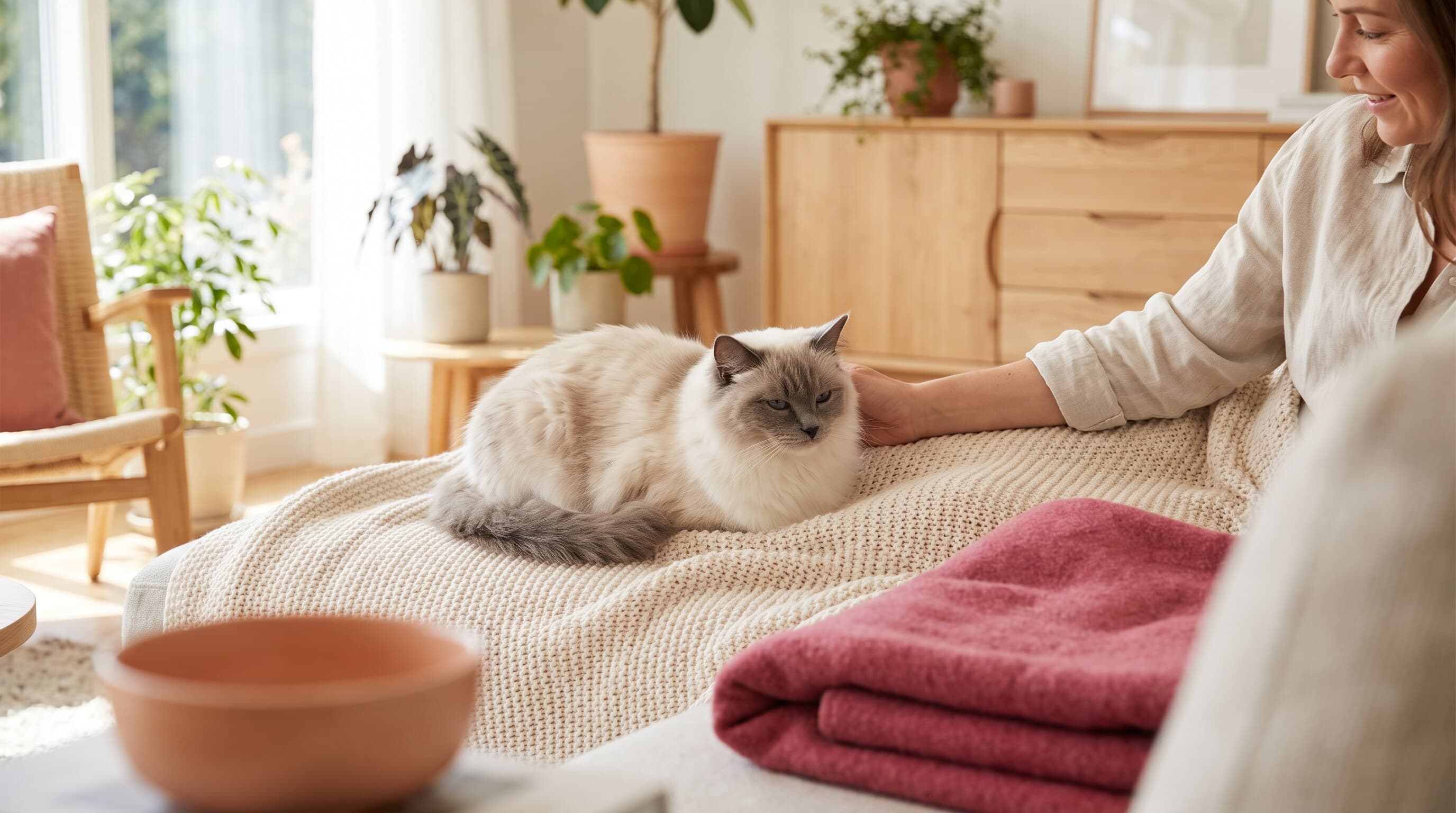
Cats are experts at hiding pain, which is why the signs are so easy to miss. As the Cornell Feline Health Center explains, cats evolved to mask weakness, since in the wild an animal that looks vulnerable is a target. The practical result is that a cat in pain rarely cries out. Instead, it shows small shifts in posture, movement, and daily habits. This article is a guide to the signs worth watching, so you know when to pick up the phone. It is not a way to diagnose what is wrong or to decide on treatment at home. Only your veterinarian can do that.
Why behavior changes are the clearest clue
Because cats do not reliably vocalize pain, the American Animal Hospital Association identifies behavioral change as the principal indicator that a cat is hurting. That makes you, the person who sees your cat every day, the most important observer. You know your cat's normal routine, favorite spots, and usual temperament, so you are positioned to notice when something drifts from baseline. The signs below are common patterns, not a checklist that confirms pain. Any one of them can also have causes unrelated to pain, which is exactly why a professional assessment matters.
Changes in movement and posture
Mobility shifts are among the more reliable signs. Watch for:
- A stiff or hunched gait, or moving more slowly than usual.
- Reluctance to jump up to favorite perches, or hesitating and jumping to lower spots than before.
- Trouble going up or down stairs, or taking them one at a time.
- Less stretching, or a crouched posture with the belly tucked and legs drawn in.
- Sitting hunched with the head lowered rather than curled comfortably.
A cat that used to leap onto the counter in one motion and now climbs up in stages, or picks a chair instead, may be telling you that the jump has started to hurt.
Changes in grooming, appetite, and habits
Pain often shows up in a cat's self-care and daily routine. According to the AAHA pain management overview, signs can include decreased grooming (a dull, unkempt, or matted coat), or the opposite, overgrooming and licking at one specific area. Other habit changes worth noting include eating less or approaching food and then walking away, drinking differences, and changes around the litter box, such as going outside it or struggling to get in and out. A cat that suddenly avoids a previously loved box may be finding the step-in painful rather than misbehaving.
Changes in temperament and interaction
Pain can shorten any animal's patience. A normally friendly cat may hiss, growl, swat, or bite, especially when touched near a sore area. Others become clingier or more restless, shift their sleep patterns, or vocalize more than usual. Facial signs can appear too. Veterinarians use tools like the Feline Grimace Scale, and at home you might notice flattened or rotated ears, tightly narrowed or squinted eyes, a tense muzzle, or whiskers held stiffly. These are subtle, and no single facial cue is proof of anything. They are simply reasons to look more closely and to call.
When to call your veterinarian
You do not need to be certain a cat is in pain to justify a call. Reach out to your veterinarian if you notice any of these signs persisting, if several appear together, or if your cat's behavior has clearly shifted from its normal self. Some situations warrant prompt or urgent contact rather than watchful waiting, including straining in the litter box or an inability to urinate, sudden inability to use a limb, crying out, rapid or labored breathing, or a cat that stops eating entirely.
The bottom line
Trust the pattern, not a single moment. One skipped jump on a lazy afternoon is not an emergency, but a cat that has steadily grown quieter, stiffer, or less interested in the things it used to love deserves a veterinary conversation. Because cats hide discomfort so well, noticing early and calling promptly is the most helpful thing an owner can do. If your cat is aging, our guidance on how often dogs and cats should see the vet covers why senior pets benefit from more frequent checkups, which is often where subtle pain gets caught first.