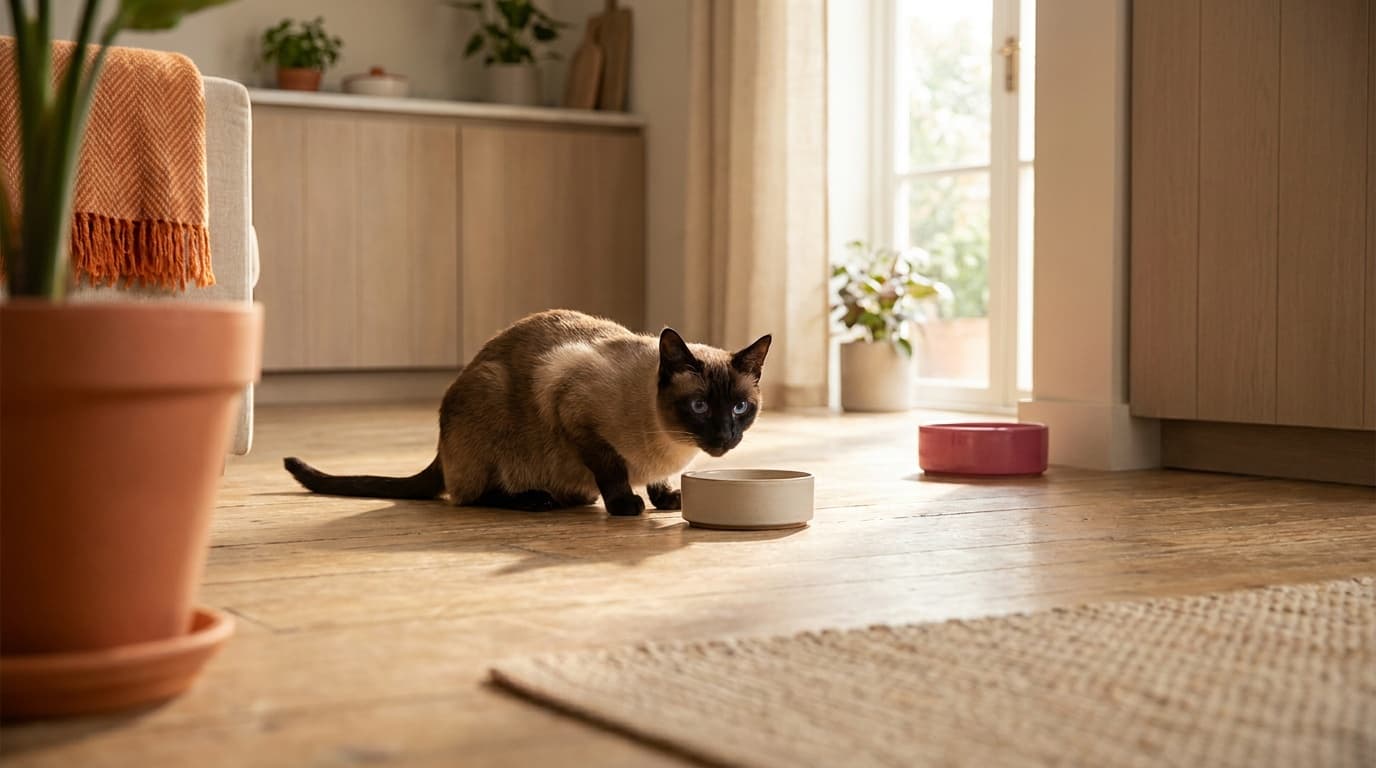
Some cats are genuinely fussy eaters, but the first and most important step is to make sure pickiness is not actually a health problem in disguise. A sudden change in a cat's appetite is often a medical sign, not a preference. According to VCA Animal Hospitals, a cat that abruptly stops eating or becomes newly choosy should be checked by a veterinarian, because dental pain, nausea, and many illnesses show up first as a reluctance to eat. Once your vet has ruled out a medical cause, there is a lot you can do to tempt a truly picky cat.
When pickiness is a red flag
Cats hide illness well, and appetite is one of the earliest things to change. The critical safety point is that a cat should not go without eating for long. As PetMD's veterinary reviewers note, a cat that refuses food risks developing hepatic lipidosis, a serious liver condition, so a cat that will not eat for more than about a day is an urgent matter rather than a stubborn one. The Cornell Feline Health Center explains that this fatty liver condition is most common in overweight cats that suddenly stop eating, which is why a sudden loss of appetite should never be waited out.
Tips to tempt a fussy eater
Once illness is ruled out, these approaches, drawn from veterinary sources, often help a picky cat eat.
- Warm the food slightly. Gently warming wet food closer to body temperature releases aroma, which matters because cats decide a lot about food by smell. A few seconds is enough, and stir to avoid hot spots.
- Offer different textures. Cats form strong texture preferences early in life. Some prefer pate, others chunks in gravy, shreds, or dry food. Experimenting can reveal what your cat actually likes.
- Keep bowls clean and calm. Wash bowls regularly, use a wide shallow dish to avoid whisker discomfort, and place food away from the litter box and busy foot traffic.
- Feed small, fresh portions. Cats often reject food that has been sitting out and gone stale. Smaller, fresher servings can be more appealing than one large bowl left all day.
- Try a topper. A spoonful of a strongly aromatic wet food, or a splash of low-sodium broth your vet approves, can make a familiar food more enticing.
- Reduce competition and stress. In multi-cat homes, a nervous cat may eat poorly. Separate feeding spots can help.
Switching a picky cat's food
Picky cats are also often neophobic, meaning wary of new foods, so transitions need to go slowly. Rushing a switch usually backfires. Move gradually over 7 to 10 days, or longer for a fussy cat, mixing increasing amounts of the new food into the old. Our guide to switching your cat's food safely walks through the schedule and the GI signs to watch for. If your cat eats only the old food and leaves the new, slow down and add less new food at a time rather than forcing the change.
Keep the diet balanced, not just accepted
It is tempting to feed a picky cat only the one treat-like food it will reliably eat, but that can lead to an unbalanced diet or a cat that "trains" you to keep upgrading the menu. Aim for a complete and balanced food your cat will accept, use the tempting tricks to encourage it, and resist building meals entirely around human food or treats. Our guide to how much to feed your cat can help you keep portions on track once your cat is eating well.
If your cat remains a reluctant eater despite a clean bill of health and these strategies, talk with your veterinarian again. Persistent poor appetite can point to a subtle underlying issue, and your vet may suggest appetite support or further testing. Patience and observation are your best tools, and a fussy but otherwise healthy cat can usually be coaxed into eating well.