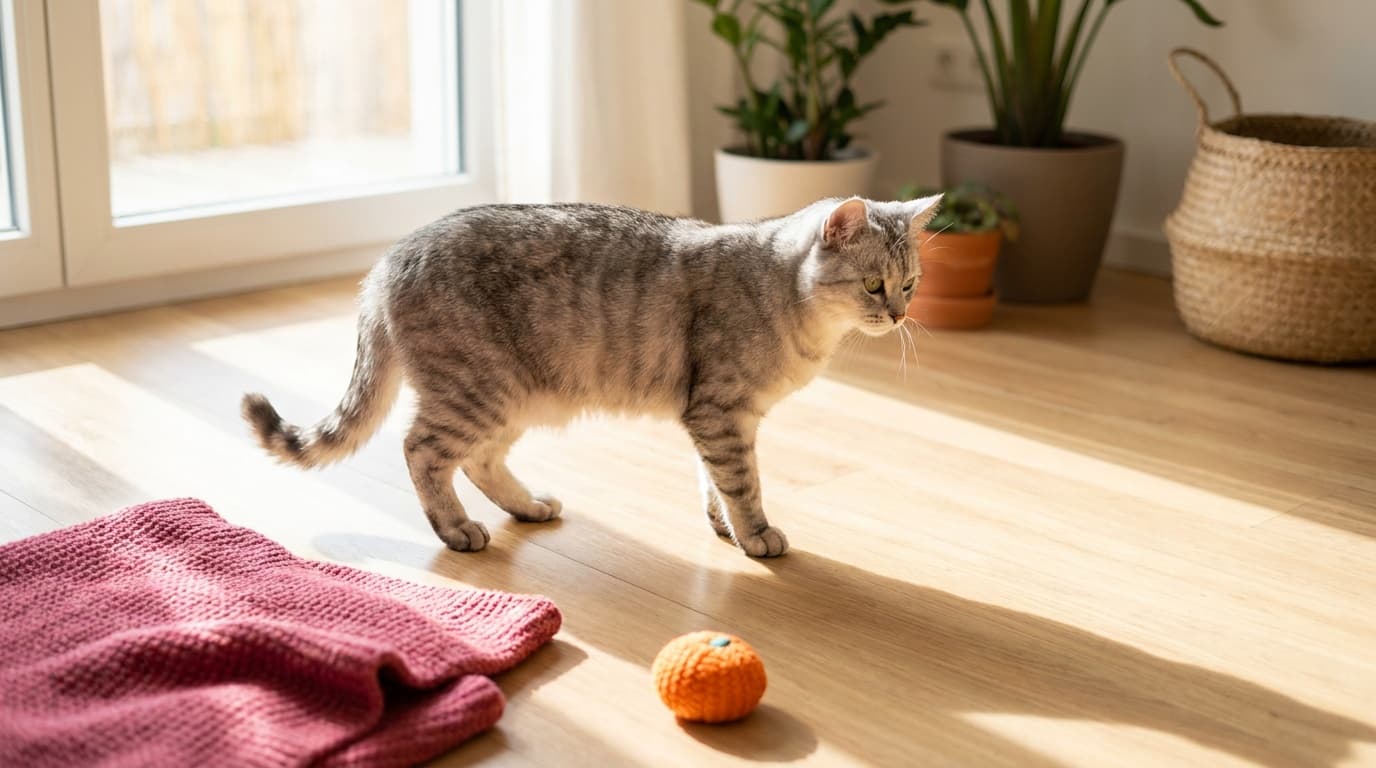
Telling whether a cat is overweight is harder than it sounds, because extra weight creeps on slowly and a fluffy coat hides a lot. The good news is you can learn to do a reasonable home check using your hands and eyes. According to the Cornell Feline Health Center, owners can assess a cat's physique with a body condition score based on feeling the ribs, looking at the waist from above, and viewing the profile from the side. This is an awareness guide, not a diagnosis. Only your veterinarian can confirm whether your cat is overweight and build a safe plan, so treat what follows as a way to know when to book that visit.
The three home checks
Vets assess body condition with a hands-on scoring system, and you can use a simplified version of the same checks at home. The VCA Animal Hospitals body condition score describes what an ideal cat should feel and look like.
- Rib check. Run both hands gently along your cat's sides over the ribcage. In a healthy-weight cat you should be able to feel the ribs easily under a thin layer of fat, a bit like feeling the back of your knuckles when your hand is relaxed. If you have to press to find the ribs, there is likely excess fat over them.
- Waist check (from above). Look down at your standing cat from above. A cat at a healthy weight has a visible waist, a slight inward curve behind the ribs. A straight-sided or bulging outline where the waist should be points toward overweight.
- Profile check (from the side). Look at your cat from the side. There should be a slight tuck-up of the belly behind the ribcage. A belly that hangs low or sways is a sign of extra weight, though note that a modest low-hanging flap of skin called the primordial pouch is normal in many cats and is not the same as fat.
How vets score body condition
Veterinarians usually use a 9-point body condition score, where a 5 is ideal. As Cornell describes, a cat at an ideal 5 is well proportioned, has a waist visible behind the ribs, has ribs you can feel with only a slight fat covering, and has a minimal abdominal fat pad. As the score climbs, the ribs become harder to feel, the waist disappears, and fat deposits build over the back, belly, and even the face and limbs. Some clinics use a 5-point scale instead, but the idea is the same: it is a standardized way to describe body condition rather than a bare weight in pounds. Your vet will also weigh your cat and track the trend over time, since even a pound or two is significant on an animal that may only weigh 10 to 12 lbs.
Why extra weight matters
This is not about appearance. Excess weight is genuinely hard on a cat's health. Cornell notes that overweight cats are markedly more likely to develop diabetes than cats at an optimal weight, and the VCA adds that carrying extra weight is associated with problems including arthritis and joint pain, and can worsen a cat's overall quality of life. Because cats are small and good at hiding discomfort, the effects often build quietly. Catching a weight problem early, while it is still a few extra ounces rather than a few extra pounds, makes it far easier to address.
When to see your vet
If your home checks suggest your cat is carrying extra weight, the next step is a vet visit rather than a do-it-yourself diet. Book an appointment if you cannot easily feel the ribs, if the waist has disappeared from the overhead view, if the belly hangs noticeably, or if you have simply noticed the number on the scale creeping up. You should also see your vet promptly for any sudden change in weight or appetite in either direction, since rapid weight loss and rapid weight gain can both signal an underlying problem that needs attention. Your veterinarian can confirm the body condition score, rule out medical causes, and set a target weight and a feeding and activity plan tailored to your cat.
The bottom line
Learning the rib, waist, and profile checks turns weight from something you guess at into something you can actually monitor month to month. If those checks raise a flag, resist the urge to slash the food bowl and instead let your veterinarian guide a slow, safe plan. For a fuller look at helping a heavy cat slim down under professional guidance, see our guide to how to help an overweight cat lose weight, and keep body condition on your radar as part of keeping your indoor cat healthy.