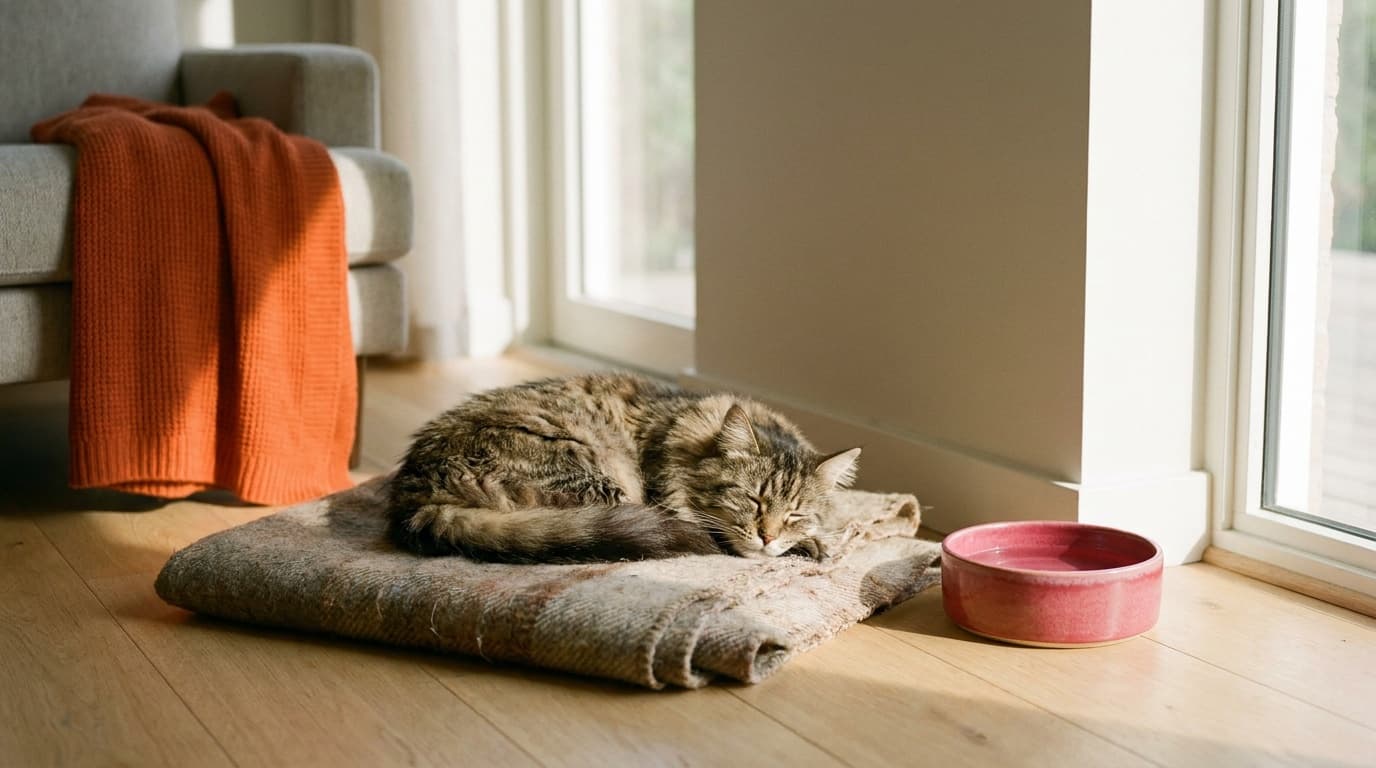
Cats are living longer than ever, and their care needs shift as they age. The Cornell Feline Health Center emphasizes that regular veterinary exams are central to keeping an older cat well, with more frequent checkups often recommended for geriatric cats. This guide covers what tends to change with age, what to monitor at home, and why wellness visits become more important, not less. It is a guide to help you support an aging cat and know when to call, not a way to diagnose or treat age-related conditions. That remains your veterinarian's role.
What "senior" means and what changes
Cats are generally considered senior from around 11 years and geriatric later still, though individuals vary. Cornell's overview of the special needs of the senior cat frames senior care as recognizing and reducing factors that can become health risks with age. Common age-related changes include:
- Reduced mobility and stiffness, sometimes from arthritis, making jumps and stairs harder.
- Changes in weight, either loss or gain, and shifts in appetite.
- Increased thirst or urination, which can accompany several age-related conditions.
- Dental discomfort that affects eating.
- Changes in grooming, leading to a less kept coat or matting.
- Reduced hearing or vision.
- Cognitive changes, such as altered sleep, more vocalizing, or disorientation.
- Litter box changes, including going outside it or trouble getting in and out.
None of these should be written off as "just old age." Many reflect manageable conditions, which is exactly why noticing them matters.
What to monitor at home
Your daily observations are the backbone of senior cat care, because you see the gradual drift that a once-a-year snapshot can miss. Keep a loose eye on:
- Weight and body condition, watching for gradual loss or gain.
- How much your cat eats and drinks, since changes in either can be significant.
- Litter box habits, including volume, frequency, and any accidents.
- Mobility, such as hesitating before jumps or choosing lower perches.
- Grooming and coat quality.
- Activity level, sleep patterns, and interaction with the household.
- Any new lumps, bad breath, or changes you can see or smell.
Writing down what you notice, even briefly, helps you spot trends and gives your vet useful detail. Small comforts help too: easy-access litter boxes with low sides, soft warm bedding, food and water that do not require a jump to reach, and gentle, patient handling.
Why wellness visits matter more with age
The most valuable thing you can do for a senior cat is keep up with regular veterinary care, often more frequently than for a younger cat. The American Animal Hospital Association's senior care guidelines lay out a framework for proactive senior pet healthcare, reflecting how much earlier problems can be caught with attentive, regular assessment. Because many age-related conditions develop slowly and cats hide illness well, a wellness exam, sometimes with routine bloodwork or other screening your vet recommends, can surface issues before they become obvious at home. Our broader guidance on how often dogs and cats should see the vet explains why senior pets benefit from more frequent checkups.
When to call your veterinarian
Reach out when you notice changes such as weight loss or gain, eating or drinking differently, increased urination, reduced grooming, new stiffness or reluctance to jump, litter box changes, or shifts in behavior and sleep. Some situations warrant prompt or urgent contact, including a cat that stops eating entirely, straining to urinate or an inability to urinate, difficulty breathing, sudden inability to use a limb, or collapse. For a closer look at subtle discomfort, our guide on telling if your cat is in pain covers the small cues aging cats often show, and our overview of common cat health problems puts these issues in context.
The bottom line
Caring for a senior cat is mostly about paying attention. The changes of age are gradual, and the cats that do best have owners who notice a skipped jump, an extra water bowl visit, or a slightly duller coat and mention it. Pair that attentiveness with regular veterinary visits and a few home comforts, and you give your aging cat the best shot at staying comfortable and well for its later years.