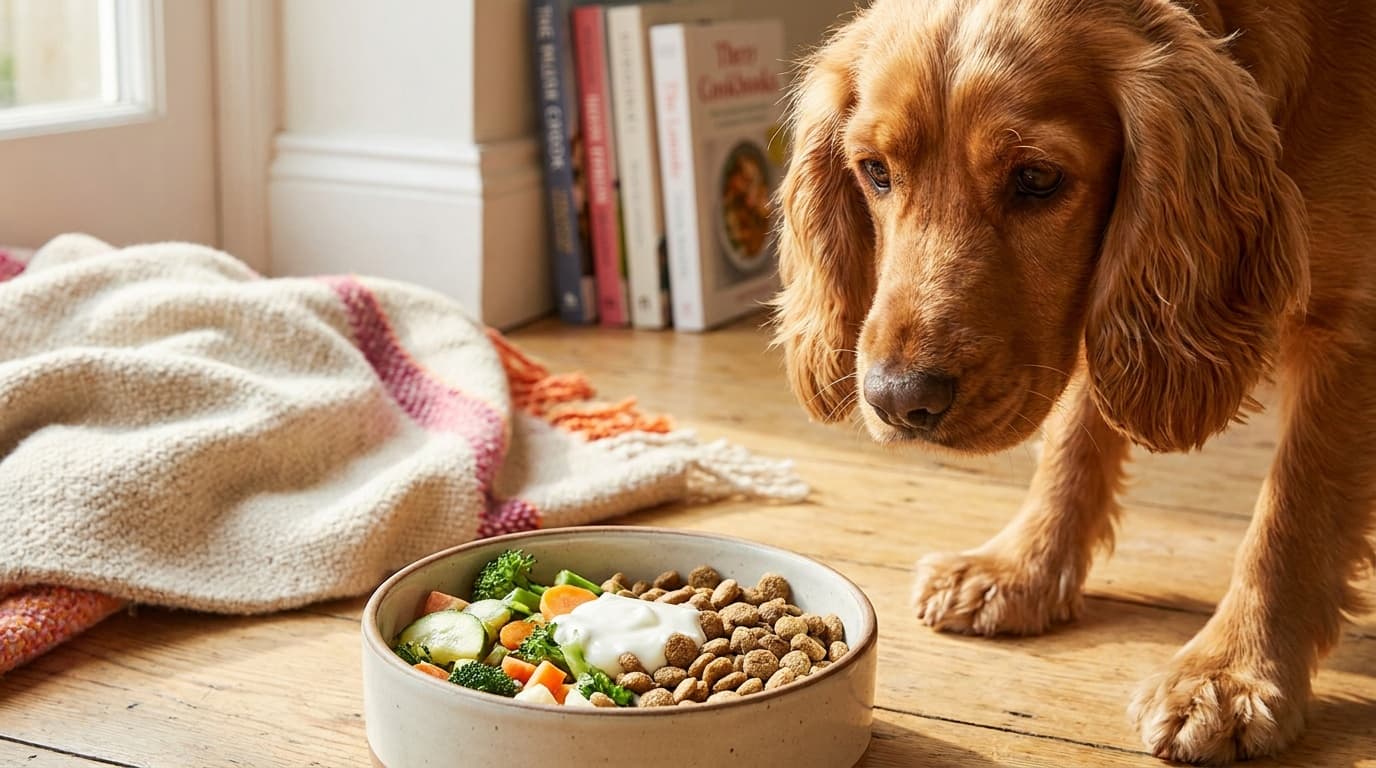
Many owners like the idea of mixing up their dog's meals, and there is nothing wrong with a little variety when it is done carefully. The key is to keep the foundation of the diet complete and balanced, add extras in small amounts, and know which foods are genuinely safe versus which can be harmful. The American Kennel Club's overview of fruits and vegetables dogs can and cannot eat makes a useful point up front: as omnivores, dogs have no strict need for fruits or vegetables, so any additions are treats rather than requirements. That framing keeps variety in its proper place, as a small, safe bonus.
Start with a complete and balanced base
Before you add anything, make sure the core of your dog's diet is a food that meets established nutritional standards. A complete and balanced food, as explained by the U.S. Food and Drug Administration, contains all the nutrients a dog needs in the right proportions. Toppers, table foods, and treats are not complete and balanced, so if they crowd out too much of the main diet, they can unbalance an otherwise well planned meal.
This is why variety works best as a garnish rather than a replacement. You can rotate proteins, add a spoonful of a safe vegetable, or switch between formulas within a trusted line, but the bulk of what your dog eats should stay a complete diet. Keeping the base steady also means that if variety does upset their stomach, you have a reliable food to fall back on.
Introduce any new food gradually
Dogs' digestive systems adapt slowly, so the fastest route to a mess on the floor is dumping a new food or a big new topper into the bowl all at once. Whether you are rotating to a different formula or trying a new vegetable, start with a very small amount and increase it over several days while watching your dog's stool and energy.
If you are changing the main food rather than just adding a topper, follow a proper transition. Our guide to switching your dog's food safely lays out the gradual mixing method that lets the gut microbiome adjust. Going slowly does two things: it reduces the odds of diarrhea, and it makes it much easier to tell which new food caused a problem if one appears.
Safe additions to try in moderation
Plenty of everyday foods are fine as occasional extras. According to the AKC's guides to fruits and vegetables and people foods dogs can and cannot eat, commonly dog safe options include carrots, green beans, peas, cucumber, plain cooked pumpkin, apple slices with the core and seeds removed, blueberries, banana, and watermelon with the rind and seeds taken out. Plain, unseasoned cooked lean meats are also generally well tolerated.
A few practical rules make these safer. Serve extras plain, with no salt, butter, oil, garlic, onion, or sauces. Cut everything into pieces sized for your dog to avoid choking. Remove pits, seeds, cores, and rinds. And introduce only one new item at a time so that if something disagrees with your dog, you know the culprit.
About rotation feeding
Some owners practice rotation feeding, cycling through different proteins or brands on a schedule to offer variety. Done thoughtfully, with each food being complete and balanced and each change introduced gradually, rotation can work for many dogs. But it carries a real caveat: frequent changes give a sensitive dog's stomach less time to settle, and they make it harder to pinpoint the cause when something does go wrong. If your dog has a stable stomach and enjoys the change, occasional rotation is reasonable. If your dog is prone to loose stools, a consistent diet is often kinder.
When to check with your vet first
Variety is lower stakes for a healthy adult dog than for one with a medical condition. Dogs managing conditions such as pancreatitis, kidney disease, allergies, food sensitivities, or diabetes may be on a diet for a specific reason, and adding toppers can undo the point of it. Puppies, seniors, and dogs recovering from illness also have particular needs. If your dog falls into any of these groups, talk with your veterinarian before you start experimenting, and mention any new foods at checkups.
The bottom line
Adding variety to your dog's diet is easy to do well: anchor the diet with a complete and balanced food, keep extras under the 10 percent line, introduce new items slowly and one at a time, and steer clear of the toxic list. When you are unsure whether a food is safe, the ASPCA's guidance is a reliable first check, and your veterinarian is the right person to ask about your individual dog. Variety should be a small pleasure, not a gamble.