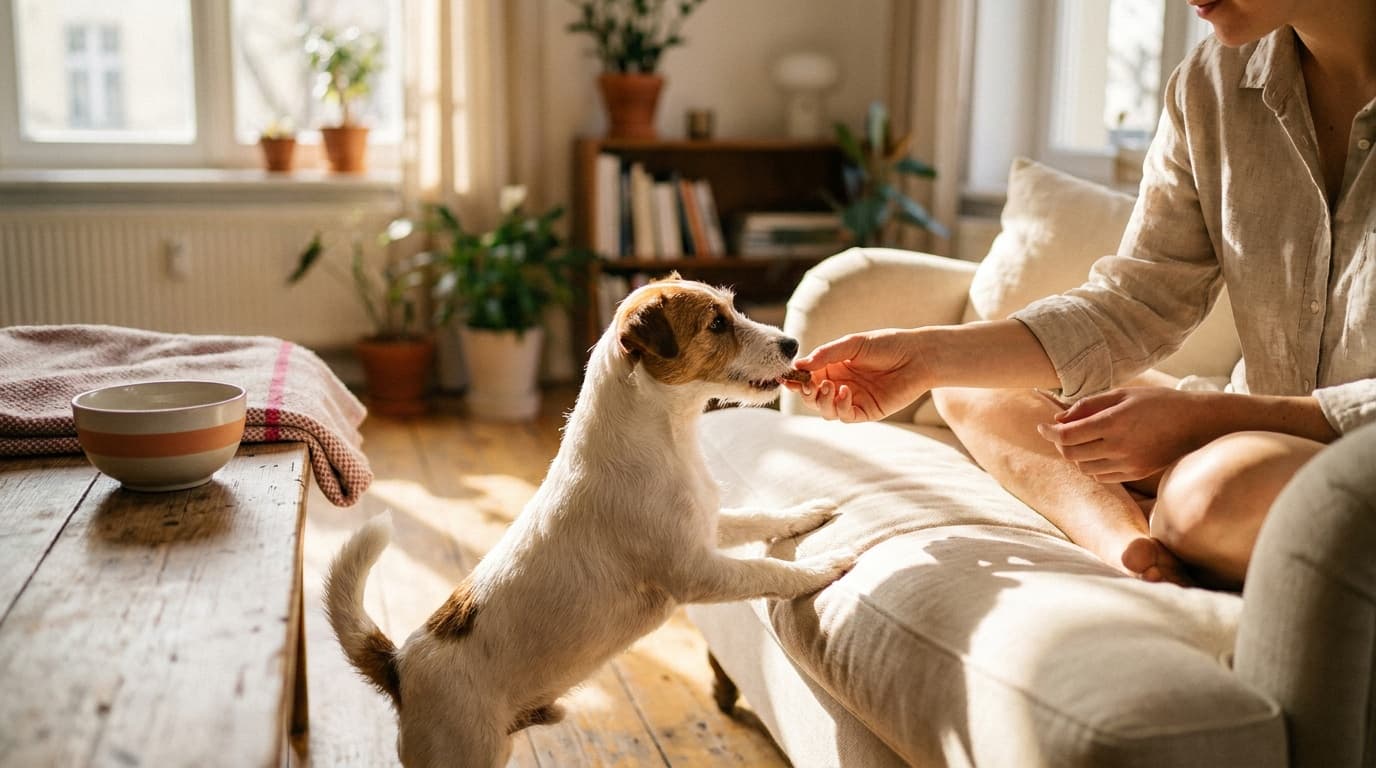
The simplest reliable guideline is the 10 percent rule: treats should make up no more than about 10 percent of your dog's total daily calories, with the other 90 percent coming from a complete and balanced food. According to the American Kennel Club, this keeps treats from crowding out the balanced nutrition your dog needs while still leaving room for rewards. VCA Animal Hospitals confirms the same 10 percent ceiling. The key detail people miss is that the rule is about calories, not the number of treats.
Why calories, not count
A single large biscuit can carry more calories than a handful of tiny training bits, so counting treats tells you very little. What matters is the calorie total. VCA points out that treats are not complete and balanced foods and can contain far more fat, salt, or sugar than a dog needs, which is why they should stay a small slice of the daily total rather than a meaningful part of the diet.
To use the rule, you need a rough sense of your dog's daily calorie needs. Your veterinarian can give you a specific number, and our guide to how much to feed your dog explains how portion math works. Once you know the daily calorie target, 10 percent of that number is your treat budget. A dog eating around 700 calories a day, for example, has roughly 70 calories to spend on treats, and that can disappear quickly with a couple of dental chews.
Choosing healthier treats
Within that budget, some treats are better choices than others. VCA's guidance on treating your pet the healthy way suggests favoring low-calorie, single-ingredient options and being mindful of rich or fatty extras. A few practical ideas:
- Use small pieces. Dogs respond to the act of getting a reward, not its size. Breaking treats into tiny bits stretches the calorie budget, which is ideal for training.
- Try dog-safe vegetables. Many dogs enjoy green beans, carrot pieces, or a slice of cucumber, which are low in calories. Confirm any new food is safe first, since some human foods are not.
- Reserve part of the meal ration. Setting aside a portion of your dog's regular kibble to use as rewards keeps the diet balanced automatically.
- Read the treat label. Calorie counts are often listed, and a treat marketed as "low calorie" is not always low if the pieces are large.
For training that involves a lot of repetitions, small, low-calorie training treats are designed exactly for this, letting you reward often without overshooting the budget.
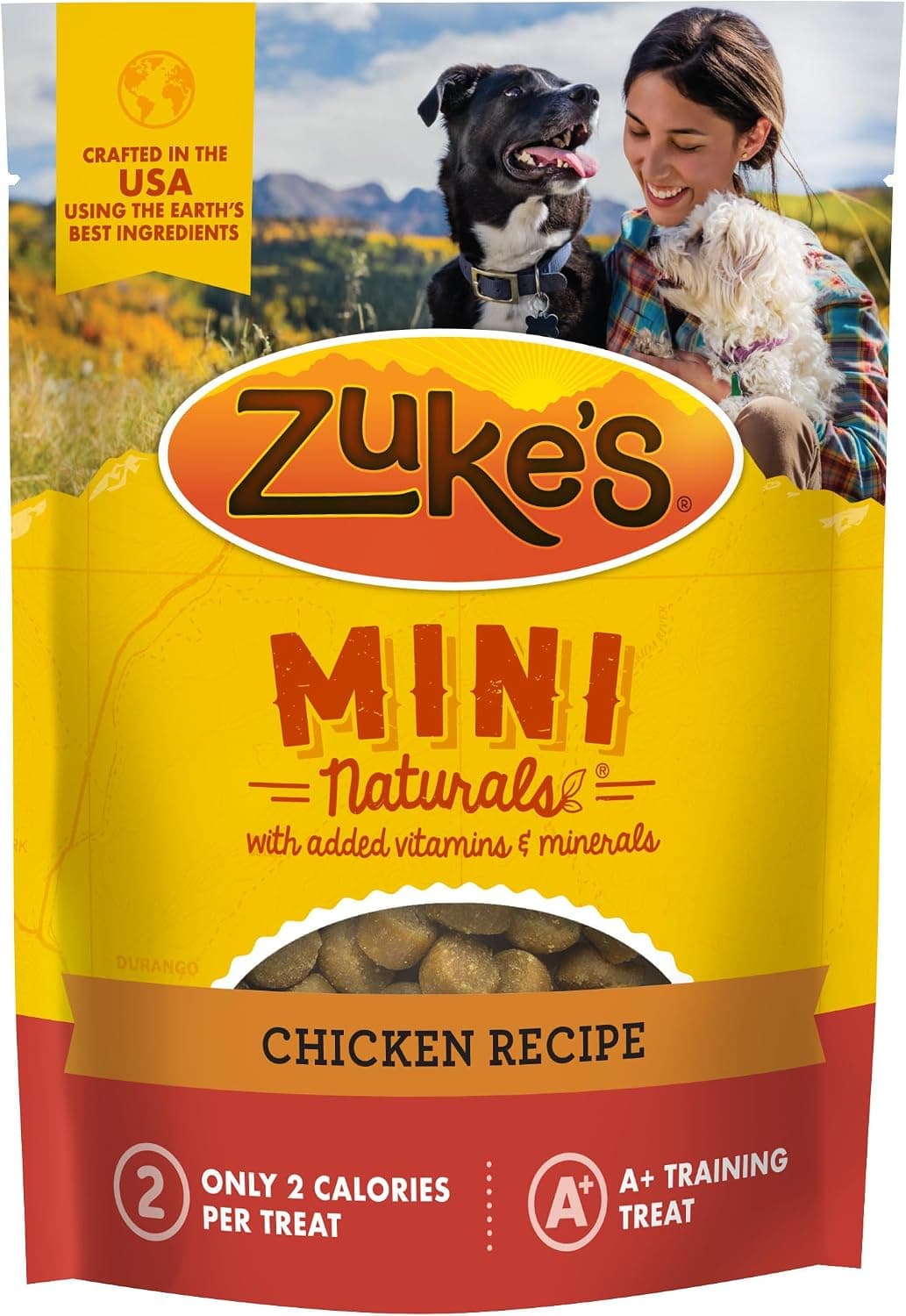
Zuke's Mini Naturals are a good example: each piece is only a few calories, so you can reward often and still stay inside the treat budget.
ZUKE'S
Mini Naturals Dog Training Treats
- Protein
- Real chicken listed first
- Size
- Mini, under 3 calories each
- Texture
- Soft and moist
- Bag
- 16 oz
- Use
- High-frequency training rewards
Tiny, soft chicken treats built specifically for high-repetition training where portion size matters. Each piece is low in calories so dogs can be rewarded many times per session. The moist texture makes them easy to break and carry in a treat pouch.
See more detailSee less detail
Strengths
- Very small size keeps training calories low
- Long-standing reputation among trainers
- Soft texture is easy to break in half
Weaknesses
- Can dry out once opened
- Not a limited-ingredient recipe
Best for
Trainers who reward frequently and need a low-calorie mini treat
What owners say
Treats for training without the calories
Training is where the 10 percent rule gets tested hardest, because effective training relies on frequent rewards. The trick is to make each reward tiny. A pea-sized piece delivers the same "yes, that was right" message as a whole biscuit, so breaking treats into small bits lets you reward dozens of times while barely touching the calorie budget. For an intensive training day, set aside a portion of your dog's regular meal to use as rewards, then feed a slightly smaller dinner to keep the day's total in check.
Chews and long-lasting treats deserve special attention, because they can be surprisingly calorie dense. A single large dental chew or bully stick can carry a big share of a small dog's daily treat allowance, so factor it in rather than treating it as free. Rotating lower-calorie options, and matching chew size to your dog's size, keeps these enjoyable extras from quietly derailing an otherwise careful diet.
What to watch for
Some human foods are genuinely dangerous for dogs, so treating is not just about calories. Grapes, raisins, chocolate, xylitol, onions, and several other foods can be toxic. Before offering anything new, check our guides to human foods that are dangerous for dogs and recognizing food poisoning in pets.
Finally, keep an eye on your dog's waistline. If treats are creeping up and the scale is too, the fix is usually to tighten the treat budget rather than to cut the balanced meal. If your dog is already carrying extra weight, our guide to helping an overweight dog lose weight covers a safe, vet-guided approach. Used thoughtfully, treats are a great tool for training and bonding. The 10 percent rule simply keeps them in their place.