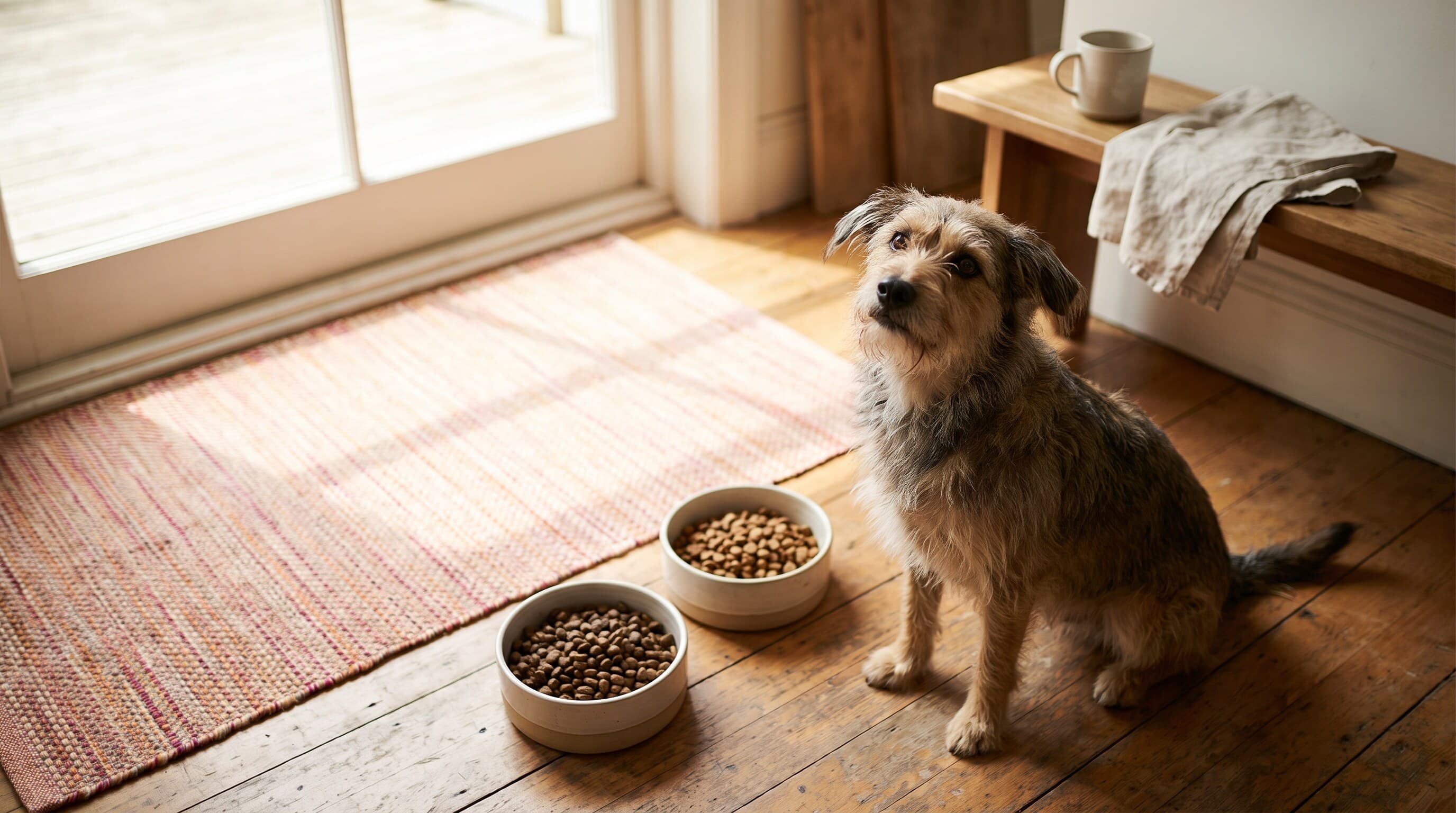
The safest way to change your dog's food is slowly. Swapping one bag for another overnight is the single most common cause of avoidable digestive upset, because a dog's gut and the community of bacteria that help digest food need time to adjust to a new recipe. According to the American Kennel Club, an abrupt switch can trigger vomiting, diarrhea, and a loss of appetite, all of which are usually preventable with a gradual transition over about a week to ten days.
The gradual transition, day by day
The standard approach is to mix increasing amounts of the new food into the old, over roughly seven days. The AKC suggests a schedule along these lines:
- Days 1 to 2: about 25 percent new food, 75 percent old food.
- Days 3 to 4: about 50 percent new food, 50 percent old food.
- Days 5 to 6: about 75 percent new food, 25 percent old food.
- Day 7 and beyond: 100 percent new food.
Mix the two foods together in the bowl rather than feeding them side by side, so the proportions shift steadily. Seven days suits many dogs, but it is a guideline, not a deadline. There is nothing wrong with stretching the change over ten days, two weeks, or longer if your dog needs it.
What to watch for during the switch
The whole point of transitioning gradually is that it gives you time to notice a problem while it is still small. As you increase the new food, keep an eye on the same things the AKC recommends monitoring: your dog's appetite, energy and behavior, and stool quality. Firm, normal stools and a normal appetite mean the transition is going well.
Mild, brief softening of the stool early in a switch is common and often resolves as the gut adjusts. Signs worth paying closer attention to include:
- Loose stool or diarrhea that lasts more than a day or two
- Repeated vomiting
- Refusing to eat the new mixture
- Noticeable gassiness, straining, or discomfort
- Any drop in energy that seems out of character
When to slow down or pause
If your dog develops digestive upset partway through, the usual fix is simple: step back to the previous ratio that your dog tolerated well, hold there for a few extra days until things settle, then resume increasing the new food more slowly. Many transitions that hit a bump succeed on the second try just by stretching out the timeline.
The same care applies when you are changing between very different foods, such as switching a puppy onto an adult formula. The AKC's guidance on changing a puppy's diet follows the same gradual principle: mix, monitor, and adjust the pace to the individual dog. If you are also rethinking portion sizes as part of the change, our guide to how much to feed your dog covers sizing meals to your dog's body condition.
When to call your veterinarian
Most food transitions are uneventful, but some situations call for professional input rather than waiting it out. Contact your veterinarian if diarrhea or vomiting is severe, contains blood, or continues beyond a day or two; if your dog seems lethargic, painful, or refuses food and water; or if a puppy or an older dog shows any of these signs, since they can become dehydrated faster than a healthy adult. VCA Animal Hospitals also recommends involving your veterinary team when choosing a new diet in the first place, especially if the switch is being made to address a health concern rather than simple preference. A food change made for medical reasons is a conversation to have with your vet, not a decision to make alone from a label.