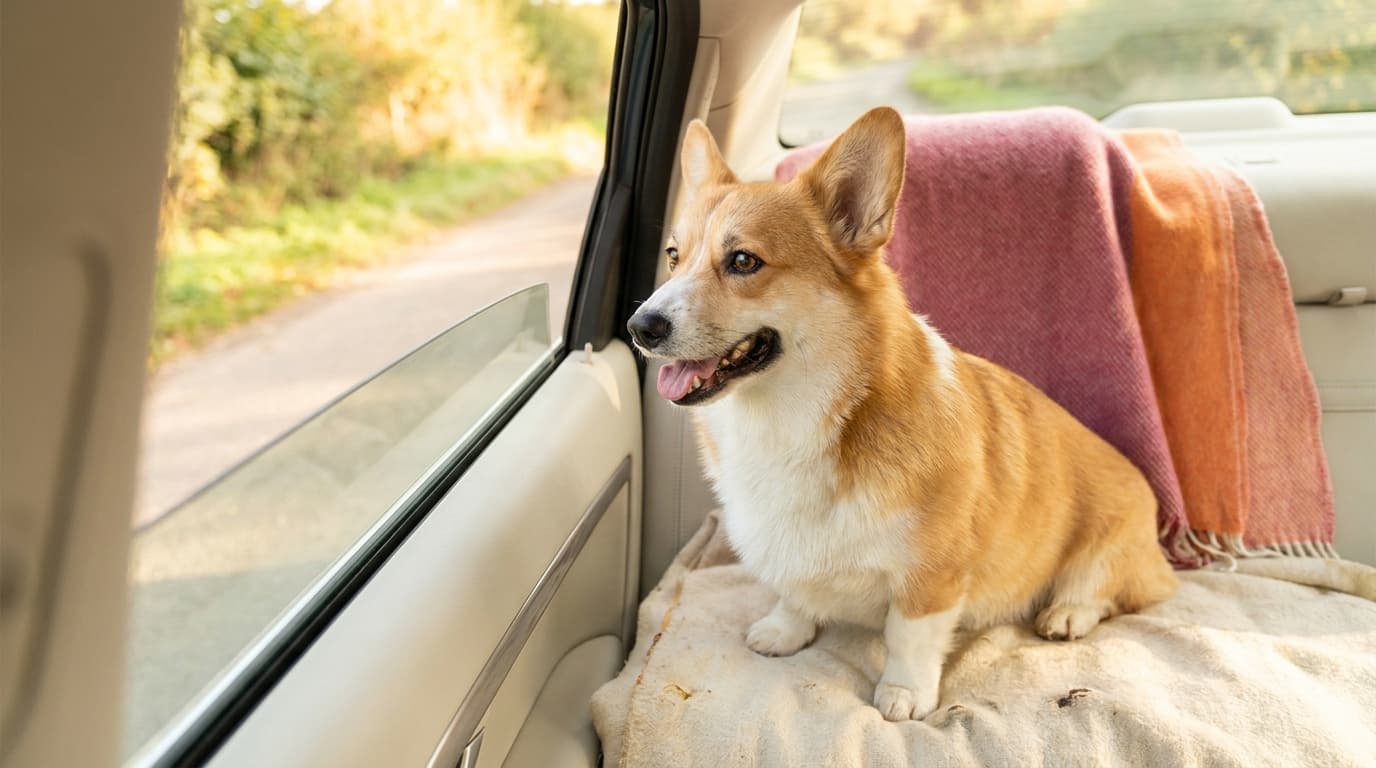
Traveling with a dog goes smoothly when the dog is secured, comfortable, and properly identified, and when you plan around their basic needs for food, water, and breaks. The American Veterinary Medical Association recommends restraining dogs during car travel, never leaving pets alone in a vehicle, and stopping regularly on long trips. Whether you are driving across the state or flying across the country, a little preparation keeps the trip safe and low stress.
Car safety comes first
A loose dog in a moving car is a danger to itself and to everyone in the vehicle. The American Kennel Club advises that in the event of an accident, a dog should be secured in a crate or with a crash-tested harness that limits harmful movement, rather than riding free. A secured dog cannot climb into the driver's lap, bolt through an open door, or become a projectile in a sudden stop.
A few rules make the biggest difference:
- Never let a dog ride loose. Use a well-fitted crate anchored in place or a harness designed and tested for car use.
- Never let a dog ride in the open bed of a truck. It is unsafe and illegal in many places.
- Keep heads inside the car. The AKC notes that riding with the head out the window risks eye injuries from flying debris and the danger of a dog jumping or falling out.
- Mind the airbags. The AVMA suggests keeping dogs out of the front passenger seat when airbags are present.
Get your dog used to the car first
Do not make your dog's first car experience a six-hour drive. The AKC recommends building positive associations gradually: let your dog explore the parked car, reward calm behavior, then take short trips that end somewhere pleasant before working up to longer distances. A dog that sees the car as normal and rewarding travels far more calmly than one that only rides to the vet.
If your dog struggles with motion sickness or anxiety in the car, talk with your veterinarian. The AKC notes that for dogs with a history of carsickness, a vet can advise on options that may help settle the stomach. This is a conversation for your vet, not a guessing game with over-the-counter products, since dosing and safety depend on your individual dog.
Rest stops, food, and water
On longer drives, plan the pace around your dog. The AVMA suggests feeding small portions and stopping roughly every couple of hours so dogs can stretch, relieve themselves, and have a drink. The AKC adds that it is best to avoid feeding a big meal right before driving, and to give the stomach time to settle after eating before getting back on the road. Pack fresh water, a bowl, waste bags, and your dog's regular food so their diet does not change mid-trip. It helps to give the dog gear its own compartment so kibble and muddy leashes stay away from your clothes; for the human half of the packing list, our sister site Kit Authority's guide to the best packing cubes covers how to organize the rest of the bag. Keep your dog leashed every time you open a door at a rest area, since an unfamiliar location is exactly where a startled dog can slip away.
ID and microchip current
Travel is when a lost dog is hardest to recover, so identification matters more than usual. Make sure your dog wears a collar with an ID tag showing your name and a phone number you will actually answer while traveling. The AKC also recommends confirming that your dog's microchip is registered with your current contact information before you leave. Bring proof of rabies vaccination as well, since some destinations, campgrounds, and boarding facilities ask for it.
Air travel basics
Flying adds paperwork and planning. If you are traveling to another state or country, the AVMA explains that you will generally need a Certificate of Veterinary Inspection, also called a health certificate, issued by an accredited veterinarian within about 10 days of travel. Federal rules require that dogs be at least eight weeks old and fully weaned before flying. Book directly with the airline well ahead of time, since each carrier has its own rules, and confirm size and crate requirements for cabin or cargo.
The AVMA offers a few more pointers: choose nonstop flights and avoid the busiest travel days, favor early morning or late evening flights in hot weather, and consult your veterinarian before giving any tranquilizer or sedative, because these can raise the risk of heart or breathing problems at altitude and are often not permitted by airlines. Always check your specific airline's and destination's current requirements, which can change.
The bottom line
Safe dog travel is mostly about restraint, routine, and preparation: buckle your dog in, plan the breaks, keep ID current, and handle the paperwork early for flights. Do those things and most trips are uneventful in the best way. If you are still choosing a travel companion, our guides to how to choose the right dog breed and the new puppy checklist for the first week can help you start off right.