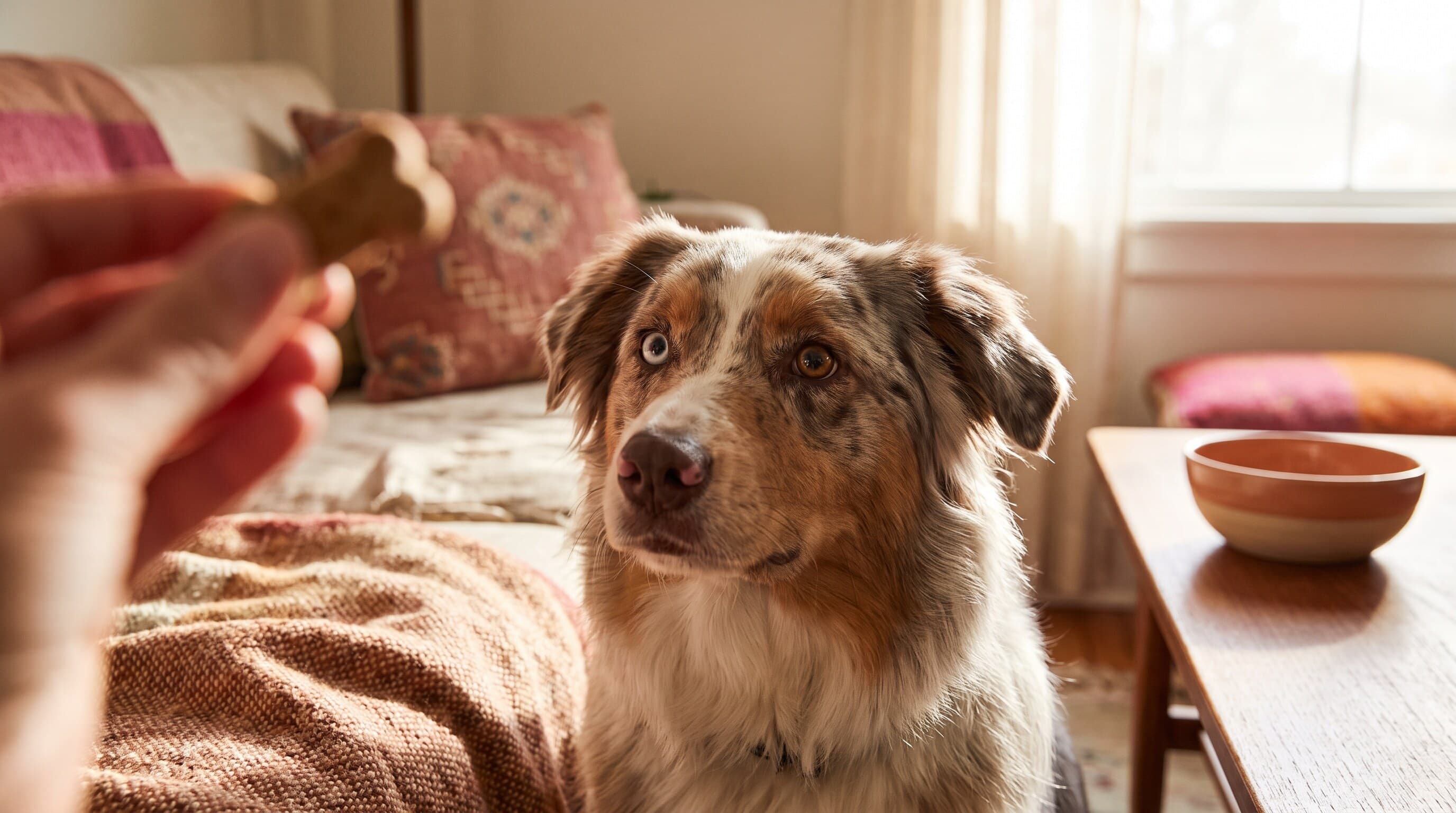
Clicker training is a way to tell your dog the exact instant it did something right, which makes reward-based training faster and clearer. As the American Kennel Club explains, a clicker is a marker: after it has been paired with treats enough times, it becomes a signal that a reward is coming, so the click both marks the correct moment and bridges the short gap until you can deliver the treat. It is a training aid built entirely on positive reinforcement.
This guide covers how marker training works, how to charge the clicker, and how to run your first sessions.
What a marker is and why it helps
The click marks a precise moment. Because dogs live in the moment, timing is everything, and a treat delivered even a couple of seconds late can accidentally reward the wrong behavior. The AKC notes that the click captures the exact instant your dog does the right thing, then holds its meaning until the reward arrives. This is especially useful for behaviors that happen quickly or at a distance, where you cannot hand over a treat fast enough to be clear.
Step one: charge the clicker
Before the clicker means anything, you have to give it value. This step is often called charging or loading the clicker. The AKC describes it simply: click, then immediately give a treat, and repeat. Click and treat, click and treat, roughly ten times, with no behavior required from your dog yet. You are teaching one association only, that the click predicts a treat. You know it has worked when your dog perks up and looks for the reward the moment it hears the click. Use small, soft training treats so your dog can eat quickly and stay focused.
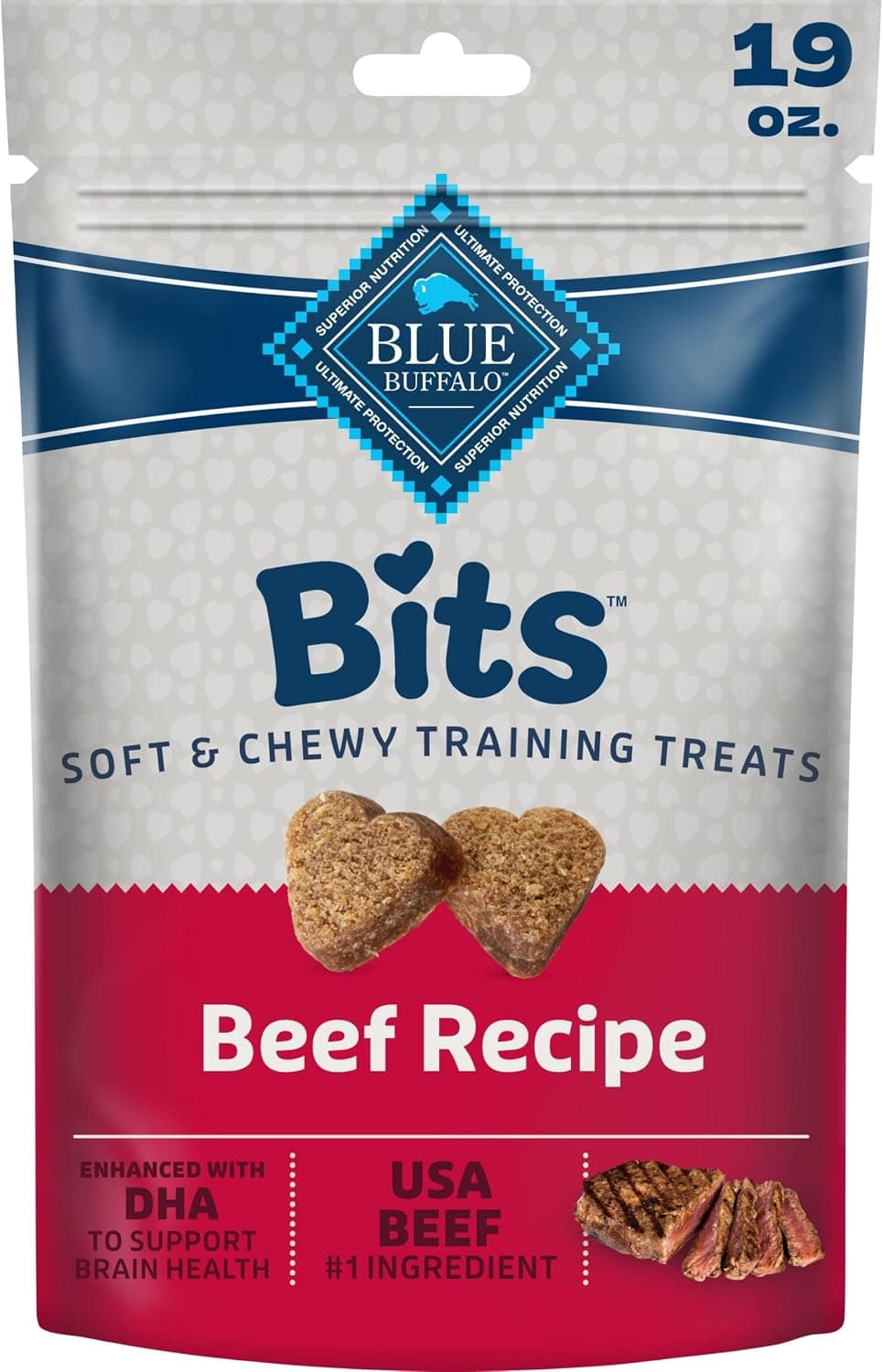
Soft, quick-to-eat rewards like Blue Buffalo Bits keep charging sessions moving, since your dog can swallow each one and reset fast.
BLUE BUFFALO
Bits Beef Soft & Chewy Dog Treats
- Protein
- Real beef listed first
- Texture
- Soft and chewy
- Size
- Bite-sized, heart-shaped
- Bag
- 19 oz
- Made in
- USA with natural ingredients
Soft, bite-sized beef treats sized for quick reward-based training without filling the dog up. The small pieces are easy to deliver in fast repetitions. The formula uses real beef as the first ingredient and adds DHA.
See more detailSee less detail
Strengths
- Small soft pieces are ideal for rapid training reps
- Real beef first ingredient
- Large bag and strong rating
Weaknesses
- Soft treats can dry out if the bag is left open
- Heart shapes are larger than some micro training treats
Best for
Owners doing frequent reward-based training who want a trusted mainstream treat
What owners say
Step two: mark a behavior
Once the clicker is charged, use it to mark a behavior. Start with something easy like sit. Lure your dog into a sit, and the instant its rear touches the floor, click, then deliver the treat. The order matters: click first, at the exact moment of the correct action, then reach for the treat. The click marks the behavior; the treat pays for it. If you fumble the treat, the click has already told your dog it was right, which is exactly the point.
Step three: keep first sessions short
Marker training works best in short, frequent sessions. Aim for a few minutes at a time, a handful of repetitions, and an end on a success while your dog is still keen. Long sessions tire a dog and blur its focus, while short ones keep learning sharp and enjoyable. Several brief sessions across a day beat one long one. Train in a quiet, low-distraction space at first, and add distractions only once the behavior is solid.
Timing is the whole skill
The one thing that separates effective clicker training from frustrating clicker training is timing. Click at the precise instant of the behavior you want, not a beat late. If you click as your dog stands back up from a sit, you have rewarded standing. Practicing your own timing, even by clicking as a tossed ball hits the floor, sharpens the skill quickly. Good timing is what makes the marker so much clearer than praise alone, which tends to arrive a moment too slow.
Fading the clicker
The clicker is a teaching tool, not a permanent fixture. Once a dog reliably performs a behavior on cue, you no longer need to mark it every time, and you can shift to rewarding intermittently and reserve the clicker for teaching new behaviors. Think of it as a way to teach clearly, then step back once the lesson is learned.
Putting it to work
With a charged clicker and good timing, you can teach the same core cues covered in essential commands to teach your dog, just more precisely. Start with sit, add stay and come, and let the marker do what it does best: make the moment of success unmistakable to your dog, so it knows exactly what earned the reward.