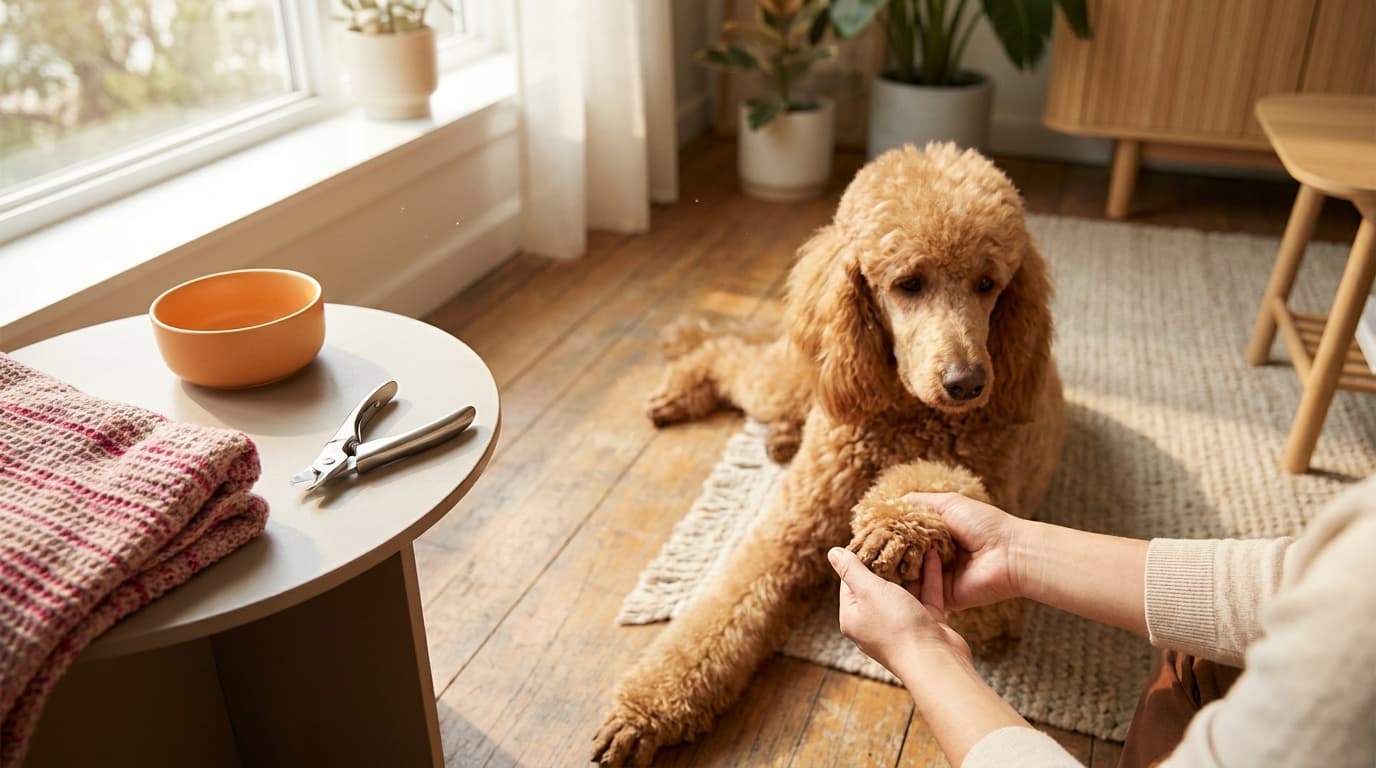
Trimming your dog's nails is a routine part of home grooming, and the safe version comes down to one rule: take off small amounts and stop before you reach the quick. According to the American Kennel Club, overly long nails can affect how a dog stands and walks, so keeping them short is about comfort as much as tidiness. This is a hygiene how-to, not medical treatment. If your dog's nails are severely overgrown, curling into the pad, or if your dog is distressed or in pain, this is a job for your veterinarian or a groomer rather than something to force at home.
Understanding the quick
The most important thing to know before you pick up any tool is where the quick is. The quick is the living part inside the nail that contains blood vessels and nerves. Cutting into it hurts and bleeds, which is exactly what makes a bad experience stick with a dog. As the AKC explains, your goal is to clip only the tip and avoid clipping past the curve of the nail where the quick begins.
On light or clear nails, the quick is easy to spot as the pink area running down the center. You want to stop a couple of millimeters short of it. On dark nails you cannot see it, so you work more cautiously. As VCA Animal Hospitals describes, the safe approach for dark nails is to trim just the very tip, taking off one to two millimeters at a time in a series of small clips. If you look at the cut surface after each small clip and see a black dot appear in the center, that is your signal that you are getting close to the quick and should stop.
Clippers or a grinder
Both tools work when used correctly, and the right one is mostly about what your dog tolerates. Clippers come in a scissor style and a guillotine style, and the VCA notes both are common and effective. A rotary grinder files the nail down instead of cutting it, which some dogs accept more readily and which lets you shorten in very small increments. Grinders take a little longer and make a noise and vibration that some dogs need time to get used to. Whichever you choose, keeping the blade or wheel in good condition matters: a dull clipper crushes rather than cuts, which is uncomfortable.
Step by step
Once your dog is calm and you have your tool and some styptic powder within reach, the technique itself is quick.
- Position the paw. Hold the paw gently but securely. The AKC suggests placing your thumb on the pad and a forefinger on the top of the toe, then pushing slightly to extend the nail and move any fur out of the way.
- Clip the tip, angled to follow the nail. Cut straight across the very end, staying on the tip side of the curve. Keep the cut roughly parallel to the natural angle of the nail rather than blunt against the growth.
- Work in small increments. Take a little off, look at the cut surface, then decide whether to take a touch more. Stop as soon as you see a pale or dark center dot appearing.
- Do not forget the dewclaws. Many dogs have dewclaws higher up on the inner leg. Because these never touch the ground, the VCA points out they can overgrow and even curl into the skin, so check and trim them too.
- Reward and keep it short. Praise your dog and finish on a good note, even if you only did a few nails. Several calm short sessions beat one long stressful one.
If you nick the quick
Even careful owners occasionally catch the quick, and it is not an emergency in most cases. Treat it as simple first aid: stay calm so your dog does, and apply pressure. The VCA notes that styptic powder pressed onto the nail end helps stop the bleeding, and if you do not have any, cornstarch or flour can work in a pinch. Hold gentle pressure for a minute or two.
Stop the session if it happens. Pushing on after a painful nick teaches your dog to fear the whole routine. Most minor quick bleeds settle quickly, but if the bleeding is heavy, will not stop after several minutes of pressure, or your dog seems very painful, call your veterinarian rather than trying to manage it at home.
When to call a professional
Some situations are better handed off. If the nails are so long that the quick has grown out with them, a single trim cannot fix that safely, and your vet or groomer can shorten them gradually over time or trim more at once under the right conditions. Nails that have curled into the pad, any sign of a cracked or split nail with swelling or limping, or a dog that becomes genuinely panicked all warrant help rather than persistence. There is no prize for doing it yourself when a professional can do it calmly and safely.
The bottom line
Safe nail trimming is less about skill and more about restraint: small clips, a watchful eye on the cut surface, and a willingness to stop early. Build your dog's comfort with the routine before you worry about getting every nail perfectly short, and keep the sessions calm and brief. Pair nail care with the rest of your at-home grooming habits, like brushing your dog's teeth, and bring up any recurring nail problems at your dog's regular checkups.