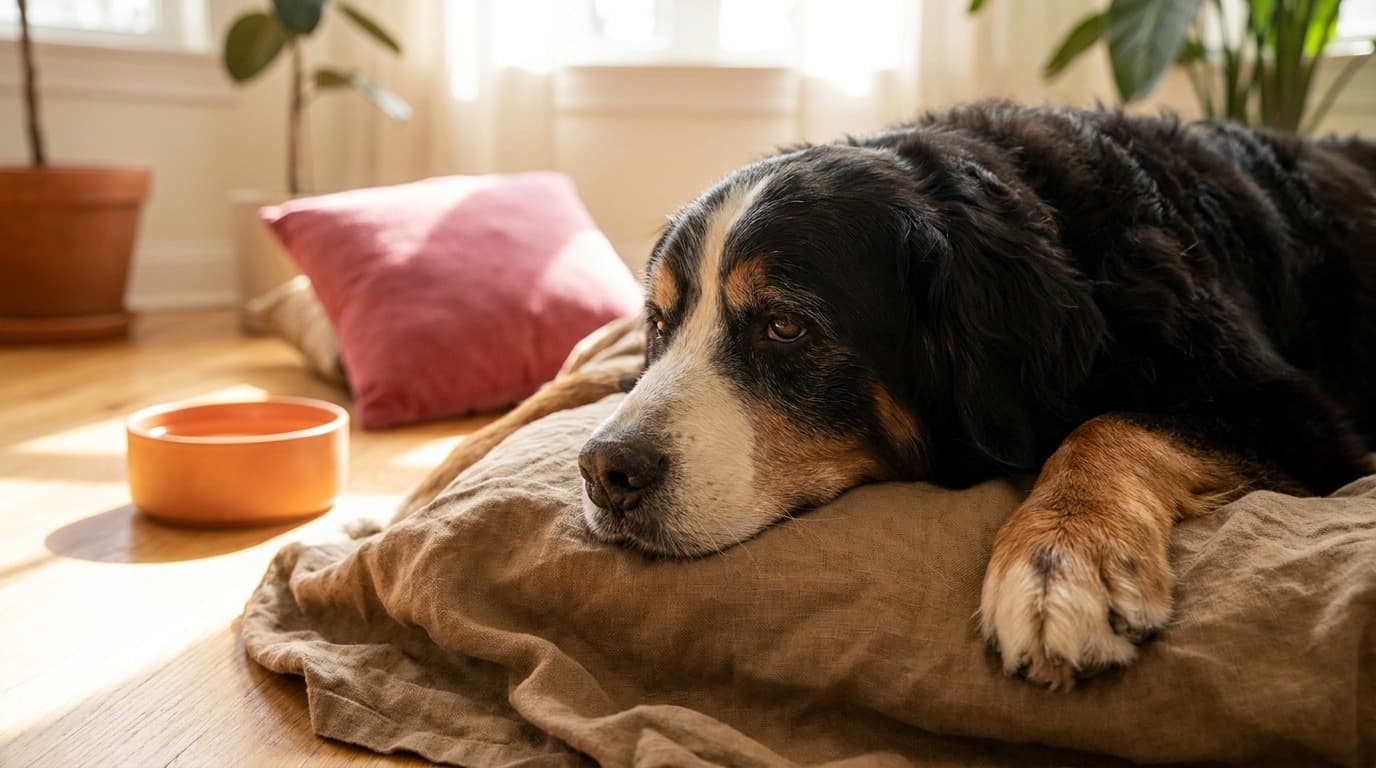
Caring for a senior dog is mostly about paying closer attention. Older dogs can live happy, comfortable years, but they benefit from more frequent checkups, a home set up for aging bodies, and an owner who takes small changes seriously rather than writing them off. The American Veterinary Medical Association notes that senior pets often need more in-depth exams and more frequent visits so that problems can be caught early. This guide covers what senior means, the changes worth monitoring, and practical ways to keep an older dog comfortable at home. It is a care and awareness guide, not a way to diagnose or treat conditions yourself.
What "senior" actually means
There is no single age at which a dog becomes a senior, because size and breed change the timeline dramatically. The 2023 AAHA Senior Care Guidelines for Dogs and Cats define a senior dog as one in roughly the last 25 percent of its expected lifespan for its breed and size. In practice, that means a giant breed like a Great Dane may be considered senior around six years of age, while a small dog might not reach that stage until ten or later. Rather than fixating on a birthday, it is more useful to think in terms of your individual dog and to ask your veterinarian where your dog falls.
Changes worth monitoring
You see your dog every day, which makes you the best person to catch a slow drift from normal. The American Kennel Club describes a range of physical and mental changes that commonly accompany aging. None of these confirm a specific problem on their own, but each is worth noting and mentioning to your vet:
- Mobility and joints. Hesitating at stairs, trouble jumping into the car, slowness rising after a nap, or weakness in the back legs can signal joint discomfort or reduced muscle mass.
- Weight. Some older dogs gain weight as they slow down, while others lose it. Unexplained weight loss in particular is worth raising with your vet.
- Vision and hearing. Cloudiness in the eyes or a dog that no longer responds to familiar sounds may be showing age-related sensory change.
- Dental health. Bad breath, reluctance to chew, or dropping food can point to dental disease, which is common in older dogs.
- Cognitive and behavioral shifts. Disorientation, changed sleep patterns, new anxiety, or reduced interest in interaction can reflect cognitive changes.
- Lumps and bumps. New growths become more common with age. Most are harmless, but any new lump is worth having examined.
More frequent veterinary care
The most important shift in senior care happens at the vet's office. Both the AVMA and AAHA point toward more frequent visits for older pets, often twice a year rather than once, so that changes can be tracked over time and caught early. A senior exam is usually more thorough than a younger dog's, and your veterinarian may recommend routine bloodwork or other screening to establish a baseline and monitor trends. Catching a shift early, while it is still small, is the whole point of this schedule. If you want a broader sense of visit frequency across your dog's life, see our guide on how often your dog should see the vet.
Bring a short list to appointments. Note any changes you have seen in appetite, thirst, energy, mobility, or behavior, along with roughly when they started. Concrete observations help your veterinarian far more than a general sense that your dog "seems older."
Comfort at home
Small adjustments make an aging dog's daily life easier:
- Traction and access. Rugs or runners over slick floors help dogs with weaker joints stay steady, and ramps or a step can ease access to the couch, bed, or car.
- A supportive bed. A cushioned, easy-to-enter bed in a warm, draft-free spot supports older joints.
- Gentle, consistent exercise. Regular, low-impact movement helps maintain muscle and mobility. Let your dog set the pace and adjust to their comfort.
- Dental care. Keep up with tooth brushing and checkups, since dental disease is both common and manageable in older dogs.
- Mental engagement. The AVMA notes that keeping senior pets mentally active through interaction and stimulation supports them as they age.
- Routine. Predictable meals, walks, and rest help a dog whose senses or memory may be changing.
Nutrition also shifts with age, and older dogs sometimes need food formulated for different energy needs and easier digestion. Discuss any diet change with your veterinarian rather than switching on your own.
The bottom line
Senior dog care comes down to attention and partnership. Notice the small changes, keep up with more frequent checkups, make your home kinder to aging joints and senses, and resist the urge to shrug off new symptoms as inevitable. Your role is to observe and to loop in your veterinarian, who is the one equipped to diagnose and treat. If you also share your life with an older cat, our senior cat care guide covers the same spirit of care for a very different animal.