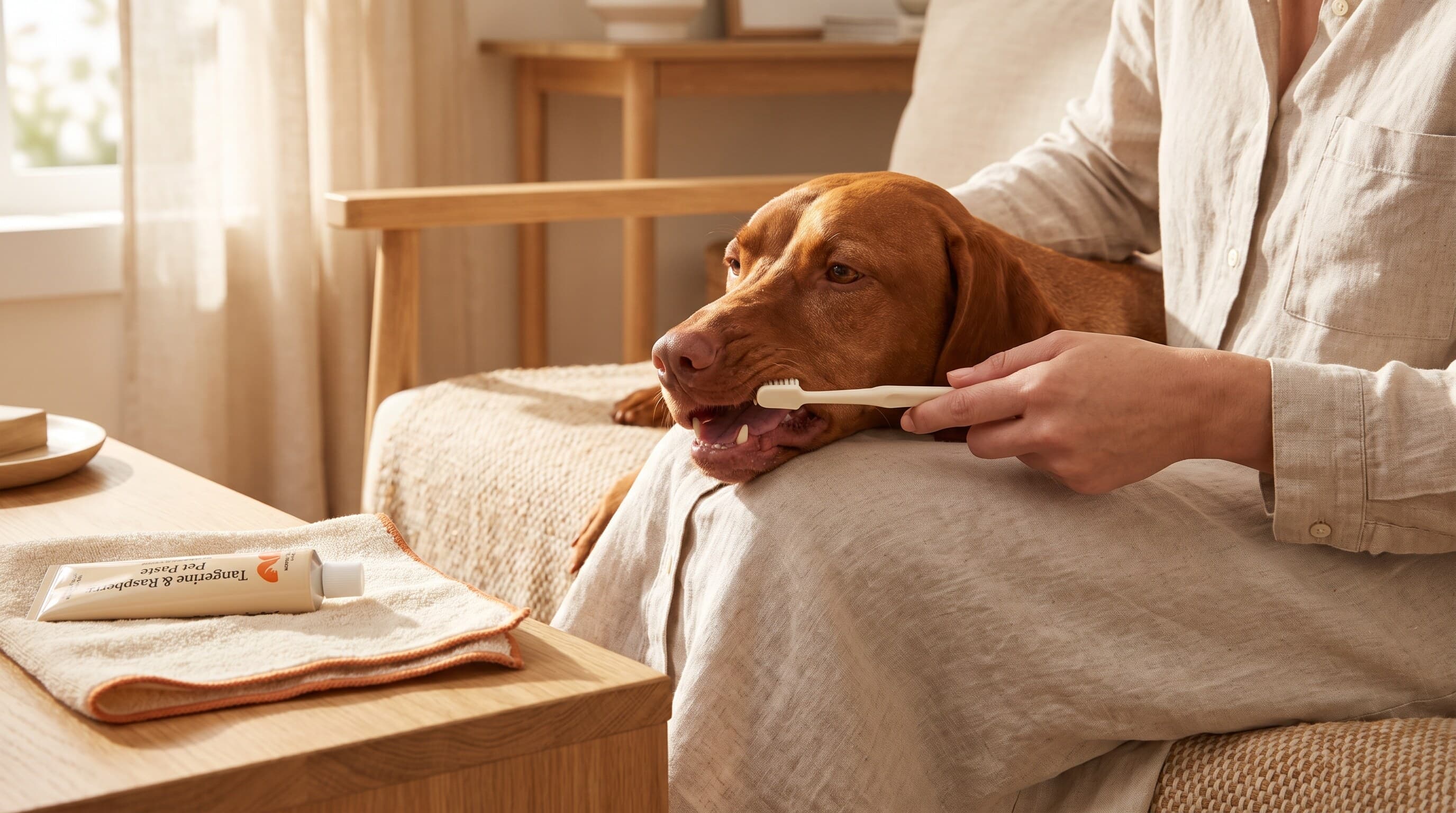
Brushing your dog's teeth is the single most effective thing you can do at home to keep their mouth healthy between professional cleanings. According to VCA Animal Hospitals, the technique is straightforward once your dog is comfortable with it, and the whole routine takes only a couple of minutes a day. This is a hygiene how-to, not medical treatment. Brushing removes plaque, but it cannot remove hardened tartar or address disease already present, so it works alongside veterinary dental care rather than replacing it.
Why dental care is worth the effort
Dental disease is one of the most common health problems in dogs, and it is not just about bad breath. The American Veterinary Medical Association notes that untreated dental problems can be painful and can affect a dog's overall health, yet they often progress silently because dogs keep eating through discomfort. Daily brushing disrupts plaque before it hardens into tartar, which is the point at which only a veterinary cleaning can remove it. A few minutes a day genuinely reduces how much builds up in the first place.
First, get the right supplies
Two things make or break this routine.
A pet-safe toothpaste. Never use human toothpaste. As VCA warns, human toothpaste can contain fluoride and, in some formulas, xylitol, both of which are harmful to dogs when swallowed, and dogs cannot rinse and spit. Pet toothpaste is made to be swallowed and comes in dog-friendly flavors like poultry or malt, which also makes the whole process easier to sell to your dog.
A soft brush. A dog toothbrush with soft bristles, an angled head, or a fingertip brush all work. The right one is whatever fits comfortably in your dog's mouth and lets you reach the back teeth.
Step by step: introduce it gradually
The goal of the first several sessions is not clean teeth. It is a dog that thinks tooth time is a good time. The VOHC and VCA both emphasize building up slowly.
- Start with touch. Over a few days, get your dog used to having their muzzle handled. Gently lift a lip and touch the teeth and gums with your finger, keeping sessions short and rewarding calm behavior.
- Introduce the toothpaste as a treat. Let your dog lick a little pet toothpaste off your finger so they learn the flavor is something to look forward to.
- Introduce the brush. Put a dab of toothpaste on the brush and let your dog lick it off, so the brush itself becomes familiar and positive before any brushing happens.
- Begin brushing a few teeth. Lift the lip and brush the outer (cheek-facing) surfaces of a few teeth using gentle, small strokes, angling the bristles slightly toward the gumline. Start with the large canines and front teeth, which are easiest to reach.
- Build up to the full mouth. Over subsequent sessions, work toward covering all the outer surfaces. Focus on the cheek-side of the teeth, where most plaque collects. You generally do not need to brush the inner surfaces, since a dog's tongue helps keep those cleaner.
Keep every session short and upbeat, and finish with praise or a favorite activity so the association stays positive.
How often to brush
Daily is the gold standard. The VOHC notes that because plaque begins to mineralize into tartar within a couple of days, brushing needs to be frequent to keep ahead of it. If daily is not realistic, several times a week is still meaningfully better than not brushing at all. Consistency matters more than perfection: a quick daily pass over the outer teeth beats an occasional thorough scrub.
What brushing does not replace
Home brushing is prevention, not treatment. If you notice signs of a dental problem, persistent bad breath, red or bleeding gums, loose or broken teeth, drooling, pawing at the mouth, or a reluctance to eat or chew, those warrant a call to your veterinarian rather than more vigorous brushing. Most dogs also need professional dental cleanings over their lives, and your vet will advise on timing based on your dog's mouth. Brushing simply lengthens the time between them and keeps things comfortable in between.
The bottom line
The hardest part of brushing a dog's teeth is starting, and the trick is to treat the first week as training rather than cleaning. Once your dog associates the brush with a tasty flavor and a happy ending, a daily two-minute routine becomes easy and pays off in fewer dental problems and a more comfortable dog. Pair it with regular checkups, covered in our guide to how often your dog should see the vet, and dental care becomes a quiet, low-effort habit.