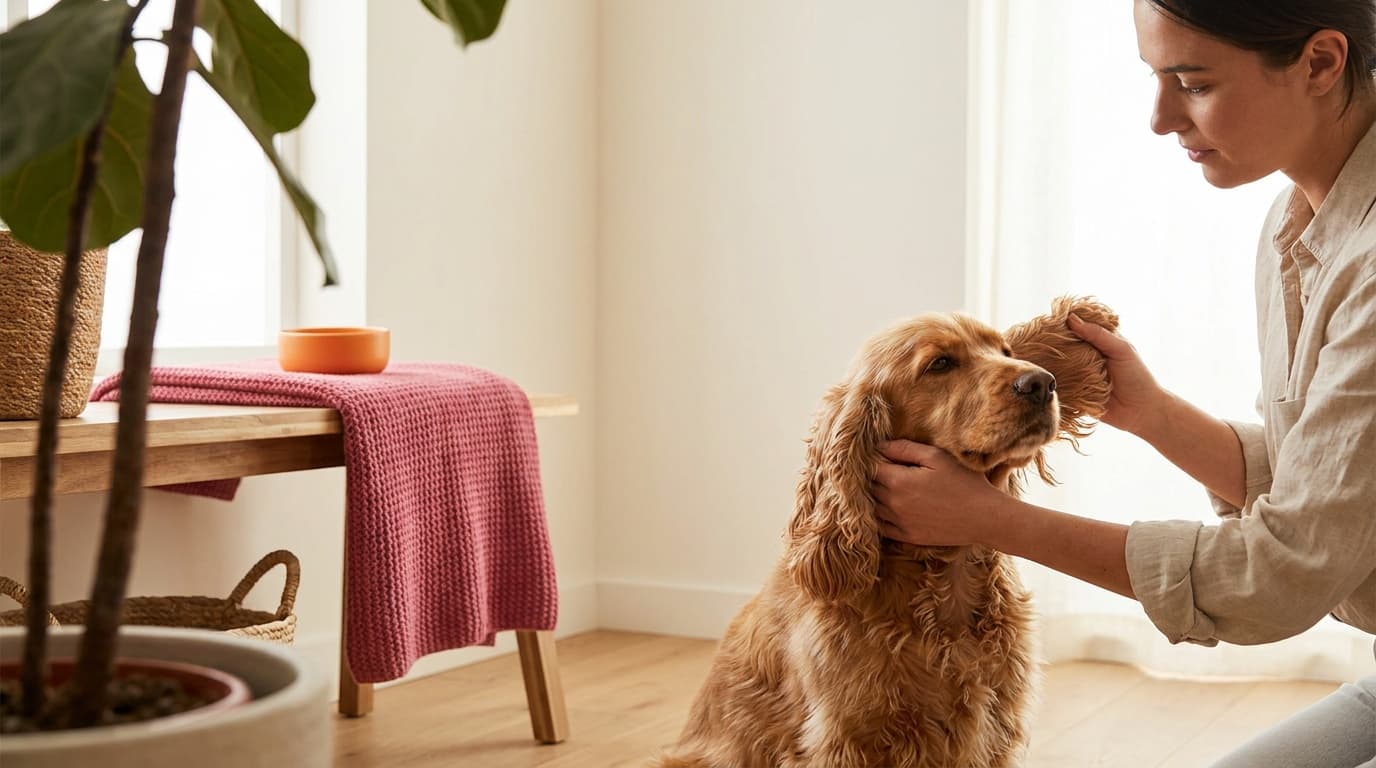
Cleaning your dog's ears is a simple routine when they need it, and the safe method is gentler and shallower than most people expect. According to VCA Animal Hospitals, all you really need is a good-quality ear cleaning solution, some cotton balls or gauze, and a few treats. This is a hygiene how-to, not medical treatment. The single most important rule is that you never clean an ear that looks red, painful, or smelly, because those are signs of a possible infection that needs your veterinarian, not a bottle of cleaner.
Not every dog needs frequent cleaning
Healthy ears are often self-maintaining, and over-cleaning can cause its own irritation. The AKC notes that cleaning too frequently can irritate the ear canal, and that many dogs only need it when you actually see buildup. Dogs with floppy ears, dogs that swim, or breeds prone to ear trouble may need it more often, while a dog with clean, odor-free ears may need very little. When in doubt about frequency, ask your veterinarian what makes sense for your particular dog.
Use a vet-approved cleaner and skip the swabs
Reach for a proper ear cleaning solution rather than improvising. Two tools to avoid matter most here. First, do not use cotton-tipped swabs down into the canal. The VCA warns that swabs can push debris deeper and risk trauma to the canal or ear drum. Second, do not insert anything deep into the ear. The canal is delicate and you cannot see the bottom of it, so cleaning is strictly a fill-massage-and-wipe-the-visible-part job. If you are unsure which cleaner to buy, your veterinarian can point you to one appropriate for your dog.
Step by step
Have your cleaner, cotton balls, treats, and a towel ready, because most dogs will shake, and pick a spot you do not mind getting a little wet.
- Settle your dog and lift the ear flap. The VCA suggests gently holding the ear flap up to expose and straighten the canal.
- Fill the canal with cleaner. Squeeze in enough solution to fill the canal. This can feel like a lot, but the liquid is what loosens debris.
- Massage the base of the ear. Keep the flap up and massage the base below the ear opening for about thirty seconds. You should hear a squishing sound as the cleaner works around and breaks up buildup.
- Let your dog shake. Step back and let your dog shake its head. This brings the loosened solution and debris up and out of the canal, which is exactly what you want.
- Wipe only what you can see. Use a cotton ball or gauze to wipe the inside of the ear flap and the visible part of the upper canal. Go no deeper than you can easily see. The AKC advises going no further than the first knuckle of your finger.
- Reward and repeat on the other side. Praise your dog and use treats so the routine stays a positive one.
Signs that mean call the vet, not clean
Cleaning is for maintenance. It is not a treatment for an ear problem, and trying to clean your way through one usually delays the care your dog needs. The AKC's guidance on ear infections describes the kinds of signs worth a vet visit: persistent head shaking, scratching or rubbing at the ear, redness or swelling, a strong or yeasty odor, dark or discolored discharge, or apparent pain and sensitivity. If you see these, or if an ear stays dirty no matter how gently you clean, book an appointment. Your vet can look deep into the canal with proper equipment, something you simply cannot do at home.
The bottom line
Ear cleaning is one of those tasks that is easy to overdo and easy to do too roughly. Keep it shallow, keep it gentle, use a proper cleaner, and let the head shake do most of the work. Above all, learn to tell the difference between a slightly dirty ear that benefits from a wipe and an inflamed or smelly ear that needs your veterinarian. When you fold ear checks into the rest of your routine grooming, alongside habits like brushing your dog's teeth, problems tend to get caught early, and anything that looks wrong is a good thing to raise at your dog's regular checkups.