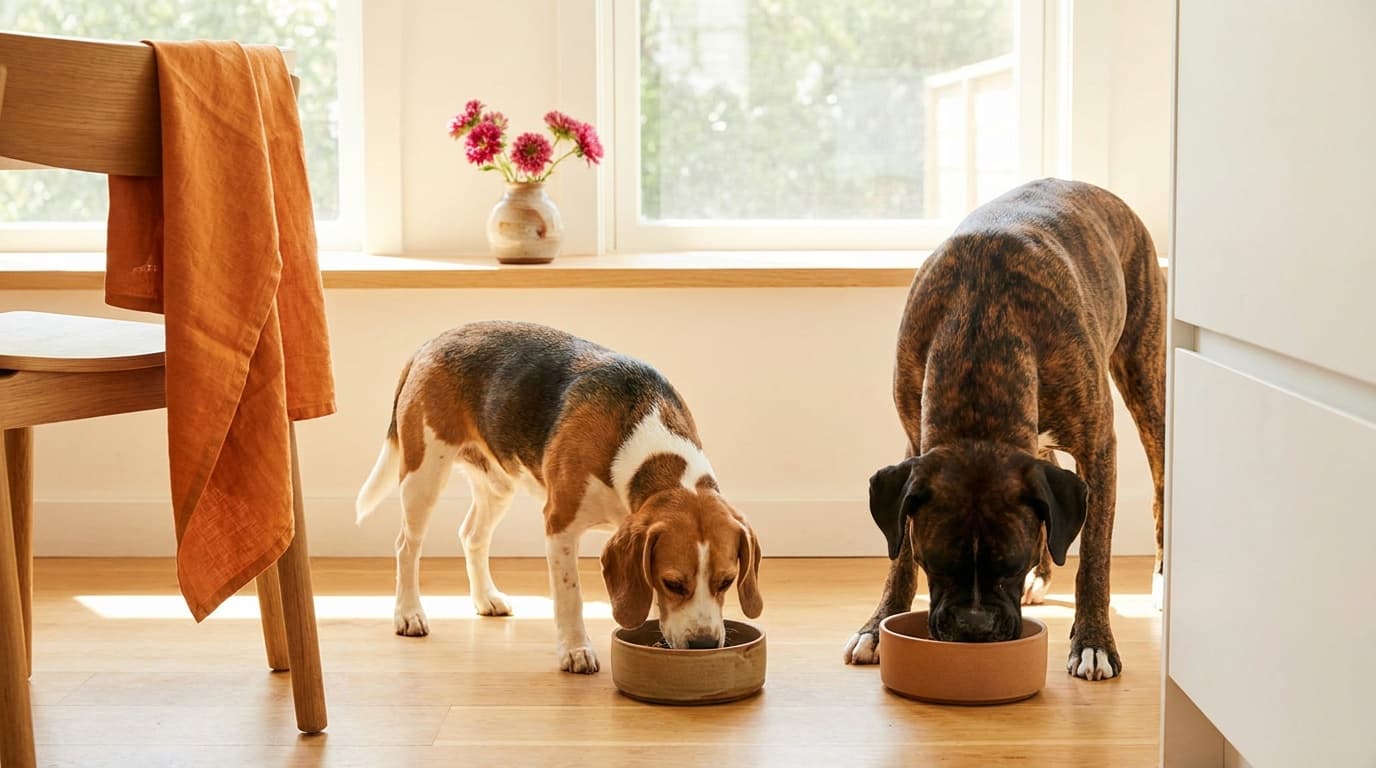
Feeding one dog is simple. Feeding two or more in the same home adds a few new problems: dogs that eat at different speeds, portions that need to stay separate, food theft, and the risk of tension around the bowl. The good news is that a handful of routine habits solve almost all of it. The American Kennel Club recommends structured, supervised mealtimes with clear separation between dogs, and that principle is the backbone of everything below.
Give each dog its own feeding station
The single most effective habit in a multi-dog home is a designated feeding spot for every dog. The AKC suggests giving each dog a specific place where its bowl goes at mealtime and creating physical boundaries between them while they eat. That can mean feeding in separate rooms with the door closed, using baby gates or an exercise pen to divide a space, or feeding each dog in its own crate.
Separation does more than keep the peace. It lets each dog eat at its own pace without pressure, and it removes the low-grade competition that can build into something worse over time. Established, structured mealtimes also help: the AKC favors set feeding times over leaving food out all day, because a predictable routine gives dogs fewer reasons to compete and gives you a supervised window to watch how each one is doing.
Portion for each dog, and watch who actually eats
Dogs in the same home often need different amounts of food. A large dog and a small dog, or a young athlete and a mellow senior, can have very different calorie needs, so a shared bowl or a free-for-all makes it impossible to control portions. Separate stations let you measure the right amount for each dog and, just as importantly, confirm that each dog is eating its own portion and finishing it.
That monitoring matters for health, not just fairness. When dogs share food freely, a dropped appetite in one dog is easy to miss, because a housemate quietly eats the difference. Feeding separately means a change in how much a dog eats becomes visible quickly, which is exactly the kind of early signal worth noticing. If one of your dogs starts leaving food, eating far more or less than usual, or losing or gaining weight over a few weeks, that is a reason to call your veterinarian rather than something to solve by adjusting the bowls alone.
Prevent food theft and manage resource guarding
Food theft, where a faster or bolder dog helps itself to a housemate's meal, is usually a management problem with a management fix: separate the dogs, supervise, and remove bowls promptly. Resource guarding is different and more serious. The ASPCA describes food guarding as a dog protecting its food with body language or behavior meant to keep others away, and in a multi-dog home the "others" can include your other dogs.
The AKC lists early warning signs to take seriously: stiffening or freezing over the bowl, a hard stare, "whale eye" (showing the whites of the eyes), lifting the lips, a low growl, or baring teeth. These are communication, not defiance. Crucially, the AKC warns against punishing a guarding dog by yelling, hitting, or trying to "show dominance," because that tends to make the behavior worse and can teach a dog to skip the warning growl and go straight to snapping. The safe short-term answer is prevention through separation: guarding dogs should simply not have physical access to each other at mealtimes.
When to bring in a professional
Separation and routine handle everyday food theft and mild tension well. Some situations need more. If a dog shows escalating guarding, if there has been any snap, lunge, or bite around food, or if the tension between your dogs is growing rather than settling, that is the point to bring in help rather than keep experimenting on your own. The AKC recommends seeking professional guidance sooner rather than later, because guarding tends to worsen when left unaddressed.
The right professional depends on the problem. Your veterinarian can rule out a medical cause for a sudden behavior change or appetite shift, since pain or illness can make a dog guard or eat oddly. For the behavior itself, a qualified trainer or a veterinary behaviorist can build a safe, gradual desensitization plan. What you should not do is try to force dogs to eat together to "work it out." That approach raises the risk of a serious incident.
The bottom line
Feeding multiple dogs well is mostly about structure: separate stations, set mealtimes, individual portions, and prompt bowl pickup, all under supervision. That routine prevents food theft, keeps portions honest, and gives you a daily read on each dog's appetite. Treat resource guarding as a safety issue, never a discipline one, and get professional help early if it appears. For portioning each dog correctly, see our guide to how much to feed your dog.