Helping a dog lose weight comes down to feeding fewer calories than your dog burns, done slowly and under veterinary guidance so the loss is fat and not muscle. It is worth doing. According to the American Animal Hospital Association, a majority of dogs in the United States are overweight or obese, and the 2021 AAHA Nutrition and Weight Management Guidelines link excess weight to the same conditions seen in people, including arthritis, diabetes, and a shortened lifespan. The encouraging part is that even modest weight loss can improve a dog's comfort and mobility.
Start with an honest body condition check
Before changing anything, figure out whether your dog is actually overweight and by how much. Veterinarians use a body condition score (BCS), usually on a 9-point scale, where 4 to 5 is ideal. As the AAHA guidelines describe, you should be able to feel your dog's ribs easily under a thin layer of fat, see a visible waist from above, and see a tuck in the belly from the side. If the ribs are hard to feel and the waist has disappeared, your dog is likely carrying extra weight.
Portion control is where the real change happens
For most dogs, diet does far more than exercise for weight loss, simply because it is easy to overfeed and hard to out-walk a heavy bowl. A few practical steps help.
- Measure every meal. Use an actual measuring cup or a kitchen scale rather than eyeballing. "Free feeding" from a full bowl makes calorie control nearly impossible.
- Feed to a calculated target, not the bag. Feeding charts on packaging are broad estimates. Your vet's calorie target for weight loss is specific to your dog. Our guide to how much to feed your dog explains how portion math works.
- Count the treats. Treats, chews, and table scraps add up fast. Keeping treats within the 10 percent rule leaves room for real food. Swapping biscuits for a few pieces of the dog's own kibble or a crunchy vegetable your vet approves keeps calories low.
- Slow down fast eaters. A slow feeder bowl makes a portioned meal last longer, which can make a smaller amount feel more satisfying.
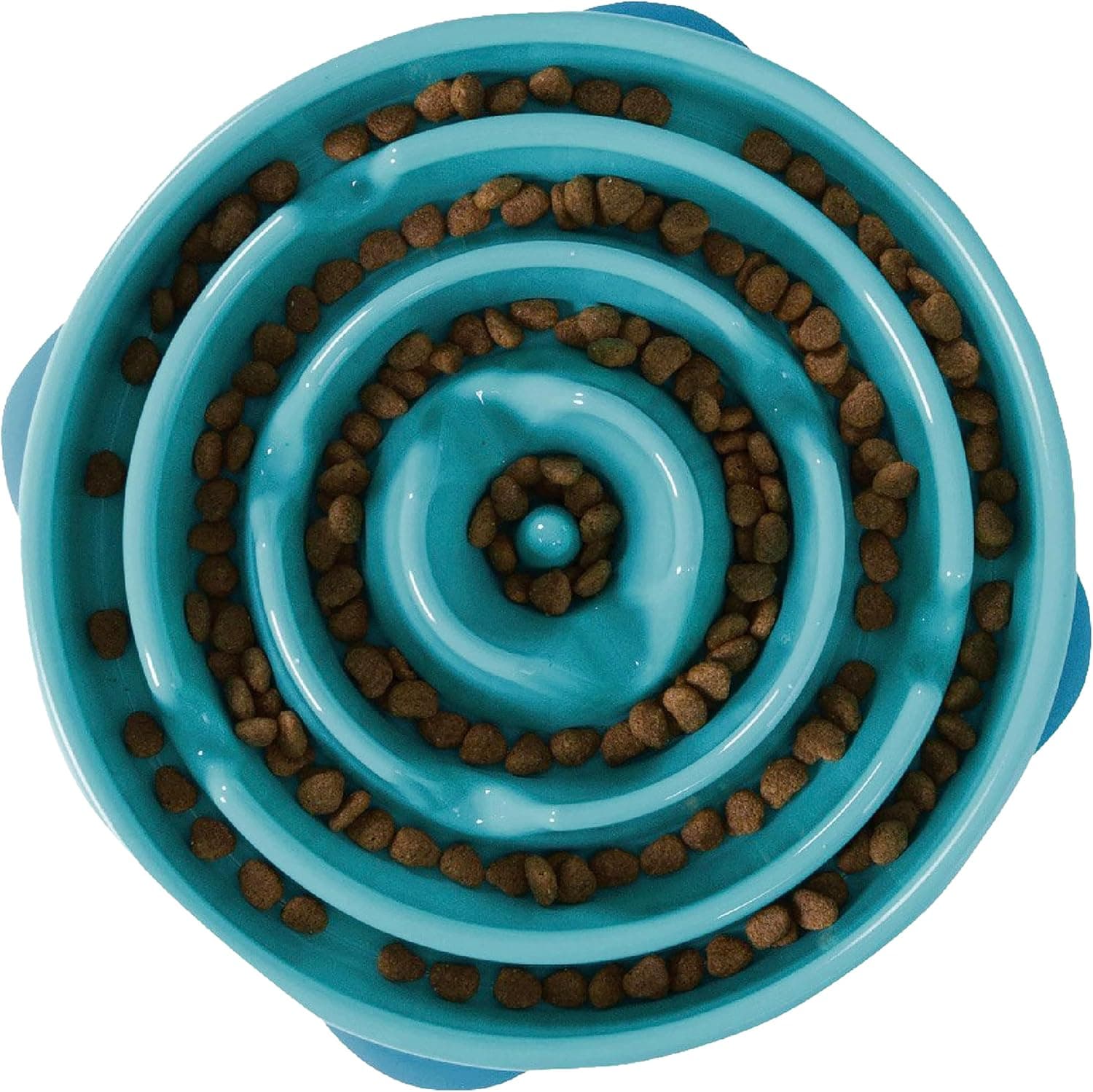
A slow feeder bowl is an easy way to make a reduced portion last, and the Outward Hound Fun Feeder is a widely used maze-style bowl for exactly this.
OUTWARD HOUND
Fun Feeder Slo Bowl
- Capacity
- 4 cups (large)
- Pattern
- Raised maze ridges
- Base
- Non-slip feet
- Dog size
- Medium to large
- Care
- Top-rack dishwasher safe
A large slow-feeder bowl with raised maze ridges that force dogs to work around the pattern, slowing gulping and reducing bloating risk. The non-slip base keeps it in place. It is one of the most reviewed slow feeders on the market.
See more detailSee less detail
Strengths
- Massive review base and proven design
- Ridged maze meaningfully slows eating
- Non-slip base and dishwasher safe
Weaknesses
- Deep grooves take effort to hand wash
- Large size is more than small breeds need
Best for
Medium to large dogs that eat too fast
What owners say
VCA Animal Hospitals also recommends building any feeding plan around your dog's individual needs rather than the numbers on the bag. Ask your veterinarian whether a therapeutic weight loss diet makes sense. These foods are designed to be lower in calories while still delivering full nutrition and enough protein to protect muscle, so a dog can eat a satisfying volume while losing fat.
Add movement gradually
Exercise supports weight loss, preserves muscle, and improves mood, but it should scale up slowly in a dog that is out of shape. Start with more frequent, gentle walks and build from there. For dogs with arthritis or heart or breathing issues, ask your vet what activity is safe first, since carrying extra weight already strains joints and the heart. Swimming and short, frequent walks are often easier on the body than one long, hard outing.
Enrichment can double as gentle exercise. Food puzzles, scatter feeding a portion of kibble across the yard, and short training games all get a dog moving and thinking without the strain of a hard workout, and they help a hungry dog feel more satisfied on fewer calories. The goal is to build activity into the day in small, sustainable ways rather than to exhaust an out-of-shape dog with one ambitious effort, which risks injury and is hard to keep up.
Go slow and track progress
Safe weight loss is gradual. Rapid crash dieting is stressful and can cost muscle rather than fat. The AAHA guidelines recommend regular weigh-ins and body condition rechecks so the plan can be adjusted, because a dog that plateaus may need a small further reduction, and a dog losing too fast may need to ease back. Rechecks every few weeks, whether at the clinic or at home on a consistent scale, keep the effort honest.
Expect the process to take months, not weeks, and treat that as a feature rather than a failure. The FDA and AAHA guidance frames weight management as an ongoing partnership with your veterinary team, not a one-time diet. If your dog stops losing weight, seems hungry to the point of distress, or loses weight faster than expected, that is a signal to check back in with your vet rather than to cut food further on your own.