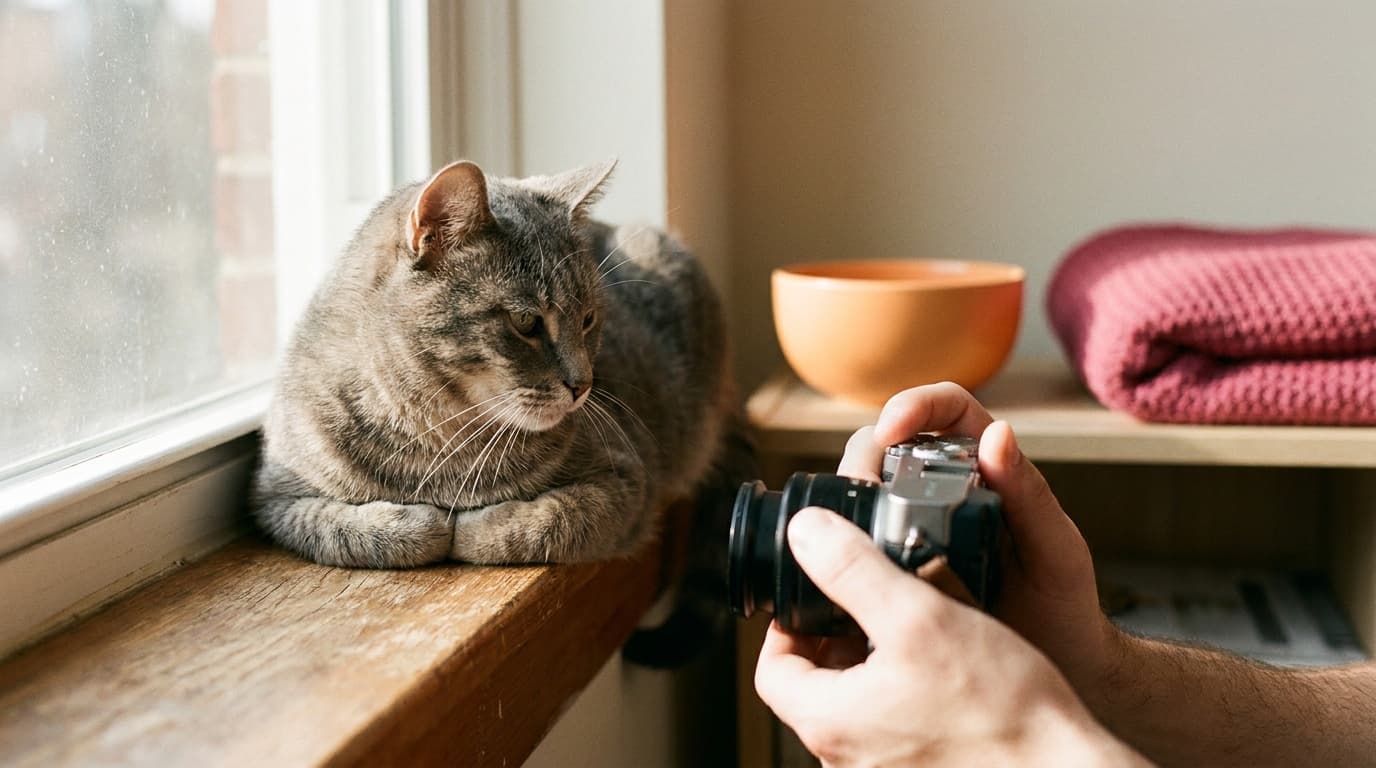
Good pet photos come from three things you already have: natural light, patience, and treats. The camera matters far less than most owners think, and the phone in your pocket is more than enough to build a collection you love. The American Kennel Club puts character first: photograph your pet where it is relaxed and comfortable, doing things it already enjoys, and the personality shows up in the frame on its own. Everything below is about setting that up on purpose.
Use window light and skip the flash
Light decides more about a photo than any setting. Aim for soft, plentiful, natural light: near a large window indoors, or outdoors in open shade or the hour after sunrise and before sunset. Midday sun creates harsh shadows and squinting; a bright window with your pet facing the light flatters every coat color and eye.
Leave the flash off. A burst of light at close range startles many pets, teaches them to associate the camera with something unpleasant, and produces the green or yellow eye shine that ruins otherwise good frames, since a dog's and cat's eyes reflect light far more than ours. If the room is too dark for a sharp photo, move closer to a window or turn on every lamp in the room instead. Dark-coated pets need more light than you expect: photograph black dogs and cats against lighter backgrounds with the light source in front of them.
Get on their level
Photos taken from human standing height flatten every pet into the same looking-down snapshot. Kneel, sit, or lie on the floor so the lens is at your pet's eye level, and the photo immediately reads as a portrait instead of a record. Eye-level framing also captures expressions, whisker detail, and the world the way your pet occupies it. For small pets, put them on a sofa or a (supervised) tabletop to meet them halfway rather than hovering above.
Backgrounds count for more at eye level, so take two seconds to check the frame: a plain wall, a tidy rug, grass, or a doorway beats a laundry basket and a tangle of cables. Moving your pet 3 feet can replace an hour of editing.
Treats, toys, and short sessions
You cannot direct a pet, but you can pay one. The working method:
- Charge the camera with treats. Before you ask for anything, let your pet sniff the phone, then treat. A pet that expects good things near the camera looks at it instead of away from it.
- Use sounds sparingly. A squeak, a crinkle, or a soft whistle earns you one or two head tilts and perked ears per session. Repeat it ten times and it earns you nothing.
- Ask for skills your pet already knows. A solid sit or stay is the foundation of almost every posed shot; our guide to essential commands to teach your dog covers building them. Cats pose best when a nap or a sunny perch does the posing for you.
- Keep sessions under five minutes. End while your pet is still interested, treat generously, and try again later. Ten short sessions beat one long one.
Phone settings that actually help
A few phone habits fix most blurry, disappointing pet photos:
- Wipe the lens. Pocket lint and fingerprints cause more soft photos than any camera limitation.
- Use burst mode for action. Hold the shutter (or slide it, depending on the phone) while your dog runs and pick the sharp frame afterward. One tap almost never catches the moment.
- Tap to focus on the eyes. Tap your pet's face on screen before shooting so the camera stops guessing.
- Try portrait mode for still subjects only. The background blur is flattering for a seated dog, but it lags and smears on moving pets; switch back to the standard camera for play.
- Use natural framing distance. Get physically closer instead of pinch zooming, which throws away detail. For cats and shy pets, step back and crop later rather than looming.
- Shoot more than feels reasonable. Twenty frames for one keeper is a normal ratio in pet photography, not a failure.
Action shots and everyday moments
Posed portraits are one photo. The collection you will treasure is the everyday catalogue: the sleeping curl, the head out the car window at a stop, the mid-shake water spray, the specific way your cat drapes over the chair arm. Photograph routines as they happen with the light you have, and favor the mid-action frames: mouth-open running at the park, the pre-pounce wiggle, the shake after a bath. Fast subjects need light more than anything else, so take action shooting outdoors or to the brightest room and let burst mode work.
New pets deserve a slow start here. If your dog or cat just came home, let it settle before you introduce a phone pointed at its face; our guide to helping a new pet adjust covers the first weeks, and the relaxed photos will come on their own schedule.
When you outgrow the phone
Everything above scales up if you catch the bug. When you want to control shutter speed for tack-sharp action, choose lenses, and shoot in lower light, that is camera-craft territory, and our sister site Aperture Authority covers it in depth: their camera settings walkthrough for photographing pets translates these habits into shutter speeds, focus modes, and lens choices, and their full pet photography genre guide goes from first camera to portfolio. The light, patience, and treat skills you build with a phone transfer directly.
The bottom line
Photograph the pet you actually live with: in its favorite spots, in good window light, rewarded for tolerating your hobby, and never pushed past a relaxed session. The phone handles the rest. Master light and patience first, and if the hobby grows into camera bodies and lenses, the fundamentals carry straight over. For more early-days wins with a new companion, see our guides to helping a new pet adjust and the new kitten checklist.