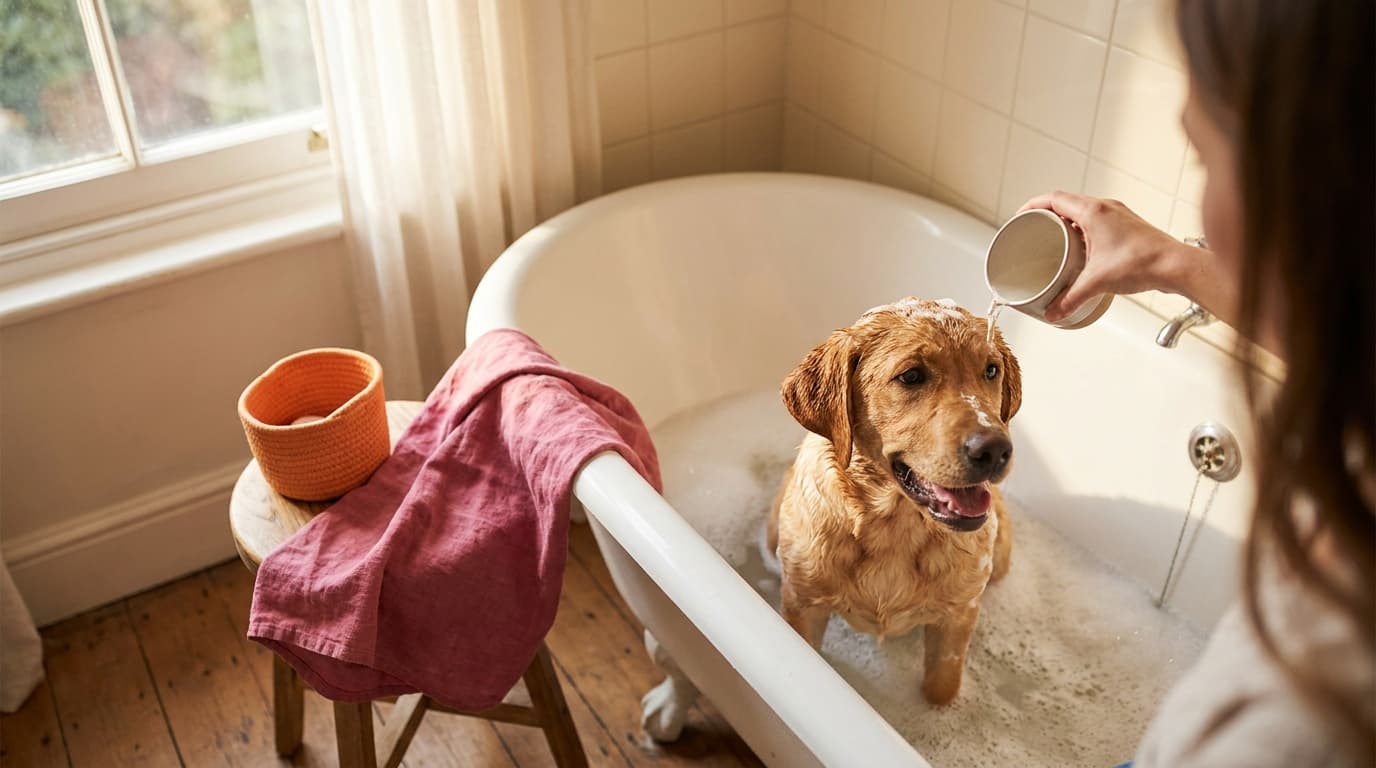
There is no single right answer to how often you should bathe your dog, and that is the honest starting point. According to the American Kennel Club, it depends on things like coat type, health, and lifestyle, and the general advice is to bathe as infrequently as your dog's cleanliness allows in order to preserve the natural oils in the skin and coat. This is a grooming and skin-care overview, not medical advice. If your dog has itchy, flaky, smelly, or inflamed skin, that is a reason to call your veterinarian rather than simply to reach for more shampoo.
What actually determines the frequency
Bathing frequency is a moving target that depends on the individual dog. As VCA Animal Hospitals puts it, how often a dog needs bathing varies with age, lifestyle, coat type, and underlying health. A few useful anchors:
- Coat type. A short, smooth coat usually needs bathing less often than a thick, long, or oily one. The AKC notes that dogs with medium to large coats might be bathed anywhere from weekly to every four to six weeks depending on how well the coat is maintained between baths.
- Lifestyle. A dog that runs through mud, rolls in the grass, or swims will need more frequent baths than a mostly indoor companion.
- Skin health. Dogs with certain skin conditions may be on a bathing schedule set by their vet, sometimes with a medicated product.
For many typical dogs, a bath every few weeks to every couple of months, plus an as-needed wash when they get dirty or smelly, covers it. The practical test is simple: if your dog is dirty or has an odor, it is time; if not, it can usually wait.
Why over-bathing backfires
It is tempting to think cleaner is always better, but a dog's skin does not work that way. Frequent bathing, especially with the wrong product, strips the natural oils that keep skin and coat healthy. The AKC cautions that bathing too often can remove those oils and leave the coat and skin dry. Dry, stripped skin can become flaky and irritated, which is the opposite of what you were aiming for. When you are unsure, erring toward less frequent bathing is usually the safer default.
Use dog shampoo, never human shampoo
The product matters as much as the frequency. Dog skin has a different pH than human skin, so human shampoo is not a safe substitute. The VCA explains that a dog's coat sits at a more neutral pH (roughly 6.2 to 7.5) than the acidic human scalp, and that dogs should be bathed only with shampoo formulated for dogs. Using human products can disrupt that balance and irritate the skin. For routine washing, a gentle, fragrance-free, or oatmeal-based dog shampoo is a common, mild choice.
A gentle bathing routine
When it is bath time, a calm and thorough routine keeps the skin happy:
- Brush first. Removing tangles and loose hair before the water goes on makes the whole bath easier and more effective.
- Use lukewarm water. Wet the coat thoroughly, avoiding the eyes and the inside of the ears.
- Lather with dog shampoo. Work it in gently down to the skin, then leave routine shampoos on only as long as the label suggests.
- Rinse completely. Leftover shampoo is a common cause of post-bath itchiness, so rinse until the water runs clear.
- Dry well. Towel dry, and if you use a dryer, use a low or no-heat setting and keep it moving to avoid overheating the skin.
When a bath is not the answer
If bathing does not fix an odor, or your dog is itchy, scratching, losing hair, or has red, flaky, greasy, or inflamed skin, more baths are unlikely to help and can make dry skin worse. Those are signs of a possible skin problem that your veterinarian should assess. Persistent scratching, a strong smell that returns quickly after a bath, or any sore or irritated patch of skin all warrant a call rather than another wash.
The bottom line
The best bathing schedule is the least-frequent one that keeps your dog clean and comfortable, using a shampoo made for dogs and plenty of brushing in between. Let coat type and lifestyle set the pace, resist the urge to over-bathe, and treat any ongoing skin trouble as a reason to see your vet rather than to scrub harder. Good coat care sits alongside the rest of your dog's routine health habits, from dental care to regular checkups.