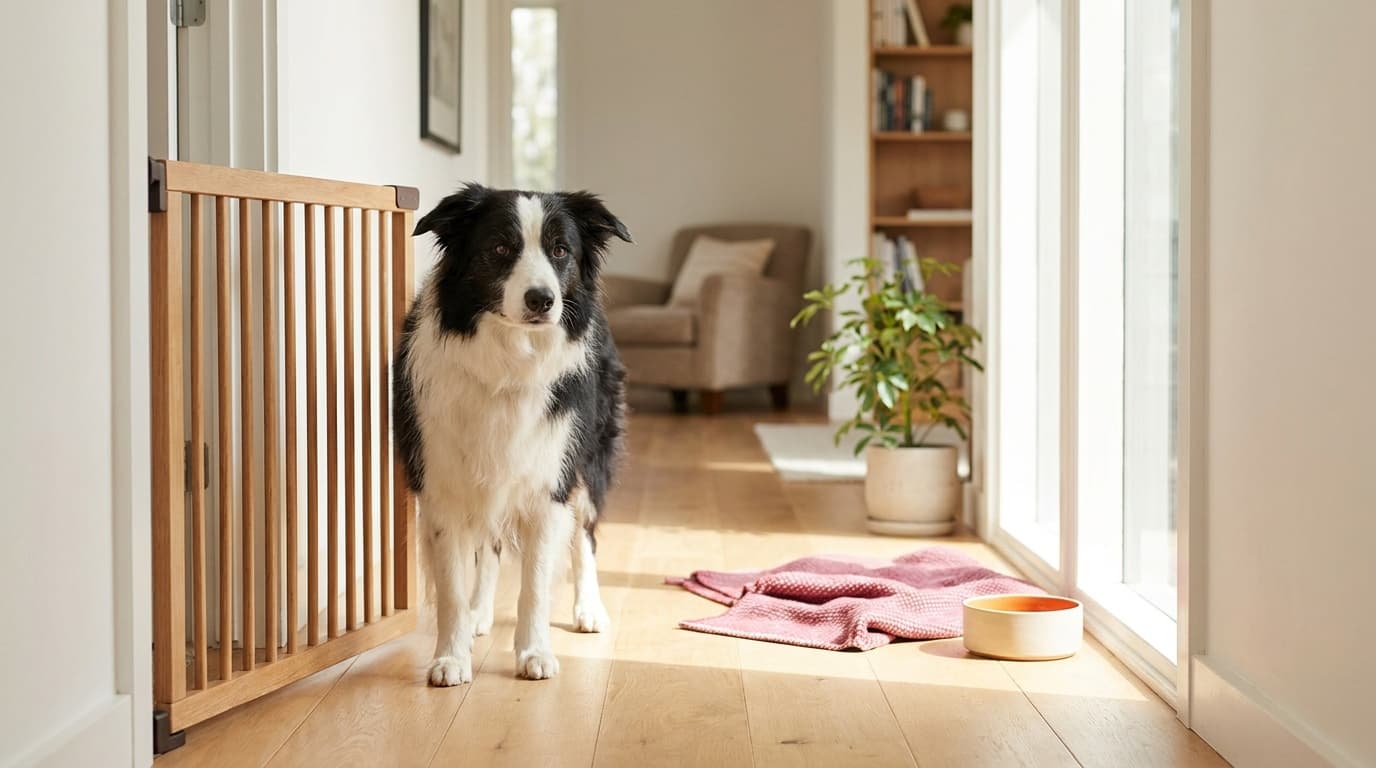
A dog gate does one simple job, keeping a dog out of a room, off the stairs, or away from the front door, but the right gate depends almost entirely on where you plan to put it. A pressure-mounted gate that is perfect across a hallway can be unsafe at the top of a staircase, and a gate sized for a standard doorway will leave gaps in a wide, open-plan living space. The five picks below are grouped by how they mount and how wide an opening they cover, so you can match the gate to the spot rather than to the brand name.
Product details come from published specifications and patterns in owner feedback. House Pet Authority earns a commission from qualifying retailer purchases, at no cost to you.
Top picks at a glance
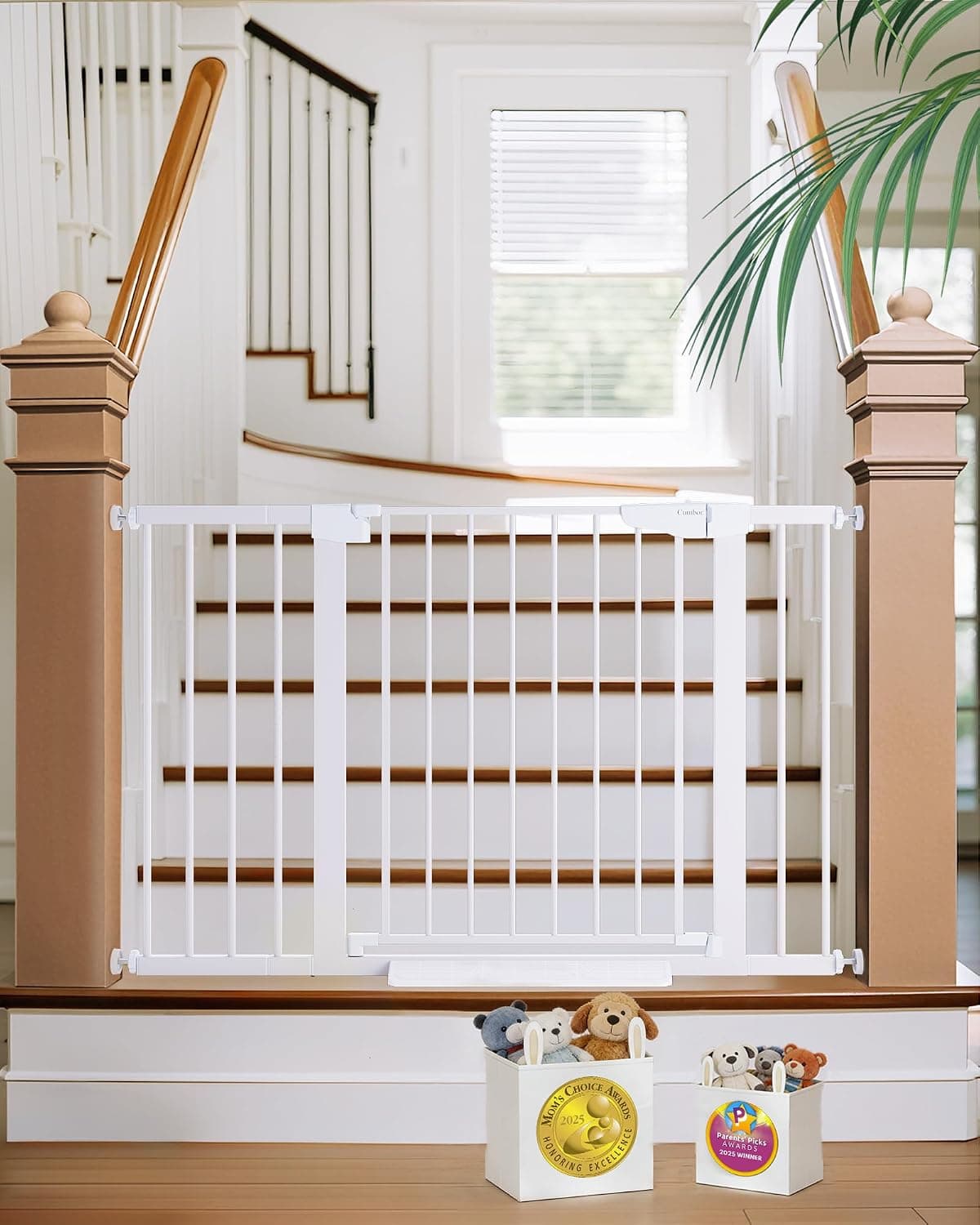 Best Overall29.7-48" Baby Gate for StairsShopView at Amazon for Cumbor 29.7-48" Baby Gate for Stairs, Auto Close Safety Pet Gate for Dogs Indoor, Pressure Mounted Child Gate with Walk Thru Door, White (opens in a new tab)
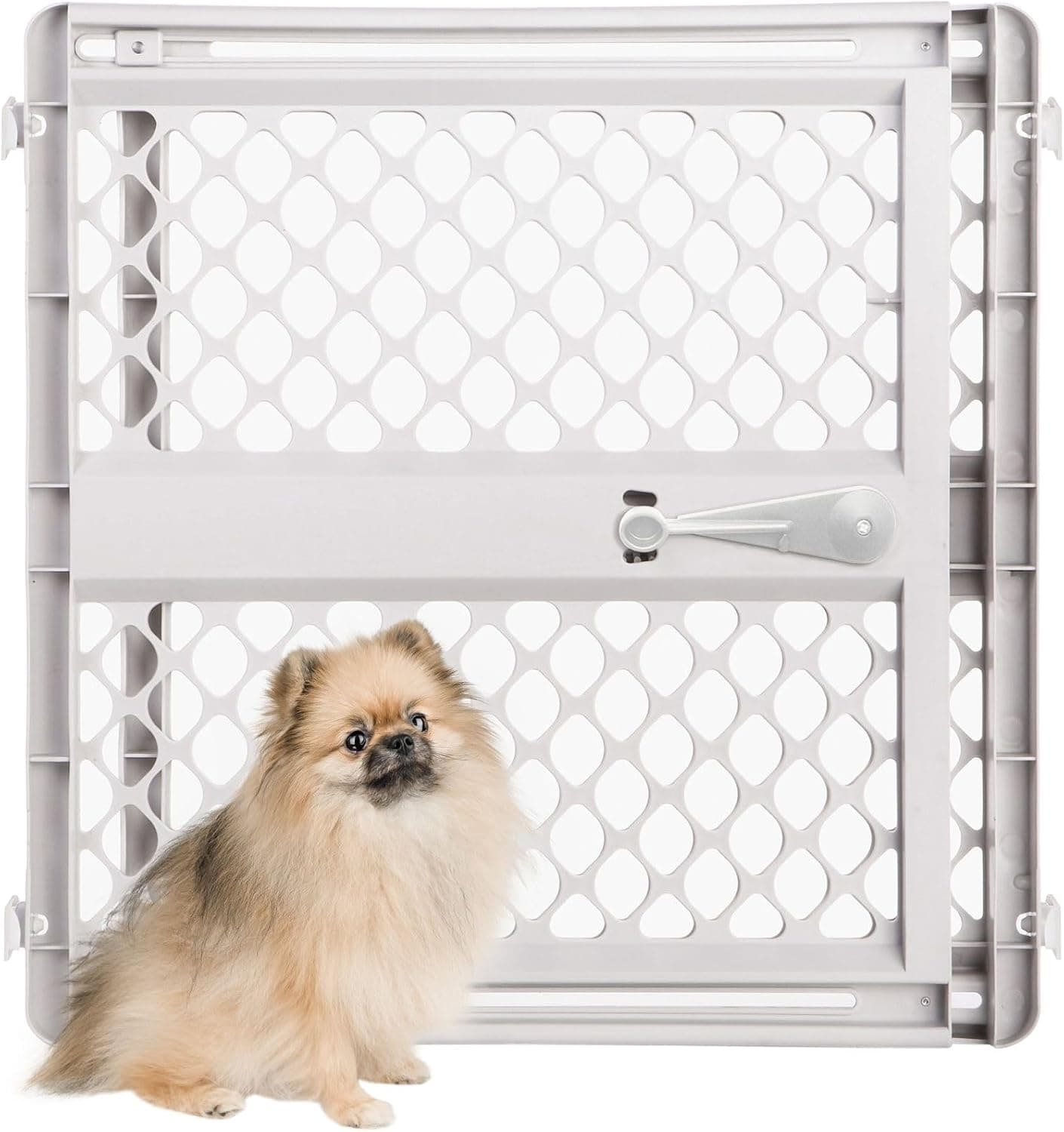 Best ValueUniversal Pet Gate: 26-42" Wide Dog Gate for Doorways with Pressure Fit or Swinging Door Hardware MountingShopView at Amazon for MYPET Universal Pet Gate: 26-42" Wide Dog Gate for Doorways with Pressure Fit or Swinging Door Hardware Mounting, 26" Tall, Gray (opens in a new tab)
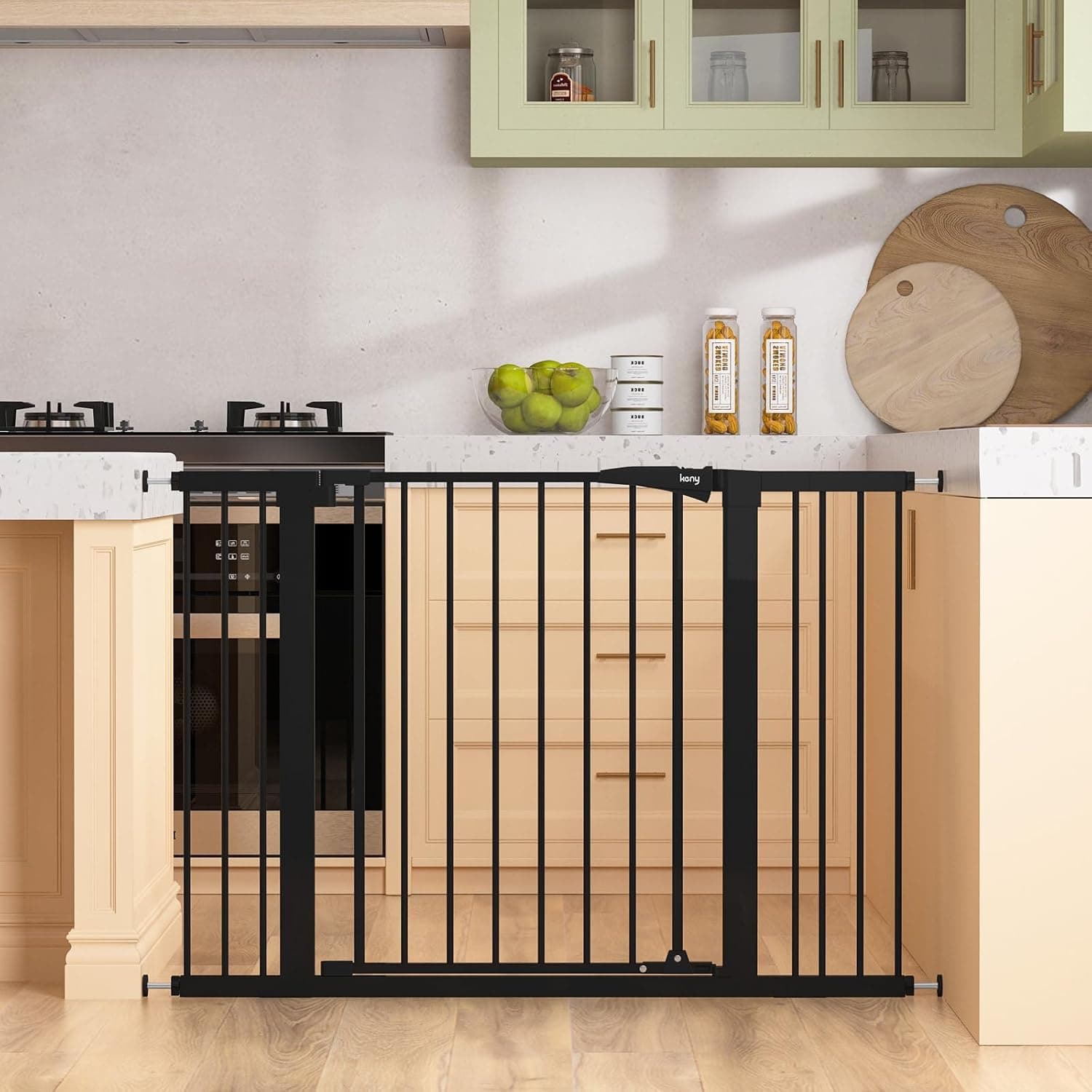 29.7-46" Baby Gate for StairsShopView at Amazon for keny 29.7-46" Baby Gate for Stairs, Auto Close Dog Gate for Doorways, Pressure Mounted No Drilling Extra Wide, Dual Lock, Black (opens in a new tab)
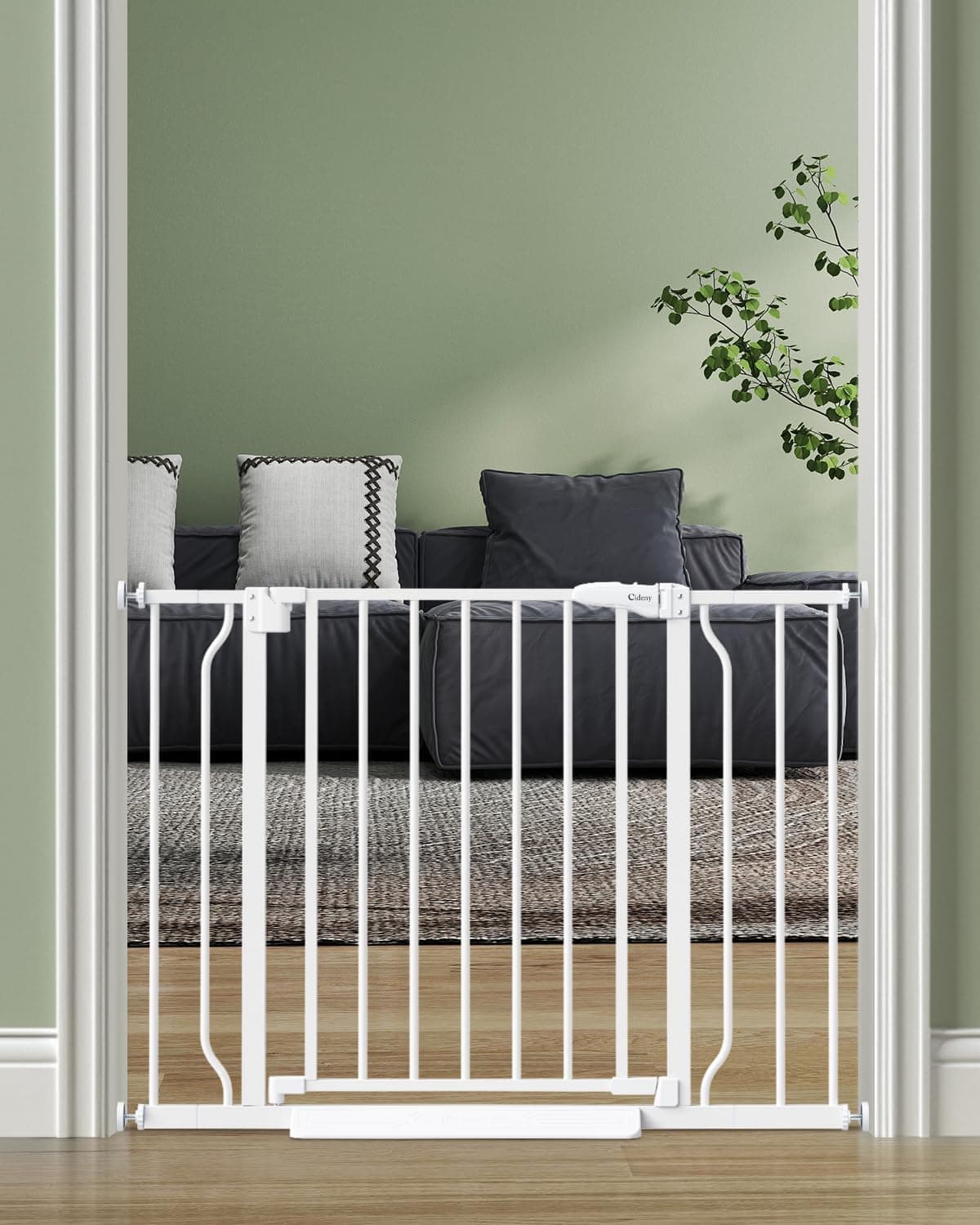 Baby Gate No DrillingShopView at Amazon for cideny Baby Gate No Drilling, 29-40" Auto Close Dog Gate for Doorways & Stairs, Pressure Mounted Adjustable Pet Gate, White (opens in a new tab)
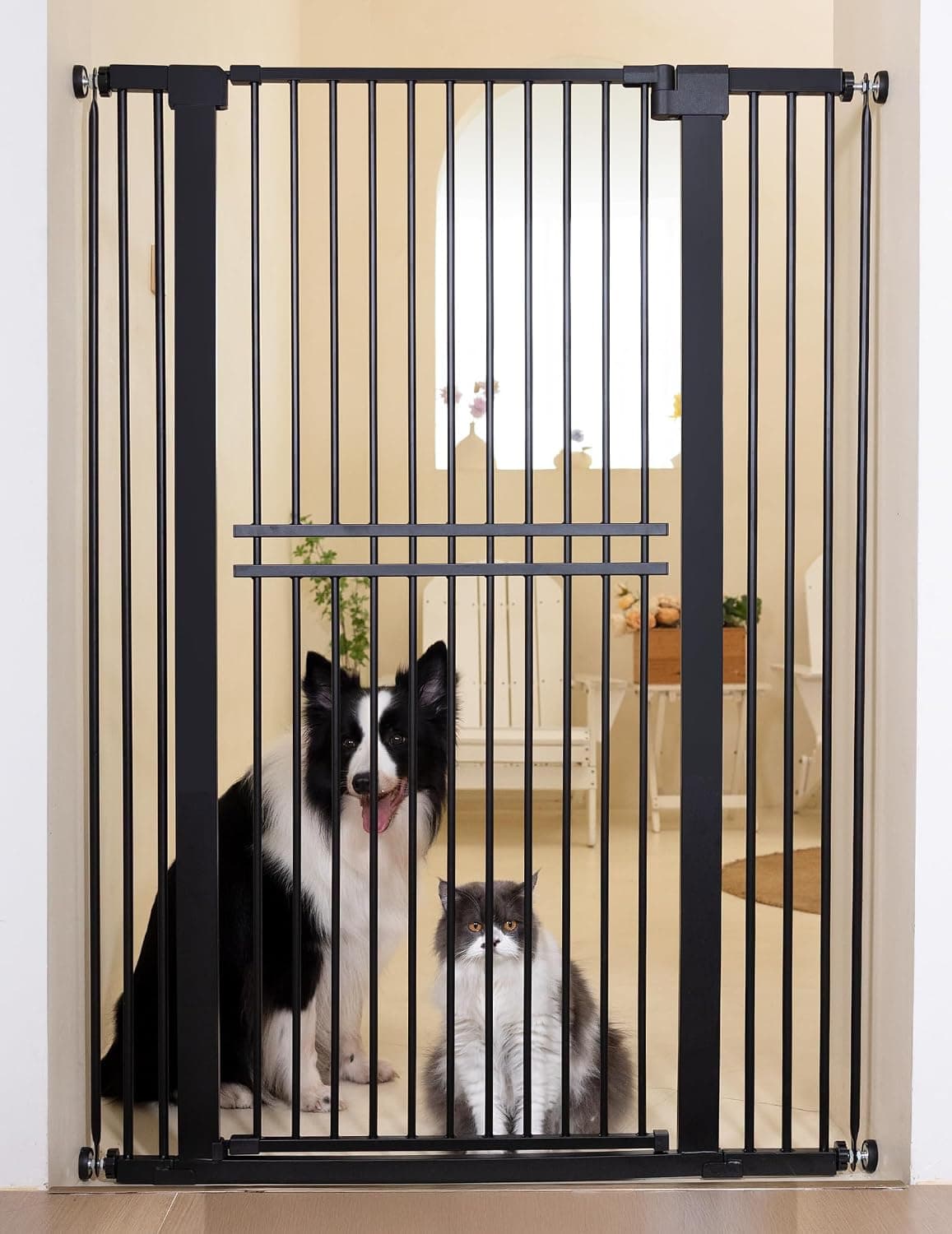 55" Extra Tall Pet Gate for Cat/DogShopView at Amazon for No Pawblems 55" Extra Tall Pet Gate for Cat/Dog, 29-40" Wide Auto Close Dog Gate, 1.37" Ultra Narrow Spacing, No Drilling Pressure Mounted, Black (opens in a new tab)
How to choose a dog gate
Start with the opening. Measure the exact width where the gate will sit, then check the gate's adjustable range, since most gates cover a span (for example 29 to 46 inches) rather than a single fixed width. For wide or irregular openings, look for models that ship with extension panels. Height matters just as much: a determined jumper or a tall breed can clear a standard 30 inch gate, which is where an extra-tall design earns its place.
The second decision is mounting type, and it is partly a safety question. Pressure-mounted gates wedge between two walls with no drilling and are quick to move, which makes them ideal for doorways and hallways. Hardware-mounted gates screw into the wall or banister and are the sturdier, more permanent option. The American Society for the Prevention of Cruelty to Animals recommends managing a dog's access to hazards in the home, and at the top of a staircase that management should not rely on friction alone. Finally, weigh the walk-through experience: an auto-close latch that shuts behind you is far more forgiving of a distracted human than a gate you have to remember to fasten.
The picks
CUMBOR
29.7-48" Baby Gate for Stairs
- Width range
- 29.7 to 48 inches
- Mounting
- Pressure mounted, no drilling
- Door
- Walk-through with auto close
- Material
- Metal
- Use
- Stairs and doorways
A pressure mounted metal gate that spans 29.7 to 48 inches and installs without drilling. The walk-through door swings shut and latches on its own, so it closes even when your hands are full. It suits both stair tops and standard doorways.
See more detailSee less detail
Strengths
- Very wide adjustable range
- Auto-close self-latching door
- Huge base of positive reviews
Weaknesses
- Higher price than basic gates
- Pressure mount needs flat, solid walls
Best for
Owners who want one wide, self-closing gate for stairs and doorways.
What owners say
The Cumbor auto-close gate is our top overall pick because it covers the widest set of situations well. It is an auto-close, walk-through metal gate with a double-locking latch and an adjustable width that suits most doorways, hallways, and stair openings, and it typically ships with extension pieces to span wider gaps. The self-closing hinge swings the gate shut behind you, which removes the most common human error, leaving it ajar. It works as either a pressure or hardware mount depending on the spot, so one gate can flex across the house. The main tradeoff is that a swing-open metal gate takes up more space in the doorway than a simple barrier.
MYPET
Universal Pet Gate: 26-42" Wide Dog Gate for Doorways with Pressure Fit or Swinging Door Hardware Mounting
- Width range
- 26 to 42 inches
- Height
- 26 inches
- Mounting
- Pressure fit or hardware
- Door
- Swinging walk-through
- Material
- Wood and metal
A budget-friendly gate that ships with both pressure-fit and hardware mounting parts, so you can choose based on where it goes. It adjusts from 26 to 42 inches wide and stands 26 inches tall. The swinging door lets you pass through without lifting it out.
See more detailSee less detail
Strengths
- Low price
- Includes pressure and hardware mounts
- Swinging walk-through door
Weaknesses
- Only 26 inches tall
- Not ideal for very large jumpers
Best for
Budget shoppers who want flexible mounting for small and medium dogs.
What owners say
The MyPet universal gate is our value pick for wide and awkward openings. It is a long, configurable barrier designed to stretch across broad spans and even shape around corners or angled entries, which makes it the practical answer for open-plan rooms where a standard doorway gate simply is not wide enough. It leans toward containment across large gaps rather than frequent walk-through use, so it suits a spot you pass through less often. Because it covers such a wide range, confirm your measured opening falls inside its stated span before buying.
KENY
29.7-46" Baby Gate for Stairs
- Width range
- 29.7 to 46 inches
- Mounting
- Pressure mounted, no drilling
- Door
- Auto close, dual lock
- Opening
- One-hand operation
- Material
- Metal
An extra-wide pressure gate that installs without drilling and closes automatically behind you. A dual-lock latch and one-hand opening make it easy for adults while staying secure against dogs. It fits doorways and the tops of stairs.
See more detailSee less detail
Strengths
- High star rating
- One-hand opening with dual lock
- No drilling required
Weaknesses
- Smaller review base than category leaders
- Pressure mount not ideal for very wide gaps
Best for
Households wanting a secure auto-close gate that opens one-handed.
What owners say
The KENY auto-close gate is a strong walk-through alternative to the Cumbor, built around the same convenience-first idea: a self-closing hinge and a one-hand latch so you can pass through with hands full and trust the gate to shut. It mounts under pressure for doorways and hallways and adjusts across a typical width range with add-on extensions. It is a good pick for a busy household where the gate gets opened dozens of times a day and someone will inevitably forget to close it. As with any pressure gate, keep it off the top of stairs and reserve it for level openings.
CIDENY
Baby Gate No Drilling
- Width range
- 29 to 40 inches
- Mounting
- Pressure mounted, no drilling
- Door
- Auto close, walk-through
- Extras
- Stroller friendly opening
- Material
- Metal
A no-drill pressure gate that adjusts from 29 to 40 inches and closes on its own. The walk-through door is wide enough to pass a stroller, and the neutral white finish blends into most trim. It works for both children and pets.
See more detailSee less detail
Strengths
- Auto-close door
- Stroller-friendly width
- Clean white finish
Weaknesses
- Narrower max width than premium gates
- Needs firm mounting surfaces
Best for
Homes with both kids and dogs needing a tidy, self-closing gate.
What owners say
The Cideny no-drill pressure gate is the pick for renters and anyone who does not want to put holes in the wall. It installs entirely by pressure with four adjustable mounting cups and no drilling, so it goes up in minutes and comes down without leaving marks, which is ideal for temporary setups, travel, or a home where you rearrange often. The no-drill design trades some rigidity for that convenience, so it is best used across doorways and hallways rather than as a stair barrier. It is a sensible first gate for a new dog while you learn which rooms actually need blocking.
NO PAWBLEMS
55" Extra Tall Pet Gate for Cat/Dog
- Height
- 55 inches extra tall
- Width range
- 29 to 40 inches
- Bar spacing
- 1.37 inch ultra narrow
- Mounting
- Pressure mounted, no drilling
- Door
- Auto close
An extra-tall 55 inch gate built for cats and athletic dogs that clear standard gates. The 1.37 inch bar spacing keeps small pets from squeezing through, and it mounts with pressure alone. The door closes automatically after you pass.
See more detailSee less detail
Strengths
- 55 inch height stops jumpers and climbers
- Narrow bar spacing
- No drilling needed
Weaknesses
- Premium price
- Tall frame is bulkier to install
Best for
Owners of jumpers or climbers who need maximum gate height.
What owners say
The No Pawblems extra-tall gate is the specialist here, built for jumpers and larger dogs that clear a standard-height gate. Its taller panel raises the bar high enough to discourage dogs that would simply hop a 30 inch barrier, and it still offers a walk-through door so you are not climbing over. If you have a small or non-athletic dog, the extra height is unnecessary and a standard gate will do, but for an agile breed or a persistent escape artist, the added height is the whole point. Check the exact height against your dog's proven jumping ability before deciding you need it.
What mattered most
The comparison focuses on mounting type, adjustable width range and extensions, height, latch and auto-close mechanism, and materials. The picks span use cases, top-of-stairs versus doorway, narrow versus wide openings, and standard versus extra-tall, because there is no single best gate, only the best gate for a given spot.
Follow each gate's mounting instructions, use hardware mounting at the top of stairs, and confirm the adjustable range fits your measured opening before you buy. Prices are shown as bands rather than live quotes, since retail pricing shifts frequently and a fixed number would go stale between updates.