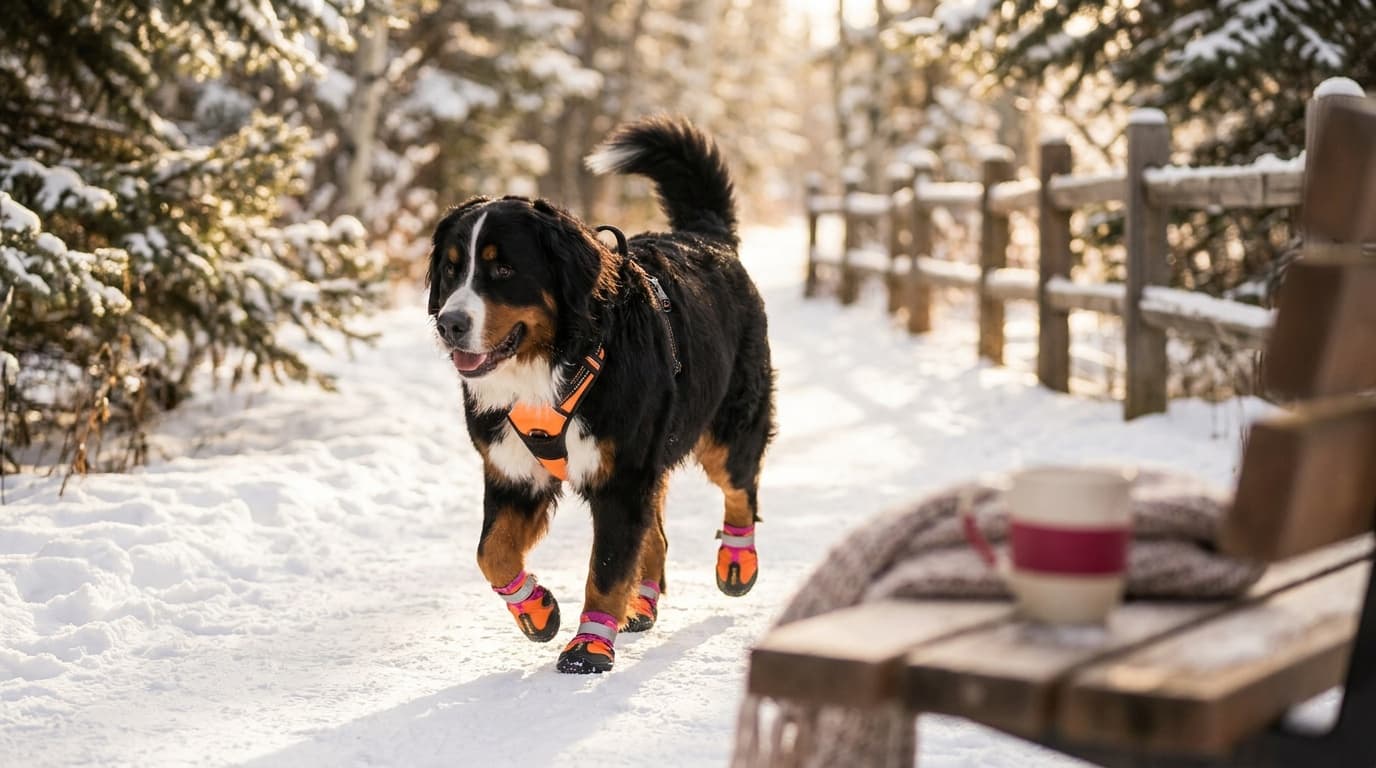
Dog boots protect paws from the surfaces that hurt them: hot summer pavement, ice and road salt in winter, rough trails, and slippery hardwood floors for older dogs that struggle to get traction. They break down into a few types. Structured boots with a rubber sole give the most protection outdoors, while soft grip socks are lighter, easier to accept, and aimed more at indoor traction than at shielding paws from the elements. The honest truth about all of them is that almost every dog walks strangely at first, high-stepping, freezing, or shaking a paw, and success depends as much on patient acclimation as on the boot itself.
Product details come from published specifications and patterns in owner feedback. House Pet Authority earns a commission from qualifying retailer purchases, at no cost to you.
Top picks at a glance
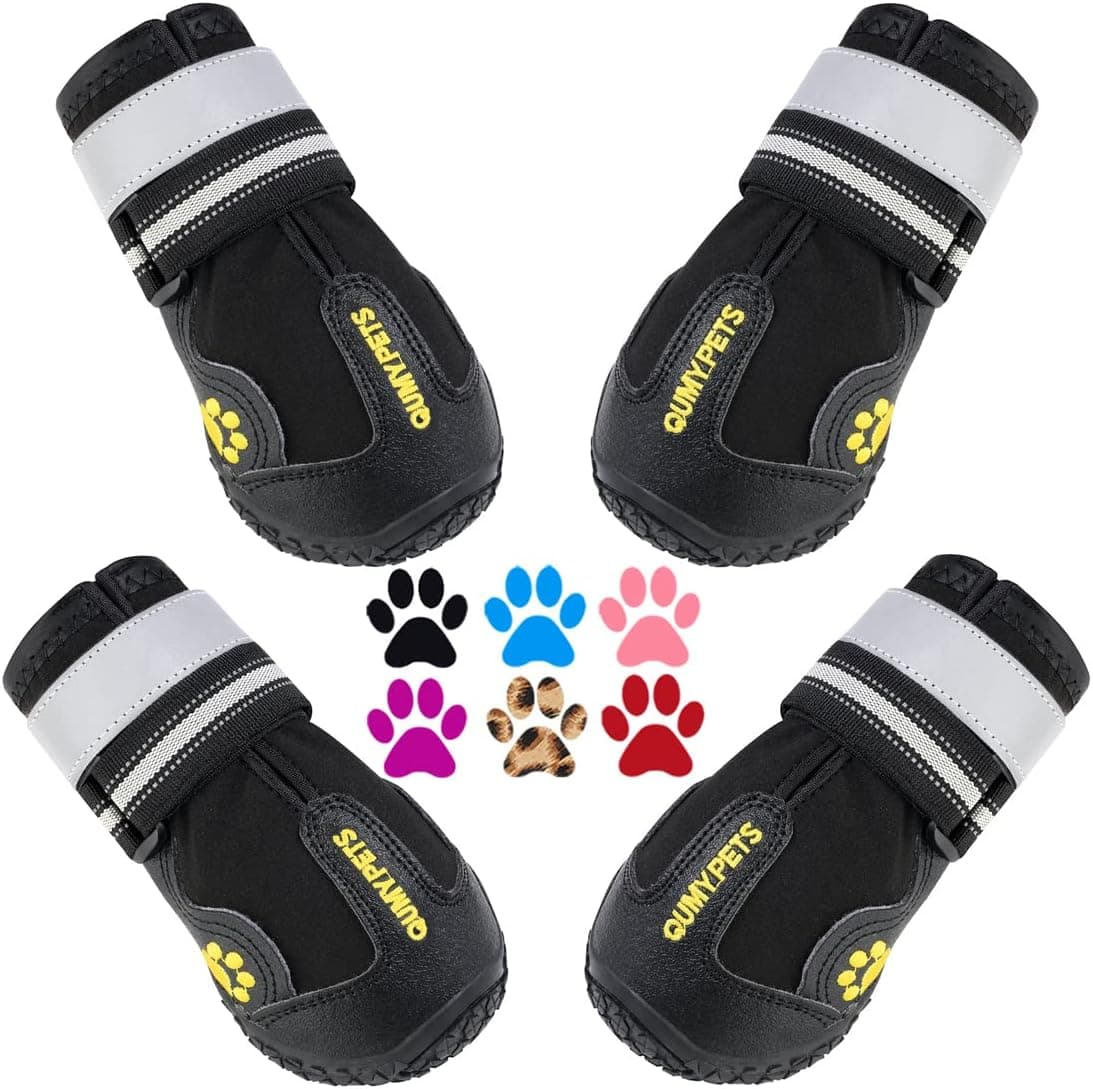 Best OverallDog Shoes for Large DogsShopView at Amazon for QUMY Dog Shoes for Large Dogs, Medium Dog Boots & Paw Protectors for Winter, Hot Pavement, Water-Resistant, Outdoor Walking, Skid-Resistant Sole (opens in a new tab)
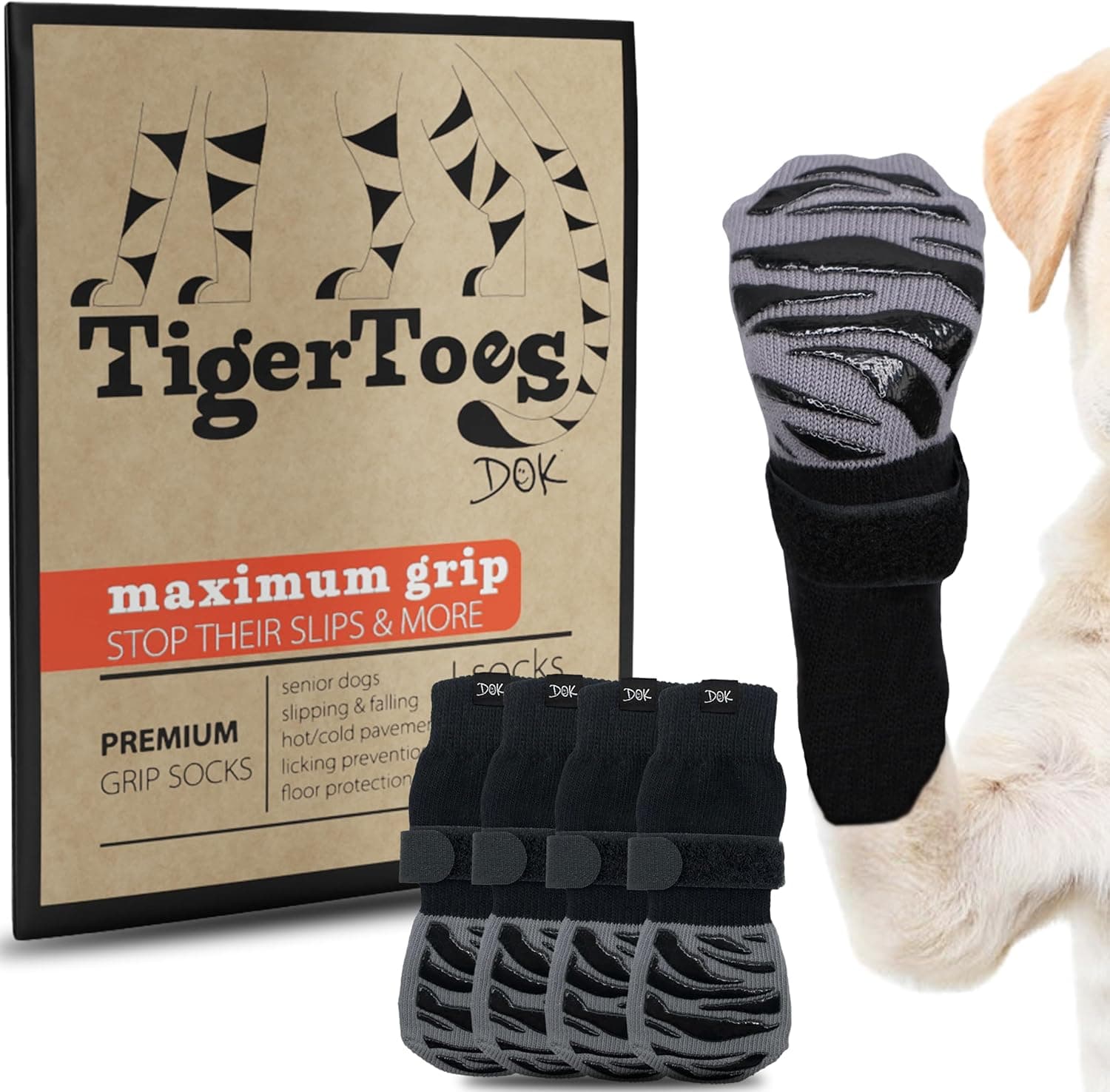 Best ValueTigerToes Premium Non-Slip Dog Socks for Hardwood FloorsShopView at Amazon for DOK TigerToes Premium Non-Slip Dog Socks for Hardwood Floors, Extra-Thick Grip, Prevents Licking and Slipping, Paw Protection, Size Medium (opens in a new tab)
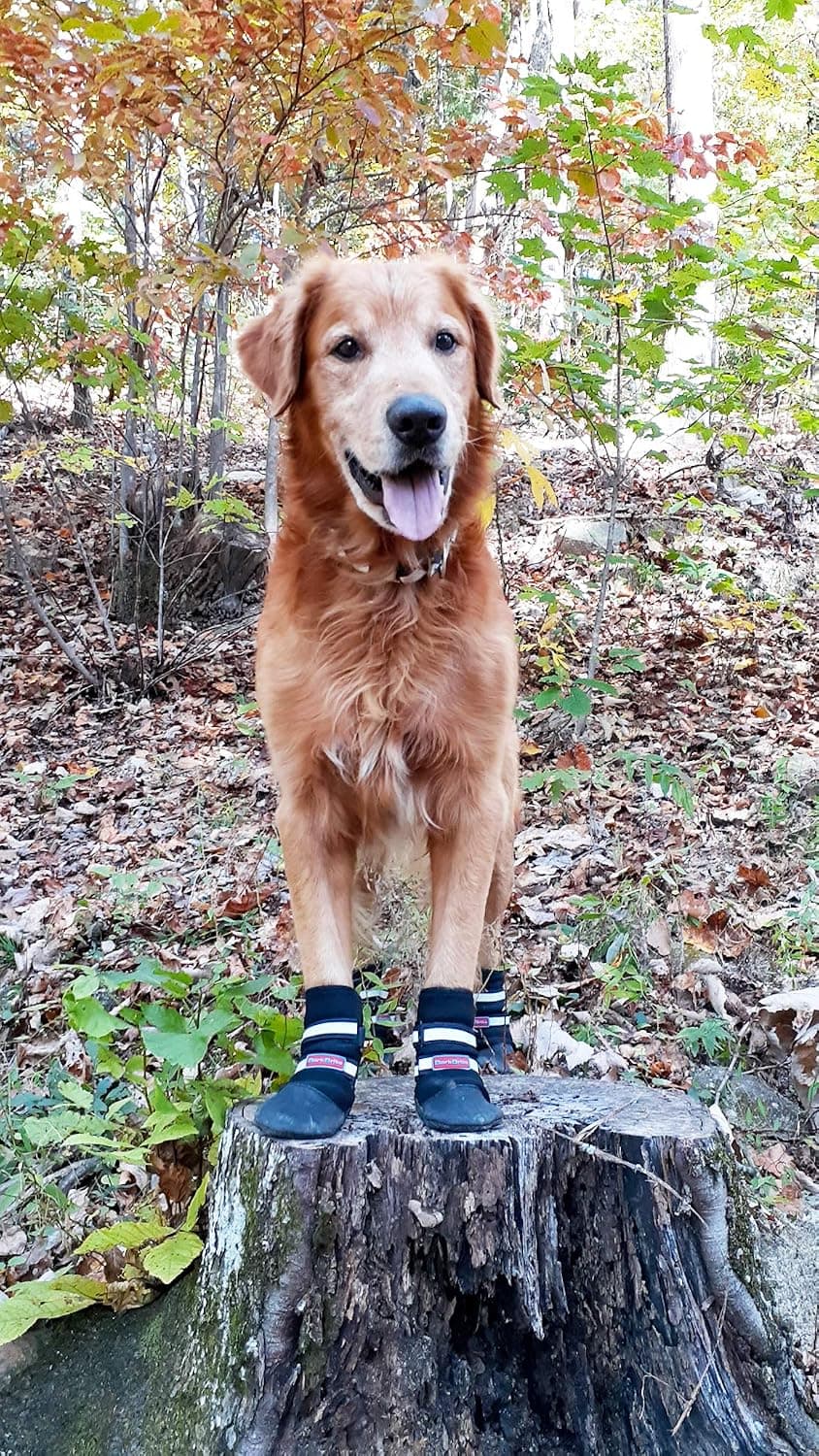 All Weather Neoprene Paw Protector Dog Boots with Reflective Straps in 5 SizesShopView at Amazon for Bark Brite All Weather Neoprene Paw Protector Dog Boots with Reflective Straps in 5 Sizes, Black Large (opens in a new tab)
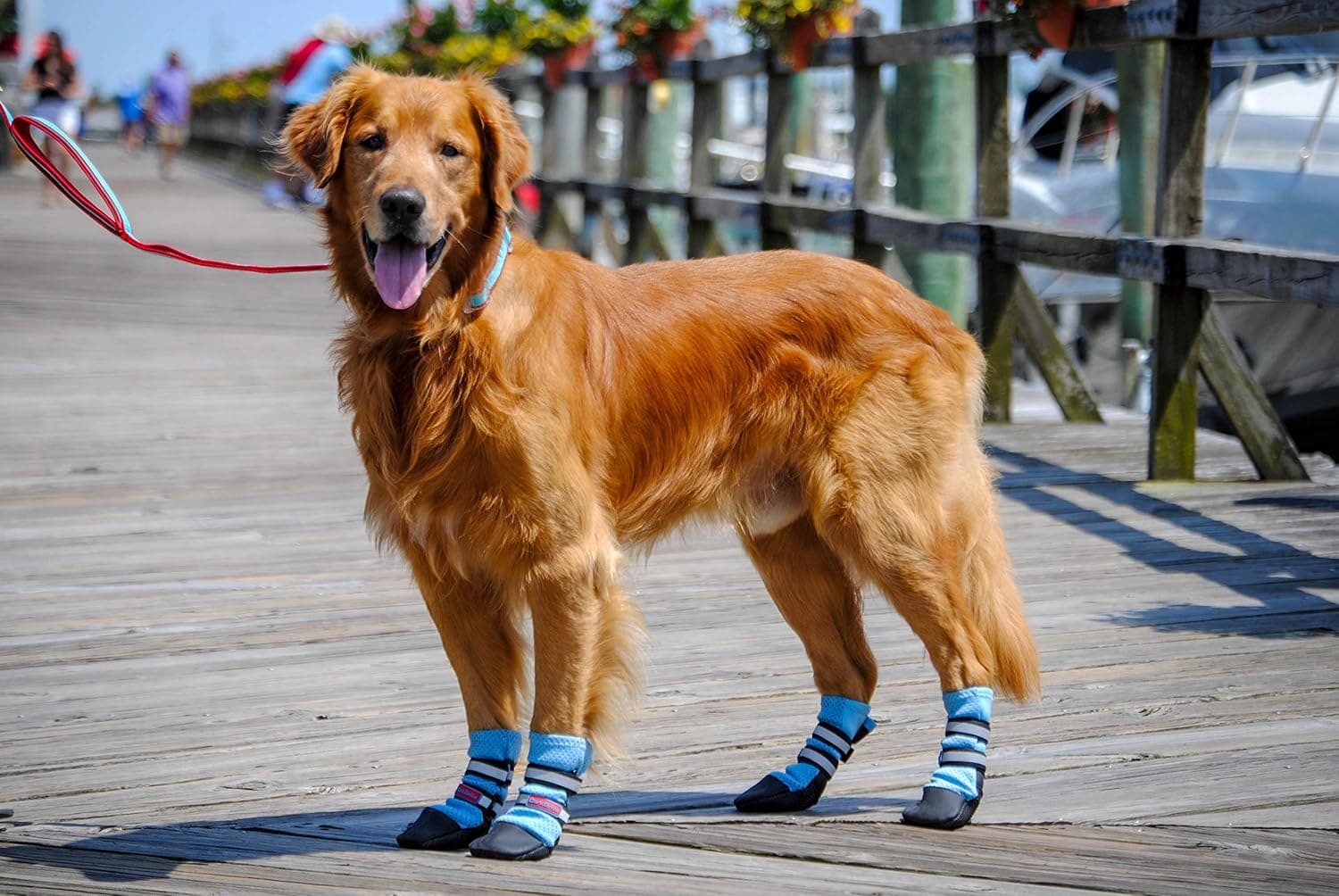 Lightweight Neoprene Paw Protector Dog Boots Designed for Comfort and Breathability in 5 SizesShopView at Amazon for Bark Brite Lightweight Neoprene Paw Protector Dog Boots Designed for Comfort and Breathability in 5 Sizes, Blue Large (opens in a new tab)
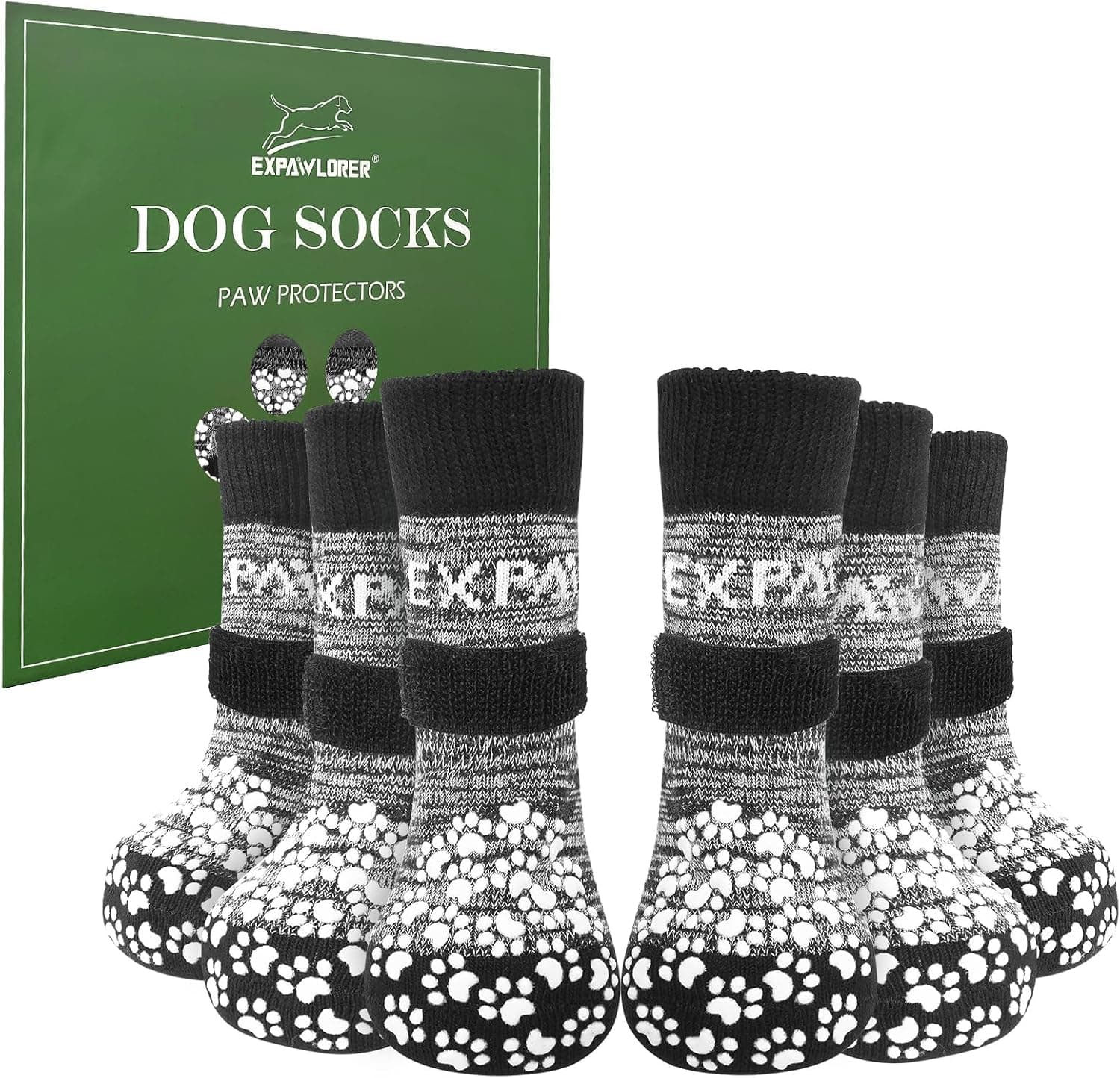 6Pcs Anti-Slip Dog Socks to Prevent Licking PawsShopView at Amazon for EXPAWLORER 6Pcs Anti-Slip Dog Socks to Prevent Licking Paws, Traction Control on Hardwood Floor, Paw Protectors for Puppy Small Medium Large Senior Dogs (opens in a new tab)
How to choose dog boots
Fit is everything with boots, and it is measured, not guessed. To size correctly, have the dog stand with weight on the paw, then measure the width of the paw at its widest point (and sometimes the length), and match that to the product's size chart rather than ordering by the dog's body weight. A boot that is too loose falls off on the first walk, and one that is too tight will be rejected outright. A secure strap or double closure keeps boots on active dogs, which is a common failure point in cheaper designs.
Match the boot to the job. For hot pavement or winter ice and salt, you want a structured boot with a real sole and some water resistance. For an older dog slipping on hardwood, or a dog recovering from a paw injury indoors, grippy socks are often the better and more tolerable choice. Whatever you pick, plan to acclimate gradually: the American Society for the Prevention of Cruelty to Animals supports introducing new gear slowly with rewards. Start with short indoor sessions and treats before any real walk, and expect the funny high-stepping walk to fade with practice.
The picks
QUMY
Dog Shoes for Large Dogs
- Type
- Hard-sole dog boots
- Sole
- Skid-resistant rubber
- Protection
- Hot pavement, snow, water-resistant
- Closure
- Adjustable straps
- Fit
- Medium to large dogs
Hard-sole boots that shield paws from hot pavement, snow, and rough trails, with a skid-resistant tread for grip. Two adjustable straps per boot help keep them on active dogs. The huge review base makes them a common starting point for boots.
See more detailSee less detail
Strengths
- Rugged skid-resistant sole
- Protects against heat and snow
- Very large review base
Weaknesses
- Boots take time for dogs to accept
- Fit and stay-on vary by paw shape
Best for
Medium and large dogs walking on hot or rough surfaces.
What owners say
The QUMY boots are our top overall pick for outdoor protection. They are water-resistant, structured boots with a rugged anti-slip rubber sole and reflective straps, built to shield paws from hot pavement, rough ground, and cold, wet conditions. Two adjustable straps per boot help them stay on active dogs, which is the feature that separates boots you can actually walk in from boots that scatter across the yard. They come in a wide range of sizes. As with every structured boot, careful paw measurement and a patient break-in period are what make them work, so measure to the chart and start indoors.
DOK
TigerToes Premium Non-Slip Dog Socks for Hardwood Floors
- Type
- Non-slip grip socks
- Grip
- Extra-thick traction pads
- Use
- Indoor hardwood floors
- Benefit
- Reduces slipping and paw licking
- Size
- Medium
Thick grip socks aimed at indoor traction for dogs that slide on hardwood or lick sore paws. The rubberized pads add grip even when the sock twists. They are a gentler indoor alternative to hard boots.
See more detailSee less detail
Strengths
- Great indoor traction
- Helps senior dogs on slick floors
- Low price
Weaknesses
- Indoor use, not for rough outdoor terrain
- Socks can slip off active dogs
Best for
Senior or slipping dogs that need indoor floor grip.
What owners say
The Dok Tigertoes non-slip socks are our pick for indoor traction, especially for senior dogs. Rather than protecting against the elements, they add grip so a dog can move confidently on slick hardwood or tile, which matters a great deal for older dogs, dogs with joint issues, or dogs recovering from surgery. They are softer and easier for most dogs to accept than rigid boots. The tradeoff is that socks offer little protection outdoors and can wear through on rough surfaces, so think of these as a mobility and confidence aid inside the home.
BARK BRITE
All Weather Neoprene Paw Protector Dog Boots with Reflective Straps in 5 Sizes
- Material
- Neoprene
- Protection
- All-weather paw protection
- Closure
- Reflective straps
- Sizing
- 5 sizes
- Fit
- Flexible neoprene body
Flexible neoprene boots that flex with the paw while still guarding against heat, cold, and debris. Reflective straps improve night visibility and help hold the boots in place. They come in five sizes to match different dogs.
See more detailSee less detail
Strengths
- Flexible neoprene is easy on paws
- Reflective straps
- Five sizes
Weaknesses
- Softer sole than rugged trail boots
- Some dogs kick them off
Best for
Dogs that dislike stiff boots but need all-weather protection.
What owners say
The Bark Brite neoprene paw protectors sit between a sock and a hard boot. The neoprene body is flexible and comfortable, wrapping the paw more gently than a stiff boot while still adding a protective, grippy layer for walks. That flexibility makes them easier for many dogs to accept during the acclimation stage, while still giving more coverage than a plain sock. They are a good middle option for dogs that reject rigid boots outright but need more than indoor grip. Measure carefully, since a snug but not tight fit is what keeps a flexible boot from twisting or slipping.
BARK BRITE
Lightweight Neoprene Paw Protector Dog Boots Designed for Comfort and Breathability in 5 Sizes
- Material
- Lightweight neoprene
- Focus
- Comfort and breathability
- Closure
- Adjustable straps
- Sizing
- 5 sizes
- Weight
- Lightweight build
A lighter, more breathable neoprene boot for dogs that find bulky boots uncomfortable. The reduced weight helps dogs adjust to wearing them. Adjustable straps and five sizes cover a range of paws.
See more detailSee less detail
Strengths
- Light and breathable
- Easier acclimation for new wearers
- Five sizes
Weaknesses
- Less rugged than hard-sole boots
- Lower star rating than top picks
Best for
Dogs new to boots that need a light, breathable option.
What owners say
The Bark Brite lightweight boots are the everyday, easy-wearing option in the lineup. They are designed to be less bulky than heavy-duty trail boots, which lowers the barrier for dogs that dislike the sensation of something on their feet, while still protecting against pavement and rough ground. The lighter build makes them a sensible choice for regular neighborhood walks rather than serious hiking. As always, they only work if they fit and stay on, so measure paw width to the size chart and expect a short adjustment period before your dog walks normally in them.
EXPAWLORER
6Pcs Anti-Slip Dog Socks to Prevent Licking Paws
- Type
- Anti-slip socks, 6 pieces
- Grip
- Traction control pads
- Use
- Indoor hardwood floors
- Benefit
- Prevents paw licking
- Fit
- Puppy to senior sizes
A six-piece sock set that gives dogs traction on slick floors and discourages paw licking. Six socks mean a spare when one goes missing. They fit puppies through senior dogs and are the lowest-cost pick here.
See more detailSee less detail
Strengths
- Six socks for spares
- Very low price
- Good indoor traction
Weaknesses
- Indoor use only
- Socks slip off some dogs
Best for
Owners wanting cheap indoor grip socks with spares.
What owners say
The EXPAWLORER anti-slip socks round out the list as another indoor-traction option, with grippy soles to help dogs stay steady on slippery floors. Like the Dok Tigertoes socks, they shine as a low-cost mobility aid for senior dogs, post-surgery recovery, or any dog that skates around on hardwood, and they are gentle enough that most dogs tolerate them quickly. They are not meant for tough outdoor use, so keep them to indoor and light-duty jobs. Measure and size to the chart, since a sock that slides down loses its grip and defeats the purpose.
What mattered most
The comparison focuses on boot type and materials, sole grip, weather resistance, closure and fit system, and size range. The picks cover the full spectrum, from structured outdoor boots to soft indoor grip socks, because paw protection for a winter hike and traction for a senior dog on hardwood are genuinely different problems.
Success with any dog boot depends heavily on correct paw measurement and a patient, treat-based break-in, so measure to each product's size chart, start indoors in short sessions, and expect an initial period of odd, high-stepping walking before your dog adjusts. Prices are shown as bands rather than live quotes, since retail pricing shifts frequently and a fixed number would go stale between updates.