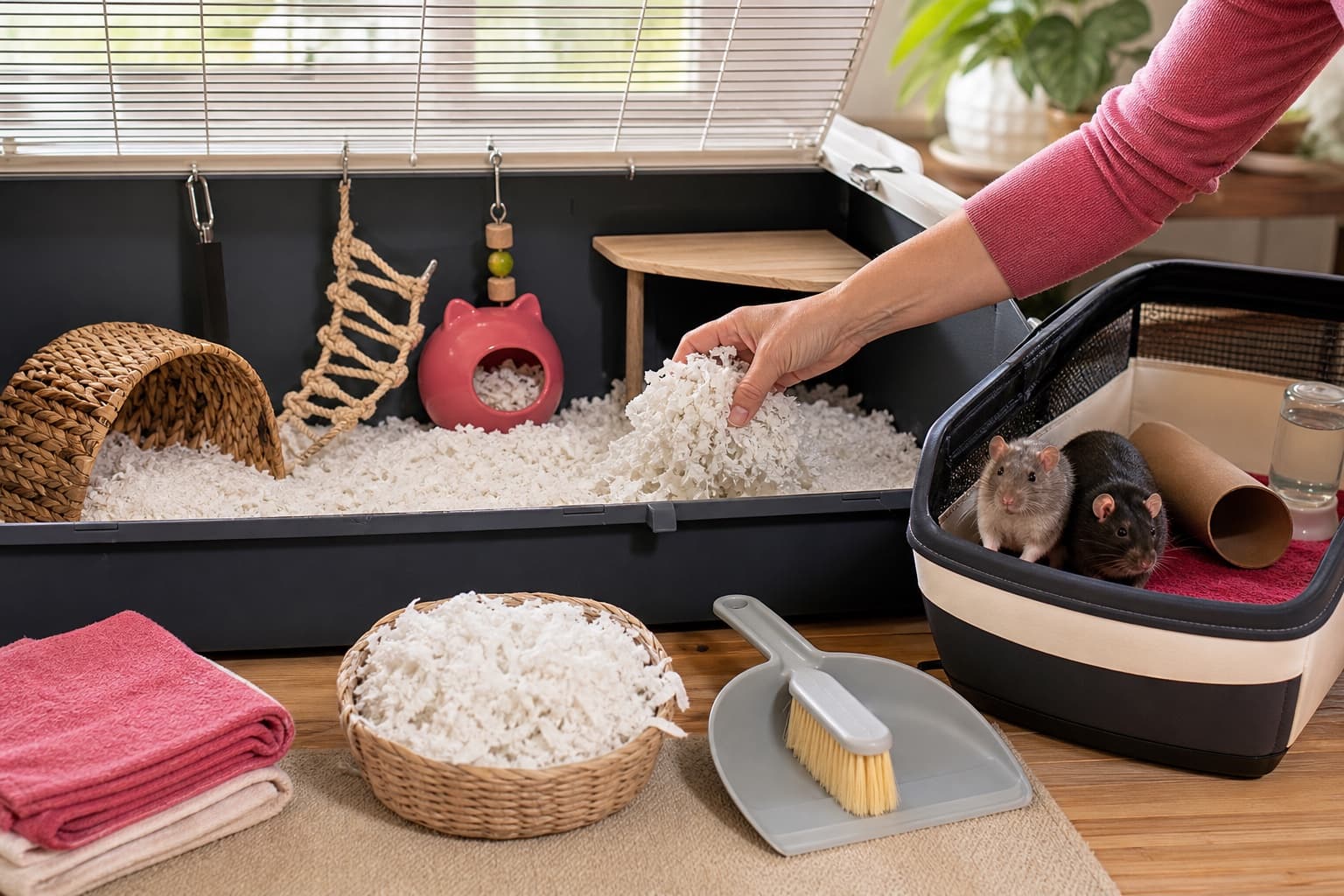
Rat bedding and cleaning should keep the home dry, ventilated, usable, and familiar after every reset. The practical routine combines daily wet-zone checks, washable solid surfaces, dust-extracted bedding, and a small amount of clean familiar nesting material.
The RSPCA environment guide recommends suitable dust-free bedding and nesting material, regular cleaning, and retaining some unsoiled material so familiar scent remains. Blue Cross similarly recommends paper-based bedding and avoiding dusty or fluffy material.
Choose a low-dust base
Use a dust-extracted paper or cellulose bedding made for small animals. It should absorb moisture, allow some digging and carrying, and remain easy to inspect. Plain shredded paper or tissue can provide separate nesting material.
Avoid sawdust, cedar, strongly scented or fragranced products, fluffy cotton-style nesting wool, and long stringy fibers. These can add dust, scent, or entanglement risks to a home where rats sleep close to the substrate.
Fleece-covered shelves can be part of a setup when they fit securely and are changed before they remain damp. Inspect edges and seams for loose threads. Fleece does not replace a digging area or absorbent material where the rats choose to toilet.
Learn the wet zones
Check the cage every day. Common wet areas include corners, beneath water bottles, favorite shelves, sleeping spots, and covered litter areas. Remove damp bedding, spoiled fresh food, and heavily soiled cardboard when you find it.
Refill the area with clean material while keeping the rest of the home stable. Daily spot cleaning prevents one wet corner from dictating a full-cage reset.
Prepare for a fuller clean
Move the bonded group together into a secure hard-sided carrier or temporary enclosure with ventilation, familiar cover, water, and a cardboard tube. Count every rat and latch the carrier before opening large cage panels or moving shelves.
Set aside a small amount of clean, dry familiar nesting material. Discard wet or heavily soiled material. Remove washable accessories, food vessels, and water bottles while keeping clips and small parts accounted for.
Work through the cage in sections
Wash solid trays, shelves, and suitable accessories with a plain pet-safe cleaning method, then rinse and dry them fully. Follow the product instructions for any cleaner and keep the rats away until surfaces are dry and fumes have cleared.
Inspect:
- Cage bars, welds, latches, and door alignment.
- Shelf edges and ramp fasteners.
- Hammock seams, clips, and loose threads.
- Water-bottle valves and seals.
- Chewed plastic, wood, cardboard, and cable protection.
- Hidden wet areas behind or beneath sleeping spaces.
Replace damaged items rather than returning a sharp edge or loose loop to the cage.
Rebuild a recognizable home
Add fresh bedding and return stable essentials to familiar areas. Mix the saved clean nesting material into one or two sleeping places. The cage can gain a new forage box or route, but avoid changing every level, hide, and resource at once.
Restore more than one water source, several covered sleeping places, food points, and safe movement paths. Test the water and latches before returning the group.
Watch the return
Let the rats leave the carrier voluntarily. Check that each rat can move through the rebuilt routes and reach water, food, and cover. Some renewed scent marking and nest building is expected after cleaning; a clear change in breathing, posture, movement, eating, drinking, or ordinary activity needs veterinary advice.
The MSD Veterinary Manual rat housing guide also emphasizes clean, dry housing, safe bedding, ventilation, and regular attention to the enclosure.