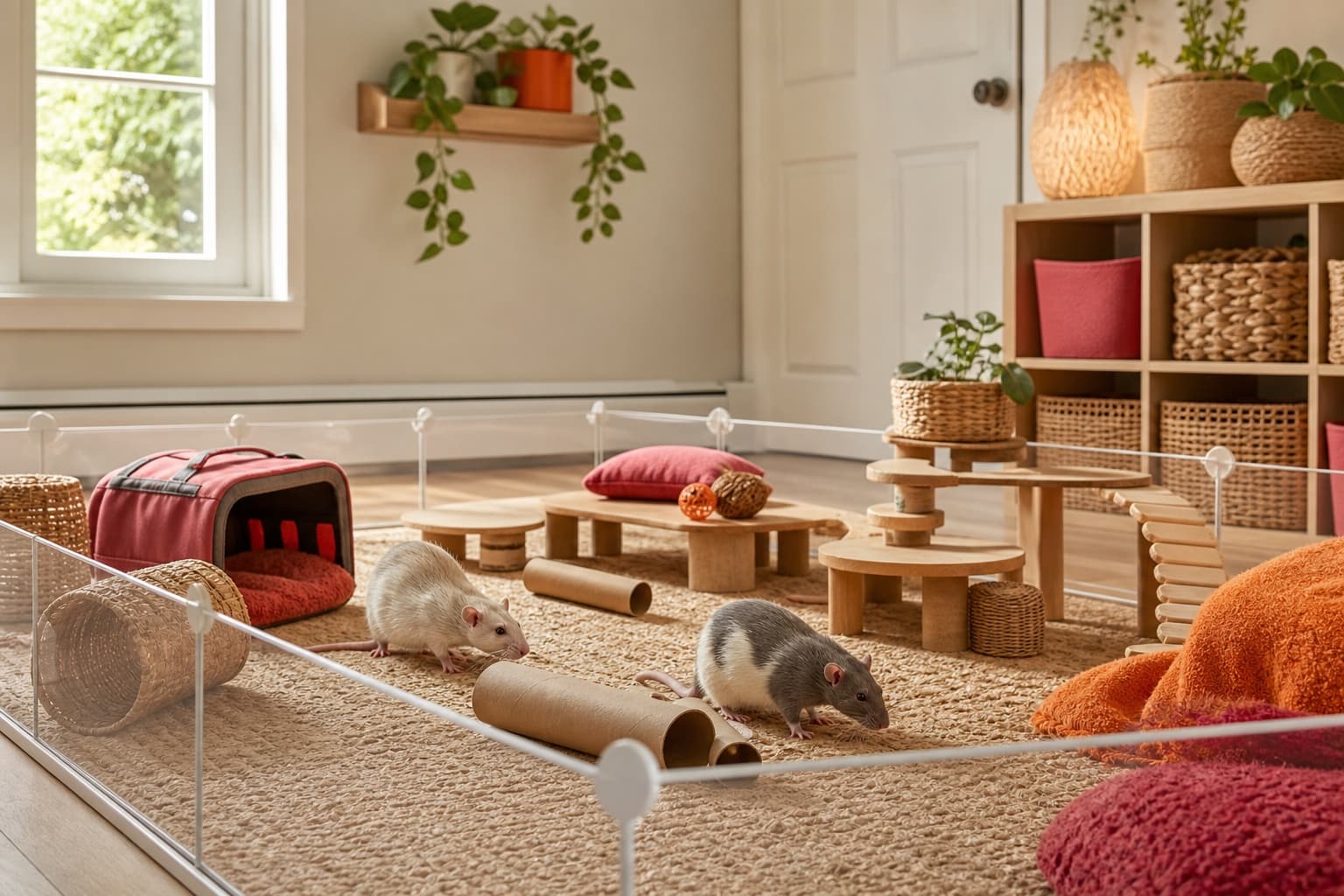
Free-roam time gives pet rats room to run, climb, investigate, forage, and train with their people. The safest version begins with one closed room or a secure play area that has been inspected from rat height before the cage door opens.
The RSPCA environment guide recommends daily supervised exercise in a rat-safe room. The room is part of the rats' care system, so its perimeter matters as much as the toys inside it.
Close the perimeter first
Shut doors and windows, then check the gaps around them. Look beneath cabinets, radiators, appliances, built-ins, and furniture. A hole that appears too small from standing height may open into a wall, floor void, or machinery.
Block gaps with durable barriers the rats cannot push aside. Pay special attention to reclining chairs, sofa beds, rocking furniture, exercise equipment, and anything with a moving mechanism. Keep those items still and inaccessible during the session.
Remove other pets from the room. Tell everyone in the household that rats are out before anyone opens a door or moves furniture.
Protect cables and household materials
Unplug and remove loose cables where possible. Route necessary cords through rigid covers and keep connection points outside the play area. Check the entire length, not only the visible section near the outlet.
Move medicines, cleaners, cosmetics, candles, tobacco, alcohol, food packages, small plastic pieces, rubber items, and sharp tools into closed storage. Put houseplants out of reach unless their safety has been confirmed through a reliable veterinary source.
Empty wastebaskets and close toilets, drains, and open water containers. Rats climb, so a hazard on a low shelf is still inside the play area.
Build a useful landscape
Once the perimeter is secure, add reasons to use the room:
- An open carrier or familiar covered hide.
- Cardboard tunnels and boxes with more than one exit.
- Stable low platforms and broad ramps.
- A digging box with suitable dust-free material.
- Paper bags and plain paper for shredding.
- Several forage points using part of the daily food.
- A padded area for handling and training.
Keep early layouts simple enough that every rat remains visible. Add complexity as the group learns the room and reliably returns to the carrier.
Supervise active time
Stay in the room and track every rat. Supervision means watching the perimeter, listening for chewing, and noticing when a rat spends unusual time behind an object. Use a consistent count before and after the session.
Do not use an exercise ball. RSPCA advises against balls because they prevent normal sensory exploration and remove the rat's ability to leave. A secure room, playpen, or sectioned floor area lets rats use their whiskers, paws, hearing, and smell while choosing where to go.
Teach the return route
Make the carrier a familiar part of every session. Place it open near the cage with known bedding and reward voluntary entry. A consistent sound cue followed by a piece of the daily food can help the group learn that the session is ending.
Avoid ending every outing with a chase. If a rat is difficult to collect, reduce the size of the next play area and add more carrier practice.
Reset and recheck
After the rats return to the cage, inspect cable covers, barriers, boxes, and fabric. Chewed cardboard may be harmless to replace; a loosened barrier or exposed cord needs correction before the next session.
Recheck the room whenever furniture, plants, electronics, or storage changes. Rat-proofing is a maintained boundary, not a one-time project.