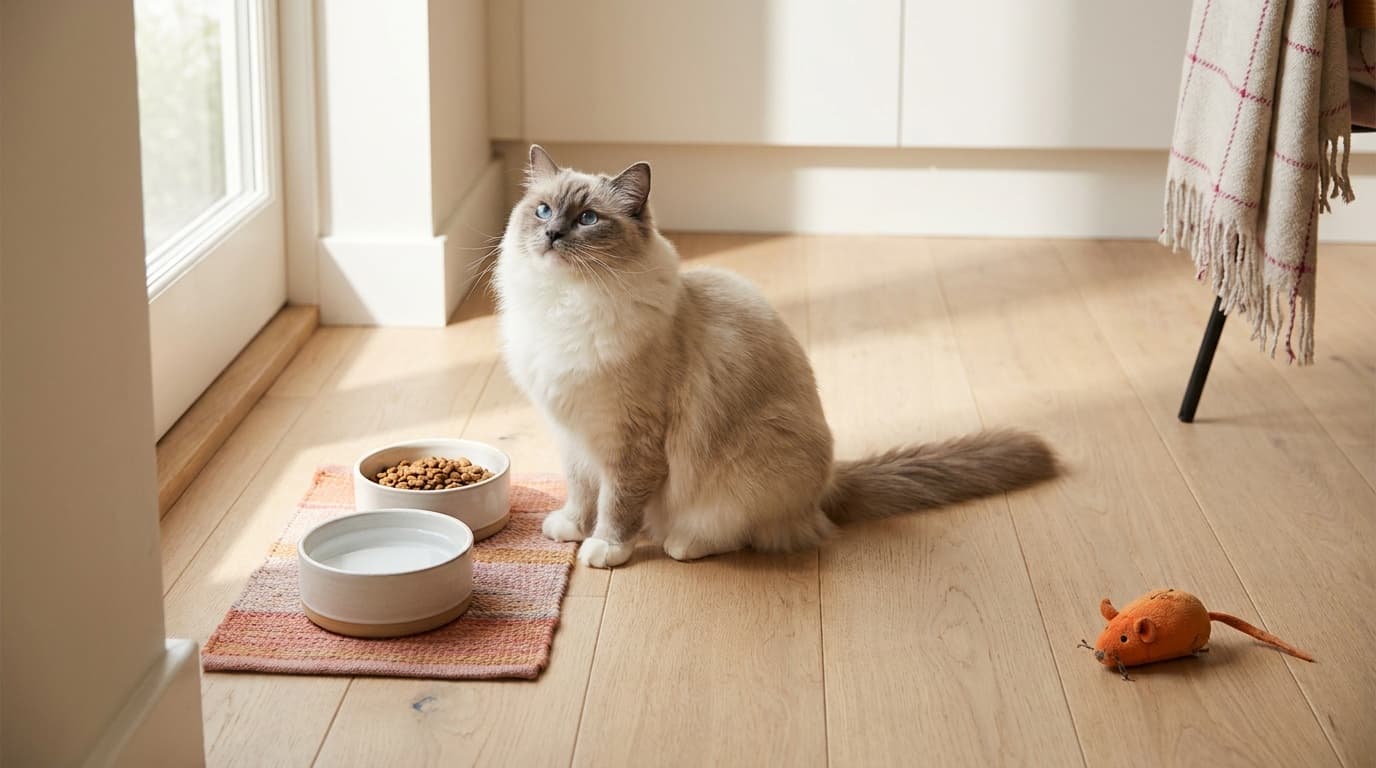
Both wet and dry cat food can keep a cat healthy, and there is no single right answer for every cat. The most important thing is that the food is complete and balanced. As the Cornell Feline Health Center puts it, what matters most is that a food is nutritionally complete and balanced, and there are many high-quality wet and dry foods that meet that standard. The differences between the two come down to hydration, dental effects, cost, and texture, and understanding them helps you choose, or combine, wisely.
Hydration is the biggest real difference
The clearest advantage of wet food is water. Cornell notes that canned wet food is typically at least 75 percent water, while dry food is only around 10 to 12 percent. Cats evolved from desert animals and have a relatively low thirst drive, so many do not drink enough water on their own. A cat eating mostly dry food takes in more of its daily water by drinking, while a cat on wet food gets a large share of its water from the food itself.
Cornell's guidance on feline hydration notes that cats need roughly 4 ounces of water per five pounds of body weight per day, and that cats eating wet food take in much of that through their food. This matters for urinary tract and kidney health, where good hydration is protective. For cats prone to urinary problems, or those that simply do not drink much, wet food or adding water to meals is an easy way to boost water intake.
The dental cleaning myth
A common belief is that dry food cleans a cat's teeth. The reality is more limited. Most standard dry kibble does little to clean teeth, because the pieces are small and brittle and shatter when bitten rather than scrubbing the tooth surface. Cornell and veterinary dental experts emphasize that oral health depends far more on genetics, home dental care, and professional cleanings than on whether food is wet or dry. In other words, dry food is not a substitute for tooth brushing.
There are specially designed dental diets with larger, textured kibble proven to reduce plaque, but ordinary dry food is not one of them. The American Veterinary Medical Association calls regular tooth brushing the single most effective thing owners can do for their pet's dental health between cleanings. Our roundup of dog and cat toothbrush kits covers the tools, though brushing technique matters more than the product.
Cost, texture, and practicality
Beyond hydration and teeth, the choice often comes down to everyday practicality.
- Cost. Dry food is usually less expensive per serving and cheaper to store in bulk. Wet food generally costs more.
- Convenience and storage. Dry food is easy to measure, store, and leave out for short periods. Wet food spoils if left out and needs refrigeration once opened.
- Texture and preference. Some cats strongly prefer one texture over another, and preferences often form in kittenhood. A cat that only ever ate dry food may resist wet food, and vice versa.
- Calorie density. Wet food is generally lower in calories per gram, which can help with feline weight management, letting a cat eat a satisfying volume for fewer calories.
Many owners land on a combination, feeding both wet and dry to get the hydration benefits of wet food and the convenience and lower cost of dry. That is a perfectly reasonable approach.
Choosing for your cat
The best food is one that is complete and balanced, keeps your cat at a healthy weight, and that your cat will happily eat. For a cat with urinary issues or one that drinks little, wet food or added water is worth prioritizing. For a household focused on cost and convenience, a quality dry food with plenty of fresh water is fine. Many cats do well on a mix.
If you decide to change what you feed, transition gradually to avoid stomach upset, following our guide to switching your cat's food safely. And if your cat has a health condition such as kidney disease, diabetes, or urinary problems, the wet-versus-dry decision becomes a medical one worth discussing with your veterinarian, who can recommend the format and formula that best supports your individual cat.