A crate is one of the first big purchases most new dog owners make, and the right choice depends more on how it will be used, daily containment, travel, or crate training a puppy, than on brand alone. This guide compares a wire crate built to grow with a puppy, a portable soft crate for travel, and a double-door wire crate aimed at dogs that work at latches. All three are wire or fabric designs rather than hard plastic airline kennels, which is the more common choice for home crate training.
Top picks at a glance
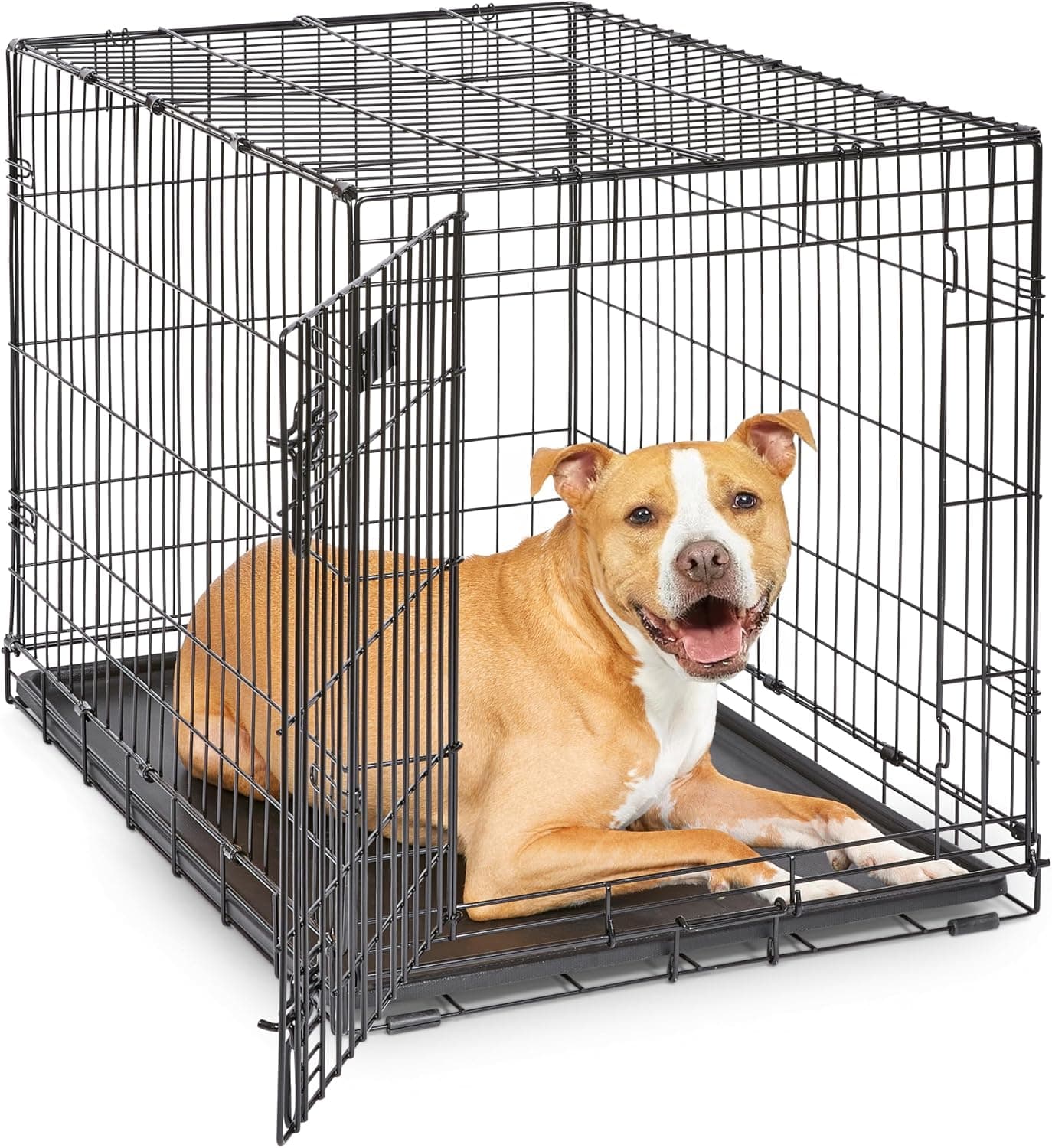 Best OverallMidWest iCrate 36-Inch Folding Dog CrateShopView at Amazon for MidWest iCrate 36-Inch Folding Dog Crate (opens in a new tab)
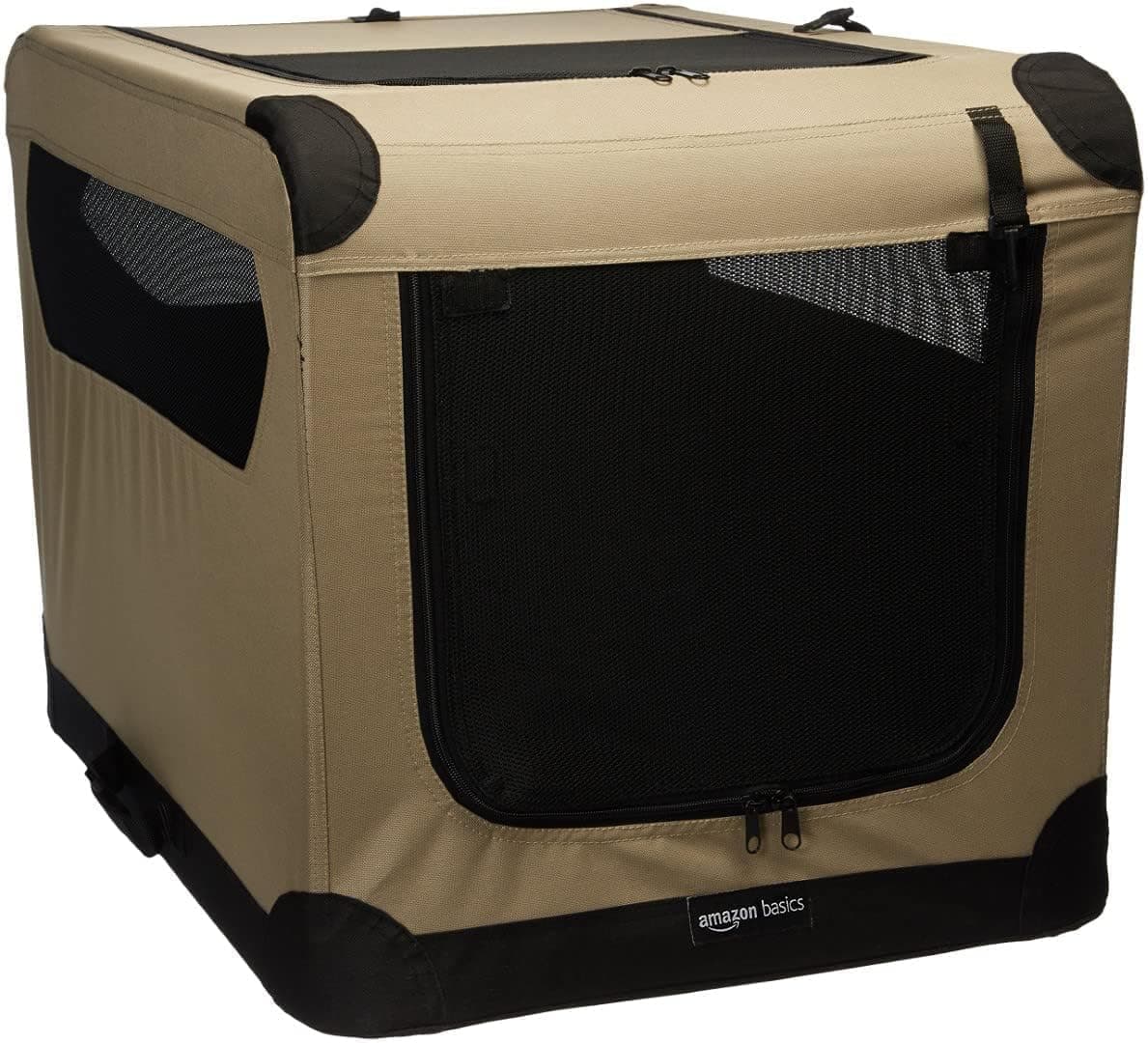 Portable Folding Soft Dog CrateShopView at Amazon for Amazon Basics Portable Folding Soft Dog Crate (opens in a new tab)
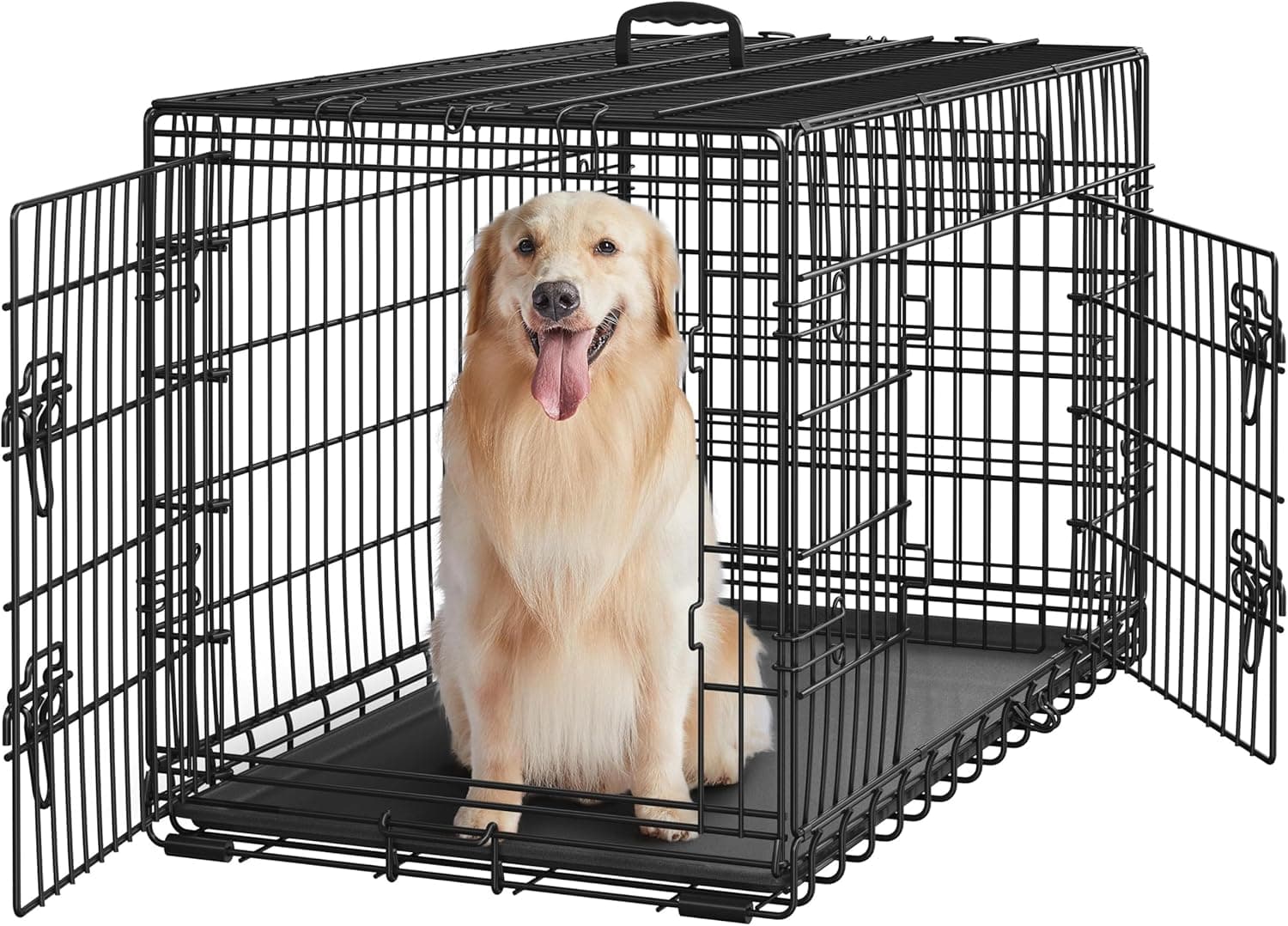 42-Inch Double Door Dog CrateShopView at Amazon for Yaheetech 42-Inch Double Door Dog Crate (opens in a new tab)
Sizing and the "grows with your puppy" question
A crate should be large enough for a dog to stand up, turn around, and lie down comfortably, but not so large that it stops feeling like a den, which is part of what makes crate training effective in the first place. For a puppy that will grow substantially, a crate with a removable divider panel is the practical answer: buy for the adult size and use the divider to shrink the usable space while the puppy is small, moving it back as the dog grows.
Material is the other major decision. Wire crates offer the most airflow and visibility and are the standard choice for home use and training. Soft-sided crates are lighter and fold flat for travel or storage, but they offer less containment for dogs that dig, chew, or scratch at the fabric.
The picks
MIDWEST HOMES FOR PETS
MidWest iCrate 36-Inch Folding Dog Crate
- Dimensions
- 36.5 x 23.25 x 24.75 in
- Dog weight range
- 41-70 lbs
- Divider panel
- Included
- Tray
- Leak-proof removable tray
- Doors
- Single door
A folding wire crate with a black e-coat finish, leak-proof tray, and an included divider panel that lets the crate size adjust as a puppy grows into an adult dog. Assembly is tool-free.
See more detailSee less detail
Strengths
- Massive review base with a strong average rating
- Divider panel lets one crate serve a growing puppy
- Leak-proof tray and rubber feet included
Weaknesses
- Wire construction offers less visual privacy than furniture-style crates
- Single door only, no side access
Best for
Owners crate-training a puppy through to full adult size in one purchase
What owners say
The MidWest iCrate is a folding wire crate with a leak-proof removable tray and an included divider panel, which is the feature that lets one crate serve a puppy through to full adult size without buying a second, larger crate later. It has by far the largest review base of any crate in this comparison and assembles without tools. The tradeoff is a single door only, with no side access, and wire construction offers less visual privacy than furniture-style crates.
AMAZON BASICS
Portable Folding Soft Dog Crate
- Dimensions
- 29.92 x 21.3 x 21.3 in (medium)
- Material
- Polyester fabric over a lightweight frame
- Doors
- 2 (top and front)
- Recommended for
- Breeds up to 50 lbs
A soft-sided, collapsible crate that sets up without tools and folds flat for storage or travel. Two doors provide top and front loading access, with mesh windows on all four sides for ventilation.
See more detailSee less detail
Strengths
- Folds flat for compact travel storage
- Two access doors with mesh ventilation
- No-tool setup
Weaknesses
- Soft sides offer less containment for strong chewers or diggers
- Not suited to dogs that scratch at enclosures
Best for
Travel, car trips, or temporary containment for calmer, crate-trained dogs
What owners say
The Amazon Basics soft crate is a collapsible, tool-free crate with two doors (top and front) and mesh windows on all sides for ventilation, built for travel, car trips, or temporary containment rather than full-time daily use. It folds flat for compact storage. Soft sides mean it offers meaningfully less containment than a wire crate for strong chewers, diggers, or dogs that scratch at enclosures, so it suits calmer, already crate-trained dogs more than a dog still learning to accept confinement.
YAHEETECH
42-Inch Double Door Dog Crate
- Dimensions
- 42 x 24 x 26 in
- Dog weight range
- 70-90 lbs
- Bar spacing
- 1.4 in
- Doors
- 2, double-lock design
- Tray
- Pull-out leak-proof tray with locking buckles
A metal wire crate for medium to large dogs with two doors, an adjustable interior divider, and a double-lock design intended for dogs that try to escape. The pull-out tray locks in place with buckles for easier cleaning.
See more detailSee less detail
Strengths
- Double-door layout for flexible placement
- Double-lock design targeted at escape-prone dogs
- Adjustable divider panel included
Weaknesses
- Fewer reviews than the top-selling MidWest crates
- Larger footprint sized only for medium-to-large dogs
Best for
Medium to large dogs, especially ones known to work at crate latches
What owners say
The Yaheetech 42-inch crate is built for medium to large dogs, with two doors, a double-lock design intended for dogs that try to work at latches, and an adjustable interior divider. The pull-out tray locks in place with buckles for easier cleaning. It has a smaller review base than the market-leading MidWest crate and a larger footprint sized specifically for medium-to-large dogs, so it is not the right fit for a small-breed puppy.
What mattered most
The comparison focuses on dimensions, weight range, door configuration, included features, published specifications, and patterns in owner feedback. Prices are shown as bands so the comparison remains useful when Amazon prices change.