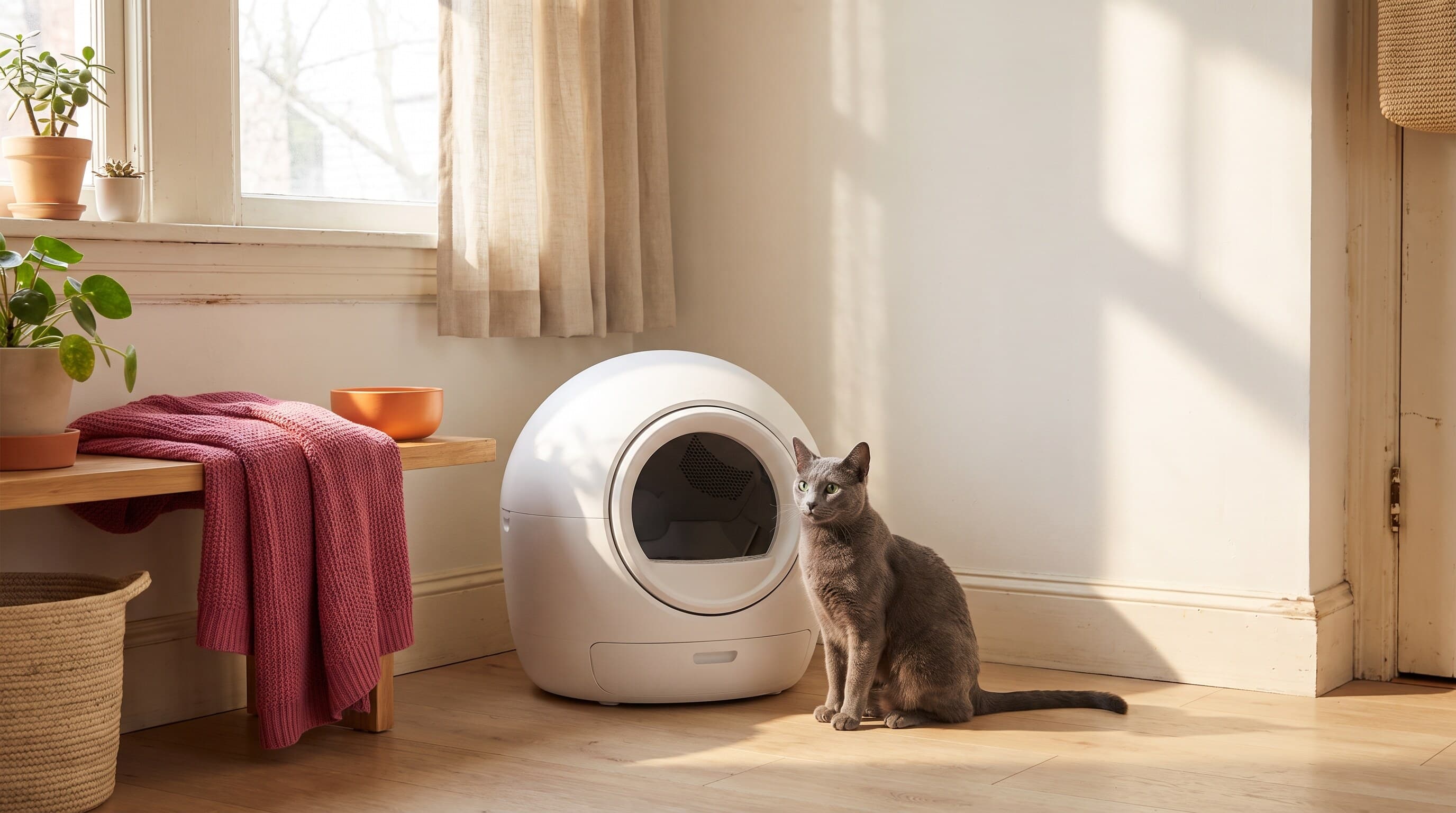
A self-cleaning litter box automates the daily scoop by sensing when a cat has left and raking or rotating waste into a sealed compartment, which can be a real convenience for busy owners or multi-cat homes. But automation adds cost, moving parts, and safety considerations that a plain tray does not have, so these are a bigger decision than most litter gear. This guide compares five automatic boxes across enclosed and open-top designs, and it is honest about the size and sensor cautions that come with the category.
Product details come from published specifications and patterns in owner feedback. House Pet Authority earns a commission from qualifying retailer purchases, at no cost to you.
Top picks at a glance
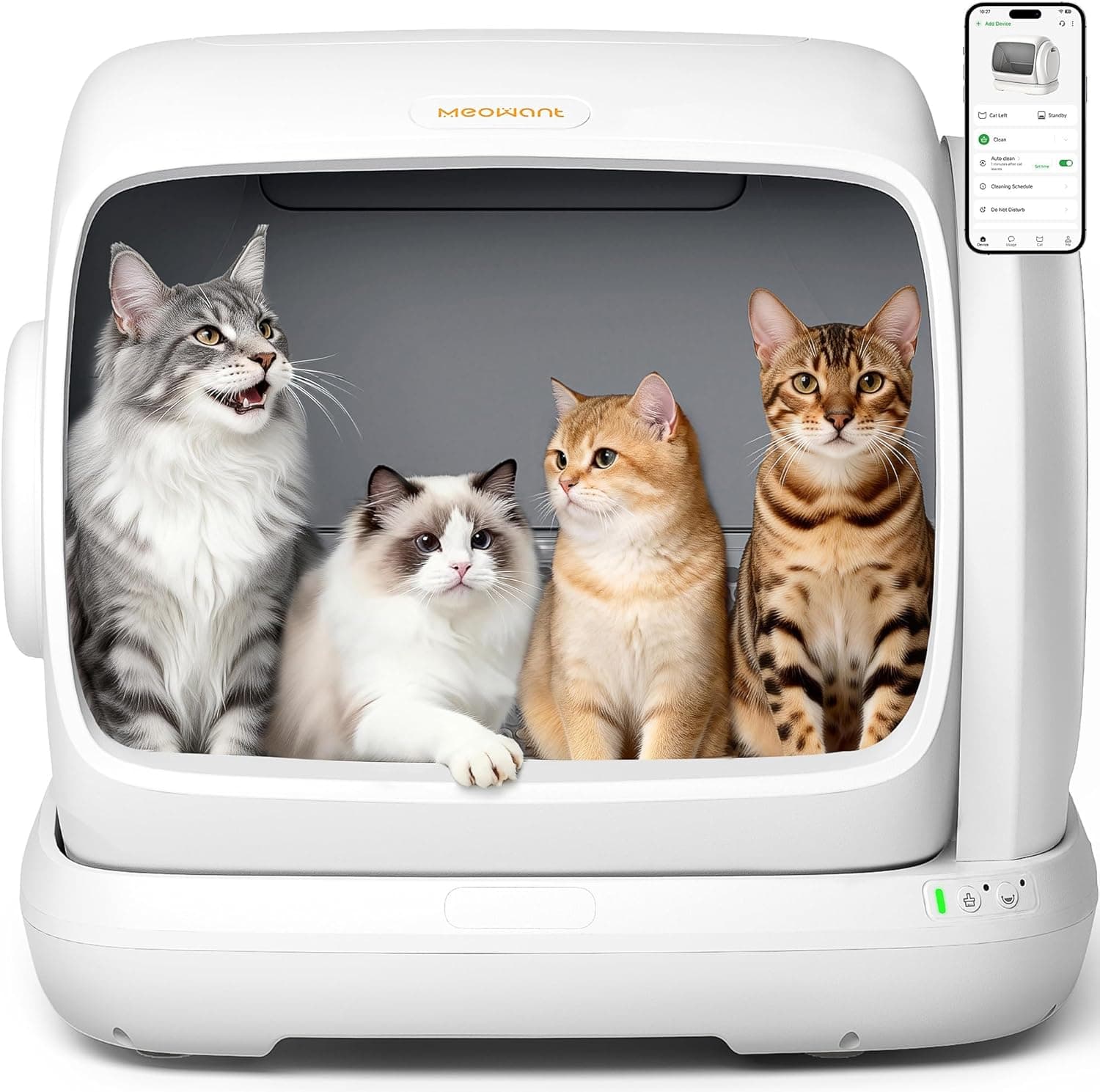 Self-Cleaning Cat Litter BoxShopView at Amazon for MeoWant Self-Cleaning Cat Litter Box, 106L Extra-Large Low Entrance with Safety Sensor and App Control (opens in a new tab)
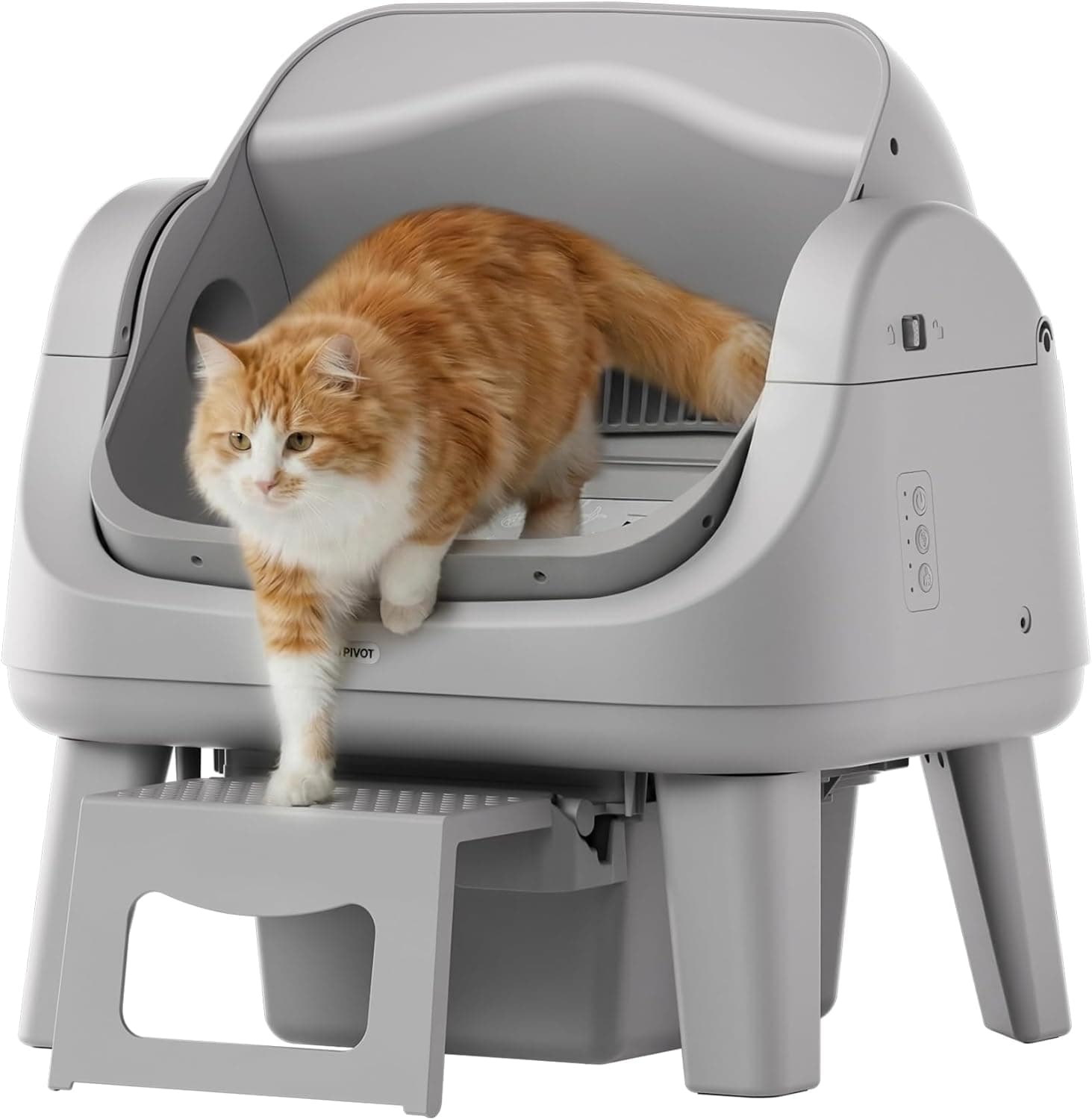 Best OverallOpen Top Self Cleaning Cat Litter BoxShopView at Amazon for PetPivot Open Top Self Cleaning Cat Litter Box, Automatic with 7 Pairs of Safety Sensors and Easy Access Step (opens in a new tab)
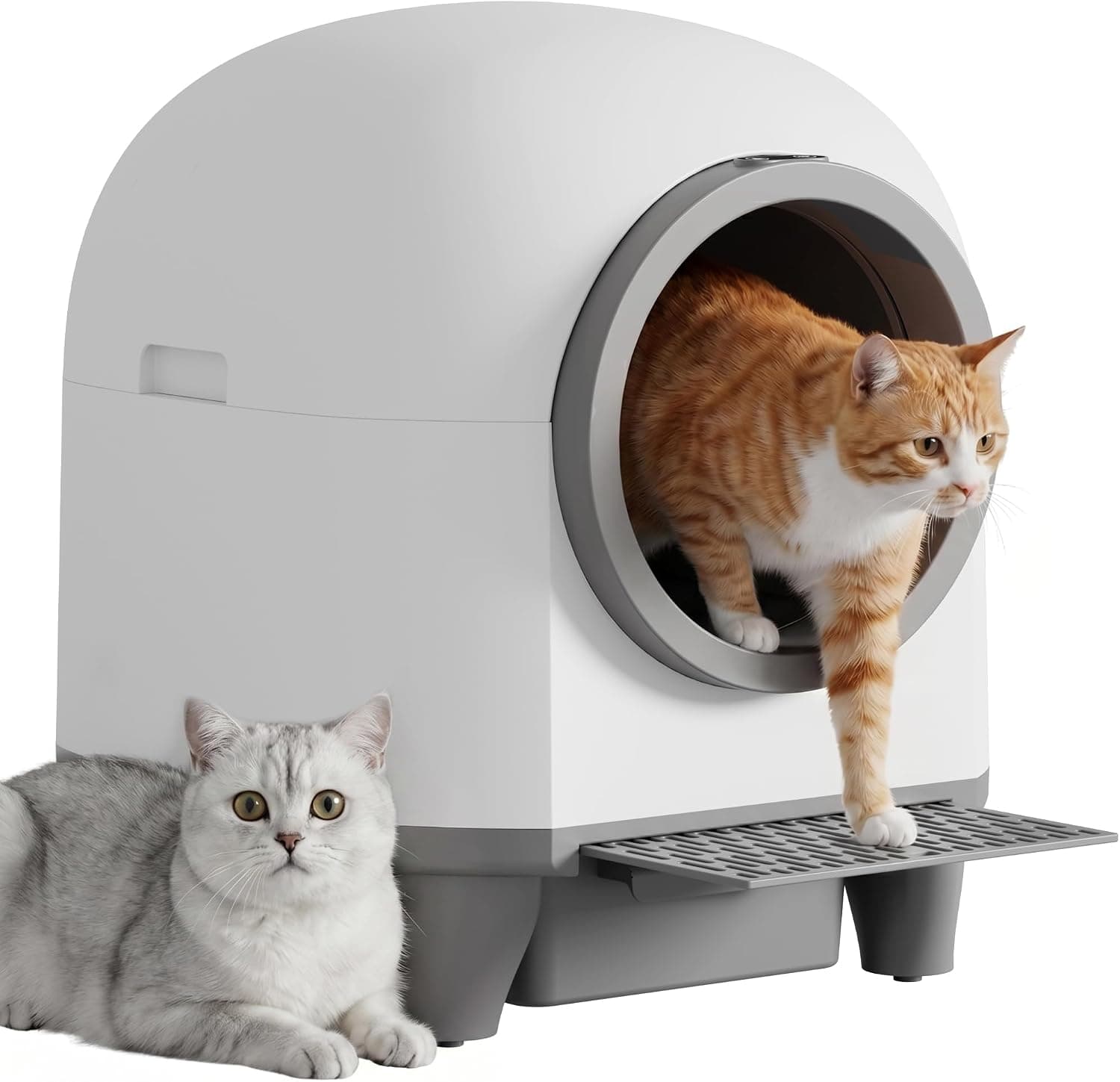 Enclosed Self-Cleaning Cat Litter BoxShopView at Amazon for Greesum Enclosed Self-Cleaning Cat Litter Box, 90L XL, App Control with Anti-Pinch Sensors and Waste Drawer (opens in a new tab)
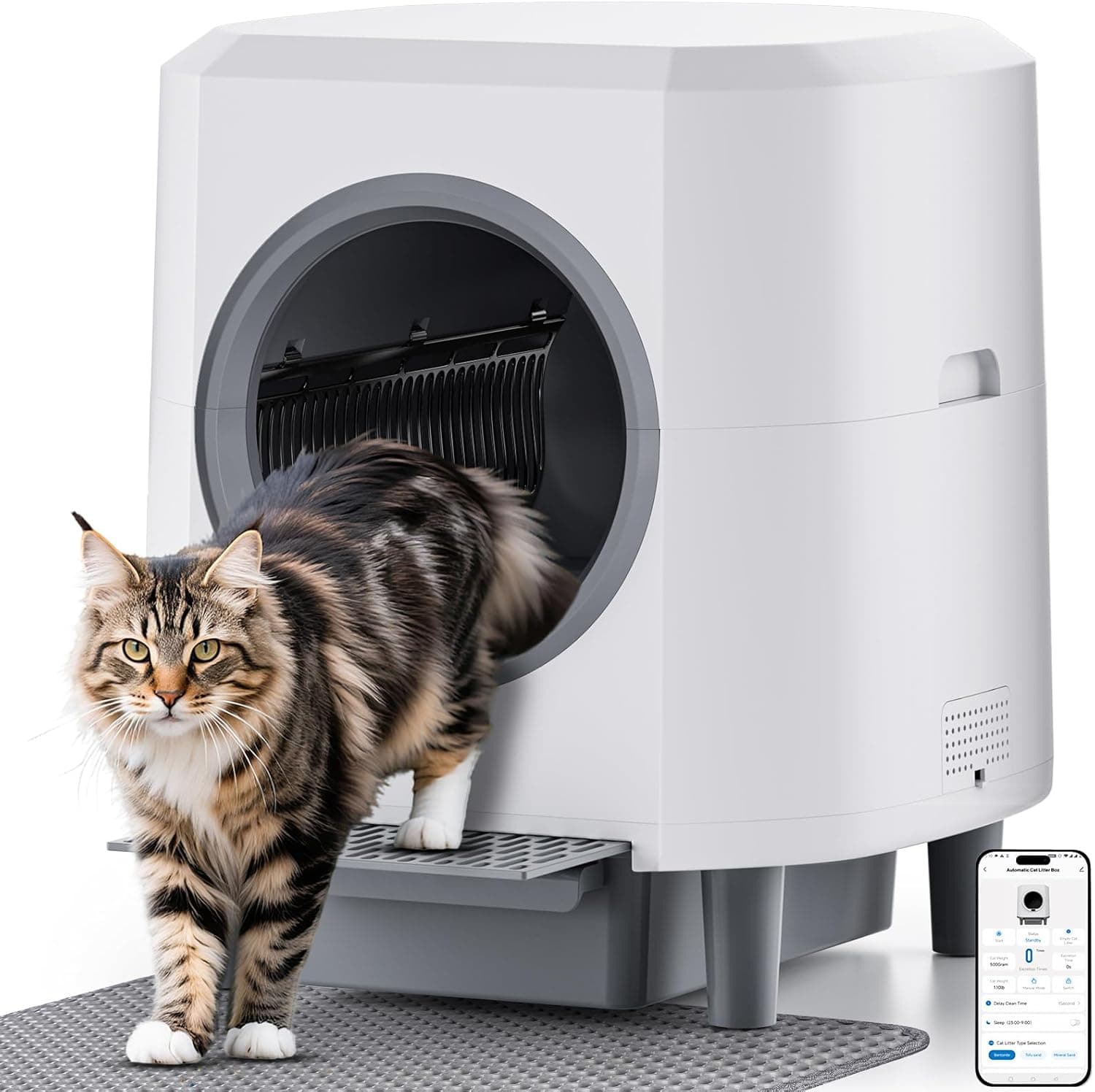 Automatic Self Cleaning Litter BoxShopView at Amazon for Ellenpent Automatic Self Cleaning Litter Box, 90L Large Capacity with App Control and Safety Sensor (opens in a new tab)
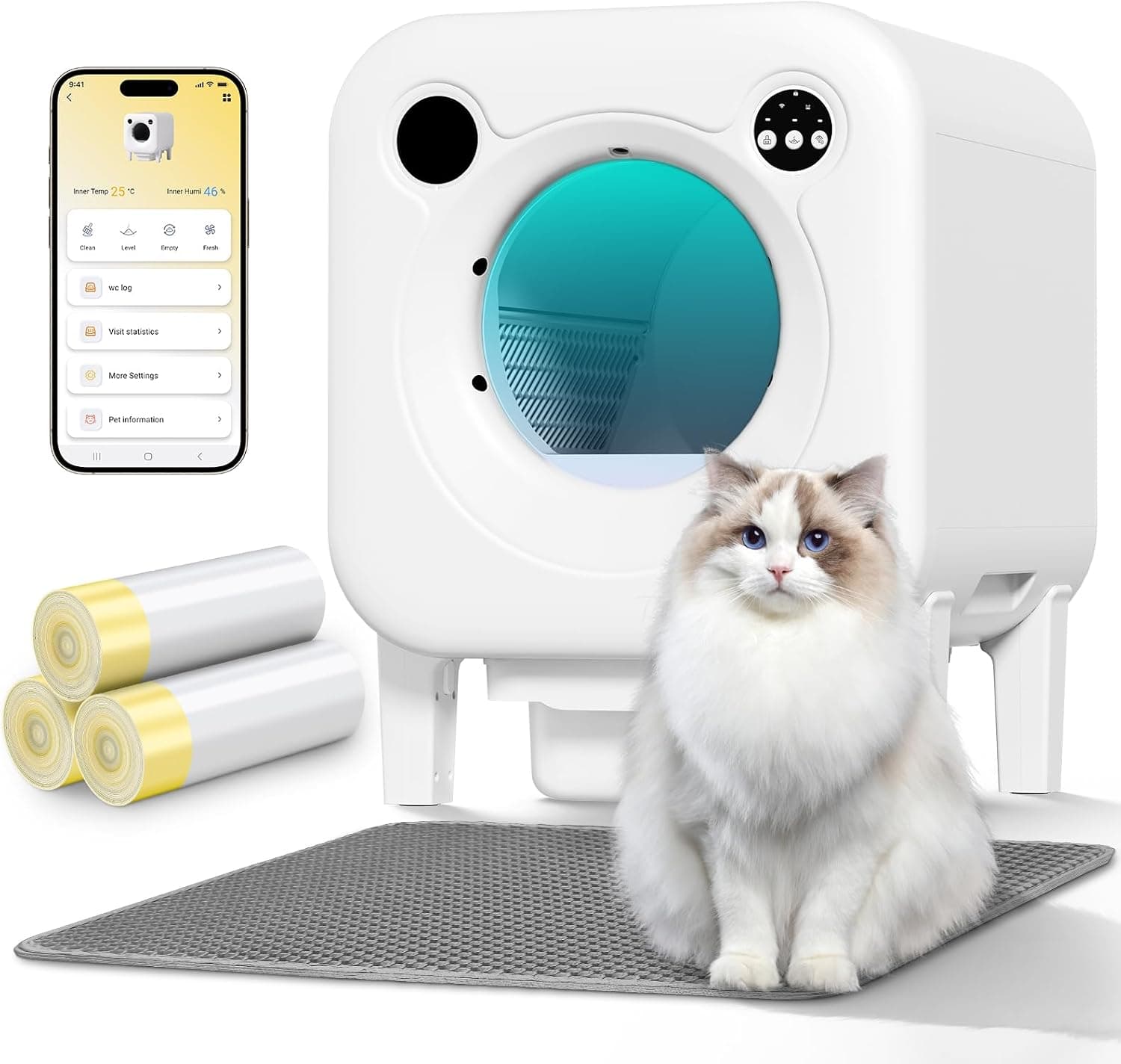 Best ValueSelf Cleaning Litter BoxShopView at Amazon for DuckSky Self Cleaning Litter Box, 4-in-1 Automatic Robot with 75L Plus 12L Space, App Control and Litter Mat (opens in a new tab)
How to choose a self-cleaning litter box
Size and safety come first with automatic boxes. These units use weight sensors or motion sensors to detect when a cat has entered and left, then run a cleaning cycle, so manufacturers set minimum weight or size guidelines. Very small kittens can fall below the sensor threshold or be too small for the mechanism, which is why most makers advise against using automatic boxes with young kittens and recommend a traditional open tray until a cat is larger. The ASPCA notes that some cats are simply particular about their box, and a motorized unit that moves and makes noise can put off a nervous cat, so a backup manual box during the transition is wise. Beyond safety, weigh capacity (a larger waste drawer means less frequent emptying, which matters in multi-cat homes), whether the design is enclosed or open, and how easy the unit is to take apart and clean, since automatic boxes still need periodic hands-on cleaning.
The picks
MEOWANT
Self-Cleaning Cat Litter Box
- Type
- Automatic self-cleaning
- Capacity
- 106L extra-large space
- Entry
- Low entrance
- Safety
- Safety sensor, anti-pinch
- Includes
- Mat and liner, odor control
An extra-large 106L automatic litter box with a low entrance and app control, designed for multiple cats or bigger cats that need room. Safety and anti-pinch sensors monitor entry. The bundle includes a mat and liner.
See more detailSee less detail
Strengths
- Very large 106L interior
- Low entrance for easy access
- App control with safety sensors
Weaknesses
- Most expensive unit here
- Large footprint to place
Best for
Big cats or multi-cat homes needing maximum space
What owners say
The Meowant 10.6L self-cleaning box is our top overall pick, pairing a large waste capacity with an enclosed automatic design that senses when a cat leaves and cycles waste into a sealed drawer. The generous capacity means less frequent emptying, which is exactly what makes an automatic box worthwhile in a busy or multi-cat household, and enclosure helps contain odor. It carries a solid review base for the category. The honest tradeoffs are the ones common to all automatic boxes: it is a larger, pricier appliance than a tray, it needs periodic manual cleaning, and its sensors mean it is not suitable for very small kittens.
PETPIVOT
Open Top Self Cleaning Cat Litter Box
- Type
- Automatic self-cleaning, open top
- Safety
- 7 pairs of safety sensors, anti-pinch
- Access
- Easy step entry for senior cats
- Design
- Open-top layout
- Color
- Dark grey
An open-top automatic litter box that scoops waste on its own, with seven pairs of safety sensors and anti-pinch protection. The low step entry suits kittens and senior cats. Its open design feels less enclosed than dome units.
See more detailSee less detail
Strengths
- Extensive safety sensor coverage
- Low step for senior cats
- Largest review base in this set
Weaknesses
- High price of entry
- Open top offers less odor containment than enclosed units
Best for
Owners wanting a well-sensored open-top automatic box
What owners say
The PetPivot open-top self-cleaning box is the pick for cats that dislike enclosed spaces. Its open-top design keeps the automated raking or sifting convenience while giving a cat the airy, unconfined feel that some cats strongly prefer, which can make the difference between a box that gets used and one that gets avoided. An open layout is also easier to see into for monitoring. The tradeoffs are that an open top contains odor and scatter less than an enclosed unit, and, like every automatic box here, it relies on sensors that make it inappropriate for very small kittens and adds moving parts to maintain.
GREESUM
Enclosed Self-Cleaning Cat Litter Box
- Type
- Enclosed automatic self-cleaning
- Capacity
- 90L, XL for multi-cat homes
- Control
- App control
- Safety
- Anti-pinch safety sensors
- Includes
- 6.5L waste drawer, litter mat, waste bags
An enclosed XL automatic box with app control and anti-pinch sensors, sized for multi-cat homes at 90L. A 6.5L waste drawer holds several days of scooped waste. The bundle adds a litter mat and waste bags.
See more detailSee less detail
Strengths
- Large enclosed capacity for multiple cats
- App control and safety sensors
- Includes mat and waste bags
Weaknesses
- Enclosed unit has a large footprint
- Smaller review base
Best for
Multi-cat homes wanting an enclosed app-controlled box
What owners say
The Greesum enclosed self-cleaning box is the pick for odor containment and privacy. A fully enclosed automatic design keeps smells and stray litter inside while cycling waste away automatically, and the covered hood gives shy cats a sense of privacy that many prefer for elimination. It is a sensible choice where the box sits in a visible living area. The tradeoffs are that enclosed units can feel confining to cats that dislike hoods, they take up a fair footprint, and they carry the same category cautions: periodic manual cleaning and unsuitability for very small kittens due to the sensor mechanism.
ELLENPENT
Automatic Self Cleaning Litter Box
- Type
- Automatic self-cleaning
- Capacity
- 90L large capacity
- Control
- App control
- Safety
- Safety sensor and odor control
- Includes
- 3 rolls of waste bags
A large 90L automatic litter box with app control, a safety sensor, and odor-control features, built for multiple cats or large cats. It scoops waste into a lined compartment. The listing includes three rolls of waste bags.
See more detailSee less detail
Strengths
- Large 90L capacity
- App control and odor features
- Big review base for an automatic box
Weaknesses
- Highest price in this set
- Lower average rating than smaller units
Best for
Households with large cats or several cats
What owners say
The EllenPent 9.0L automatic box is the value pick within the higher-capacity tier, offering a large waste chamber and automatic cycling at a more accessible price than premium robots. The sizable capacity reduces how often you empty the drawer, which is the practical payoff of an automatic box, and it makes automation approachable for owners not ready to spend the most. The tradeoffs are that a lower price can mean simpler sensors or build quality than premium units, it still requires regular hands-on cleaning, and the standard kitten and small-cat sensor caution applies.
DUCKSKY
Self Cleaning Litter Box
- Type
- Automatic self-cleaning robot
- Capacity
- 75L main plus 12L waste space
- Control
- App control
- Safety
- 4-in-1 security system
- Includes
- Litter mat and 3 rolls of waste bags
An automatic litter robot with a 75L main chamber and 12L waste storage, app control, and a multi-part security system, at a lower price than most large units. The bundle adds a litter mat and waste bags. It targets buyers wanting automation without the top-tier price.
See more detailSee less detail
Strengths
- Lower price than most automatic boxes
- Large combined capacity
- Includes mat and waste bags
Weaknesses
- Small review base as a newer product
- App and setup have a learning curve
Best for
Value shoppers wanting an automatic box under most competitors
What owners say
The Ducksky 4-in-1 self-cleaning litter robot is the pick for the most feature-loaded, appliance-style experience. A rotating globe-style robot with multiple functions automates cleaning into a sealed drawer and often adds features like app connectivity or cycle settings, aimed at owners who want the most hands-off setup. It represents the higher end of automation here. The tradeoffs are the most pronounced in this roundup: it is the largest and typically the most expensive option, it has the most moving parts to maintain, and rotating-mechanism robots in particular carry manufacturer weight minimums, so they are not appropriate for very small kittens and are best introduced gradually to a confident adult cat.
What mattered most
The comparison focuses on cleaning mechanism, waste capacity, enclosed versus open design, sensor type, and cleaning access. The picks favor boxes that clearly serve a distinct need, whether capacity, openness, or odor containment, and that have a stable review history. Size and sensor cautions stay prominent.
House Pet Authority makes no health or medical claims about automatic litter boxes. Always confirm your cat meets the manufacturer's minimum weight and size guidance, keep automatic units away from very small kittens, and keep a traditional box available during any transition. Prices are shown as bands rather than live quotes, because retail pricing changes often and a fixed number would go stale between updates.