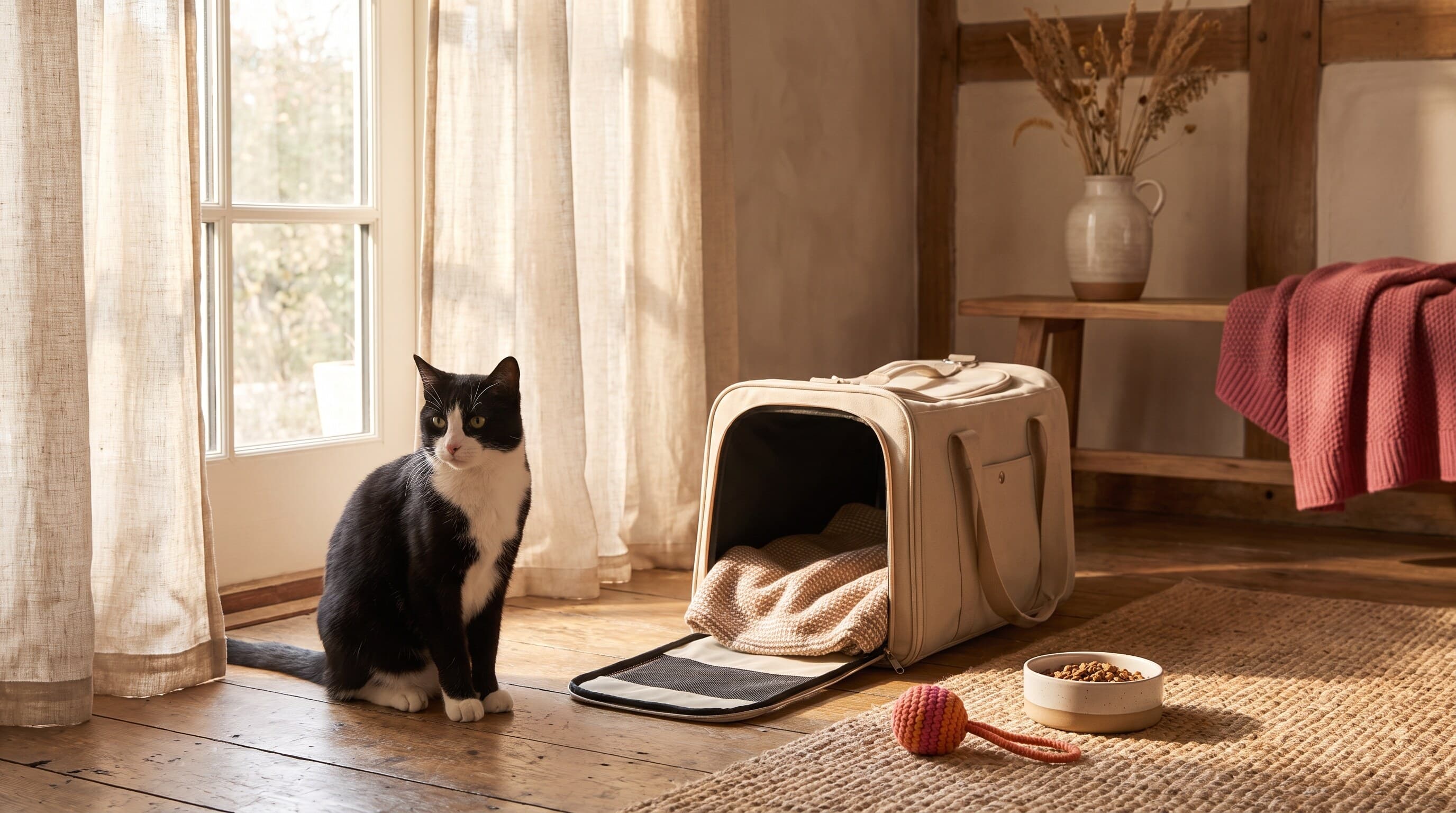
The right carrier is usually the difference between a manageable vet trip and a stressful wrestling match. What matters most is not the brand but the practical details: how many doors it has and where they are, whether the top opens so a scared cat can be lifted out gently, how secure the latches are, and whether it is easy to clean afterward. This guide compares five carriers across hard-sided, soft-sided, and collapsible designs so you can match the build to how and how often you travel.
Product details come from published specifications and patterns in owner feedback. House Pet Authority earns a commission from qualifying retailer purchases, at no cost to you.
Top picks at a glance
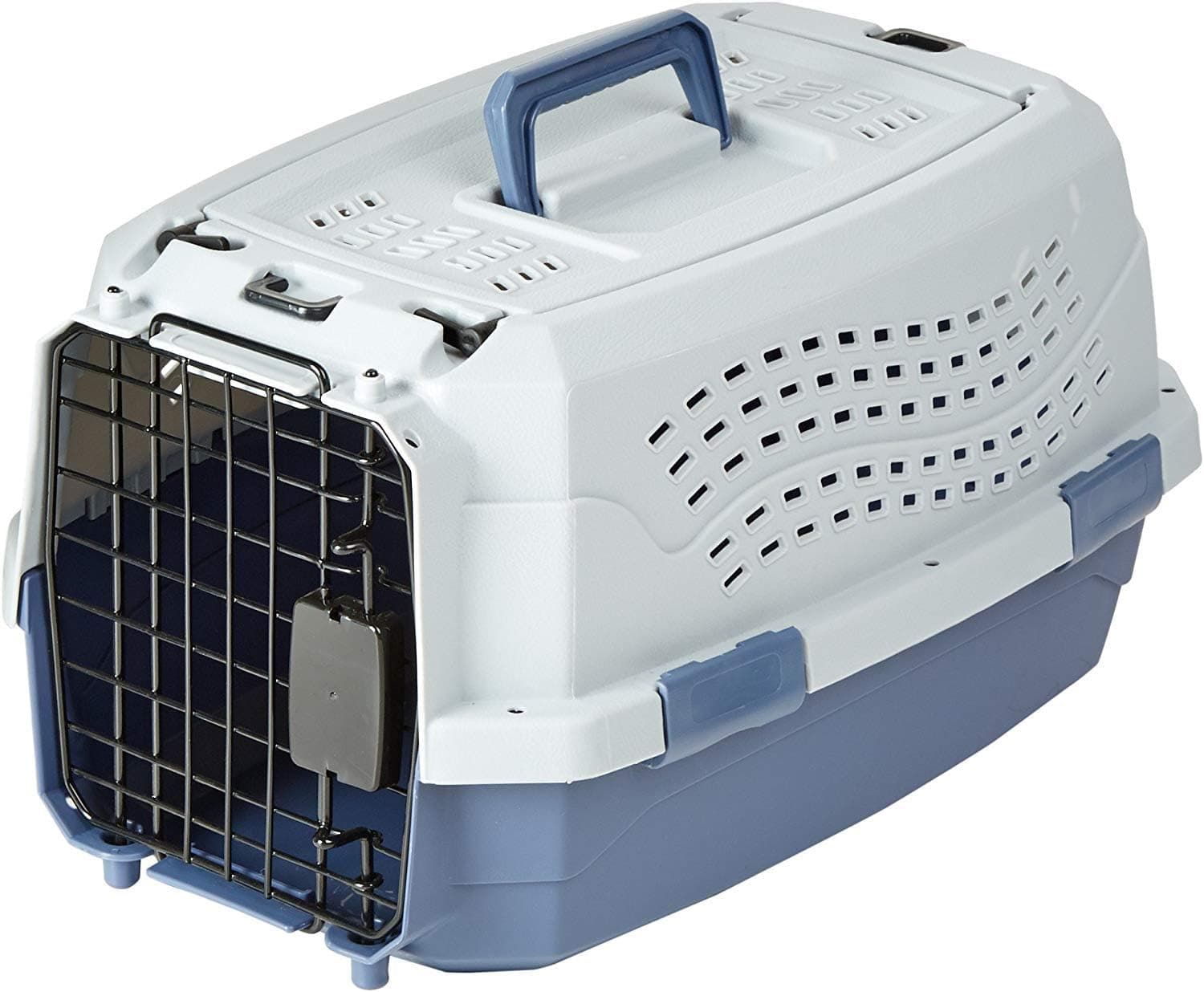 Best Overall2-Door Top-Load Hard-Sided Pet Travel Carrier for Cats and Small DogsShopView at Amazon for Amazon Basics 2-Door Top-Load Hard-Sided Pet Travel Carrier for Cats and Small Dogs, 19 inch (opens in a new tab)
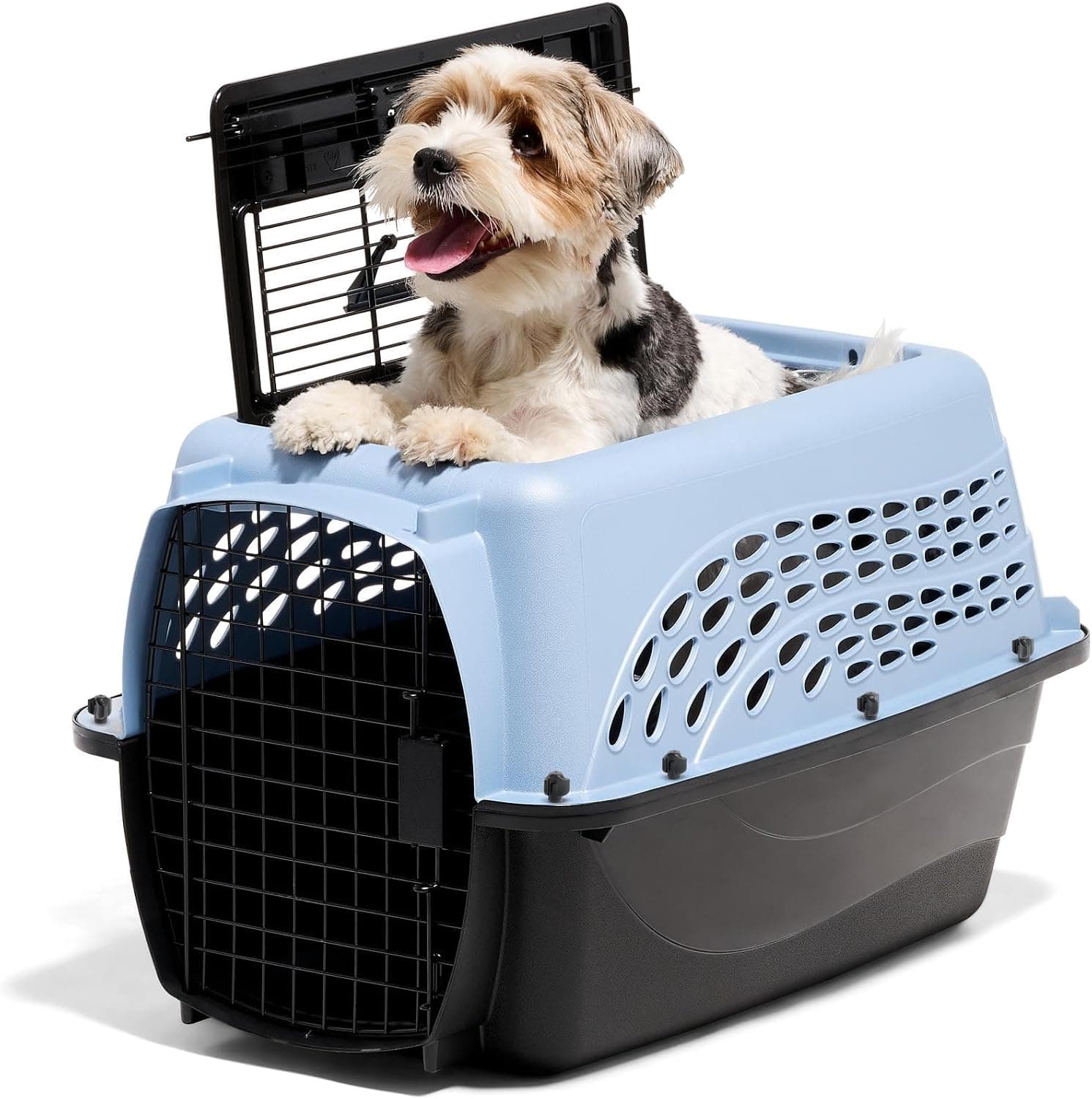 Two-Door Plastic Pet Kennel for Small Dogs and CatsShopView at Amazon for Petmate Two-Door Plastic Pet Kennel for Small Dogs and Cats, Top and Front Loading, Made in USA, 24 inch (opens in a new tab)
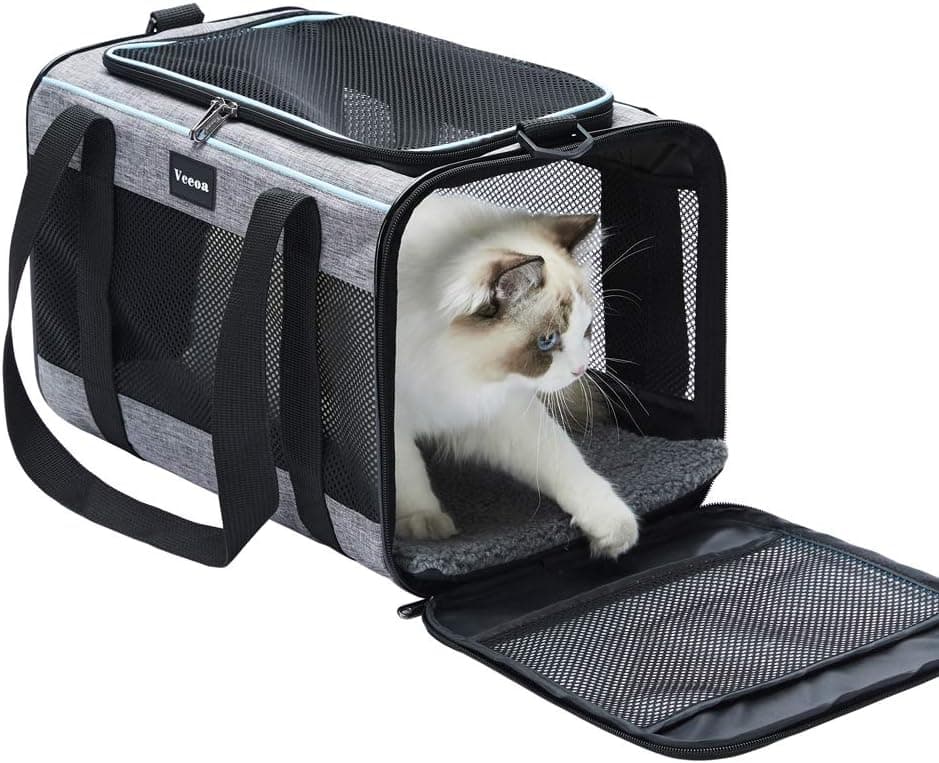 Best ValueSoft-Sided Cat and Dog Carrier for Pets up to 16 lbsShopView at Amazon for Vceoa Soft-Sided Cat and Dog Carrier for Pets up to 16 lbs, 17.5 x 11 x 11 inch Travel Bag (opens in a new tab)
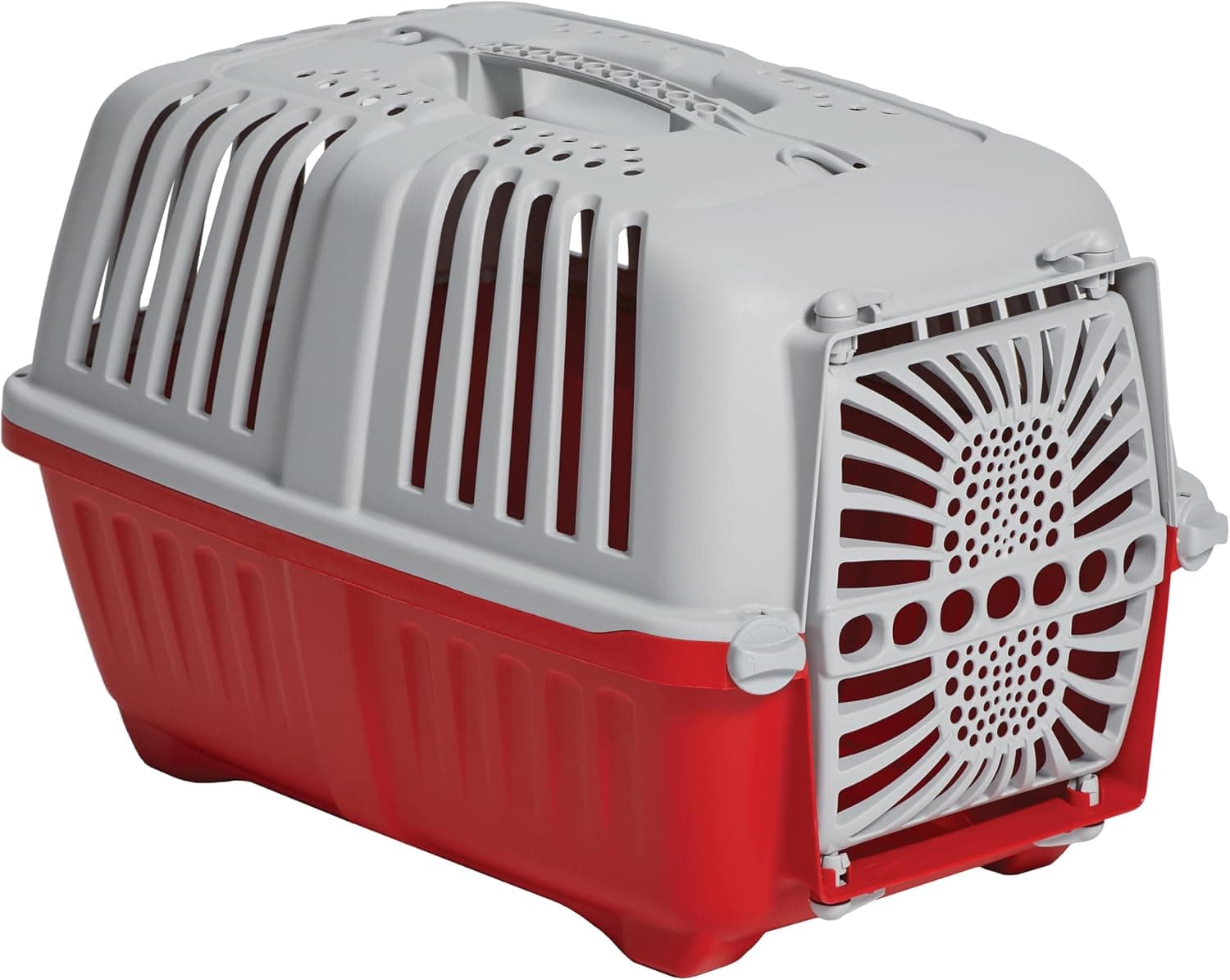 Spree by MidWest 19-Inch Hard-Sided Travel Carrier for Pets up to 10 lbsShopView at Amazon for Spree by MidWest 19-Inch Hard-Sided Travel Carrier for Pets up to 10 lbs, Ventilated with Locking Tabs (opens in a new tab)
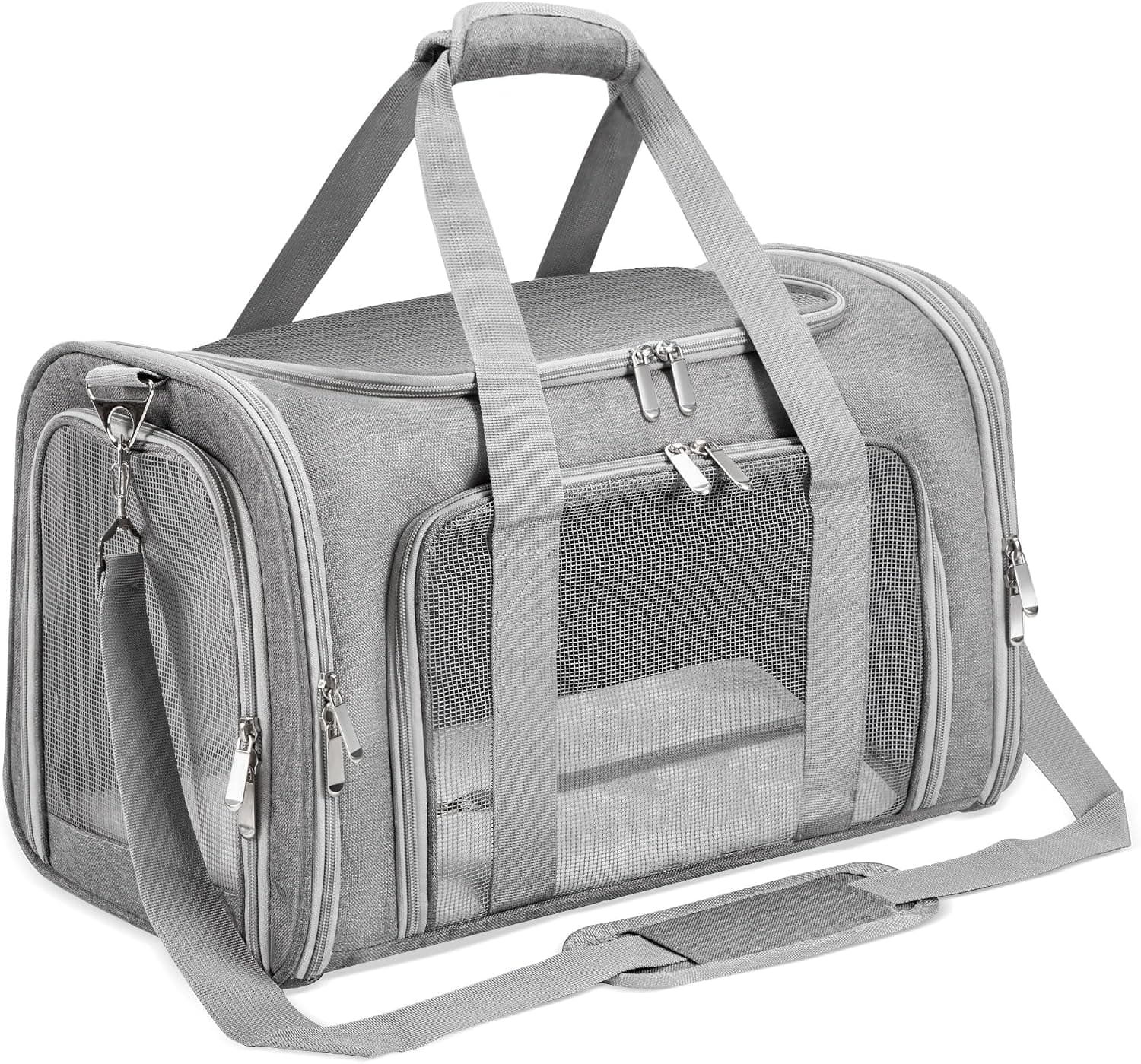 Soft-Sided Collapsible Pet Carrier with Shoulder Strap and Removable MatShopView at Amazon for LEHNI Soft-Sided Collapsible Pet Carrier with Shoulder Strap and Removable Mat, up to 16 lbs, Airline Friendly (opens in a new tab)
How to choose a cat carrier
Start with door placement. A carrier with a top-loading door as well as a front door is far easier for a cat that plants its feet at the entrance, because you can lower a reluctant cat in from above rather than pushing it forward. The American Association of Feline Practitioners has long encouraged owners to make the carrier a familiar, low-stress space, which is easier when the carrier opens in more than one way. Hard-sided carriers offer the most protection and are simplest to disinfect after an accident, which is common on stressful trips. Soft-sided carriers are lighter and often fit under an airline seat, but they are harder to clean and offer less structural protection. Collapsible carriers save storage space but trade away some rigidity.
Match the size to your cat: a carrier should let the cat stand, turn around, and lie down, and you should check the listed weight capacity against your cat's weight.
The picks
AMAZON BASICS
2-Door Top-Load Hard-Sided Pet Travel Carrier for Cats and Small Dogs
- Type
- Hard-sided carrier
- Doors
- 2-door, top and front load
- Size
- 19 x 12.6 x 10 inches
- Ventilation
- Vented sides
- Pets
- Cats and small dogs
A hard-sided carrier with both top and front doors, making it easier to lower a reluctant cat in from above. The vented shell keeps airflow during travel and vet trips. It is one of the most reviewed carriers on the market.
See more detailSee less detail
Strengths
- Top and front doors ease loading
- Sturdy vented hard shell
- Huge review base at a fair price
Weaknesses
- Fixed size does not collapse for storage
- Plastic latches need a firm close
Best for
Owners who want a dependable top-loading hard carrier
What owners say
The Amazon Basics hard-sided carrier is our top overall pick for its combination of a top-loading door and a front door on a rigid, easy-to-clean plastic shell at a modest price. Two-door access is the single most useful feature for a nervous cat, since you can lift from the top when the cat refuses the front. It carries a very large review base, latches securely, and wipes down easily after accidents. The tradeoff is that hard shells take up fixed storage space and the plainer models skip padding, so a blanket inside is worth adding.
PETMATE
Two-Door Plastic Pet Kennel for Small Dogs and Cats
- Type
- Hard-sided plastic kennel
- Doors
- Top and front loading
- Size
- 24 inch
- Origin
- Made in USA
- Use
- Travel and vet trips
A larger 24 inch two-door plastic kennel with top and front access, suited to bigger cats or small dogs. The dual-entry design helps with loading and vet handling. It is a sturdy, made-in-USA travel crate.
See more detailSee less detail
Strengths
- Roomy 24 inch size
- Top and front loading
- Durable made-in-USA build
Weaknesses
- Higher price and larger footprint
- Bulkier than compact carriers
Best for
Larger cats or small dogs needing extra carrier room
What owners say
The Petmate two-door kennel is the pick for durability and secure containment, a well-established hard-sided design with front and top doors and steel-reinforced latching points. The heavier-duty construction suits cats that are strong or determined to escape, and the two-door layout gives the same top-loading advantage as our top pick. It is a proven, widely reviewed option. The tradeoffs are that it runs bulkier and heavier than a basic carrier, and the sturdier build usually costs a bit more.
VCEOA
Soft-Sided Cat and Dog Carrier for Pets up to 16 lbs
- Type
- Soft-sided carrier
- Size
- 17.5 x 11 x 11 inches
- Weight limit
- Up to 16 lbs
- Material
- Fabric with mesh panels
- Use
- Travel and short trips
A soft fabric carrier with mesh ventilation panels, sized for pets up to 16 lbs and priced as an easy everyday option. The flexible body is lighter and easier to store than hard shells. It suits short trips and vet visits.
See more detailSee less detail
Strengths
- Very high rating and huge review base
- Light and easy to carry
- Low price
Weaknesses
- Soft body offers less crush protection
- Fabric needs spot cleaning
Best for
Owners wanting a light, affordable soft carrier
What owners say
The Vceoa soft-sided carrier is the pick for travel comfort and portability. Soft carriers are lighter to carry, often have mesh panels for ventilation and multiple zip openings including a top zip, and many are sized to fit under an airline seat. The padded, collapsible feel can be less intimidating for some cats than a rigid box. The honest tradeoffs are real: fabric is harder to disinfect than plastic after an accident, offers less protection in a knock, and a determined clawing cat can stress the zippers, so check the weight rating and zipper quality before relying on it for a strong cat.
MIDWEST HOMES FOR PETS
Spree by MidWest 19-Inch Hard-Sided Travel Carrier for Pets up to 10 lbs
- Type
- Hard-sided carrier
- Size
- 19 inch
- Weight limit
- Up to 10 lbs
- Door
- Plastic door with locking tabs
- Assembly
- Easy tool-free assembly
A compact 19 inch hard-sided carrier for cats and small pets up to 10 lbs, with a ventilated shell and locking tabs. The simple tool-free assembly makes setup quick. It is a straightforward budget hard carrier.
See more detailSee less detail
Strengths
- Affordable hard shell
- Ventilated with secure locking tabs
- Tool-free assembly
Weaknesses
- Lower weight limit at 10 lbs
- Front door only, no top access
Best for
Smaller cats needing an inexpensive hard carrier
What owners say
The Spree by MidWest hard-sided carrier is another strong two-door hard option, typically with a top and front door, secure latches, and a design meant for quick assembly. It sits in the same practical category as our top pick, offering the cleanability and protection of a rigid shell with the loading flexibility of top access. It is a sensible choice if it is priced better than the alternatives at the time you buy. The tradeoff, common to all hard carriers, is fixed storage bulk and minimal built-in padding.
LEHNI
Soft-Sided Collapsible Pet Carrier with Shoulder Strap and Removable Mat
- Type
- Soft-sided, collapsible
- Weight limit
- Up to 16 lbs
- Includes
- Shoulder strap and removable mat
- Panels
- Mesh ventilation
- Travel
- Marketed as airline friendly
A collapsible soft carrier with a shoulder strap and a removable washable mat, aimed at travelers who need it to fold down between trips. Mesh panels provide airflow. It is marketed as airline friendly, though owners should confirm carrier rules with their airline.
See more detailSee less detail
Strengths
- Collapses flat for storage
- Shoulder strap and washable mat
- Mesh ventilation
Weaknesses
- Airline sizing rules vary and need checking
- Soft body offers less protection
Best for
Travelers who want a foldable soft carrier with a strap
What owners say
The Lehni collapsible carrier is the pick for owners short on storage space. It folds flat when not in use, which is a genuine advantage in a small home or for occasional travelers, while still offering mesh ventilation and zip access when set up. It is the most space-efficient option here between trips. The tradeoffs are what you would expect from a collapsible design: less structural rigidity than a hard shell, and fabric that is harder to clean, so it is best suited to calmer cats and shorter, infrequent trips rather than a strong escape artist.
What mattered most
The comparison focuses on door count and placement, shell type, latch and zipper security, ventilation, and weight capacity. The picks favor carriers with more than one door and a stable review history. Each design shows its main tradeoff.
Cats vary in size and temperament, so always check the weight capacity and internal dimensions against your cat before buying. Prices are shown as bands rather than live quotes, because retail pricing changes often and a fixed number would go stale between updates.