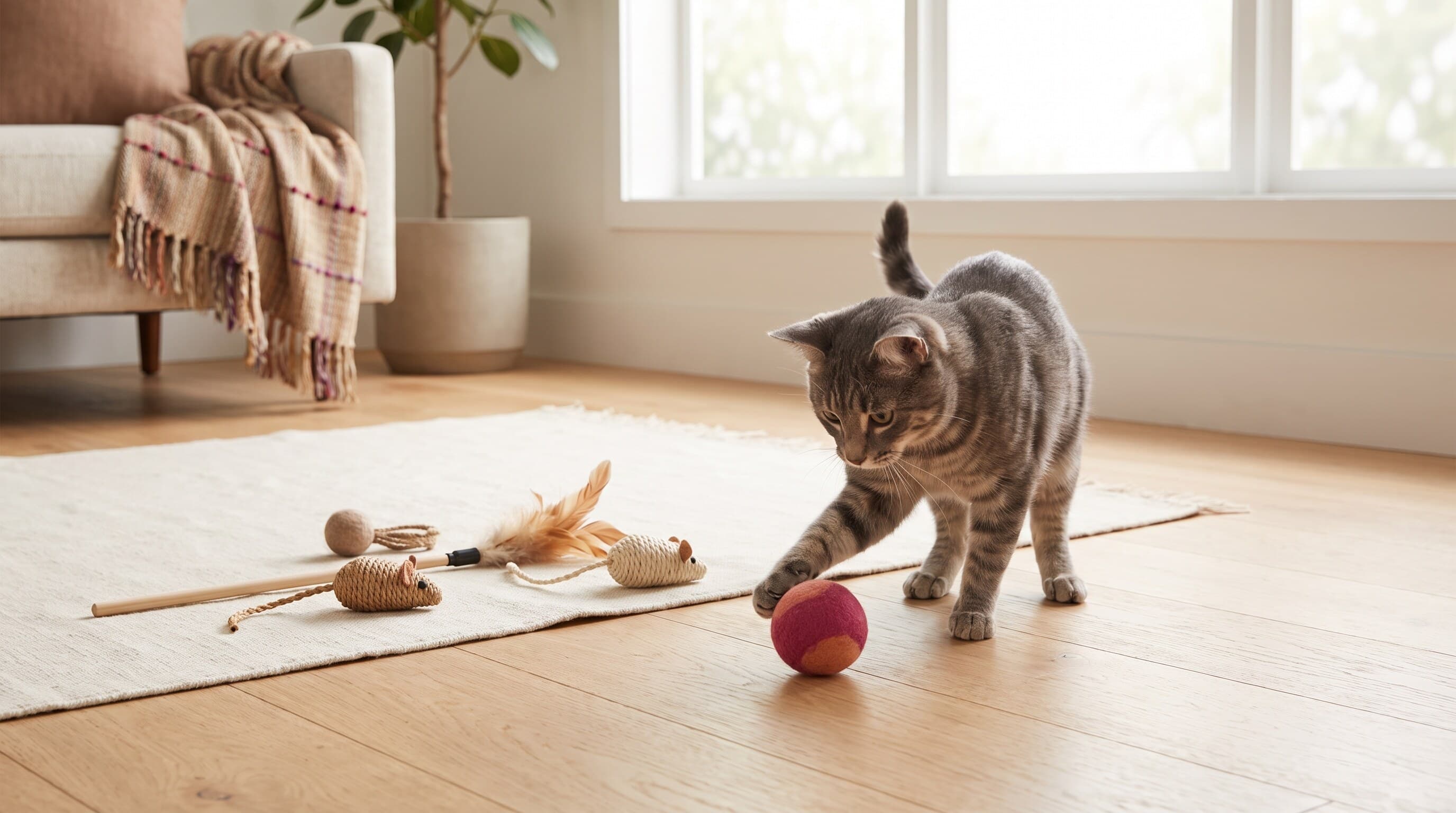
Cats are predators on a house cat's schedule, which means the toys that hold their attention are the ones that mimic hunting: something to chase, stalk, bat, and pounce on. A single toy rarely covers all of those behaviors, so the most useful thing a guide can do is compare toy types by the kind of play they encourage, from solo hideaway tunnels to owner-directed wands to self-powered gadgets for when nobody is home. This roundup looks at five widely reviewed toys across those categories.
Product details come from published specifications and patterns in owner feedback. House Pet Authority earns a commission from qualifying retailer purchases, at no cost to you.
Top picks at a glance
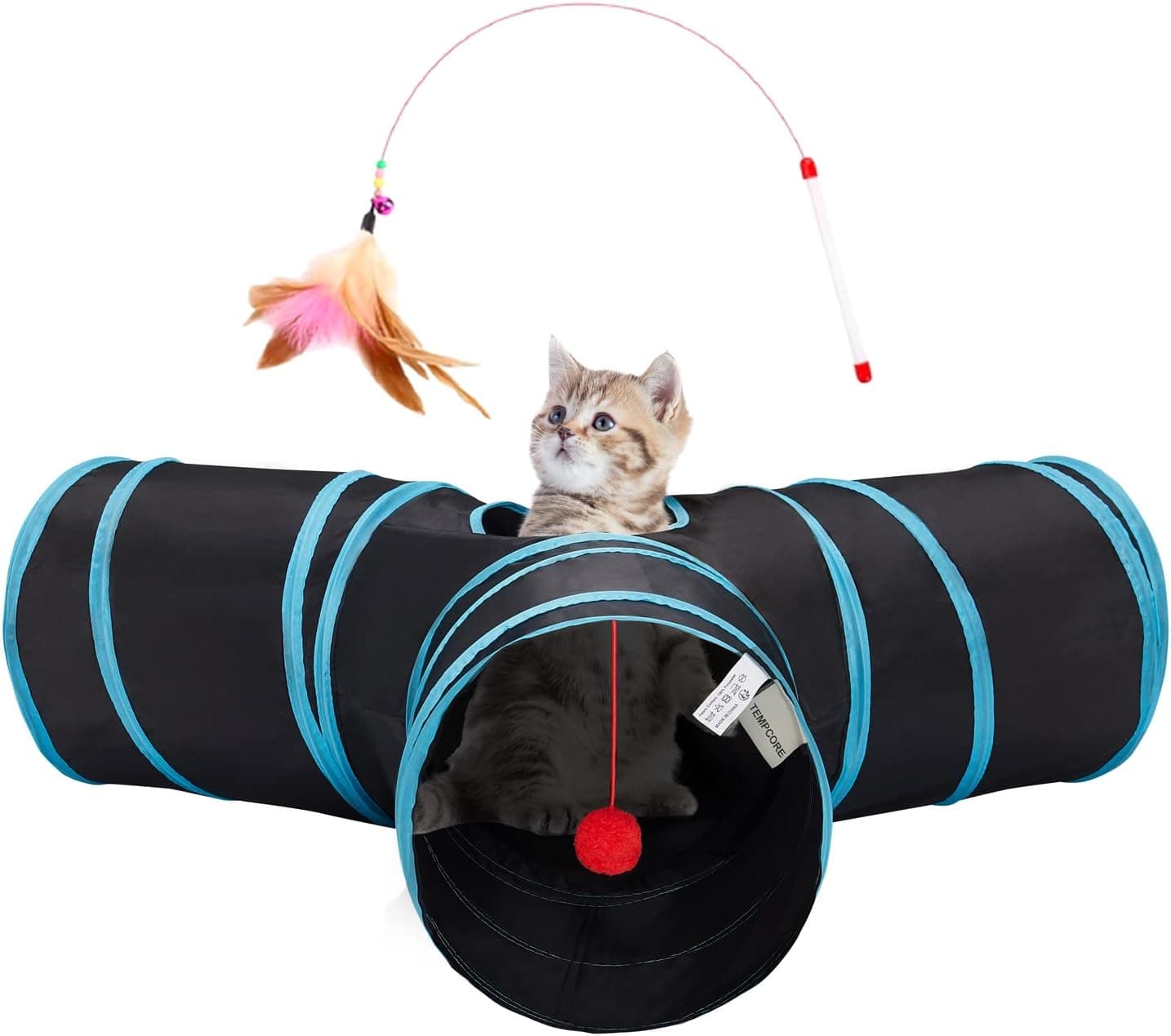 Best OverallCat Tunnel 3-Way Collapsible Tube with Teaser WandShopView at Amazon for Tempcore Cat Tunnel 3-Way Collapsible Tube with Teaser Wand, Peek Holes and Hanging Ball (opens in a new tab)
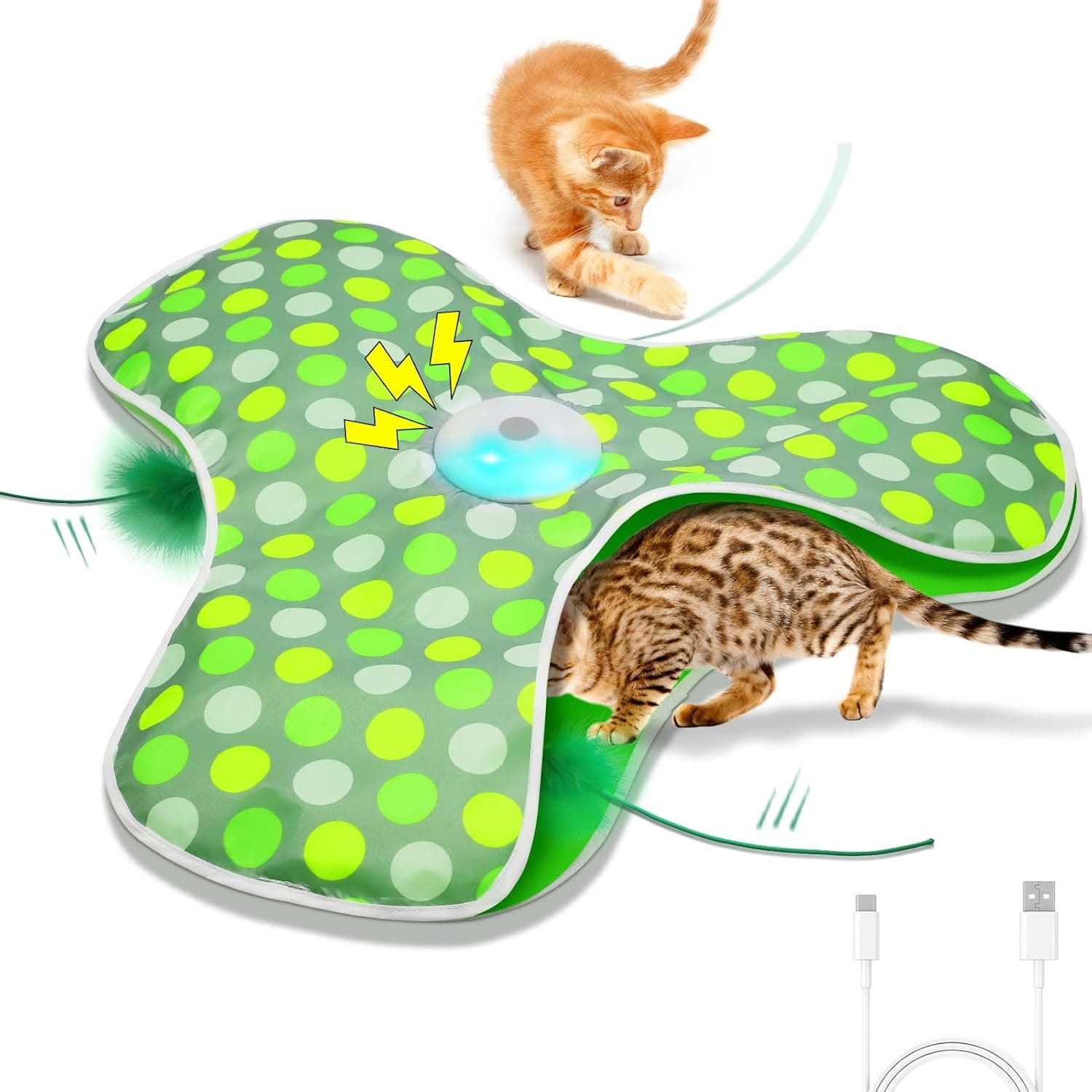 Interactive Cat ToyShopView at Amazon for umosis Interactive Cat Toy, Rechargeable Moving Concealed Feathers with Squeak, Touch Activated Exercise Toy (opens in a new tab)
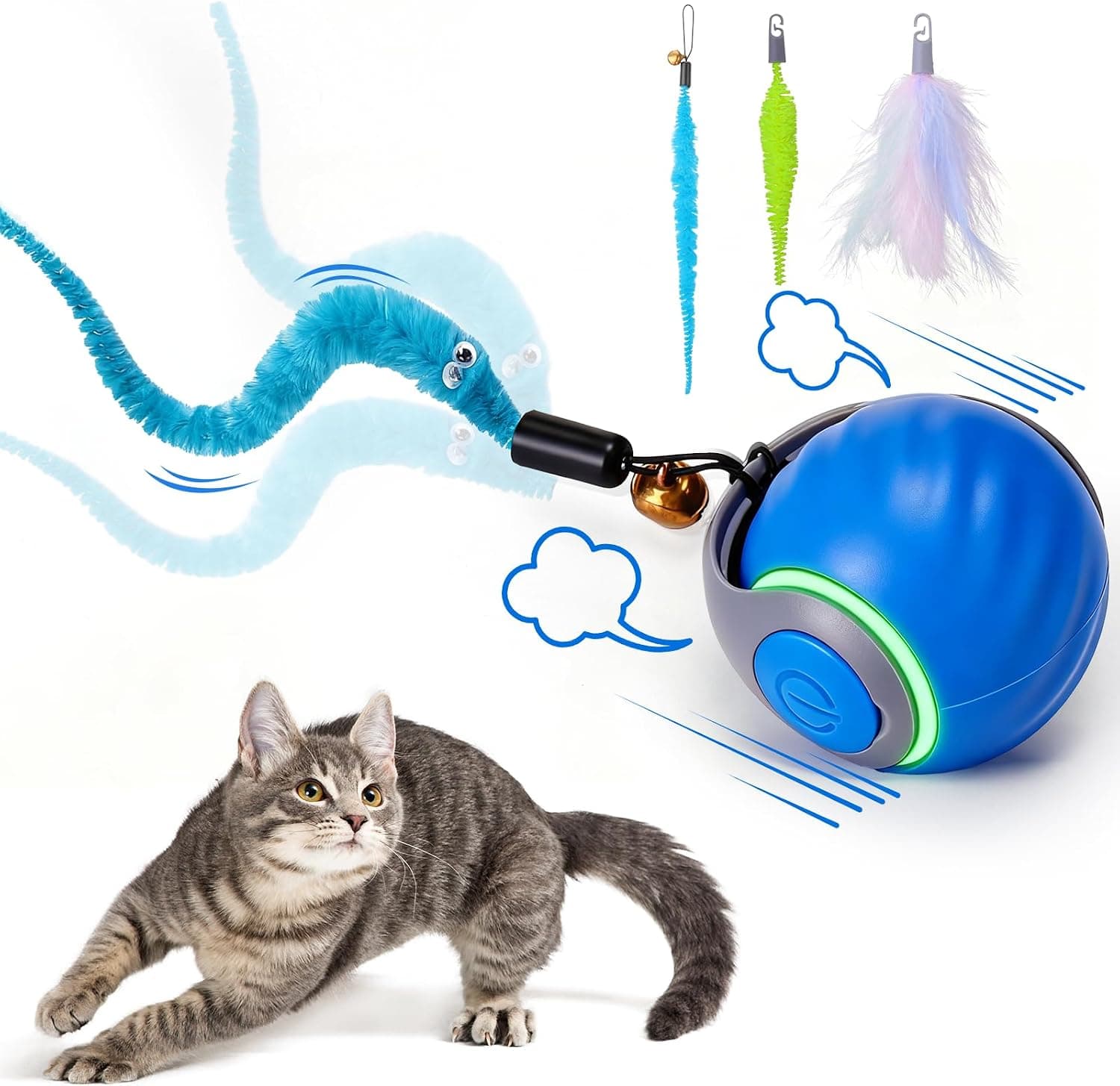 Best ValueAutomatic Interactive Cat Toy Ball with 3 Tails and 2 SpeedsShopView at Amazon for BABORUI Automatic Interactive Cat Toy Ball with 3 Tails and 2 Speeds, Rechargeable Enrichment Toy (opens in a new tab)
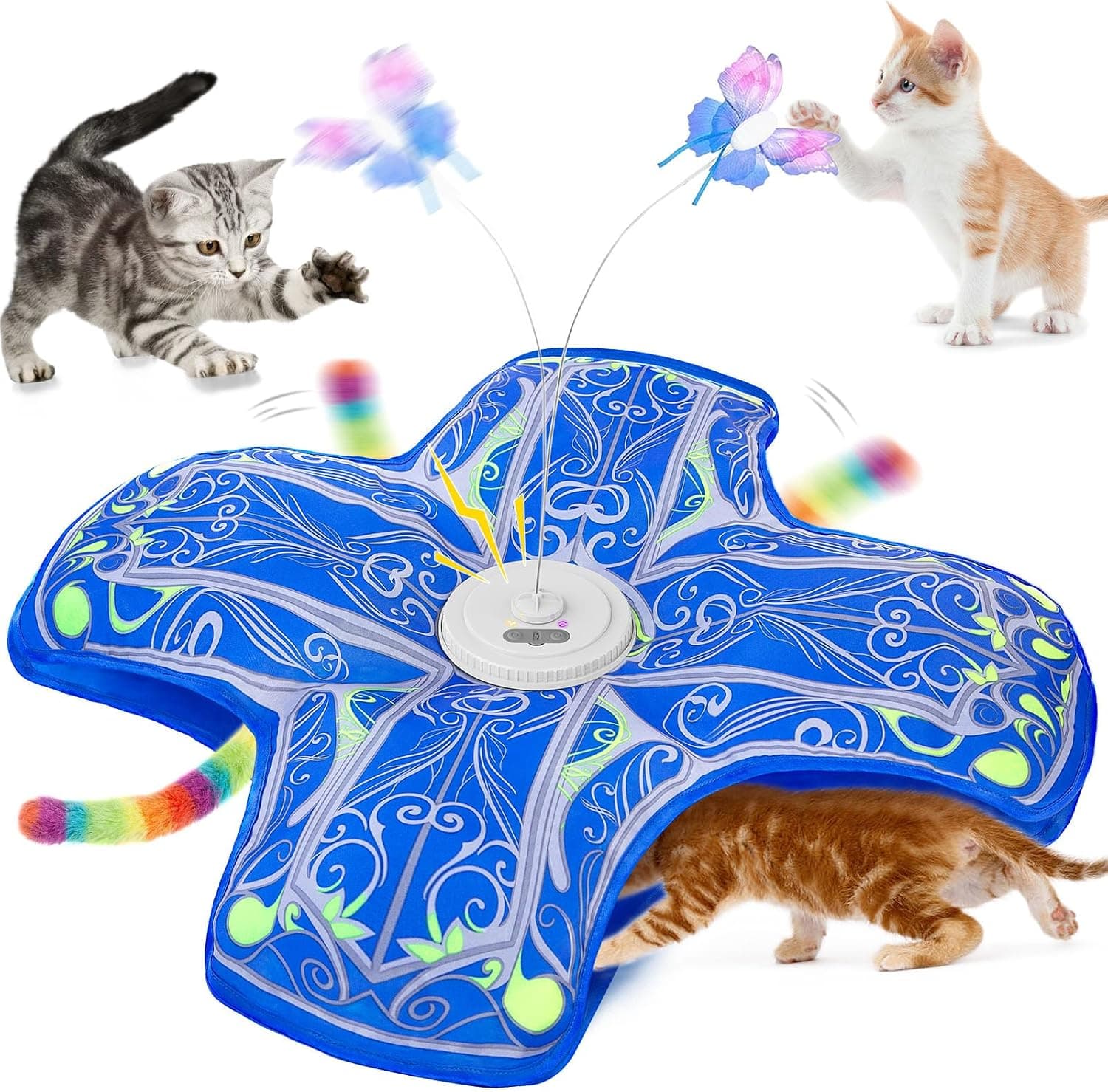 Interactive Cat ToyShopView at Amazon for Qraxond Interactive Cat Toy, Rechargeable Touch Activated Hide and Seek Toy with Fluttering Motion (opens in a new tab)
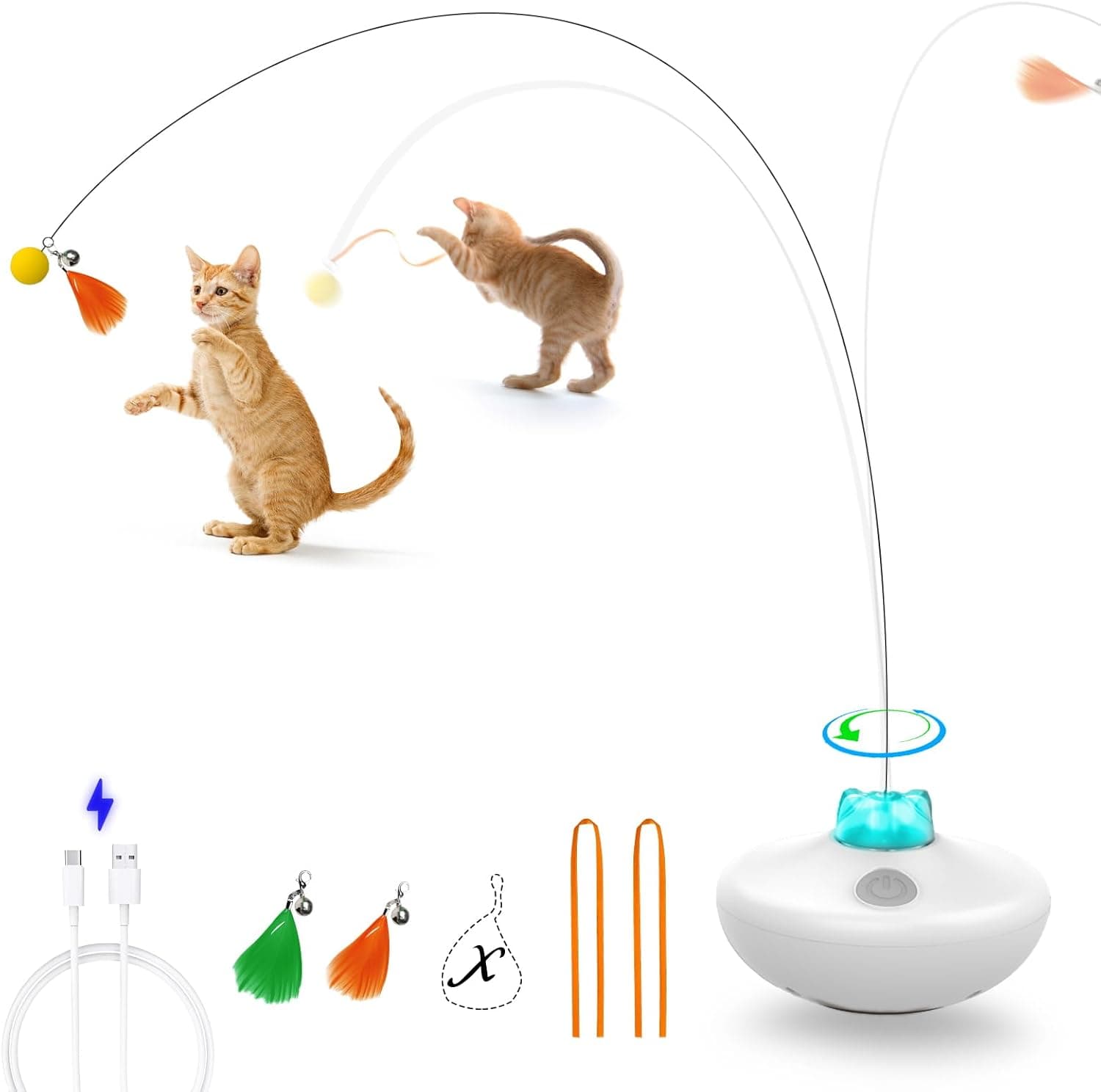 Interactive Cat Exercise TumblerShopView at Amazon for Oxawo Interactive Cat Exercise Tumbler, Rechargeable Spin Butterfly Toy with Extra Long Feather Wand (opens in a new tab)
How to choose cat toys
The goal is variety across the hunting sequence rather than one perfect toy. The Cornell Feline Health Center emphasizes that indoor cats need environmental enrichment to express natural behaviors, and rotating a small set of toys keeps novelty high without buying constantly. Interactive toys that you control, like wands, tend to produce the most intense play because you can move them unpredictably the way real prey moves. Solo toys like tunnels and automatic ball chasers fill the gap when you are busy, though most cats lose interest in a fully automatic toy faster than one a person is operating.
Safety matters more with toys than with most gear. Wands with strings or feathers should be put away between sessions so they are not chewed or swallowed unsupervised, and any small detachable parts are a concern for cats that chew.
The picks
TEMPCORE
Cat Tunnel 3-Way Collapsible Tube with Teaser Wand
- Shape
- 3-way collapsible tube
- Includes
- Teaser wand and hanging ball
- Features
- Peek holes and crinkle material
- Storage
- Folds flat
- Use
- Indoor hide, chase, and pounce play
A three-way collapsible tunnel with crinkle walls, peek holes, and a hanging ball that taps into cats' urge to hide and pounce. It folds flat for storage between play sessions. The included teaser wand adds interactive play.
See more detailSee less detail
Strengths
- Three connected tubes for chase and hide play
- Folds flat for storage
- Very large review base at a low price
Weaknesses
- Crinkle material can wear with heavy use
- Large footprint when set up
Best for
Indoor cats who love to hide, chase, and pounce
What owners say
The Tempcore three-way tunnel is our top overall pick because it appeals to a deep, near-universal cat instinct: hiding and ambushing from an enclosed space. The three-way collapsible design gives cats multiple entrances and a central junction for peek-and-pounce play, packs flat for storage, and often includes a dangling ball or crinkle material to add sound and movement. It works for solo play and multi-cat chase, carries a very large review base, and suits cats that like to burrow. The tradeoff is that a determined chewer can damage the fabric over time, and it takes up floor space when set up.
UMOSIS
Interactive Cat Toy
- Power
- USB rechargeable
- Motion
- Concealed moving feathers
- Trigger
- Touch activated
- Sound
- Mouse squeak
- Use
- Self-play for indoor cats
A rechargeable self-play toy with feathers that dart in and out of the base and a squeak to mimic prey. It activates on touch so cats can trigger the action themselves. It is aimed at keeping bored indoor cats moving.
See more detailSee less detail
Strengths
- Touch-activated self-play
- Rechargeable rather than disposable batteries
- Feather and squeak mimic prey
Weaknesses
- Feather refills wear out over time
- Motor needs occasional charging
Best for
Indoor cats that need solo prey-style stimulation
What owners say
The Umosis interactive feather toy is the pick for owner-directed play, the type that tends to produce the most vigorous exercise. Feather wand toys let you mimic the erratic flight of a bird, triggering stalking and leaping, and they are usually sold as a set with replaceable feather attachments since feathers wear out with heavy use. That replaceability is a genuine advantage over a single fixed wand. The honest tradeoff is that these are supervised toys: strings and feathers should be stored between sessions so they are not chewed or swallowed when you are not watching.
BABORUI
Automatic Interactive Cat Toy Ball with 3 Tails and 2 Speeds
- Power
- USB rechargeable
- Motion
- Automatic rolling ball
- Attachments
- 3 tails
- Speeds
- 2 speed settings
- Cat size
- Small, medium, large
A low-cost automatic rolling ball with swappable tails and two speed settings to trigger chase play. It moves on its own to keep cats busy when owners are away. The tails add a prey-like target to bat.
See more detailSee less detail
Strengths
- Low price for a motorized toy
- Two speeds and swappable tails
- Rechargeable
Weaknesses
- Lower average rating
- Ball can get stuck under furniture
Best for
Budget shoppers wanting a self-moving chase toy
What owners say
The Baborui automatic ball toy is the pick for self-powered solo play. It is a motorized ball that moves and changes direction on its own to trigger a chase without you holding anything, typically with a rechargeable battery and an auto shutoff to conserve power between play bouts. It is a reasonable option for keeping a cat busy while you work. The realistic caveat, true of nearly all automatic toys, is that some cats tire of the predictable motion faster than they do of a wand a person controls, so it works best as one part of a rotation rather than the only toy.
QRAXOND
Interactive Cat Toy
- Power
- USB rechargeable
- Play style
- Hide and seek with fluttering motion
- Trigger
- Touch activated
- Target
- Bored indoor adult cats and kittens
- Use
- Interactive and self-play
A rechargeable hide-and-seek toy where a fluttering element pops out to trigger a cat's chase and pounce instincts. Touch activation lets the cat restart the action. It targets bored adult cats and kittens.
See more detailSee less detail
Strengths
- Fluttering hide and seek motion
- Touch activated for self-play
- Rechargeable design
Weaknesses
- Higher price than simple toys
- Moving parts need care and charging
Best for
Cats that respond to peek-and-pounce style toys
What owners say
The Qraxond hide-and-seek toy is the pick for interactive whack-a-mole style play, where a moving element pops between openings for the cat to bat at. This kind of toy taps the same ambush-and-swat instinct as a tunnel but concentrates it into a compact board, which suits smaller living spaces. It can run in an automatic mode or be operated manually. As with other electronic toys, novelty is the main limiter: it is most engaging when brought out for sessions rather than left available all day.
OXAWO
Interactive Cat Exercise Tumbler
- Power
- Rechargeable
- Motion
- Spinning butterfly tumbler
- Includes
- Extra long feather wand
- Design
- Weighted tumbler base
- Use
- Interactive and self-play
A weighted tumbler with a spinning butterfly to bat at, bundled with a long feather wand for hands-on play. The tumbler rights itself after each swat to keep the game going. It combines self-play and interactive options.
See more detailSee less detail
Strengths
- Two play modes in one purchase
- Self-righting tumbler base
- Rechargeable spinner
Weaknesses
- Average rating relative to leaders
- Feather wand attachments wear out
Best for
Cats that like batting toys plus wand play
What owners say
The Oxawo exercise tumbler wand combines two play styles in one product, pairing a wand element with a weighted tumbler or roller base, so it offers both owner-directed and self-righting solo play. A tumbler that wobbles back upright rewards repeated batting and can hold a cat's attention during independent play, while the wand component adds an interactive option. It is a flexible, budget-friendly way to cover more than one play behavior at once. The tradeoff is that combination toys sometimes do neither job quite as well as a dedicated single-purpose toy, so heavy players may still want a standalone wand alongside it.
What mattered most
The comparison focuses on toy type and mechanism, whether play is solo or owner-directed, replaceable parts, and power source for electronic toys. The picks favor toys that cover distinct play behaviors so the set works together as a rotation.
Cats vary enormously in what motivates them, so rotate play styles and let the cat's response guide the next choice. Prices are shown as bands rather than live quotes, because retail pricing changes often and a fixed number would go stale between updates.