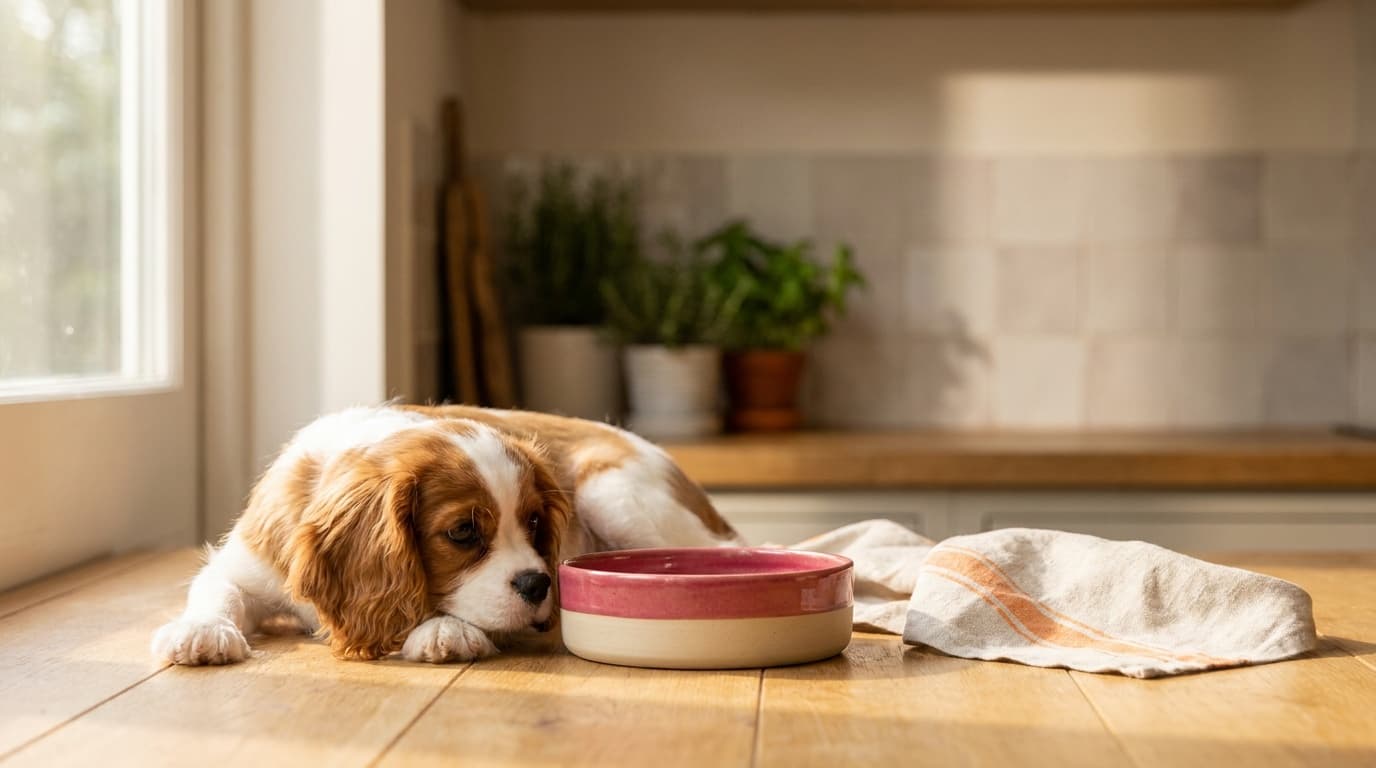
Puppies do best on frequent, scheduled meals, and the number of meals per day decreases as they grow. As a general framework from the American Kennel Club, young puppies eat about four times a day, dropping to three meals in the middle months, and settling into two meals a day as they approach adulthood. The exact timing depends on your puppy's breed and size, so treat this as a starting point to confirm with your veterinarian.
A schedule by age
Here is the typical progression the AKC describes, which suits most puppies once they are fully weaned and eating solid food.
- 6 to 12 weeks: About four meals a day. Very young puppies have small stomachs and high energy needs, so food is spread across frequent small meals. They should be eating a food formulated for puppies or for all life stages.
- 3 to 6 months: Reduce to about three meals a day as the puppy grows and can handle larger portions less often.
- 6 to 12 months: Move to two meals a day. Many puppies are ready for this shift as growth begins to slow, though larger breeds may hold at three meals a little longer.
- 12 months and beyond: Most dogs do well on two meals a day into adulthood, which the AKC notes suits the majority of adult dogs. See our guide to how much to feed your dog for adult portioning.
Large-breed puppies need extra care
Large and giant breeds are a special case. They grow for longer and are prone to bone and joint problems if they grow too quickly, so the goal is steady, controlled growth rather than getting big as fast as possible. Overfeeding a large-breed puppy, or feeding one too many calories or too much calcium, can contribute to developmental orthopedic problems.
For that reason, large-breed puppies should eat a food specifically formulated for large-breed growth, which is designed with appropriate calcium and calorie levels. They also tend to stay on more frequent meals a bit longer and transition to adult food later than small breeds. Small breeds mature quickly and may move toward adult feeding sooner, while big dogs may not switch to an adult diet until closer to 12 to 14 months. Your veterinarian can tell you when your specific puppy should make that change.
How much, and watching body condition
How often to feed is only half the picture. How much matters just as much, and the right amount changes constantly as a puppy grows. Feeding charts on the bag are broad starting points, so the better guide is your puppy's body condition: you should be able to feel the ribs easily and see a waist, without ribs or hip bones being visibly prominent. If your puppy is getting pudgy or looking too thin, adjust portions and check with your vet. VCA Animal Hospitals recommends using body condition as the main guide to portion size rather than relying on package charts alone.
Scheduled meals versus free feeding
For most puppies, scheduled meals work better than leaving a bowl of food out all day. Set mealtimes make house-training easier, because what goes in on a schedule tends to come out on a schedule too, and they let you see immediately if your puppy skips a meal, which can be an early sign something is wrong. Free feeding, by contrast, makes it hard to know how much your puppy actually eats and can encourage overeating in a food motivated breed.
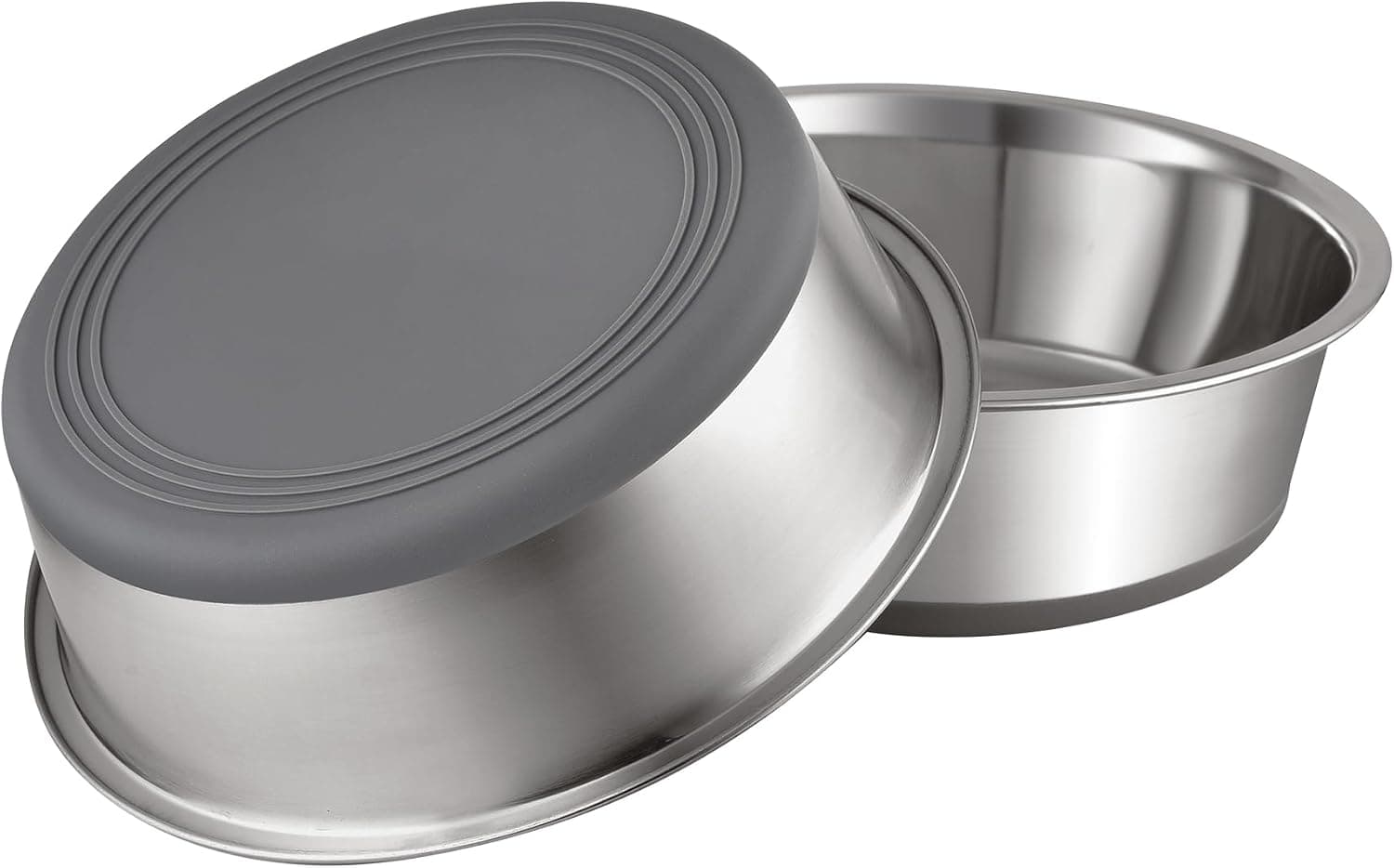
A sturdy, nonslip bowl helps those set mealtimes stay tidy for an eager eater, and the Peggy11 nonslip stainless steel bowl is a dishwasher-safe option that stays put.
PEGGY11
Nonslip Stainless Steel Dog Bowls
- Capacity
- 3.8 cups per bowl
- Material
- Stainless steel with silicone base
- Diameter
- 6.37 in (6.9 in with lip)
- Best for dog weight
- 20-30 lbs
- Dishwasher safe
- Yes
A two-bowl stainless steel set with a nonslip silicone bottom, sized for dogs in the 20-30 lb range. The bowls stack for storage and are dishwasher safe, with a silicone base designed to reduce sliding and noise during meals.
See more detailSee less detail
Strengths
- Nonslip silicone base keeps bowls in place
- Stackable design for easy storage
- Dishwasher safe stainless steel
Weaknesses
- Sized for smaller dogs, not ideal for large breeds
- Silicone base can trap moisture if not dried
Best for
Small to medium dogs that need a steady, easy-to-clean everyday bowl
What owners say
Fresh water is the exception: it should always be available, not rationed like food. As puppies grow and become more active they need steady access to water, especially around play and after meals. If you ever have questions about the amount at a given age, our guide to how much to feed your dog and your puppy's own body condition are better guides than the broad ranges printed on the bag.
The transition to adult food
Switching from puppy food to adult food is a milestone tied to growth, not just the calendar. Small breeds generally finish growing and can move to adult food earlier, while large and giant breeds keep growing longer and switch later. The AKC's general feeding-frequency guidance reinforces that two meals a day works well for most adult dogs once they reach that stage.
Whenever you change foods, whether from puppy to adult or between brands, do it gradually to avoid digestive upset, following our guide to switching your dog's food safely. And because a growing puppy's needs are so individual, use your veterinarian as your main reference point. Regular puppy checkups are the ideal time to confirm you are feeding the right food, the right amount, and on the right schedule.