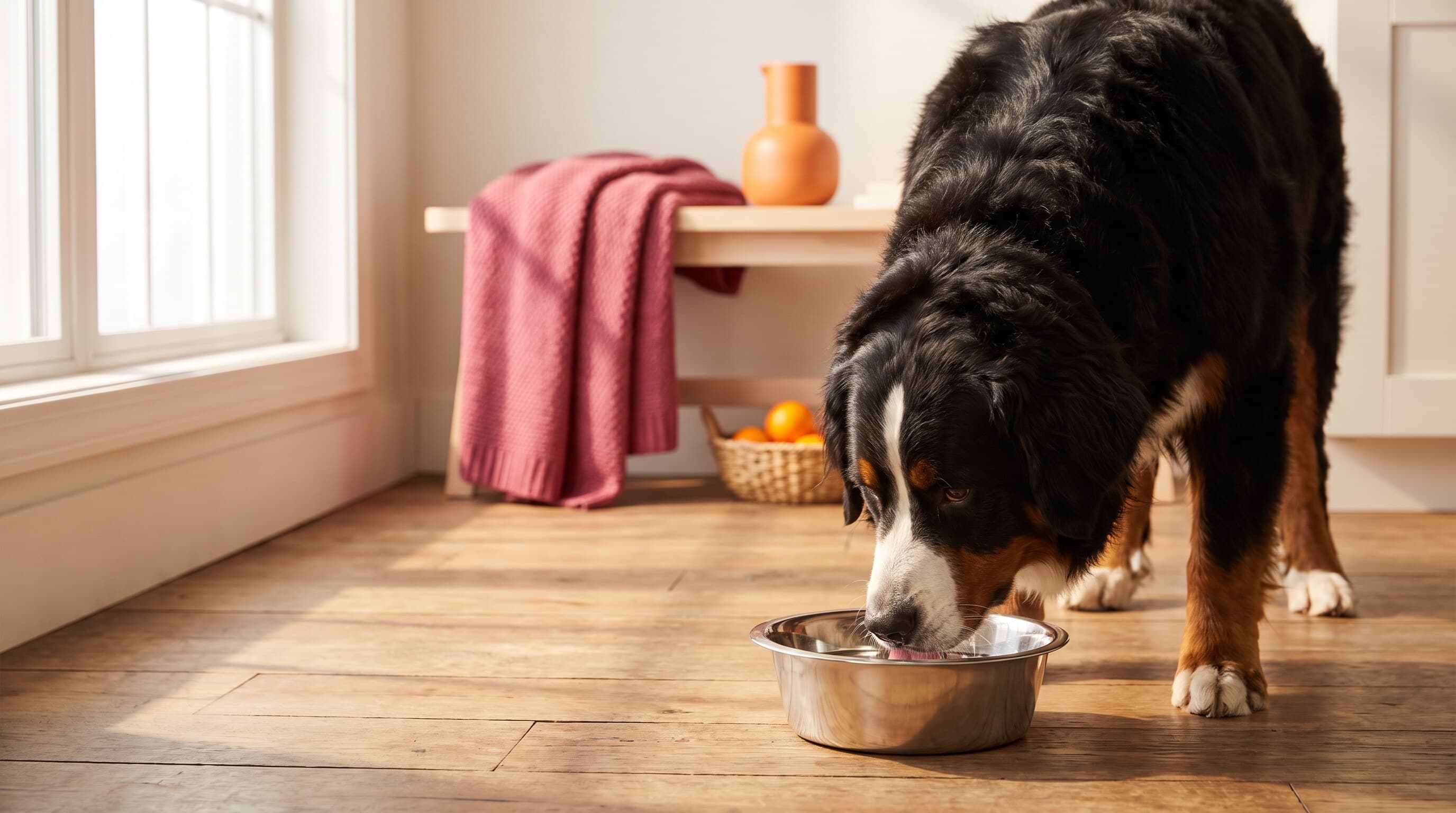
Water is the nutrient dogs need most and the one owners think about least. A useful rule of thumb, cited by PetMD, is that a healthy dog drinks roughly one ounce of water per pound of body weight per day. For a 50-pound dog that is about 50 ounces, a little over six cups. Treat that as a ballpark, not a target to enforce, because a dog's real needs shift with heat, exercise, diet, and health. The more important habit is simply making sure fresh, clean water is always available and never restricted.
What affects a normal amount
The one-ounce-per-pound figure is an average for a resting dog in mild conditions. Several everyday factors push the number up or down:
- Weather and activity. Hot days and hard exercise increase water loss through panting, so a dog that runs at the park in summer will drink more than the same dog on a cool, lazy day.
- Diet. Dogs fed canned or fresh food take in a lot of water with their meals and may drink less from the bowl, while dogs on dry kibble often drink more to make up the difference.
- Life stage and size. Puppies, nursing mothers, and very active working dogs have higher needs.
Because of all this variation, a dog whose bowl level changes day to day is usually normal. What matters is the overall pattern and whether it fits your dog's routine.
Signs your dog may be dehydrated
Dehydration is the more common water problem, especially in heat or during an illness with vomiting or diarrhea. Two simple home checks are widely recommended by veterinarians. First, the skin-tent test: gently lift the skin between the shoulder blades and let go. In a well-hydrated dog it snaps back quickly; if it is slow to return or stays tented, that suggests dehydration. Second, check the gums: they should feel moist and slippery, and when you press a finger against them the pink color should return within about two seconds.
Other signs to watch for include:
- Tacky, dry, or sticky gums
- Lethargy or unusual tiredness
- Sunken-looking eyes
- Loss of appetite
- Thick saliva or a very dry nose
Dehydration can accompany other illness, so a dog that is clearly dehydrated, or that became so through repeated vomiting or diarrhea, deserves a prompt call to the veterinarian rather than a wait-and-see approach.
When increased thirst is worth a vet visit
An occasional big drink after a hot walk is nothing to worry about. A persistent, unexplained increase in drinking is different. The AKC's guide to why a dog may be drinking so much water explains that markedly increased thirst, known medically as polydipsia, can be an early sign of conditions such as kidney disease, diabetes, or a hormonal disorder, and it often shows up alongside increased urination. PetMD makes the same point: a lasting jump in water intake is one of the more common early clues that prompts a diagnostic workup, so it is worth taking seriously rather than dismissing.
You do not need to measure milliliters at home. What is useful is noticing a real change from your dog's normal pattern: emptying the bowl far faster than usual for more than a few days, asking to go out to urinate much more often, or having accidents in a previously house-trained dog. Those are reasons to book a veterinary appointment, where a physical exam, bloodwork, and a urine test can sort out the cause. None of this is something to diagnose from a list, but the change itself is a clear prompt to call.
The bigger picture
Hydration works hand in hand with the rest of your dog's diet. If you have recently changed foods, especially from wet to dry, a shift in how much your dog drinks can be completely normal, as covered in our guide to switching your dog's food safely. And because a dog's water needs partly track how and how much they eat, it is worth reading alongside how much to feed your dog. When something about your dog's drinking genuinely worries you, the safest move is always the same: keep the water available and ask your veterinarian.