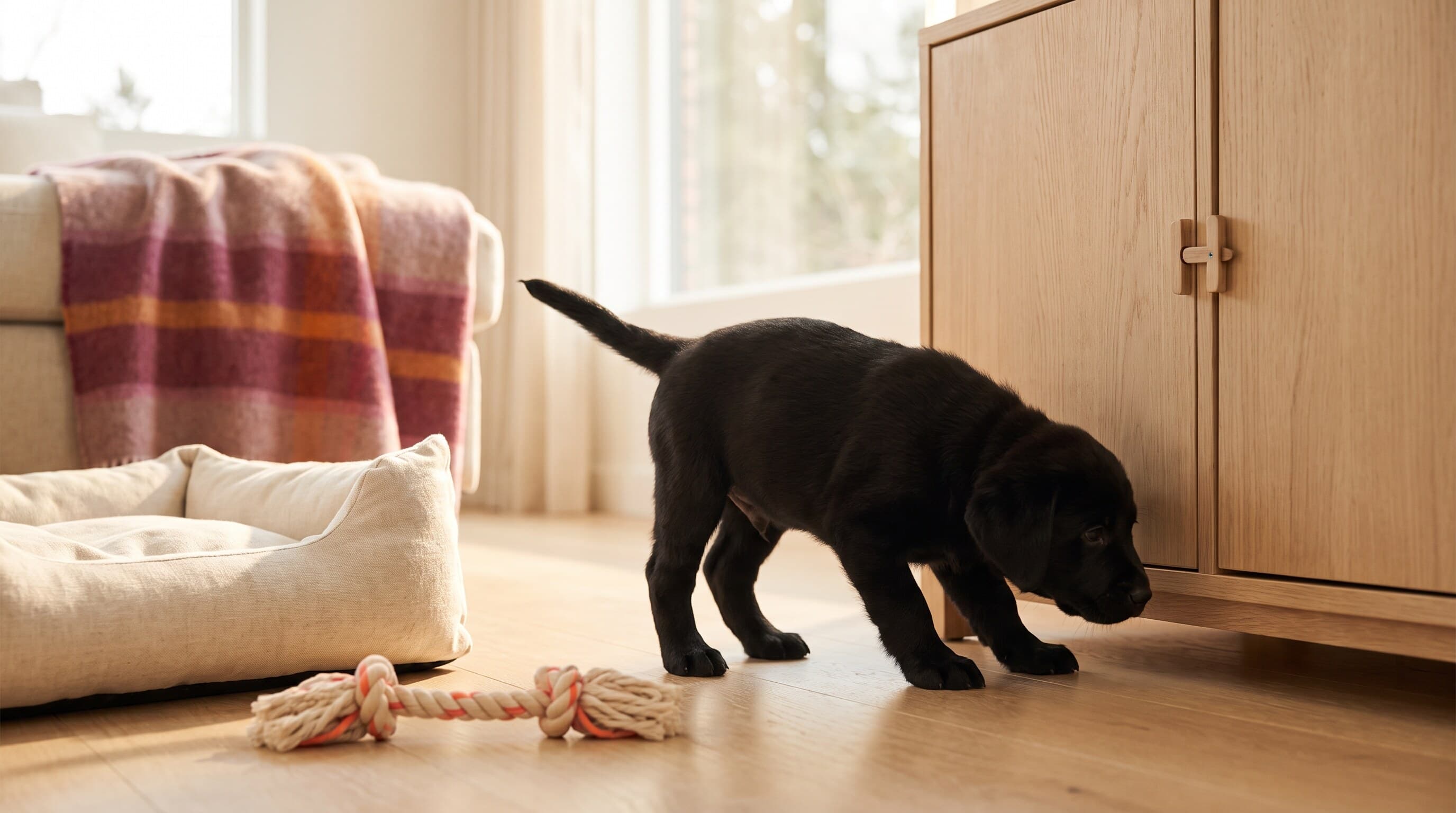
Puppies explore the world with their mouths, which means anything at nose height is fair game. Puppy-proofing is simply the work of getting the genuinely dangerous things out of reach before your puppy finds them first. As VCA Animal Hospitals puts it, the most effective approach is to get down to your puppy's eye level, one room at a time, and look for hazards from that perspective. You do not need to transform the whole house at once. Focus first on the one or two rooms where your puppy will spend most of its time.
Start with cords, small objects, and chewables
Chewing is the biggest hazard category because it covers so much. Electrical cords are a priority: a puppy chewing a live cord can suffer burns, electric shock, or choking, and VCA lists electrocution from cords among the more common household injuries in pets. Bundle loose cords, run them behind furniture, or use cord covers, and unplug what you can when you are not around.
Then sweep for anything small enough to swallow. Coins, hair ties, children's toys, socks, batteries, and string are all common causes of dangerous blockages. If it fits in a puppy's mouth and is not meant to be there, it needs to go up high or behind a closed door.
Lock down the kitchen and its foods
The kitchen holds most of the foods that are genuinely dangerous to dogs, so it deserves extra attention. Keep counters clear, secure the trash behind a cabinet or with a locking lid, and ask everyone in the household not to hand down table scraps. The ASPCA and its Animal Poison Control Center field cases involving common foods and household products every day. Store well out of reach:
- Chocolate, coffee, and anything with caffeine.
- Grapes and raisins.
- Onions, garlic, chives, and leeks.
- Xylitol, the sweetener in many sugar-free gums, candies, and some peanut butters.
- Alcohol, raw yeast dough, and cooked bones that can splinter.
If you ever suspect your puppy ate something toxic, contact your veterinarian or the ASPCA Animal Poison Control Center at (888) 426-4435 right away rather than waiting for symptoms.
Watch for toxic plants
A number of common houseplants and garden plants are toxic to dogs. The ASPCA maintains a searchable toxic and non-toxic plant list worth checking against what you have. Sago palm is especially dangerous, and others such as certain lilies, aloe, pothos, and tulip bulbs can cause problems ranging from mouth irritation to serious illness. Move risky plants up high where a puppy cannot reach or knock them down, or rehome them until your puppy is past the chew-everything stage.
Bathrooms, bedrooms, and the garage
Hazards hide beyond the kitchen too.
Bathrooms hold medications, cleaning products, and small items like cotton swabs and razors. Keep the cabinet closed or latched, store human and pet medications separately and out of reach, and get in the habit of shutting the toilet lid.
Bedrooms and living areas are full of swallowable temptations: laundry (especially socks and underwear), children's small toys, remote controls, and jewelry. A closed hamper and a quick pickup routine solve most of it.
Garages, laundry rooms, and basements often store the most toxic substances in the house, including antifreeze, which is dangerously sweet-tasting, along with pesticides, fertilizers, and detergent pods. Keep these on high shelves or behind closed doors, and clean up spills immediately.
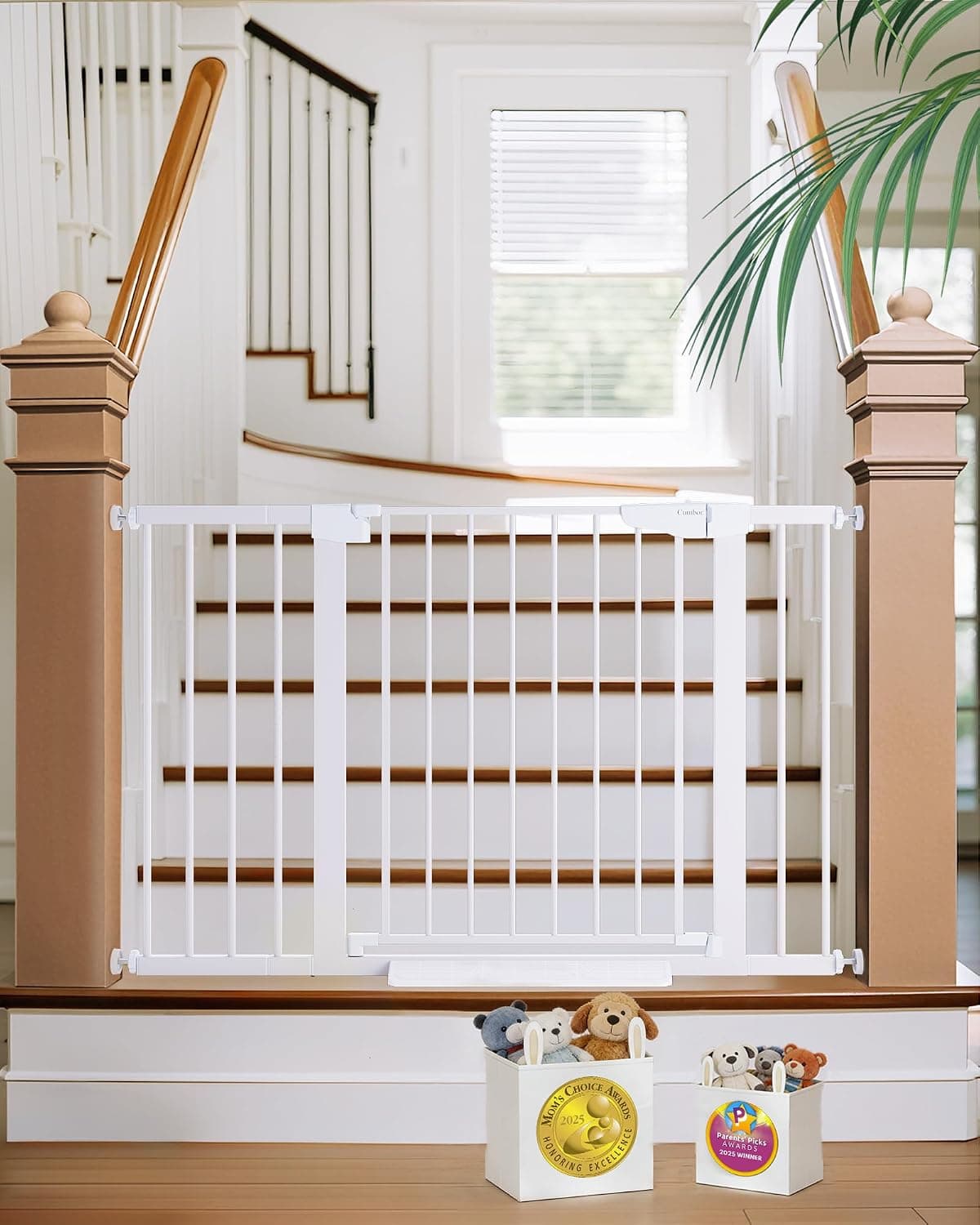
A baby gate is the simplest way to keep a puppy out of an off-limits room, and the Cumbor auto-close gate latches itself shut so a busy household does not leave a gap.
CUMBOR
29.7-48" Baby Gate for Stairs
- Width range
- 29.7 to 48 inches
- Mounting
- Pressure mounted, no drilling
- Door
- Walk-through with auto close
- Material
- Metal
- Use
- Stairs and doorways
A pressure mounted metal gate that spans 29.7 to 48 inches and installs without drilling. The walk-through door swings shut and latches on its own, so it closes even when your hands are full. It suits both stair tops and standard doorways.
See more detailSee less detail
Strengths
- Very wide adjustable range
- Auto-close self-latching door
- Huge base of positive reviews
Weaknesses
- Higher price than basic gates
- Pressure mount needs flat, solid walls
Best for
Owners who want one wide, self-closing gate for stairs and doorways.
What owners say
Secure exits and outdoor spaces
Puppies are fast and curious. Check that doors and low windows latch securely, mind gaps under gates and fences, and supervise time near stairs, pools, and balconies. The AVMA recommends thinking about a puppy's environment as something to manage actively, not set once and forget, since a growing puppy quickly reaches places it could not a week earlier.
The bottom line
Puppy-proofing is less about a perfect one-time cleanup and more about a mindset: manage the space, watch your puppy, and keep the genuinely dangerous things behind barriers. Do the eye-level sweep, secure the kitchen and the chemicals, and use gates and supervision to cover the rest. For everything else that comes with those first days, see our new puppy checklist for the first week, and read up on the first vet visit and what to expect so you are ready for that early appointment.