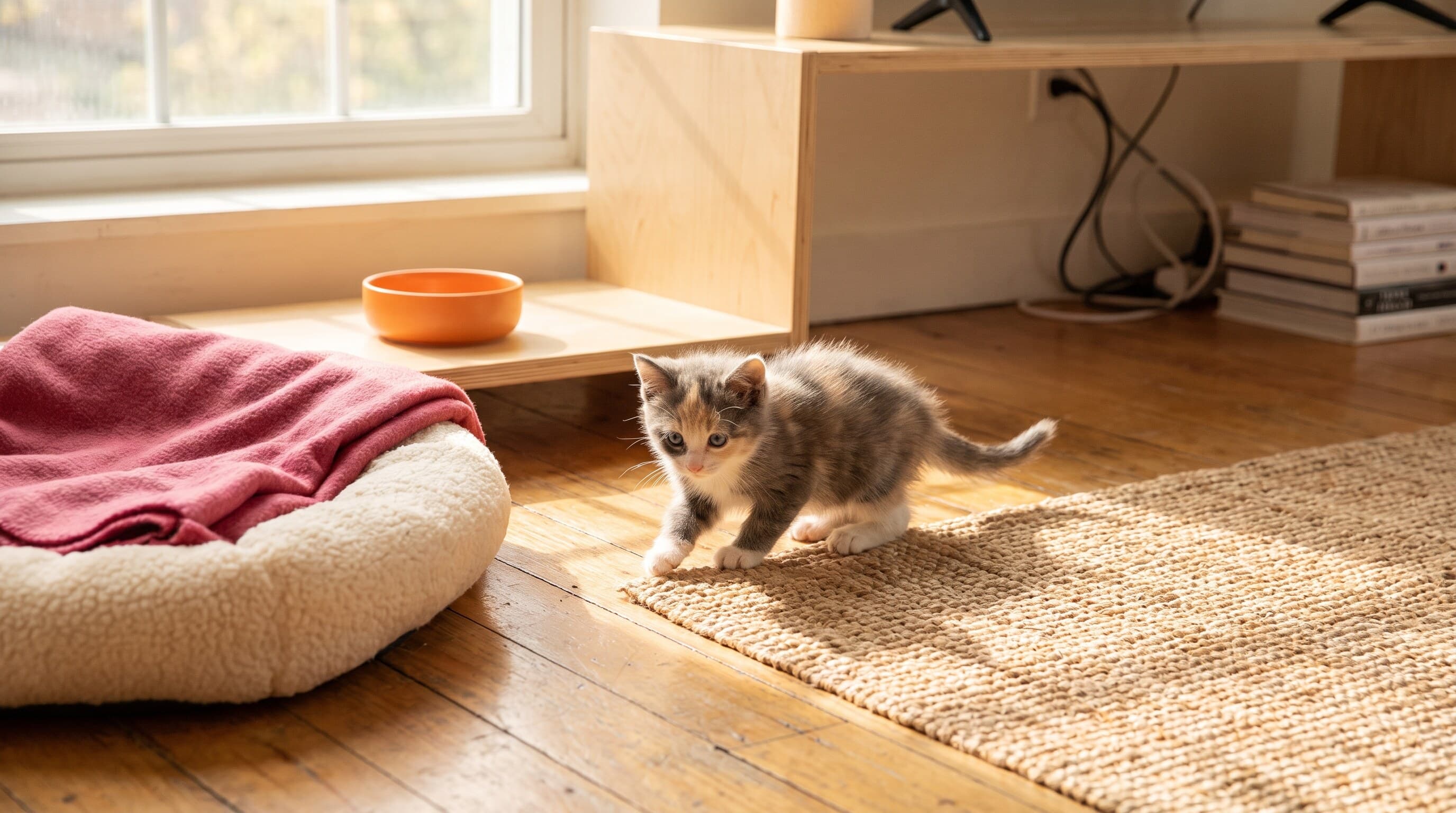
Kittens climb, squeeze, pounce, and investigate anything that moves, which makes their idea of a hazard very different from a puppy's. Kitten-proofing means thinking in three dimensions, since a kitten will reach shelves, windowsills, and countertops you might assume are out of reach. As VCA Animal Hospitals advises, the goal is to walk each room imagining where a small, agile, curious animal could get to, then remove or secure the dangers you find there. Start with the rooms your kitten will use first and expand from there.
String, cords, and anything dangly
The classic image of a kitten batting a ball of yarn hides a real danger. String, thread, ribbon, yarn, rubber bands, hair ties, and tinsel are all tempting to bat and chew, and if swallowed they can cause a serious and sometimes life-threatening intestinal blockage known as a linear foreign body. The VCA recommends putting all such items safely away rather than leaving them out as impromptu toys, and supervising play with string-style toys, then storing them out of reach afterward.
Blind and curtain cords deserve special attention. Looped cords are a strangulation hazard for a playful kitten, so tie them up high, cut looped cords, or use cord cleats to keep them well out of a kitten's reach. Electrical cords, as with puppies, are a chewing and shock risk, so bundle or cover them and unplug what you can.
Secure windows, screens, and high spaces
Cats love a window view, but an unsecured screen turns one into a fall or escape risk. Make sure every window and door screen is intact and firmly seated. A loose or damaged screen can give way when a kitten leans or pushes against it, and a kitten that falls from a height or slips outside can be badly hurt or lost. Keep balconies off-limits unless you are actively supervising.
Because kittens will get up high one way or another, plan for it rather than fight it. Give them approved places to climb, a cat tree or sturdy shelves, near the spots they are drawn to, so their instinct to be up high has a safe outlet. At the same time, secure or remove breakable and heavy items from shelves and mantels a kitten might scale.
Toxic plants and foods
Some plants are dangerously toxic to cats, and lilies top the list. The ASPCA warns that many true lilies can cause fatal kidney failure in cats, and even small exposures, including licking pollen off their fur, can be enough. If you keep cats, the safest choice is to avoid lilies in the home entirely. For everything else, check your plants against the ASPCA toxic and non-toxic plant list for cats and move or rehome anything risky.
In the kitchen, keep toxic human foods out of reach: onions, garlic, chocolate, caffeine, alcohol, grapes and raisins, and anything containing xylitol. Because cats are smaller than dogs, even modest amounts matter. Secure the trash, keep counters clear, and store food away rather than leaving it out.
The small spaces kittens disappear into
Kittens are small enough to hide in places that become hazards. Check inside appliances before running them: the dryer, the washing machine, the dishwasher, and even an open oven or refrigerator are all spots a kitten may explore, so keep doors closed and glance inside before starting a cycle. Recliners and sofa beds have mechanisms a kitten can crawl into, so operate them slowly and check first. Also block off gaps behind cabinets, under appliances, and into wall or floor openings where a kitten could get stuck.
Medications, chemicals, and small hazards
As with any pet, keep human and pet medications, cleaning products, and garage chemicals like antifreeze securely stored behind closed or latched doors. Pick up small swallowable objects: earrings, buttons, twist ties, and craft supplies. A quick daily tidy in the rooms your kitten uses removes most of these before they become a problem.
The bottom line
Kitten-proofing rewards thinking like a small acrobat: assume your kitten can reach higher, squeeze smaller, and find more trouble than you expect. Put strings and cords away, secure your screens, skip the lilies, and give your climber safe places to go up. For the rest of settling a new cat in, see our new kitten checklist for the first week, and learn what a first appointment involves in our guide to the first vet visit and what to expect.